Ancient Egypt astonishing and awesome eye-opening treasures

Art that speaks across millennia of Ancient Egypt

Colossal statue of Tutankhamun (usurped by Ay and Horemheb), 18th Dynasty (c.1550–1295 BCE), Quartzite, pigment
Ancient Egypt Unveiled
The Hong Kong Palace Museum Ancient Egypt Unveiled: Treasures from Egyptian Museums features more than 250 artefacts spanning 5,000 years.

Striding Merenptah 19th dynasty c.1213-1203, Granite
This marks Hong Kong’s first exhibition of treasures sourced directly from Egyptian museums, featuring works from seven institutions, including the Egyptian Museum in Cairo and recent finds from Saqqara.
Related British Museum Silk Roads movement of people and ideas that changed the world
Why does ancient Egypt command such attention? The answer lies in its tangible connections to a world that understood death differently, built monuments that defy easy explanation, and created art that speaks across millennia.

Funerary stele of Semerkhet 1st Dynasty (c.3040–2890 BCE), Schist (a medium-grade metamorphic rock)
When Howard Carter discovered Tutankhamun’s tomb in November 1922, he triggered arguably the first global news story.
Related Mythical Sanxingdui creatures discovered in Sichuan
The tomb was largely intact, yielding thousands of objects, including the iconic gold mask.

Kneeling Hatshepsut, 18th Dynasty (c.1550–1295 BCE), Red granite, Ancient Egypt
At this exhibition, visitors encounter the only remaining monumental stone sculpture of Tutankhamun in Egypt.
Related Neolithic Clues to the Origins of Chinese Civilisation
This colossal statue, originally standing over five metres tall, represents the boy pharaoh and his world.

Colossal statue of Akhenaten, 18th Dynasty (c.1550–1295 BCE), Sandstone, pigments
Projection mapping reconstructs the statue’s original appearance, showing colours that time has stripped away.
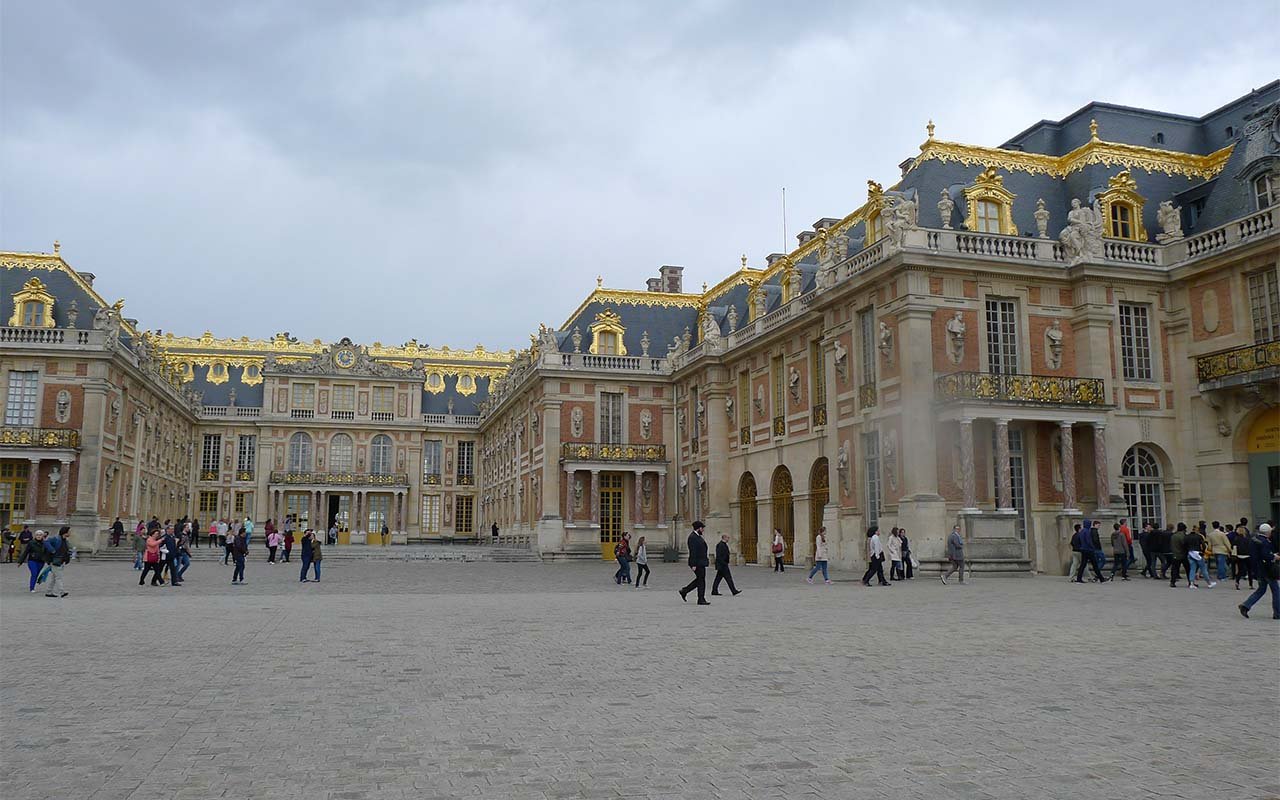
Related Chateau de Versailles: Legacy of the Sun King
The statue captures his youthful features through a naturalistic approach that differs from earlier, rigid royal depictions.
Akhenaten, Tutankhamun’s father
A colossal statue of Akhenaten, Tutankhamun’s father, shows the radical break this pharaoh made with tradition.
Related Ludwig Pollak Collection Museum of Ancient Sculpture in Rome
Akhenaten moved Egypt’s capital to a new city in the desert and imposed monotheistic worship centred on the sun disk Aten.

(left) Canopic jar of Tjuyu, 18th Dynasty (1550–1295 BCE), Egyptian alabaster (travertine), pigments, plaster, gold
(right) A set of four canopic jars of Setyerboni, 26th Dynasty (664–525 BCE), Egyptian alabaster (travertine), Ancient Egypt
The statue displays exaggerated, elongated features that scholars call the Amarna style, a visual propaganda that declares his determination to re-establish divine kingship on new terms.
Related Ultimate destination Vatican Museums Sistine Chapel
Nearby, the head of a statue of Nefertiti, whose name means the beautiful one has come, captures an elegance that served political ends.

Head from a statue of Nefertiti 18th Dynasty (c.1550–1295 BCE), Quartzite
Nefertiti was one of the most powerful women in ancient Egyptian history, playing a role second only to Akhenaten himself during his religious reforms.
Related Vatican Museum’s collection of contemporary art
The exhibition features Hatshepsut, an earlier female pharaoh who ruled for twenty years during the Eighteenth dynasty.
Female pharaoh Hatshepsut
A red granite statue shows her kneeling, wearing the traditional male shendyt kilt and false beard.
Related Women and Femininity in Ancient China, revealing a way of life
Egypt experienced stability and prosperity during her reign, though after her death, many statues were deliberately defaced.

Falcon pectoral, Late Period (664-332 BCE), Metal, Ancient Egypt
Mummification lies at the heart of ancient Egypt’s appeal, stemming from a core belief that physical preservation was essential for resurrection and the afterlife.
Related Tang dynasty golden age artistic highlights
The Egyptians believed the soul needed an intact body to return to in the afterlife; without mummification, the soul would lose its way. The process took between forty and seventy days.

Hippopotamus, Probably 13th Dynasty (c.1773–after 1650 BCE), Faience (a ceramic composite)
Embalmers removed the brain through the nostrils, then removed the lungs, liver, stomach, and intestines through a cut in the left side of the body, mummifying these organs separately and placing them in canopic jars.
Related Gothic Christian Art of the 13th-14th Century
The heart remained because Egyptians believed it was the seat of identity and morality. In the Weighing of the Heart ceremony, the heart was placed on a scale against the feather of Ma’at, goddess of truth.
A balanced heart meant eternal peace, a heavy heart risked annihilation by Ammit, a creature part crocodile, lion, and hippopotamus.
Related Great art on display at the M+ Museum
The exhibition displays anthropoid coffins of Pedeamun, a lower-ranking priest and scribe at the mummy workshop of the Amun-Re temple during the twenty-first dynasty.

Anthropoid coffins of Pedeamun a priest of Amun, 21st Dynasty (c.1069–945 BCE) Sycamore fig, pigment
These yellow coffins gleam like gold, their surfaces covered with dense, intricate funerary texts. Seven cat mummies are on display in the exhibition, buried as offerings to the goddess Bastet, demonstrating sacred animal veneration in ancient Egypt.
Related Congolese art, colourful and hypnotic, mixed media
Bastet began as a fierce lioness war goddess and later became a gentle domestic cat associated with fertility and household protection.

Mummy and cartonnage of a calf Ptolemaic Period (332–30 BCE), Wood, plaster, linen, papyrus pigment, animal remains
The worship of Bastet reached its zenith during the Ptolemaic Period. A bronze statue depicts her wearing an intricately patterned dress and holding a sistrum, a musical and ritual instrument, in her right hand.
Related Surrealism beyond Mythologies
The exhibition also displays objects revealing daily life and divine kingship in ancient Egypt.

Colossal head of Senwosret I (usurped by Rameses II) 12th Dynasty (c.1985–1773 BCE), Granite
A colossal head of Senwosret I from the twelfth dynasty demonstrates pharaonic power; scholars estimate the original statue reached nearly ten metres tall.
Related Way of the Sword: Warrior Traditions in China and Italy
He wears the white crown symbolising kingship and Upper Egypt, an emblem of divinity and royalty since Egypt’s unification around 3000 BCE.
Ancient Egypt continues to fascinate
A piece of triangular bread from the eleventh dynasty survives in remarkable condition.

Triangular bread 11th Dynasty (c.2034–1985 BCE), Emmer
Made from emmer, a type of wheat, this bread was a staple food consumed by everyone, from the rich to the poor. Beer and bread were economic commodities used to pay wages.

Statue of two men brewing beer 6th Dynasty (c.2345–2181 BCE), Wood, pigments
Gold jewellery demonstrates wealth and craftsmanship throughout the exhibition. A broad collar called wesekh, meaning broad, belonged to Princess Noub-Hotep-ta-Khroudit.

Broad collar and counterpoise, Probably 12th Dynasty (c.1985–1773 BCE), Gold, gemstone
Made of gold and gemstone with cylindrical beads that gradually diminish in length, each end terminates with falcon heads, and a counterpoise pendant balances the collar’s weight.

Diadem with cartouches of Seti II and Queen Tawosret, 19th Dynasty (c.1295–1186 BCE), Gold Egyptian Museum in Cairo, Image courtesy of HKPM
From the Gold Tomb in the Valley of the Kings comes a diadem with cartouches of Seti II and Queen Tawosret.
Related Gold glitters in luxurious handmade ceramics linked by Jingdezhen
The tomb yielded the most exquisite gold and silver jewellery ever discovered in the necropolis.

Ibis, Late Period (664-332 BCE), Bronze, gold, wood
The diadem’s flowers alternate between yellow gold and red gold, a rare feature documented only in royal contexts from the New Kingdom period.
Related Home of abandoned gods and deities
The Hong Kong Palace Museum presents material through four thematic sections spanning nearly 5,000 years.

Stele with three scripts (similar to the Rosetta Stone) Roman Period, 12 BCE, Limestone
The first, The Land of the Pharaohs, introduces pharaohs, deities, beliefs about the afterlife, and daily life.
Related Bold colours and magical, magnificent Rajasthan
The second, The World of Tutankhamun, focuses on the boy pharaoh and his era.

Sphinx of a queen, New kingdom (c.1550-1069 BCE), Serpentine
The third, The Secrets of Saqqara, presents nearly forty recently unearthed objects.
Related Lumbini Nepal, birthplace of Buddha, a World UNESCO Heritage Site
The fourth, Ancient Egypt and the World, explores cultural dialogues between ancient Egypt and other civilisations, including China.

Aegis, Late Period (664-332 BCE), Bronze, gold
The museum employs more than ten multimedia installations, including projection mapping that reconstructs Tutankhamun’s damaged sculpture, videos showing the mummification process, and interactive displays introducing hieroglyphs and the Rosetta Stone.
Related Hiking on China’s Great Wall Ruins
Ancient Egypt commands attention because it solved problems that still perplex us: how to build structures that last forever, preserve the dead so they can live again, and express power through art.

Pyramidion of Roy and Maia, 18th Dynasty (about 1550-1295 BCE) Limestone
The civilisation created a comprehensive worldview that addressed fundamental human concerns about death, identity, and continuity.
For visitors, the Ancient Egypt Unveiled: Treasures from Egyptian Museums exhibition offers a chance to stand before objects meant to last forever that, against the odds, have succeeded.
Related British Museum History of the World in 100 Objects
The colossal statues, gold jewellery, painted coffins, and wrapped mummies represent a civilisation that faced death and chose to defeat it through preservation, ritual, and art.
Text and photos Martin Wray