Astonishing, fantastic global jewellery from around the world

Treasures of Global Jewellery from The Metropolitan Museum of Art: The Body Transformed
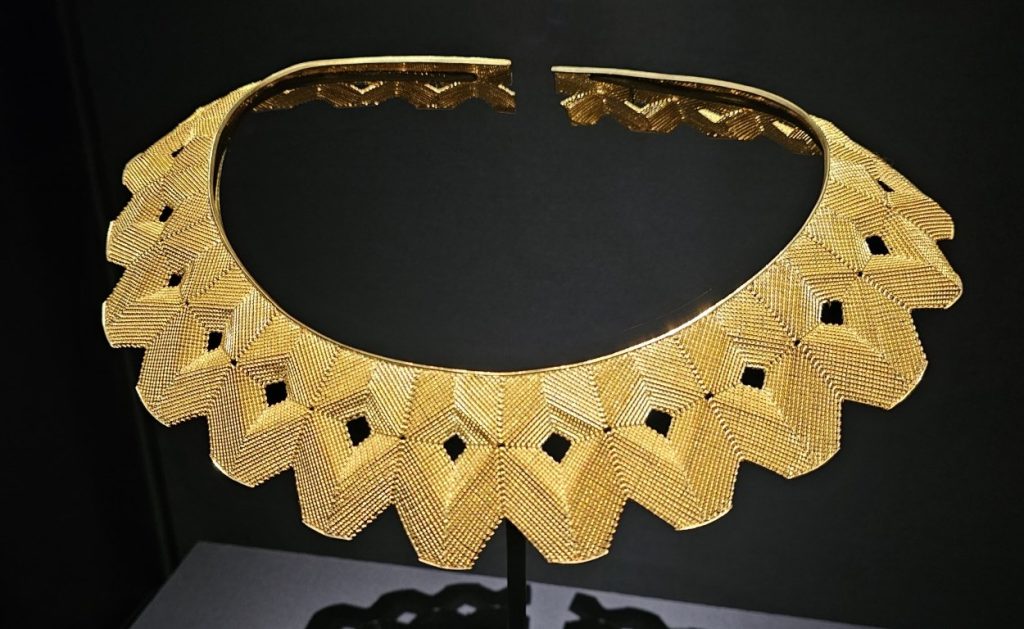
Choker #70, 1985, 18K and 22K gold, Mary Lee Hu
Treasures of Global Jewellery
The Hong Kong Palace Museum is showcasing a remarkable collection of precious and historic jewellery from around the world. Since opening, the museum has hosted several exhibitions on jewellery, fashion, and textiles. “Treasures of Global Jewellery from The Metropolitan Museum of Art: The Body Transformed” is the newest exhibition, focusing on the story of jewellery and how people have adorned themselves over time.
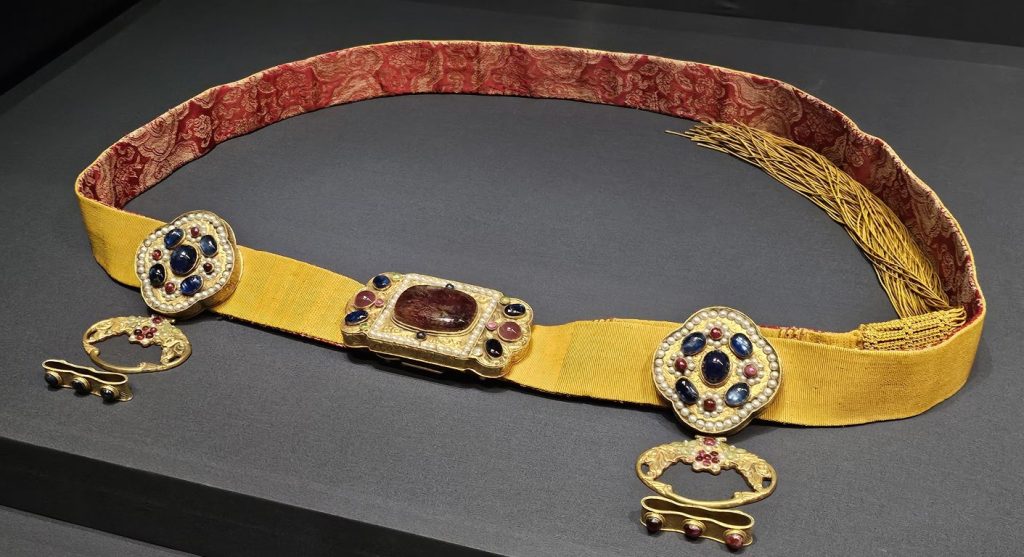
Festive robe belt, Brocaded satin, polychrome and metallic-wrapped silk threads, metal gilt, sapphires, rubies, pearls, China, Qing dynasty, about 18th to 19th century, The Chris Hall Collection at the Hong Kong Palace Museum,
The exhibition is a celebration of jewellery as a universal medium of artistic and cultural expression, imagination and desire. The items on display feature magnificent one-of-a-kind pieces and artefacts from five continents, covering nearly 4,000 years of history, dating from the second millennium BCE to the 21st century.
Related British Museum History of the World in 100 Objects
Most of the dazzling and iconic pieces come from The Metropolitan Museum of Art’s (The Met) renowned collection. The exhibition also features rare and important jewellery and fashion items from the Palace Museum’s Mengdiexuan Collection and the Chris Hall Collection.
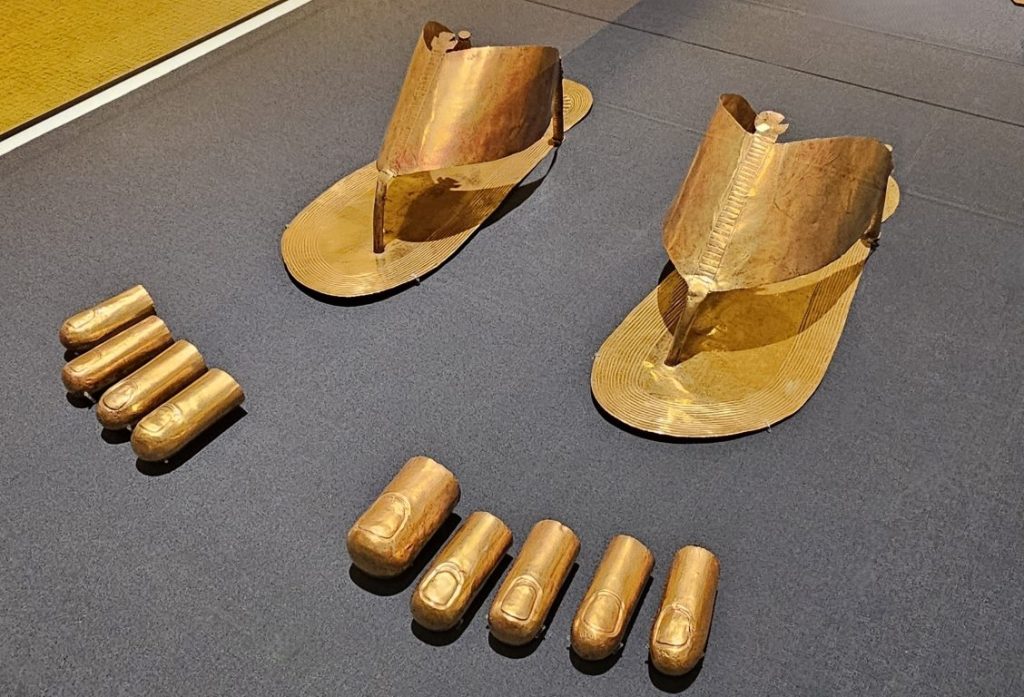
Sandals and toe stalls, New Kingdom period, 18th Dynasty, reign of Thutmose III, about 1479–1425 BCE, Gold, From Egypt, Upper Egypt, Thebes, Wadi, Gabbanat el-Qurud, Wadi D, Tomb of the Three Foreign Wives of Thutmose III
Treasures of Global Jewellery presents some of the finest works and tells the fascinating story of the development of personal embellishment, featuring sumptuous, opulent examples from diverse cultures, societies, and time periods.
Related The wealth and power of the Romanov rulers of Russia
The universality and timelessness of bodily ornamentation are highlighted by enigmatic items such as the golden toe covers found in an Egyptian tomb, designed to accompany the dead and preserve the body intact in the next realm, and the modern, shockingly unsettling sculptural Jaw-Piece, designed by Alexander McQueen in 1998.
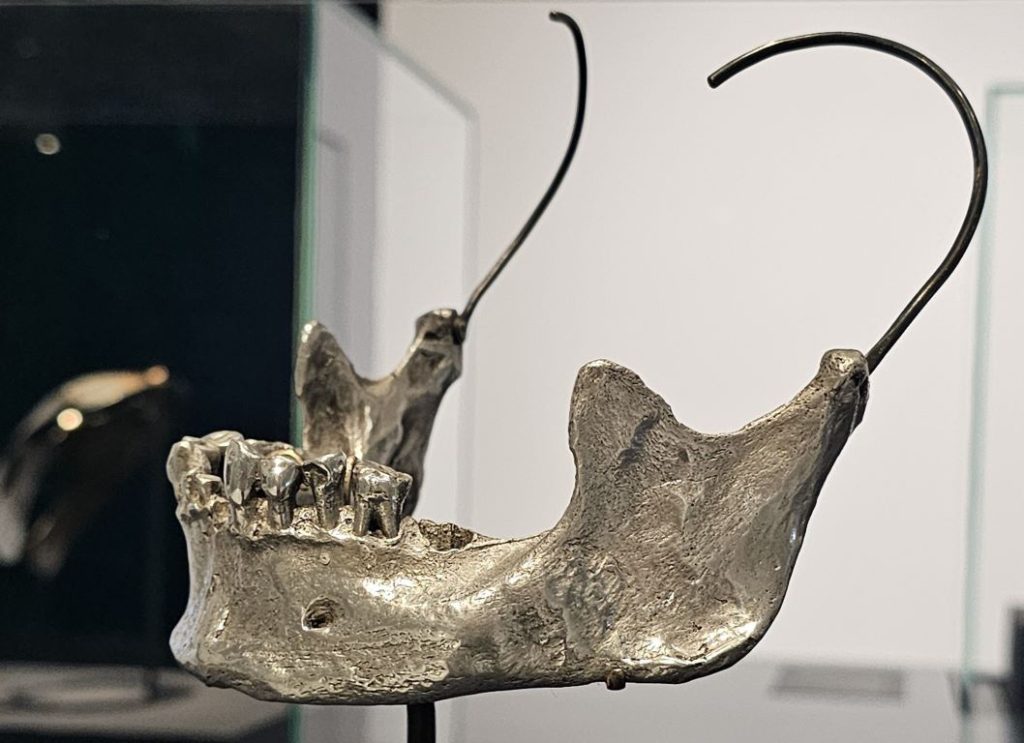
Jaw-Piece, 1998, Silver-plated aluminium Alexander McQueen
The way humans have embellished themselves throughout history and across geographies with the most fanciful decorations illuminates the infinite creativity and craftsmanship of people in all societies. In the introduction “The Adorned Body”, jewellery’s relationship with the human form is highlighted.
Related History of China in Silk and The Chris Hall Collection
Predating cave paintings by tens of thousands of years, jewellery is considered the oldest man-made art form. This art form is as intimate as fashion, as it is in direct contact with skin, flesh, bone and hair.
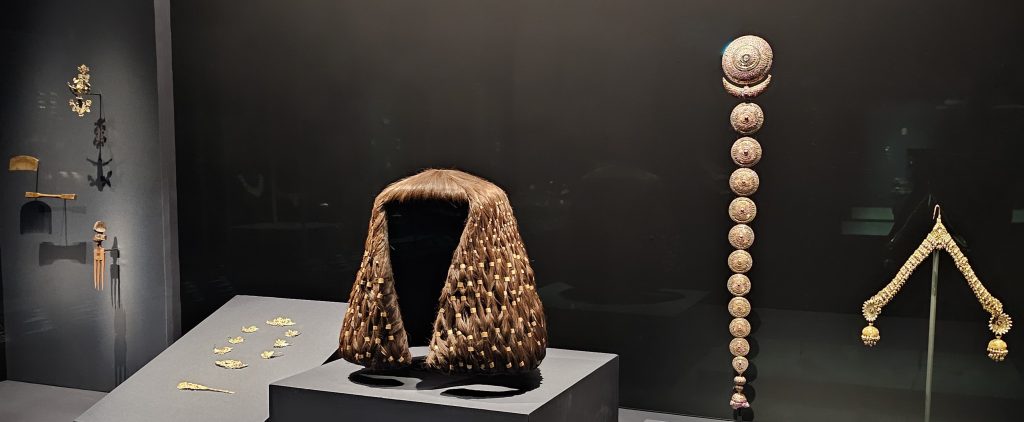
(Middle) Large and small wig rings of Sithathoryunet, on a modern wig, Middle Kingdom period, 12th Dynasty, reign of Senwosret II Amenemhat III, about 1887–1813 BCE, Gold, Egypt, (Right) Plait ornament (Jadanagam), 18th to 19th century, Gold with rock crystal, rubies, emeralds and amethyst inlays, Attributed to India, probably Madras, (Far Right) Head ornament, 19th century, Gold, glass, turquoises, Attributed to India, Kashmir, Punjab or Rajasthan
Hair ornaments extend the prominence of the head and face, and many fine examples of hair jewels are on display, such as the 1,251 exquisite gold rings that once adorned the ceremonial wig of Egyptian princess Sithathoryunet, daughter of the Pharaoh Senwosret II.
Related Ancient Chinese Gold symbol of power and wealth
A Head ornament made in the 19th century of gold, glass, and turquoises attests to the fashion of adorning hair with precious materials and gems in India, Kashmir, Punjab and Rajasthan.
Ancient civilisations used jewellery to capture, activate, and embody the divine
In the first section titled “The Divine Body: Gold Ornaments”, the exhibition explores how ancient civilisations utilised jewellery to capture, activate, and embody the divine.
Related Glistening Treasures in the Dust: Ancient Treasures of Afghanistan
From Egypt and the Americas to China, jewellery was an essential grave good. Material wealth enjoyed in life was equally desired for the afterlife, and therefore jewellery accompanied the owner into the grave. Indeed, many items on display were found with their wearers in lavishly laden tombs.
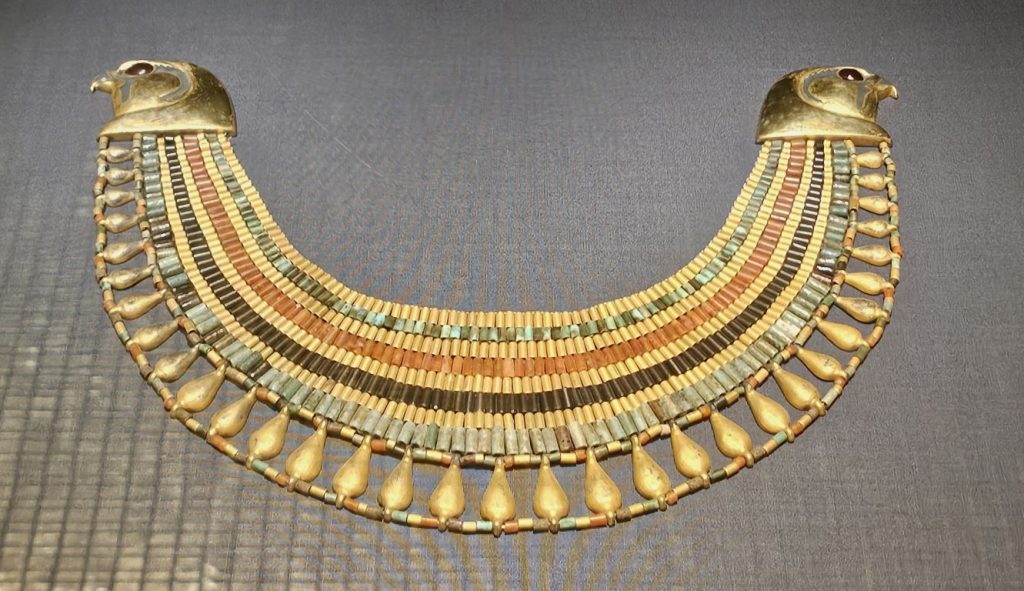
Broad collar of Senebtisi, Middle Kingdom period, late 12 to early 13th Dynasty, about 1850-1775 BCE, Faience, gold, carnelians, turquoises, Egypt
Many cultures shared the tradition of elaborate preparations for the afterlife. In both ancient Egypt and ancient China, death was viewed as an extension of life. Consequently, the life-long planning and accumulation of goods for death ensured that essential and prized possessions were readied to fill purpose-built tombs.
Related Majestic Han dynasty, China’s first Golden Age
Gold was cherished for its enduring, sacred qualities, as it did not degrade or tarnish. It was widely used to preserve and adorn the body. This precious metal conferred continued status and the hopes of divinity on the owner beyond death.
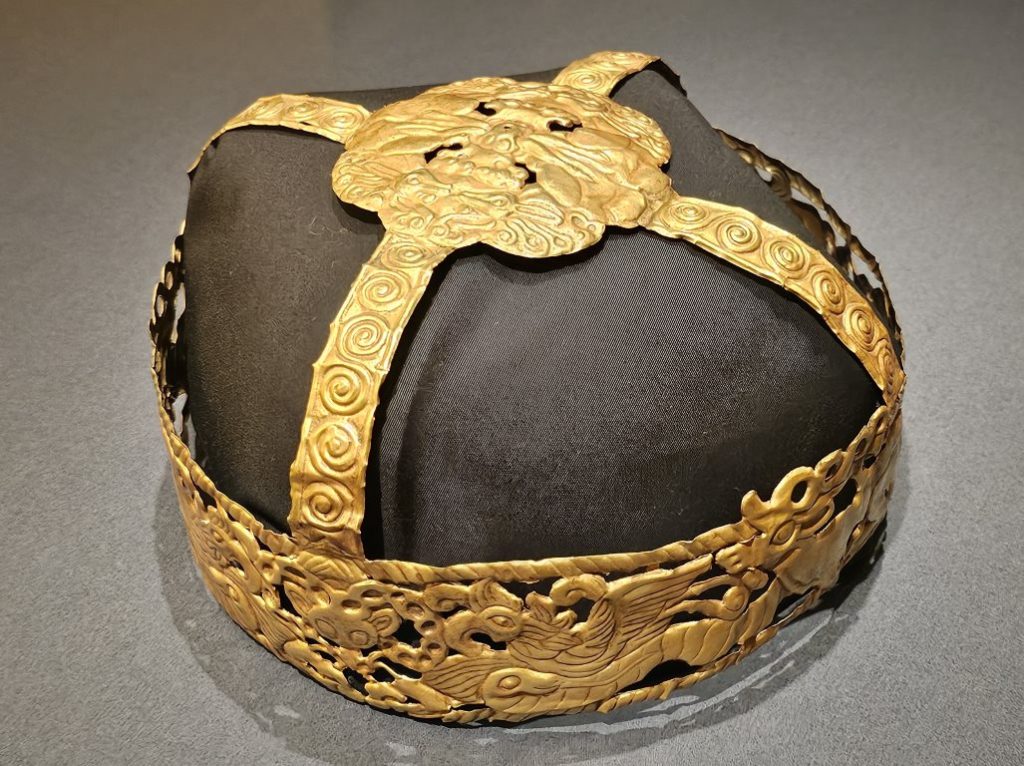
Headdress with animals, 4th to 3rd century BCE. Gold, Probably Eurasian Steppe
The high status accorded to those who possessed gold was also evident in the civilisations of South America. The material was believed to channel the sun’s divinity.
Related Fascinating world of Stonehenge
Headdress Ornament, from Colombia, would have given its wearers a commanding presence, transforming them into radiant figures of sacred power.
High status is accorded to those who possess gold
The artefact shows remarkable craftsmanship. A highly skilled goldsmith made this by hammering and cutting gold sheets to produce elaborate regalia for high-status individuals to wear in life and in death.
Related China history and the Sanxingdui artefacts discovered in Sichuan
The Headdress Ornament would have been affixed to the front of a turban-like textile or basketry headdress, with freely moving pendants swaying with the wearer’s movements.
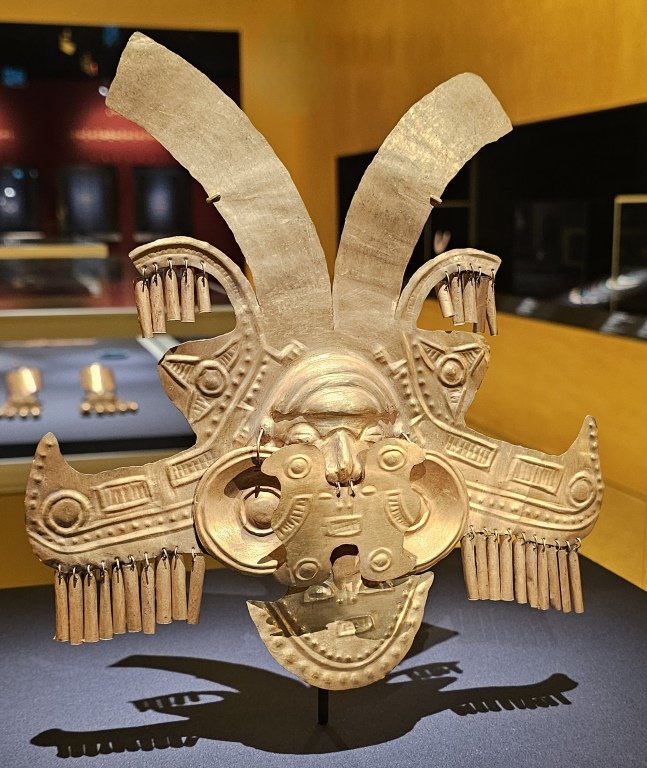
Headdress Ornament, Yotoco period, 1st to 7th century, Gold, Colombia, Calima
The second section titled “The Regal Body: Royal Jewellery” shows how a parure – elaborate matched sets, and ceremonial adornments associated with royalty and court life articulate rank, authority and status.
Related Stylish and luxurious legacy of Marie Antoinette
A spectacular Fifteen-piece parure in a leather case consists of a tiara, a necklace, two pairs of bracelets, a lorgnette (a type of spectacles on a handle once popular among women), and a pair of earrings.
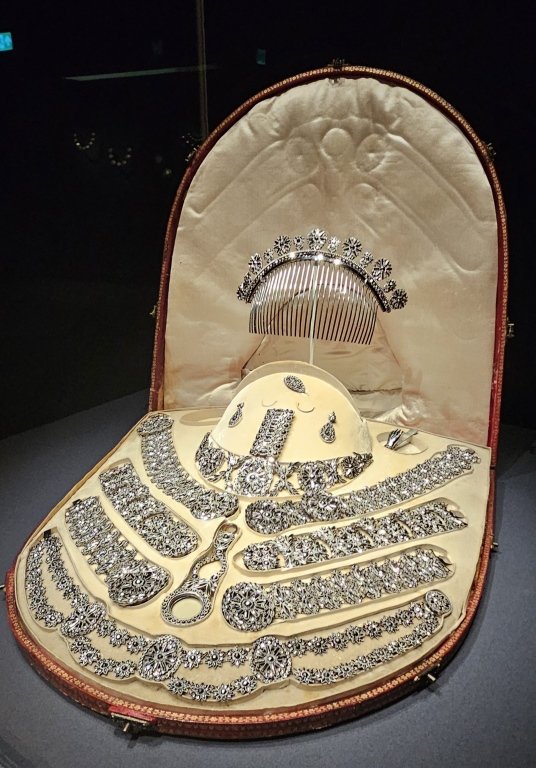
Fifteen-piece Parure in leather case, about 1810, Parure: cut steel, Case: red Moroccan leather, gilt stamped, France
The pieces are decorated with polished, multifaceted steel nails or studs that reflect light, mimicking the appearance of sparkling diamonds. In the 1800s, cut steel was novel and fashionable, but not necessarily a less expensive substitute for precious metals and gemstones in jewellery.
Related French jewellery design from 1770 to 1970
Regal and royal jewellery reinforces social hierarchy and a sovereign’s power. Whether gold or gemstones, the raw materials of courtly jewellery speak to the prerogatives of privilege.
Items such as the Tiara with oak leaves and acorns made it easy to recognise those with affluence and wealth. The tiara asserted rank, authority, and status. This regal ornament inspired emulation, and tiaras became a popular fashion, highly desired by those seeking jewellery, once the domain of an elite few.
Related Cartier and Women: stunning jewellery treasures
This tiara can be transformed into three brooches, each shaped as an English oak-leaf spray. In Britain, the English oak signified national strength and steadfast loyalty.
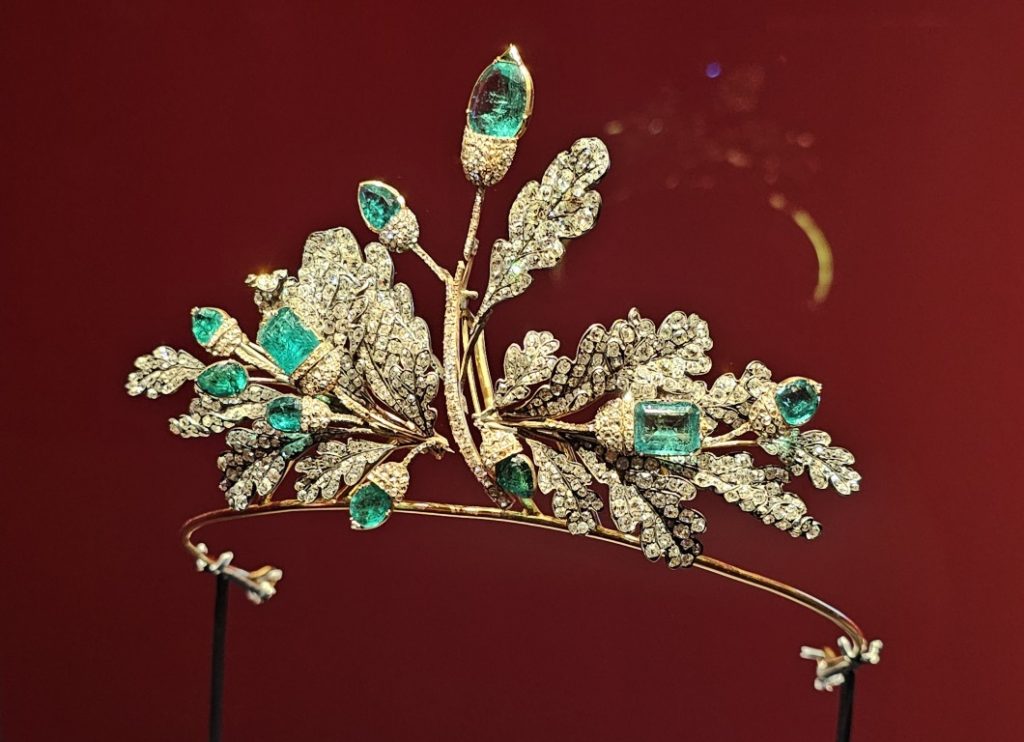
Tiara with oak leaves and acorns (transformable into three brooches), Circa 1840–1850, Emeralds, diamonds, gold, silver
Both sexes wore jewels, and throughout history, men have adorned their bodies as much as women. European portraits show men adorned with elaborate collars, glittering sword hilts and decorative armour. These ornaments provided the European gentry with fashionable adornments that heightened their virility and power.
Related Peeling off the beautiful layers of French Fashion and Jewellery
European Courtiers and gentlemen embraced the gorgets, a form of neck guard that served as a decorative necklace. An intricately patterned and imposing French Gorget, made around 1600, would have given the wearer prominence and stature.
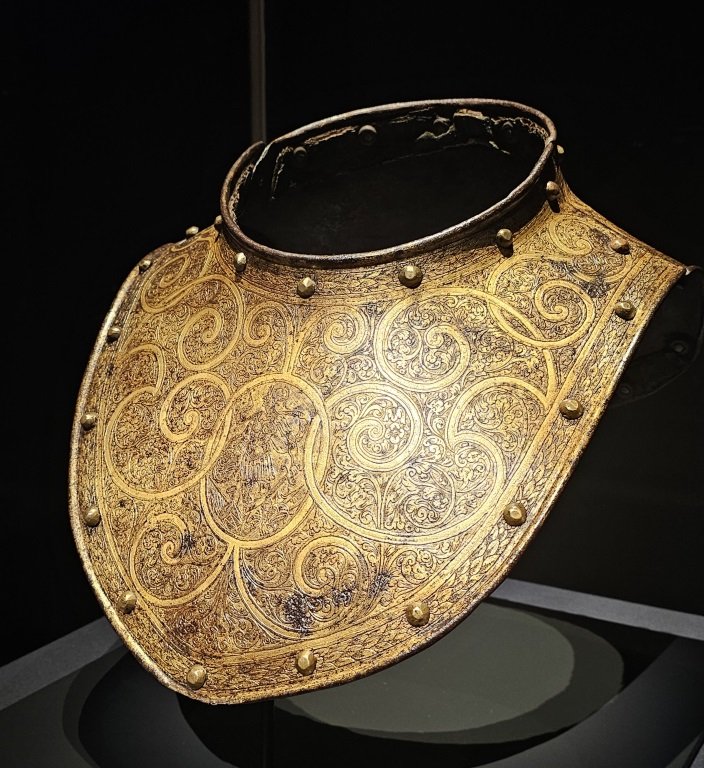
Gorget, about 1600, Steel, gold, France
A display of the golden ornaments from the Moche civilisation in Peru shows remarkable skill, decoration and craftsmanship. A bead with the fearsome face of a supernatural being was made from a hammered gold sheet. The raised image was made by working the gold sheet from the back, using a technique known as repoussé.
Related Treasures from the Forbidden City and Palace of Versailles
High-ranking individuals were distinguished by their display of golden jewellery, worn to signify their earthly authority. The Moche believed these treasures were the possession of a single soul, and did not bequeath heirlooms to descendants. Royalty were buried with the gold and silver ornaments they owned in life, taking with them the power they imbued them with to the afterlife.
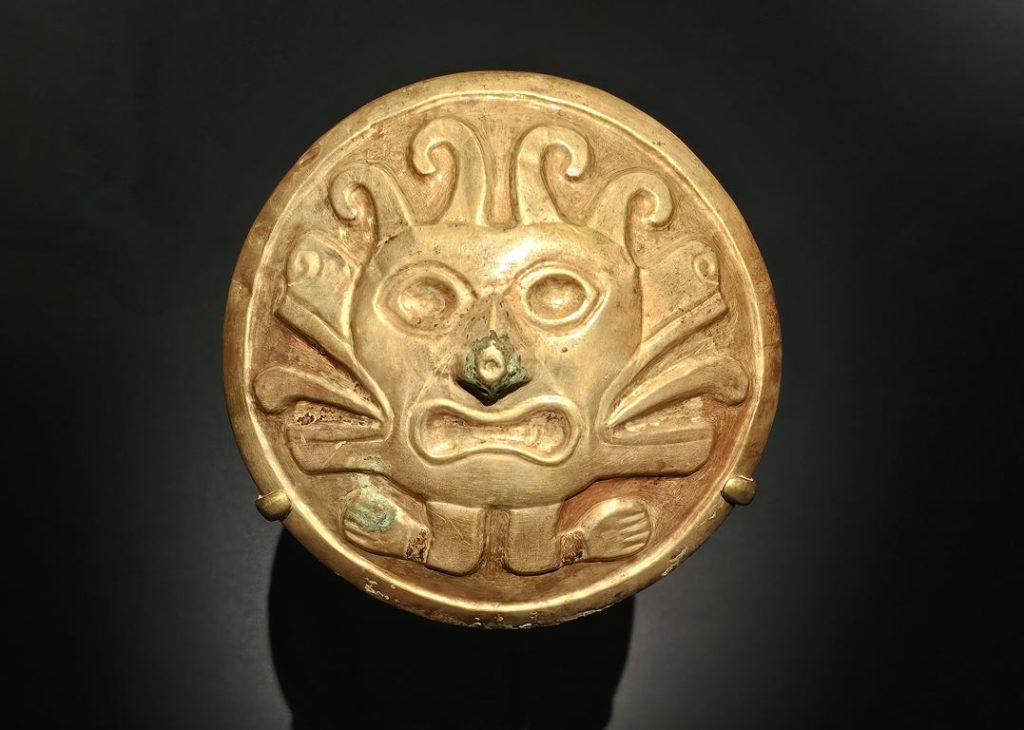
Bead, 3rd to 6th century, Gold, Peru, Moche
In “The Transcendent Body: Jewellery and Beliefs” section of the exhibition, jewellery illustrates how precious objects were produced to serve as a bridge between the human and the divine.
Related Neolithic Clues to the Origins of Chinese Civilisation
A highlight is a set of Nepalese ear ornaments for a deity. The elaborate earrings were created to adorn statues of Buddhist deities who are perpetually depicted wearing lavish jewellery.
Precious objects were produced to bridge the human and the divine
From the bustling workshops of the Kathmandu Valley, goldsmiths reached a pinnacle of craftsmanship, reflecting the region’s artistic and religious vitality. The characteristic Himalayan aesthetic was defined by the bold use of colour, primarily achieved through the embedding of turquoise, valued for its celestial link, and deep red coral believed to symbolise life force.
Related Lumbini Nepal, birthplace of Buddha, a World UNESCO Heritage Site
Jewellery’s power to facilitate transcendent communication, whether by conjuring spirits, appeasing gods, or seeking divine protection, was sought and cultivated throughout the world. In Africa, this basic desire was captured in their art and ornaments.
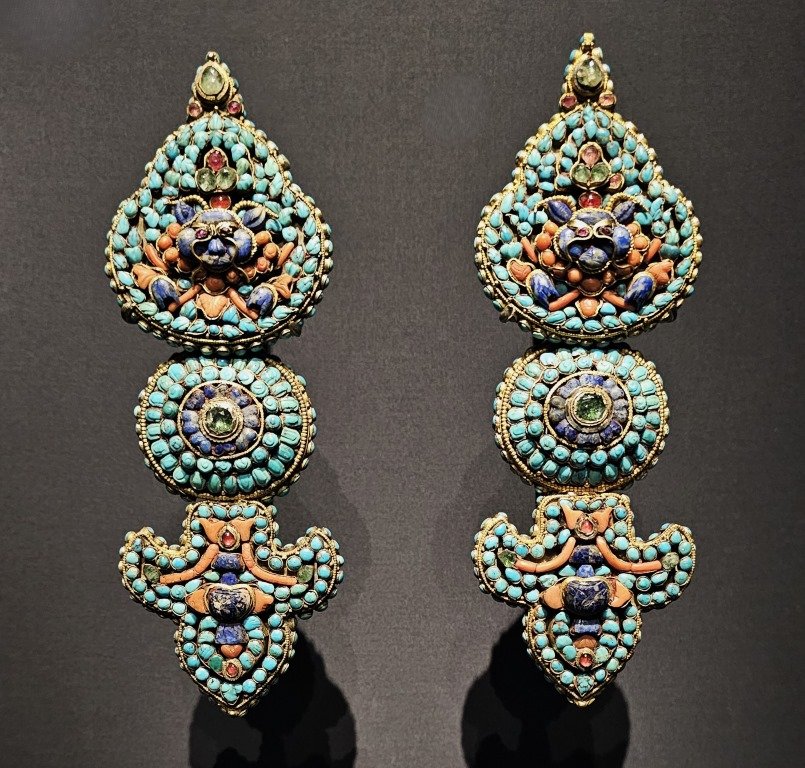
Ear ornaments for a deity, Nepal, 17th to 19th century, Gold, coral, shell, turquoise
The Baule men and women of Côte d’Ivoire used jewellery to foster a relationship with the ancestral realm through specially made sculptures. These were made to house a spirit spouse, a supernatural entity, to facilitate divine communication.
Related Donatello: One of the greatest Renaissance sculptors
Adornments, along with clothing and hairstyling tools, contributed to the sense that the statue’s spouse hosts a sentient being. Beads from the European trade provided precious and entrancing colours to enhance the ideal of beauty embodied by the sculptures.
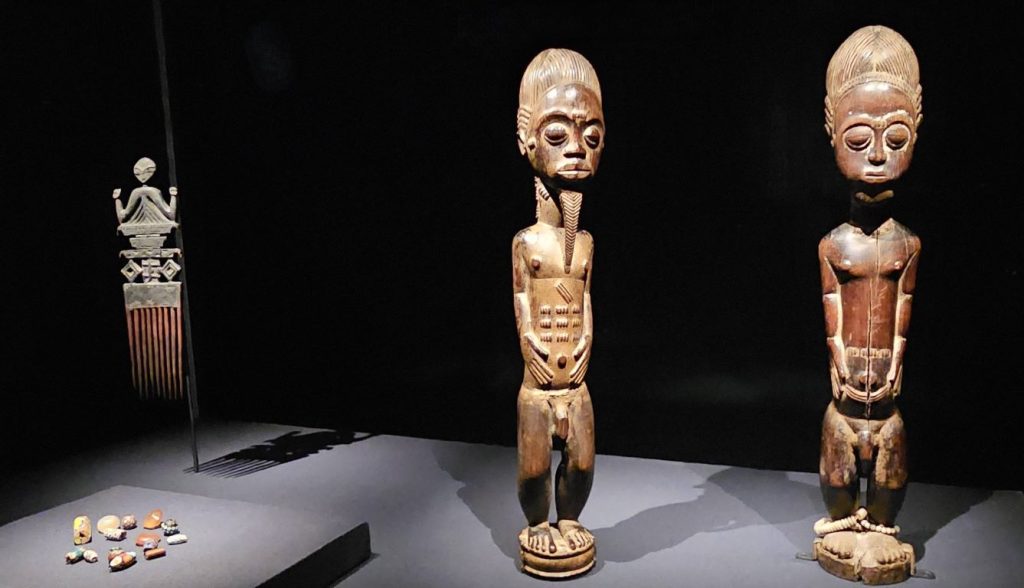
(Top Left) Duafe (comb), Ghana, Akan peoples, 19th to mid-20th century, Wood, (Bottom Left) Beads, For the Afro-Eurasian trade,16th to 19th century, Glass, stone, (Right) Male figure, Central Côte d’Ivoire, Baule peoples, 19th to mid-20th century, Wood, (Far Right) Male figure, Central Côte d’Ivoire, Baule Peoples, 19th to mid-20th century, Wood, glass beads, plant fibre
Some ornaments had multiple uses and significance. Ankle bells from Côte d’Ivoire were worn as traditional musical instruments for dances and were also indicators of social status and wealth. The number of bells signified social rank, with the elite wearing more.
Related Tropical Modernism Architecture of post-colonial West Africa
For some, Ankle bells also served as amulets for protection or as an item for healers to use to create rhythmic sounds during rituals. They functioned as enhancements in both the earthly and the spiritual realms.
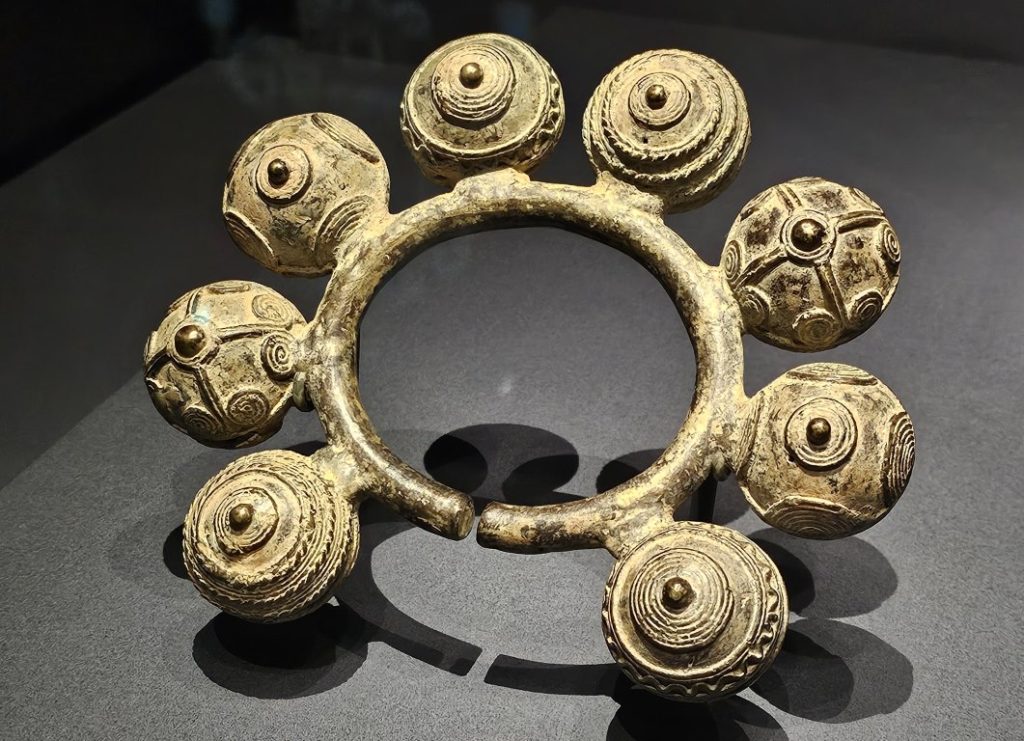
Ankle bells, early 19th century, Metal, Côte d’Ivoire, Dan peoples
A late 19th-century marriage necklace depicts Lord Shiva and Goddess Parvati, symbols of divine union. The four fingers of the central pendant represent the four Vedas, the sacred foundational scriptures of Hinduism.
Related Bold colours and in magical, magnificent Rajasthan
This elaborate Thali was made for a bride of the Chettiar community, a Hindu mercantile and banking caste of Southern India. The groom’s family presented it during the wedding ceremonies. The necklace would protect the bride and serve as a symbol of the groom’s commitment to the family.
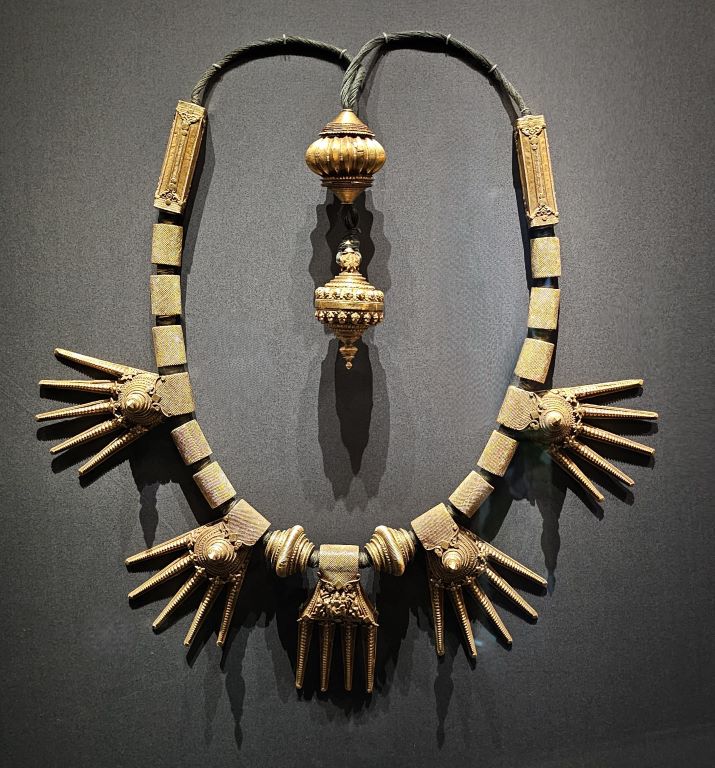
Thali (marriage necklace), late 19th century, Gold, black thread, India
The complex role of jewellery as an art, craft and creative statement is examined in the section “The Alluring Body: Jewellery as Art”. The pieces on display are one-of-a-kind works of mystique, sensuality and drama. Amongst this collection is the amazingly abstract and modern work of art, the Head Ornament, produced in 1937 by Elsa Schiaparelli.
Related Vasily Kandinsky’s important work, which is an icon of modern art
Celebrated for her original design aesthetic that embraces humour and surprise, Schiaparelli was deeply influenced by Surrealism. The movement sought to unleash the subconscious’s unbridled imagination. She translated those ideas into this bold, theatrical Head Ornament, which remained mysterious for decades until its original, intended use was confirmed.
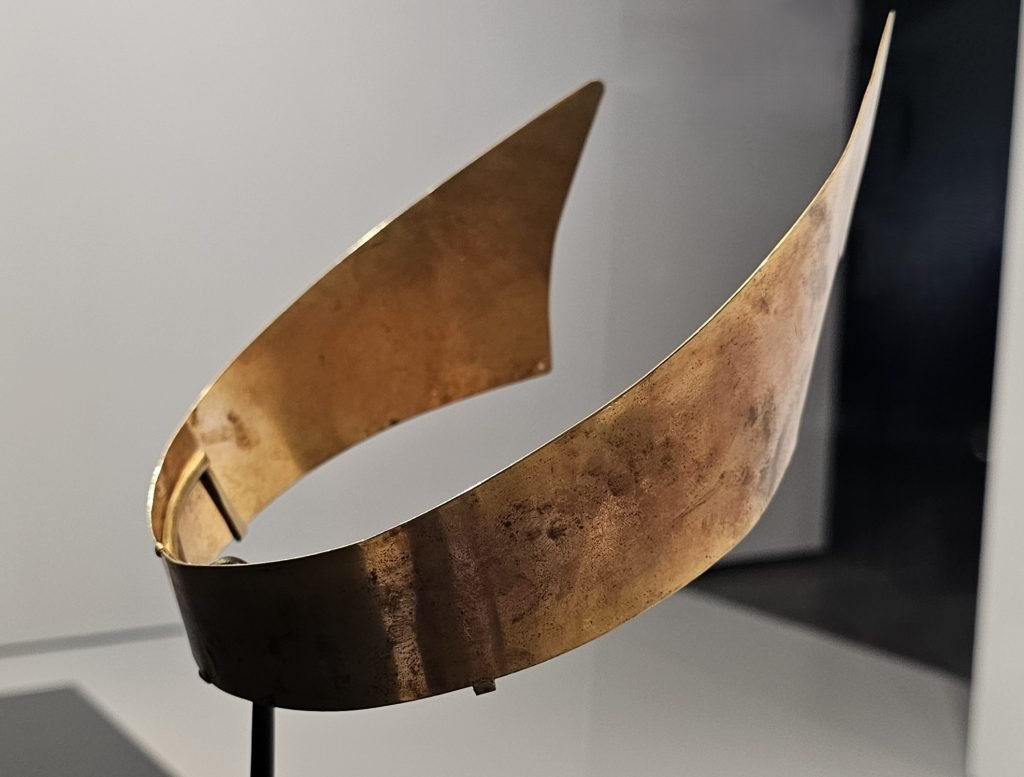
Head ornament, about 1937, Metal, Elsa Schiaparelli
Surrealism, African sculpture, and tribal jewellery also inspired Arthur “Art” Smith. He was also influenced by the experimental spirit of jazz and the sculptures of Alexander Calder. He rose to prominence in the mid-20th century for avant-garde designs that pushed the limits of modernism.
Related Surrealism beyond Mythologies
Smith’s Necklace, made of copper, is highly sculptural in design. Wholly unique, the necklace is stunning on its own, yet on a model, it would create an interplay between the jewellery and the wearer, transforming the two into a stunningly artistic whole.
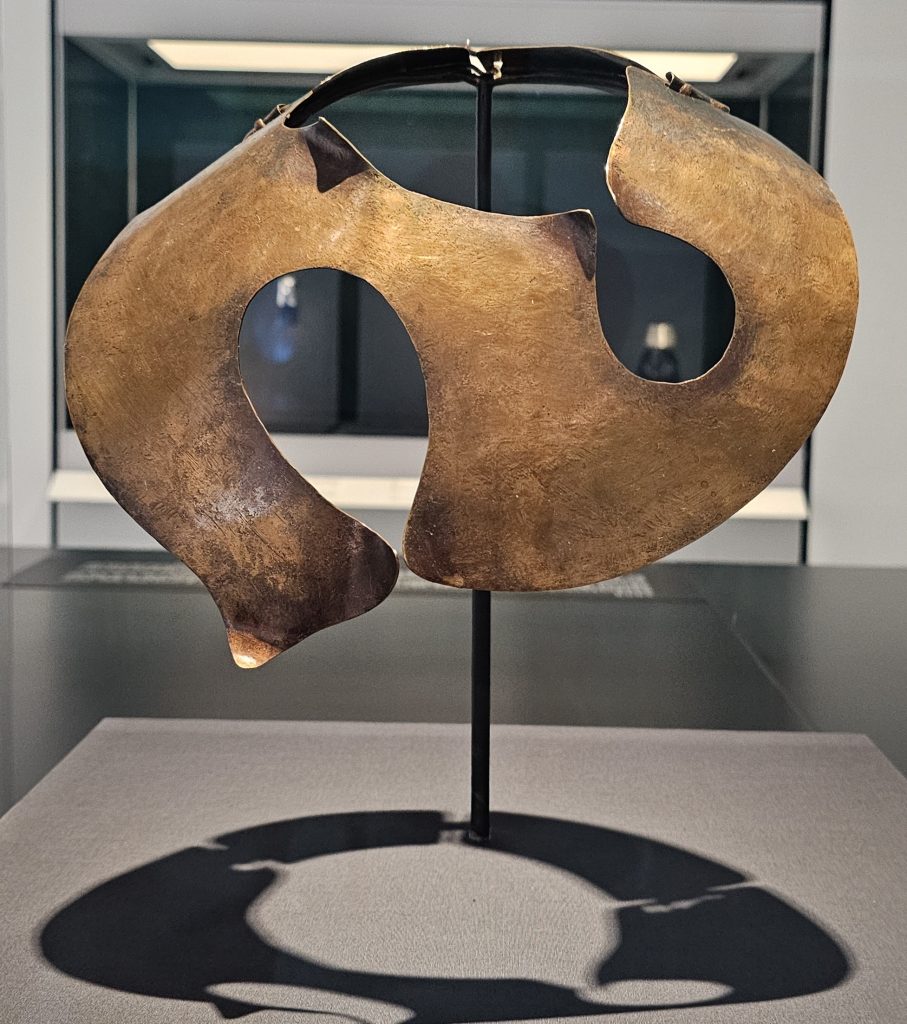
Necklace, 1949, Copper, Arthur “Art” Smith
A gold, enamel, and moonstone brooch, conceived at the beginning of the 20th century by Ferdinand Hauser, shows an originality that challenged conventional design. These jewels have the characteristics of Art Nouveau, with its curves and naturalistic motifs.
Related M+ Sigg Collection: contemporary Chinese art 1970 to 2012
The use of enamel and moonstones in its manufacture is in keeping with the Art Nouveau jewellery tradition. The precise, handmade craftsmanship of this piece is remarkable and exceptional in its execution.
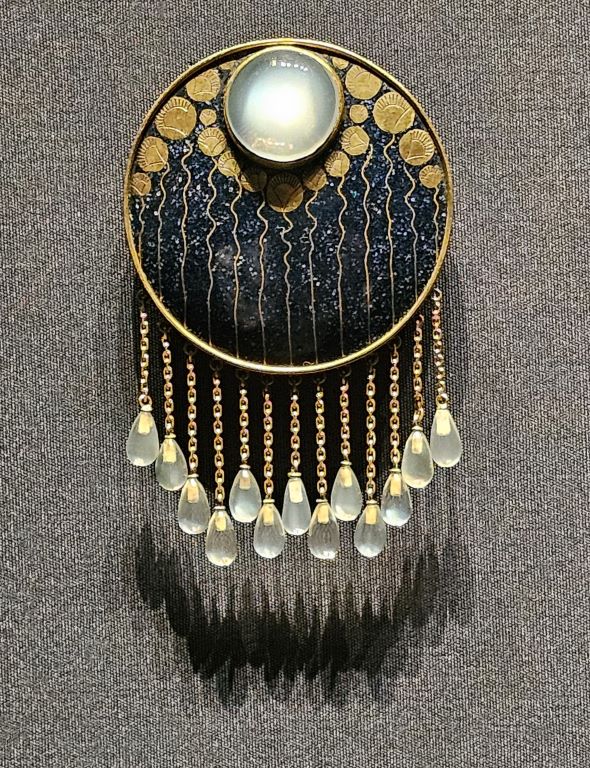
Brooch, about 1912-1913, Gold, enamel, moonstones, Ferdinand Hauser
A Chatelaine produced in 1887 shows that not all jewellery had to be purely decorative. The Chatelaine, made of silver, red glass, and black beads, was attached to a belt or sash worn at the waist and served as a functional decorative accessory.
Related Zhao Hai Tien’s colourful abstract art beyond simple expression
The hanging chains were meant to hold useful household tools, like keys. This fashionable ornament dates to the Middle Ages, and was popularised in the Victorian era. It was worn by women in positions of power in a household to establish status and authority. The design of this one, with the octopus motif, seems fitting for a wearer who would have had responsibilities across multiple areas.
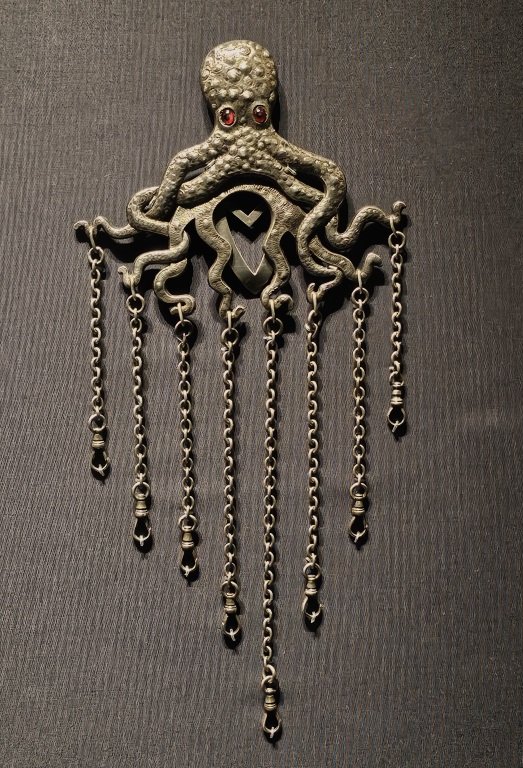
Chatelaine, 1887, Silver, red glass, black beads, Gorham Manufacturing Company (American, founded 1831), United States
The final section of the exhibition follows the evolution of jewellery-making materials and techniques. The spectacle of jewellery, the value of the materials, the quality of the design, and the virtuosity of the craftsmanship had the potential to surprise. Some adornments were worn to be seen, to stand out, and to be noticed.
Related Takashi Murakami’s pioneering art icons with massive social appeal
A Woman’s dress and accessories, made by Jodi Archambault, powerfully demonstrate how materials can be designed and assembled to create a signature piece that is both awe-inspiring and majestic. Featuring approximately fifteen pounds of glass and metal beads, cotton, silk, horsehair, bells, porcupine quills, and coins, the dress was meant to be worn in powwow dance competitions.
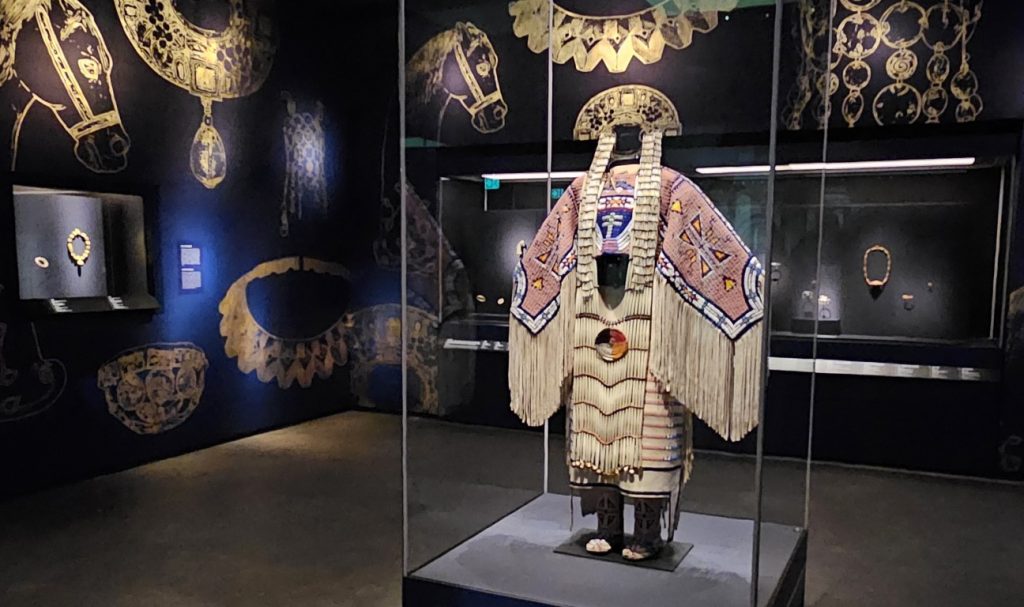
Woman’s dress and accessories, 2005, Leather, glass and metal beads, cotton, silk, dentalium shell, metal cones, horsehair, plastic, brass bells, porcupine quills, coins, Jodi Archambault
The outfit comes to life amid songs, voices, drumming, and the gathering of family and community during the Northern Traditional Dance celebrations that affirm Native sovereignty and identity through creative expression.
Related Each/Other, focus on Native American art
An Evening ensemble by Giorgio di Sant’Angelo blurs the line between jewellery and garments. Yet like the Native American Woman’s dress, it was meant to dazzle once worn. The wearer’s movement would enhance the ensemble’s kinetic effect and accentuate the drama of the materials.
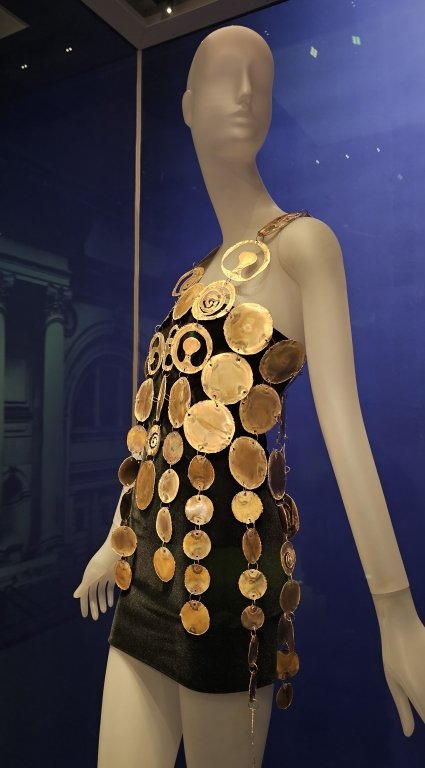
Evening ensemble, Metal, synthetic fibre, Giorgio di Sant’Angelo
Constructed from a stretchy synthetic fabric adorned with dangling metal discs, some bearing the designer’s initials, the Evening ensemble is a modern work of art. It is also classical in its reference to the glamour of the Egyptians’ spectacular, overly exuberant gold adornments.
Related Ancient Egypt art and eye-opening treasures
The embellishment and use of clothing to enhance its owner’s prestige are prominent in all societies. A pair of Slippers from present-day Uzbekistan shows an artistry and a mastery of workmanship that combines materials with precious gems and stones.
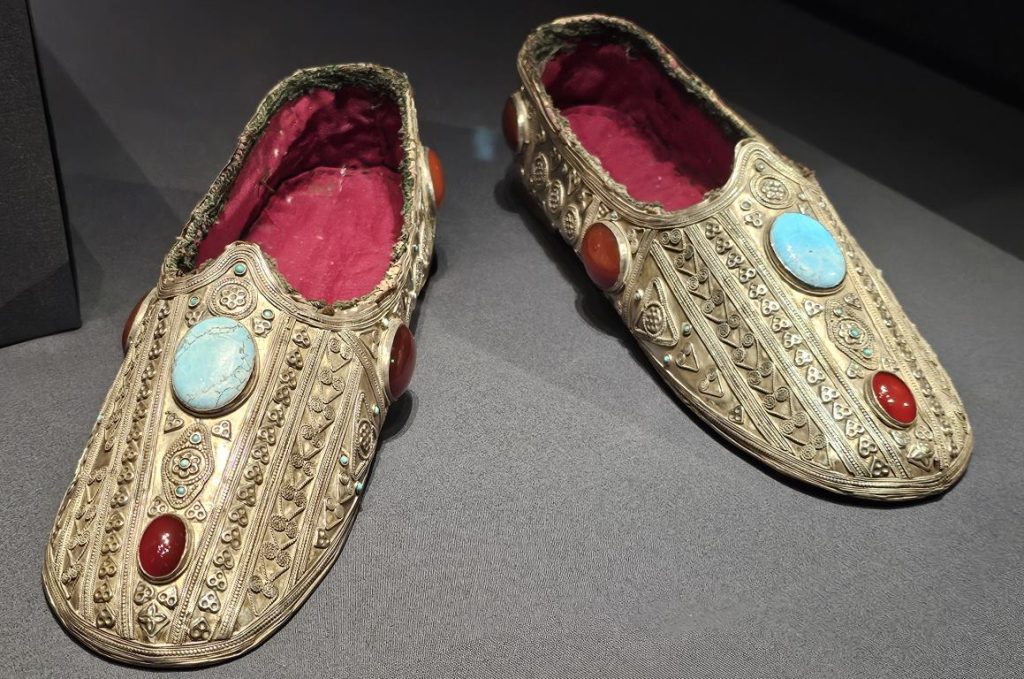
Slippers, attributed to present-day Uzbekistan, possibly Karakalpak, late 19th to 20th century, Silver, turquoises, carnelians, red cotton fabric
Gold, precious metals and gems have been valued throughout history. Each culture attributes values to items of worth in its own way. The exhibition provides a historical and global narrative, with many fine examples and artefacts that show how adornments and jewellery have attained the importance and prominence they have in our modern world.
Related Fabergé exclusive Imperial Easter Eggs made for Rich people
Throughout history and across cultures, jewellery has served to extend and amplify the human body, accentuating, enhancing, distorting, and transforming it. Traversing time and place, Treasures of Global Jewellery from The Metropolitan Museum of Art: The Body Transformed explores what jewellery is, why we wear it, and, in the process, a fundamental aspect of what it is to be human.
Text and photos Cammy Yiu