
Chris Hall Collection, sensational and luxurious silks from antiquity

A History of China in Silk: The Chris Hall Collection
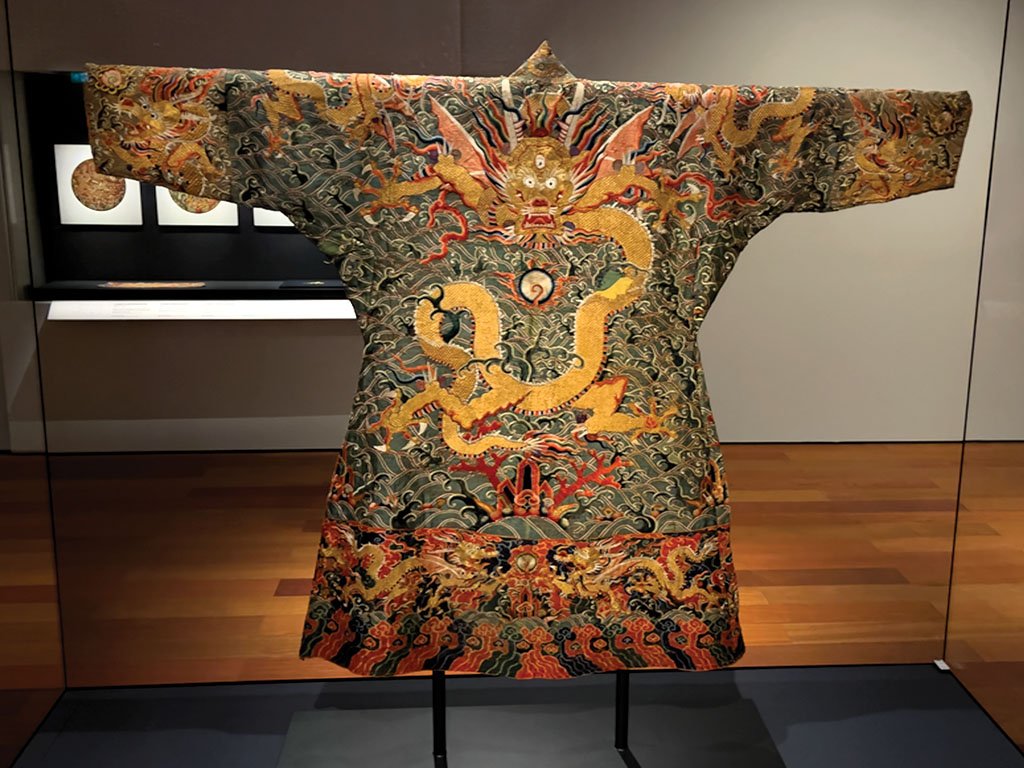
Robe with three-eyed winged dragons, Ming dynasty, Wanli period (1573-1620), Embroidery, polychrome and metallic-wrapped silk threads on silk gauze
Chris Hall Collection
The Chris Hall collection begins with art and its enduring role in recording a society’s history. Sculptures immortalise faces, ceramics speak of purpose and beauty, jewellery displays wealth, and paintings capture stories.
Related Tang dynasty golden age artistic highlights
What unifies them all is durability; their continued existence documents the past. Intuitively, one might think textiles would be the least likely art form to fulfil this purpose.
Yet, they do. There are textiles in the Chris Hall Collection that date back almost 2,300 years.
Related Movement of objects and ideas via the Silk Road
A History of China in Silk: The Chris Hall Collection, on display at the Hong Kong Palace Museum, is only possible because almost 50 years ago, Chris recognised an opportunity.
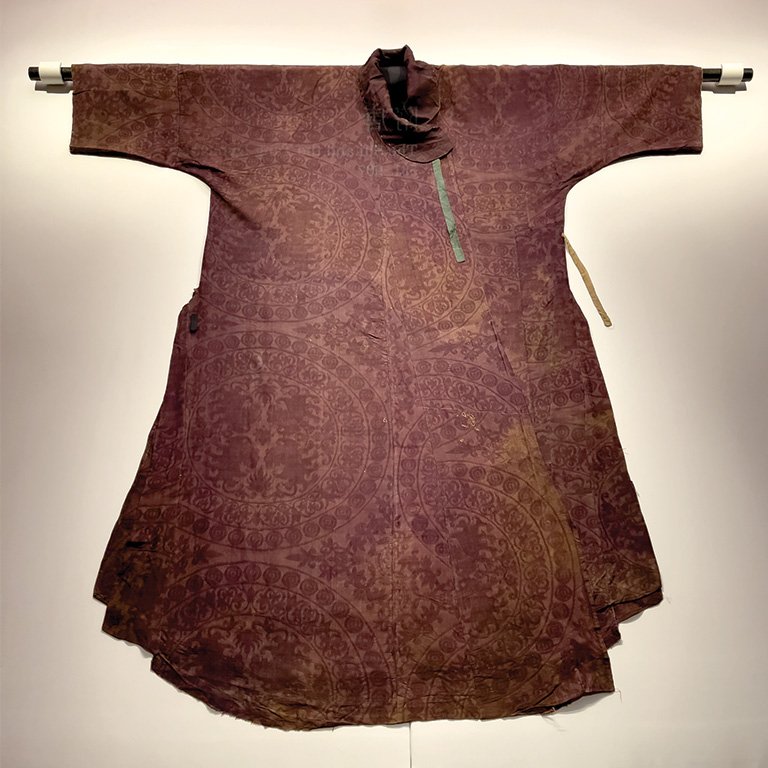
Robe with pairs of facing lions in pearl roundels, Tang dynasty (7th-8th century) Twill damask, silk threads
This epiphany happened in 1978 after noticing Chinese robes on display at the Mandarin Oriental Hotel.
Related British Museum Silk Roads movement of people and ideas that changed the world
Chris Hall realised that while Japanese kimonos were valued and collected, the same could not be said for Chinese versions.
Related Japanese Kimono influenced fashion, art and design
Developing his nascent antique silk collection and learning what to value along the way, Chris Hall became a leading expert.
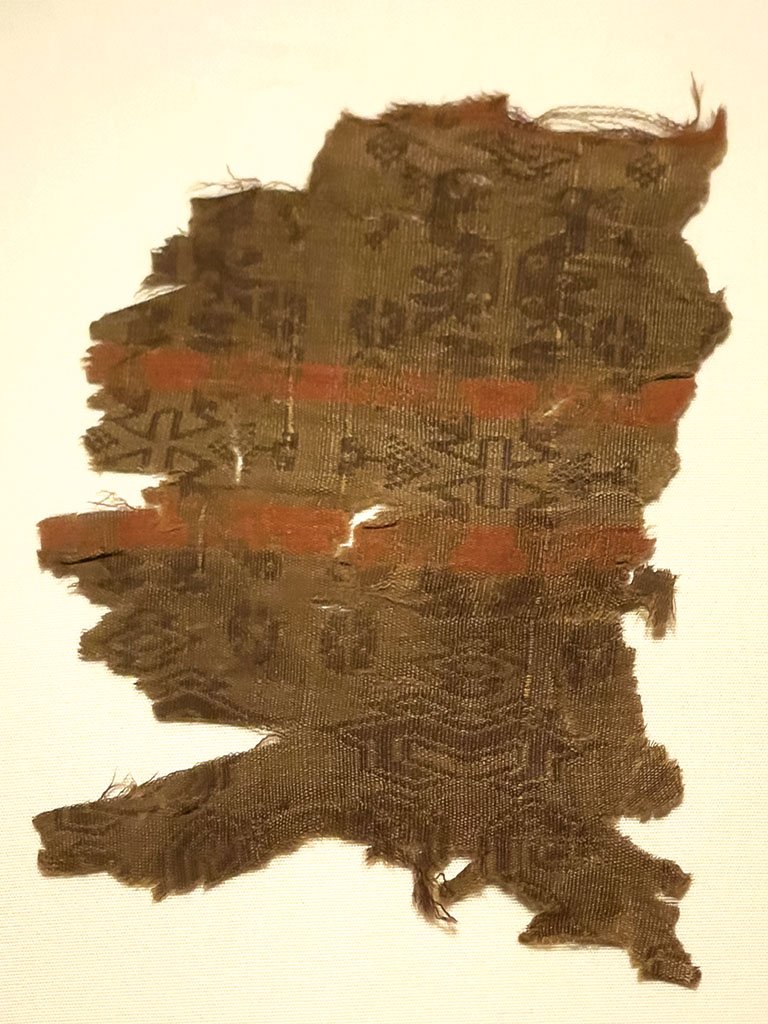
Piece with facing dragons and phoenixes, and geometric decorations, Warring States period (4th century BCE), Warp-faced compound tabby, polychrome silk threads
His criteria for collecting are rarity, beauty, condition, and age. With his early start and earned expertise, he has amassed a collection of over 3,000 Chinese textiles, which ranks among the most comprehensive in the world.
Related Ancient dynasty currency and gold-like coveted Chinese Silk
The oldest artefact in this exhibition is a Piece with facing dragons and phoenixes, and geometric decorations, dating back to the Eastern Zhou dynasty, Warring States period, about the fourth century BCE.
A History of China in Silk
During the press tour for the exhibition, Chris stated, “Fortunately, just because the textile is old, that doesn’t mean to say that it has to look old.”

Detail of Robe with three-eyed winged dragons, Ming dynasty, Wanli period (1573-1620), Embroidery, polychrome and metallic-wrapped silk threads on silk gauze
Factors that help textiles survive the test of time include low humidity, remaining above ground (i.e., not in a tomb), the quality of the silk, and the quality of the stitching, weave, or embroidery.
Related Maritime Silk Road daring time for world myths
Many Chinese textiles survived because they ended up in the high and dry altitudes of Tibet.

Chris Hall with Coat with ox-horn dragons, Ming dynasty (15th to 16th century) Embroidery, polychrome silk threads on silk gauze
Like the Ming dynasty Coat with ox-horn dragons, which Chris figures is probably the oldest Chinese dragon robe to have survived above ground.
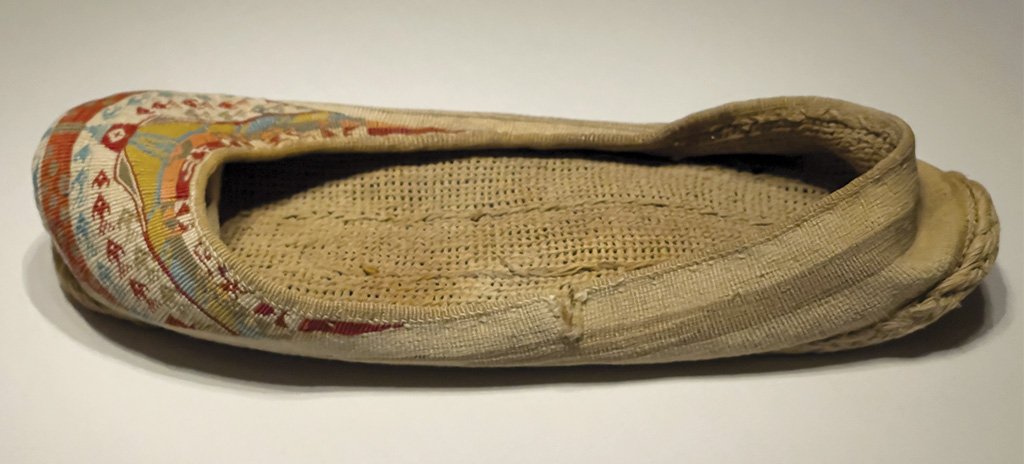
Shoe with fish and coloured stripes, Three Kingdoms period to Jin dynasty (220-420 CE), Weaving, polychrome silk and hemp threads
Likewise, the Shoe with fish and coloured stripes from the Wei period of the Three Kingdoms to the Jin dynasty (220-420) and the Boot with flowers and lozenges from the Northern dynasties (5th to 6th century), both of which, by appearance, defy the passage of time.
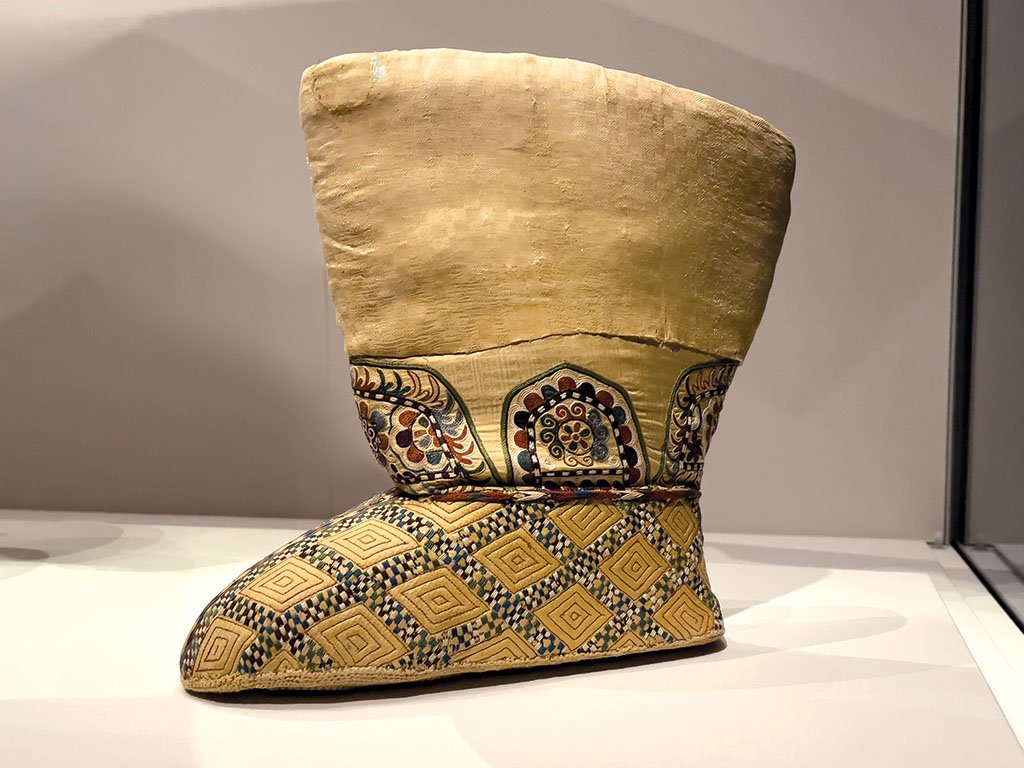
Boot with flowers and lozenges, Northern dynasties, (5th to 6th century), Embroidery, polychrome silk threads on silk tabby and damask; hemp threads
Like porcelain production, which for a time was known as china, silk production also defines the country.
Silk began in China
Archaeological evidence suggests that silk production began in China during the Neolithic Age (approximately 3600 BCE).
Related Neolithic Clues to the Origins of Chinese Civilisation
Imperial China held a military-enforced monopoly on its production until 552 CE, when two Nestorian monks stole the secrets for the Roman Emperor Justinian I.
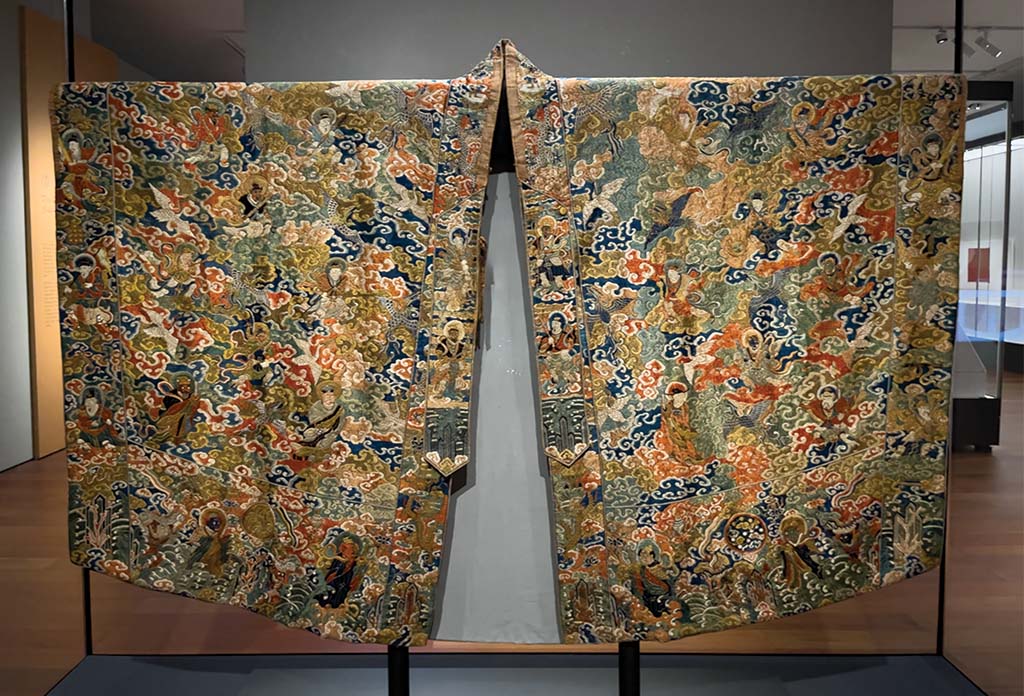
Daoist ritual robe with Three Officials, Ming dynasty, probably Jiajing period (1522-1566), Embroidery, polychrome and metallic-wrapped silk threads on silk tabby
The trade of silk with the outside world began during the Han dynasty (206 BCE-220 CE). In 130 BCE, Emperor Wu sent his ambassador to Central Asia, marking the beginning of the Silk Road network.
Related Chinese Silk from the Qing dynasty, stunning embroidery
Silk was so closely associated with China that the ancient Greeks referred to China as Serica, meaning the land of silk.
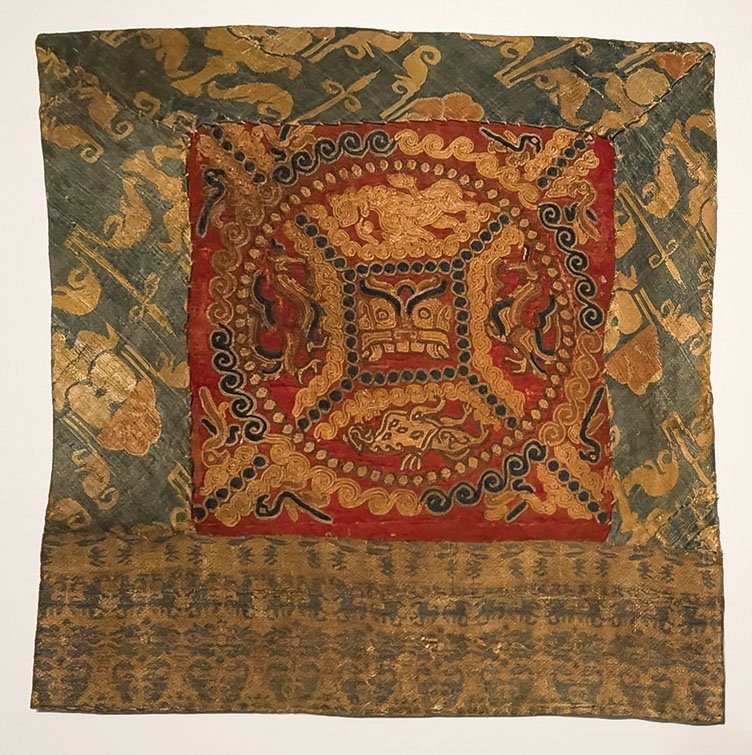
Pillow end with animal mask in pearl roundel, Three Kingdoms period to Jin dynasty (220-420 CE), Embroidery, polychrome silk threads on silk damask; weft-faced compound tabby (taqueté), polychrome silk threads; warp-faced compound tabby, polychrome silk threads
The value of silk was at its peak between 50 BCE and 250 CE. The stable governments provided by the Han dynasty and the Roman Empire, led by Augustus Caesar, allowed for free commerce.
Related Hong Kong Maritime Crossroads: A Millennium of Global Trade
At times, silk’s value was often equated with gold. Silk functioned as a form of currency during the Han dynasty, with farmers paying taxes in the form of silk bolts and officials receiving silk as rewards.
Related Tale of 3 cities: Maritime Silk Trade in Guangdong – Hong Kong – Macau
Even into the Yuan dynasty (1271-1368), silk continued to serve as a store of value.
Related Ancient dynasty currency and gold-like coveted Chinese Silk
In 1328, the Chinese government collected 655 tons of silk in taxes. Silk robes cost significantly more than porcelain.
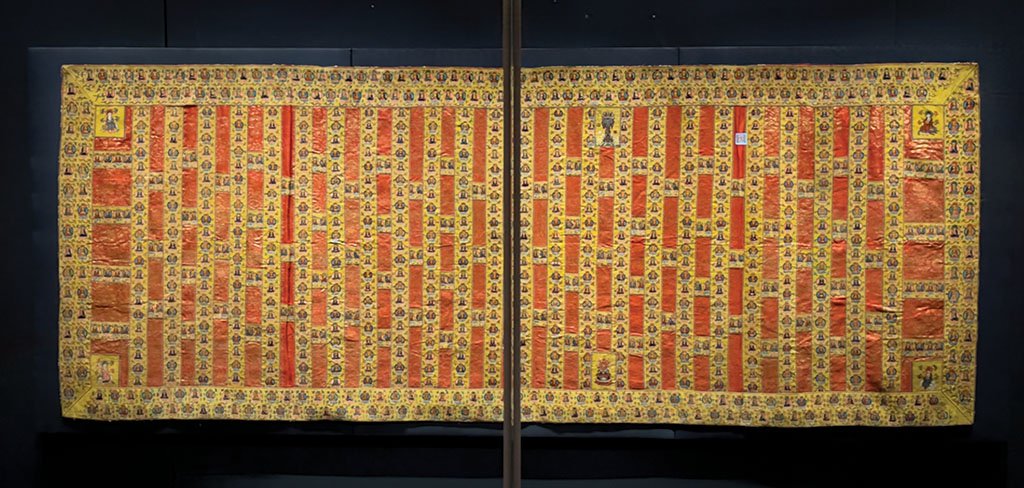
Buddhist ritual robe with myriad Buddhas, Ming dynasty, Wanli period (1594-1614), Embroidery, polychrome silk threads on silk gauze
For example, in the late Qing dynasty, an imperial porcelain vase cost 30 to 40 taels (approximately HK$4,000 to HK$5,000 today), whereas an imperial dragon robe would cost ten times as much.
Related Chinese Silk from the Qing dynasty, stunning embroidery
From the Han to the Qing dynasties, Chinese emperors used silk clothing as a symbol of their status and authority; these garments were highly regulated and deeply symbolic, evolving over successive dynasties.
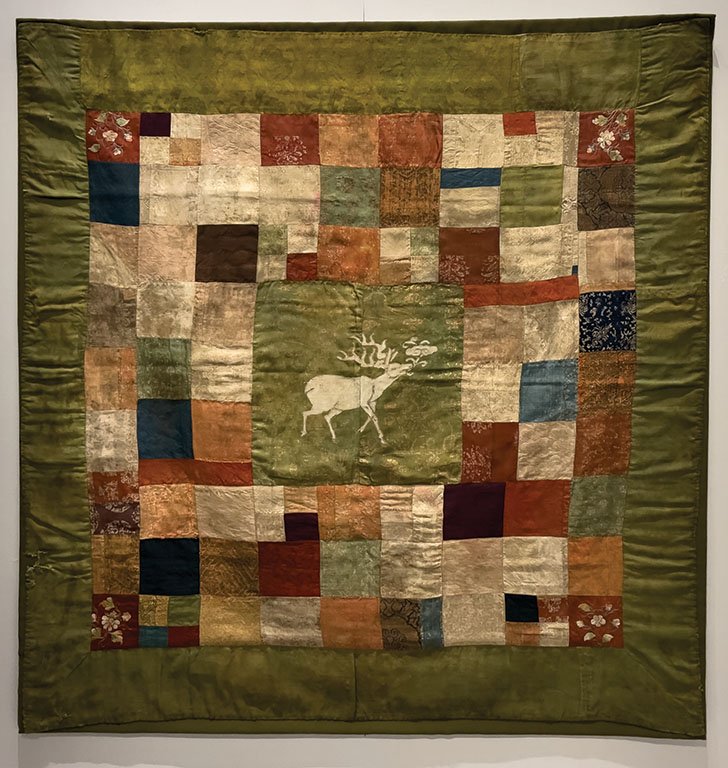
Patchwork badge with deer and pine, Yuan dynasty (13th century), Twill damask, gold threads, silk tabby, and embroidery, polychrome silk threads on silk satin
Carefully selected colours – primarily yellow for the emperor – along with emblems such as dragons, phoenixes, and the Twelve Symbols of Imperial Authority, conveyed cosmic importance and royal legitimacy.
Related Ancient Chinese Gold symbol of power and wealth
Strict regulation of silk garment colours and symbols maintained a clear hierarchy, visually reinforcing the ruler’s unique position within the empire and the universe.
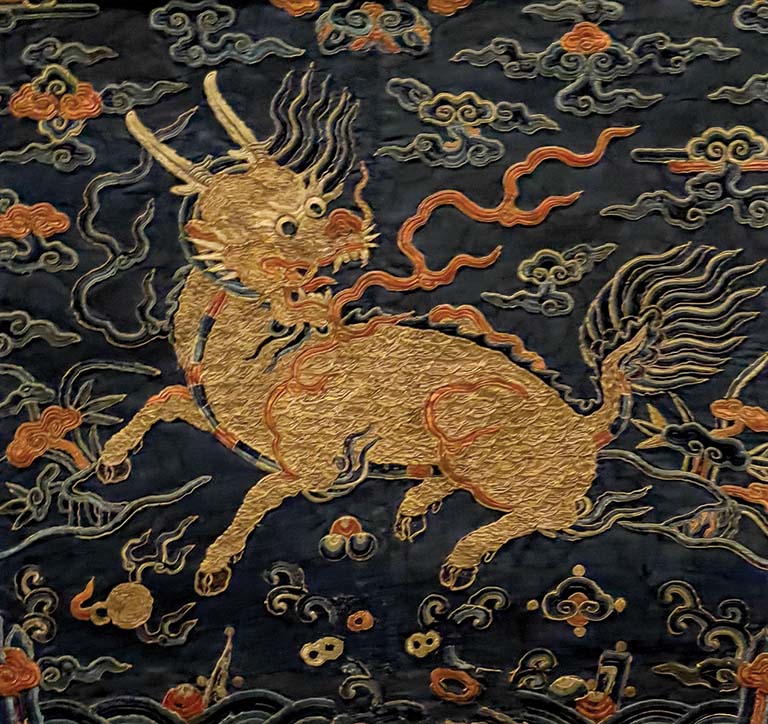
First-rank military official badge with qilin, Qing dynasty, Kangxi period (1662-1722), Embroidery, polychrome and metallic-wrapped silk threads on silk gauze
The wearing of silk garments reflected political and societal changes. The Ming dynasty regulated clothing according to social hierarchy, while Qing rulers enforced Manchu dress codes that distinguished their regime from earlier Han Chinese dynasties.
Related Imperial portraits of the luxurious life of Qing Emperors and Empresses
Religious beliefs influenced textile decoration. Daoist emperors favoured religious motifs on court garments, while Buddhist imagery appeared during periods of imperial devotion.
Silk wealth and status
Robes conveyed rank, asserted legitimacy. Silk signalled not only wealth, but also one’s social position, and wearing colours or patterns beyond one’s rank could result in severe punishment.
Related Women and Femininity in Ancient China, revealing way of life
Over time, rank was indicated by square badges; the custom of wearing rank badges began with the association of animals with military titles and birds with civilian officials.
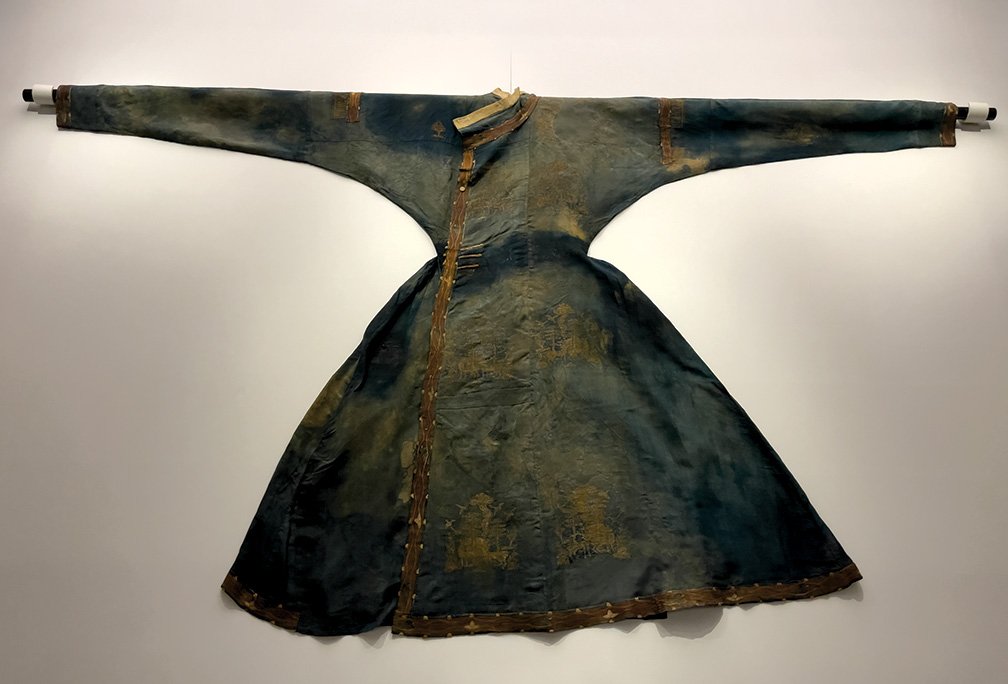
Robe with trees, deer, and birds, Jin dynasty (12th century), Brocaded tabby, silk and metallic threads; silk tapestry polychrome silk threads
Chris suggests that the origins of this practice can be seen in the Jin dynasty Robe, decorated with trees, deer, and birds.
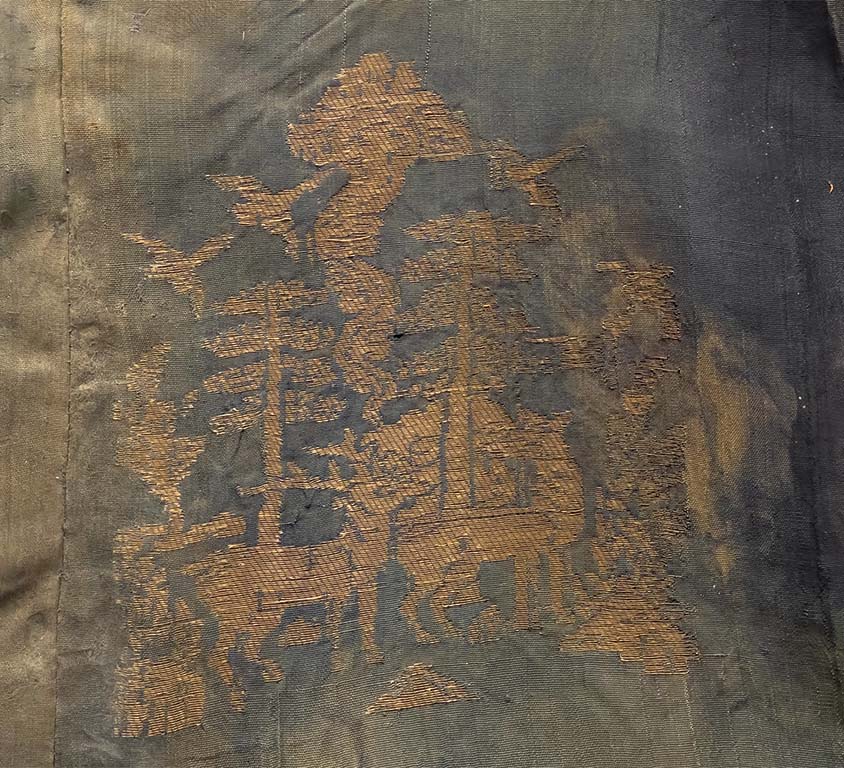
Detail of Robe with trees, deer, and birds, Jin dynasty (12th century), Brocaded tabby, silk and metallic threads; silk tapestry polychrome silk threads
Gradually, these early squares were simplified to feature only a single animal or bird, which evolved into a formal rank band system.
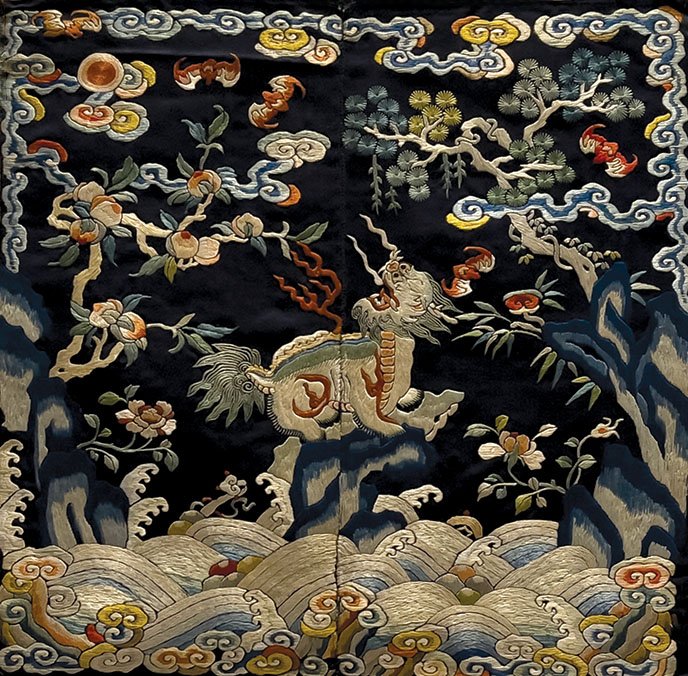
Second-rank military official badge with lion, Qing dynasty, Qianlong period (1736-1795), Embroidery, polychrome and metallic-wrapped silk threads on silk satin
The qilin, a mythical creature with the body of a deer, the head of a dragon, and the tail of a lion, could only be worn by first-rank military officers, followed by those of the lion, leopard, tiger, bear, and panther (sixth rank).
Related Amazing Auspicious Dragon
Even after the secret of making silk was appropriated, China continued to produce the most sought-after silk products.
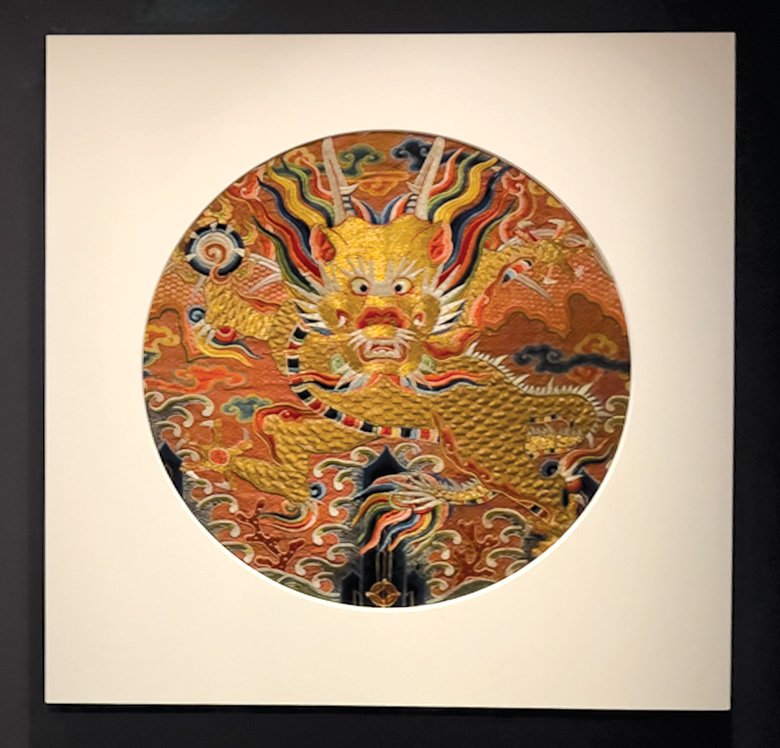
Roundel with winged dragon, Ming dynasty, Wanli period (1573-1620), Embroidery, polychrome and metallic-wrapped silk threads on silk gauze
This was partly due to the imperial system, which maintained highly centralised, regulated control over silk production.
Related Chinese Silk from the Qing dynasty, stunning embroidery
Outside China, production was mainly carried out by guilds and independent workshops, responding to market demand rather than imperial decrees.
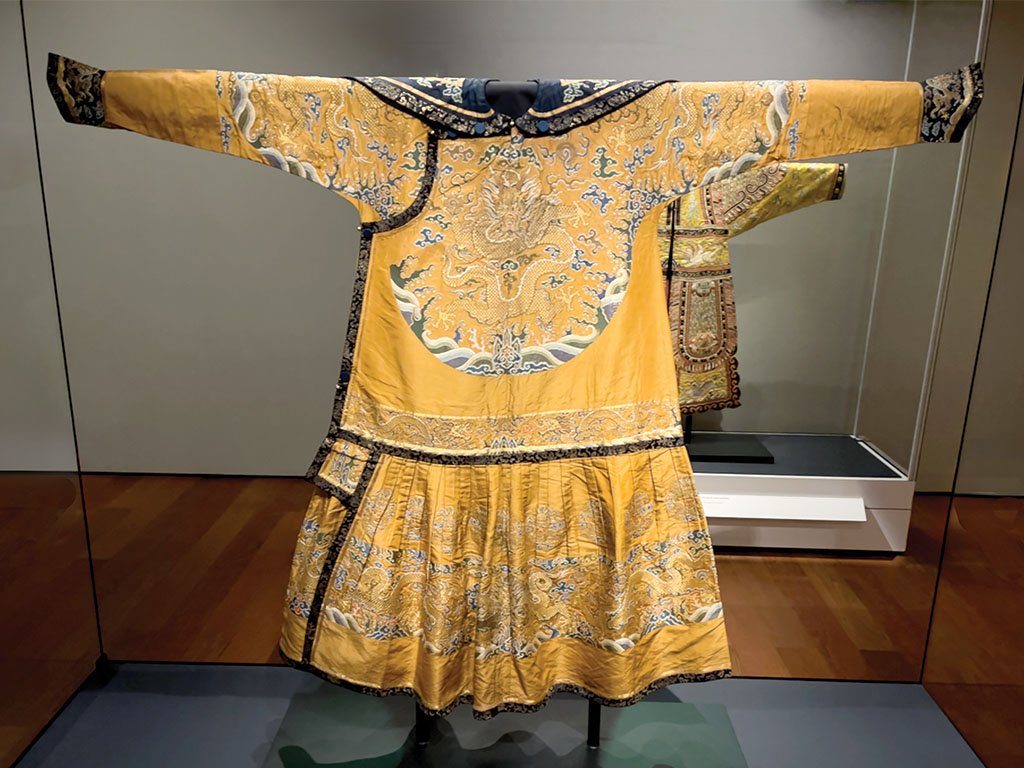
Court robe with dragons and clouds, Qing dynasty, Yongzheng period (1723-1735), Brocaded gauze, polychrome and metallic-wrapped silk threads
Consequently, less efficient but more beautiful weaving techniques, such as kesi, were used in China. The saying “an inch of kesi, an inch of gold” reflected the time and skill needed.
Related Gold glitters in luxurious handmade ceramics linked by Jingdezhen
Kesi means cut silk and refers to a very intricate and challenging silk tapestry technique originating in China.

Sixth-rank military official badge with panther, Qing dynasty (late 19th to early 20th century), Silk tapestry (kesi technique) and embroidery as applique, polychrome and metallic-wrapped silk threads
The sixth-rank military official badge with a panther is one example of kesi in the exhibition.
Related China history and Sanxingdui artefacts discovered in Sichuan
Unlike normal weaving, where threads are continuously woven across fabric, kesi uses short sections of silk thread in many colours that are carefully tucked and cut into place to form clearly defined colour blocks with crisp edges.

Panel with double-headed eagle and flowers, Ming dynasty, probably Wanli period (1573-1620), Embroidery, polychrome and metallic wrapped silk threads on silk velvet
This process creates images that look like they have been carved or engraved in silk. The density of threads in kesi fabric is exceptionally high, more than twice that of similar European tapestries, allowing for extremely fine detail and clarity.
Related Vatican Museum treasures and the world’s most renowned works of art
Because the coloured areas are woven separately, kesi produces a rich, elegant double-sided effect in which the design appears fully on both sides, almost like a three-dimensional sculpture.
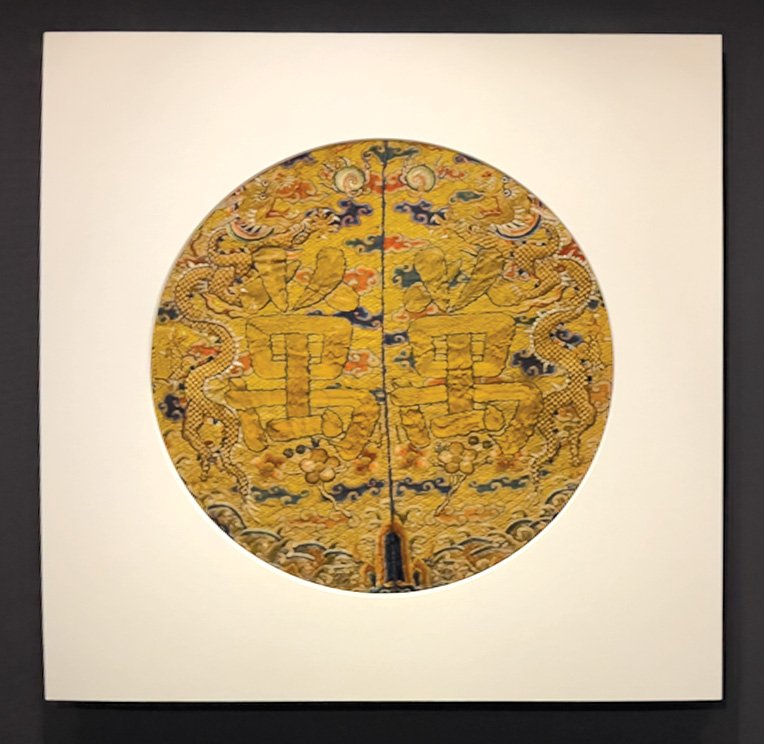
Festive roundel with a pair of dragons and the double character for wan (ten thousand), Ming dynasty, Wanli period (1573-1620), Embroidery, polychrome and metallic-wrapped silk threads on silk gauze
It is also known for its strength and durability, with kesi textiles surviving better than other silk fabrics or embroidery due to the tightly packed and strong threads.
Related Adorned Body: French Fashion and Jewellery 1770-1910
This exhibition of the Chris Hall collection shows that art plays a role in preserving society’s cultural history through robust media like sculpture, ceramics, and paintings, and that textiles can also be remarkably long-lasting.
The collection amassed by Chris Hall reveals a continuous legacy shaped by imperial control, artistry, and symbolism.
Related Celebrating the Year of the Snake artefacts
From early silk production in the Neolithic period and Han dynasty’s Silk Road trade, to regulated imperial garments adorned with dragons, phoenixes, and the exclusive colour yellow, silk has embodied China’s culture, social hierarchy, and power.
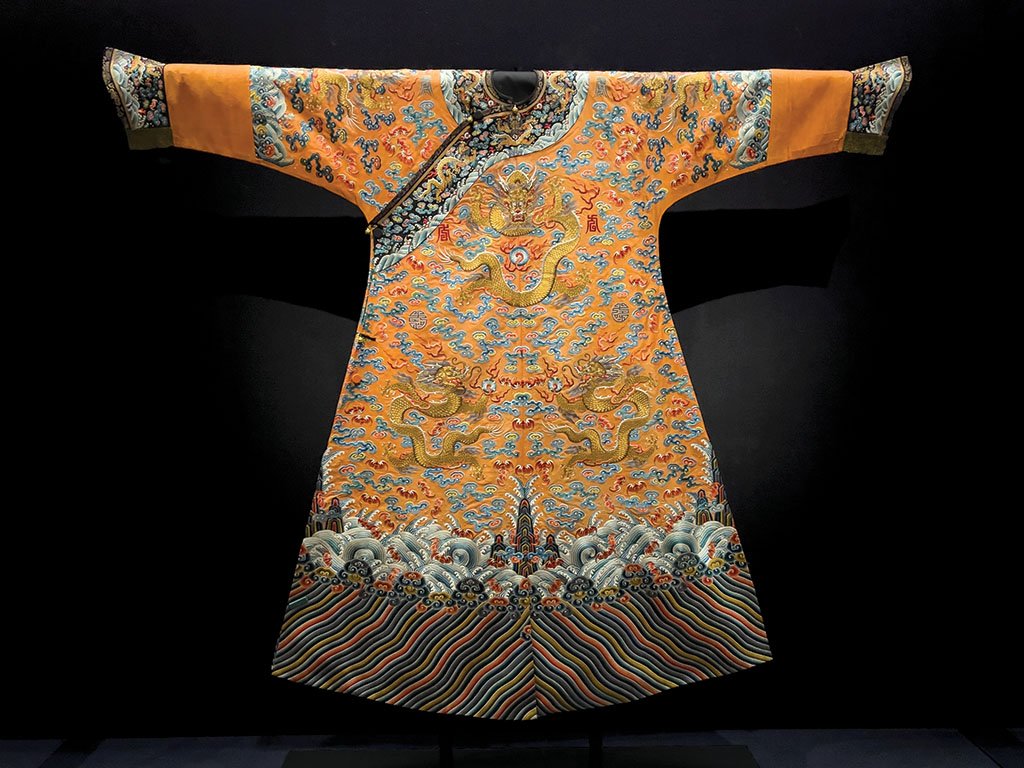
Surcoat with dragons and clouds in eight roundels, Qing dynasty, Qianlong period (1736-1795) Embroidery. polychrome and metallic wrapped silk threads on silk gauze
Techniques like kesi demonstrate artistic skill, combining durability with pictorial detail. The more I research, the more I recognise how much more there is to learn.
Related Qing dynasty garden paradise, Yuan Ming Yuan jewel of Chinese history
Chris Hall has invested almost 50 years in understanding over 2,300 years of Chinese history; it may take more than just a few museum visits to appreciate what he has accomplished.
Text and photos Martin Wray


