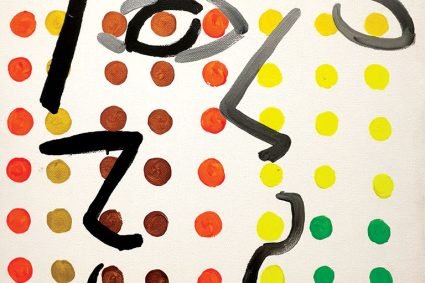
Colourful eye-opening world of Gabriele Münter

Gabriele Münter developed a distinct expressionist style wholly her own

Self-Portrait in Front of an Easel (Selbstbildnis vor der Staffelei), Gabriele Münter ca. 1908–09, Oil on canvas
Princeton University Art Museum, Gift of Frank E. Taplin Jr., Class of 1937, and Mrs Taplin, © Artists Rights Society (ARS) New York / VG Bild-Kunst, Bonn, Photo: Bruce M. White, Princeton University Art Museum / Art Resource, NY
Gabriele Münter defied expectations for a woman of her time
Gabriele Münter was a distinctly modern artist who was considered radical and defied the expectations for a woman of her time. She lived and worked when there were few women artists, and those who made significant contributions, like her, were overshadowed by their male counterparts.

Girl with braids seated on the porch Moorefield, Arkansas, Gabriele Münter, July 1900, Gelatin silver print, The Gabriele Münter and Johannes Eichner Foundation, Munich 3691, © Artists Rights Society (ARS), New York / VG Bild Kunst, Bonn
Münter was born in Berlin, Germany, in 1877 to an upper-middle-class family. From an early age, her family supported her creative talent and desire to be an artist. She received lessons with private tutors and some formal training in schools and with artists.
Related Archibald Prize, Australia’s most prestigious portrait award
At the time, women were not allowed to enrol in official art academies, so Münter took private lessons with Wassily Kandinsky, a Russian painter who had settled in Germany. Their relationship began as teacher and student, however their union would become much more personal.

Still Life, Red (Stillleben, rot), Gabriele Münter, 1909, Oil on board, Collection of the McNay Art Museum, Museum purchase with the Ralph A. Anderson Jr. Memorial Fund, the Helen and Everett H. Jones Purchase Fund, and the Alvin Whitley Estate, © Artists Rights Society (ARS), New York / VG Bild-Kunst, Bonn, Photo: © McNay Art Museum / Art Resource, NY
Münter and Kandinsky would spend many years as romantic partners, travelling the world and collaborating on creative pursuits, especially with the establishment of the Der Blaue Reiter – a group of German Expressionists.
Related Surrealism beyond Mythologies
The name Der Blaue Reiter was derived from Kandinsky’s painting titled The Blue Rider (1903). It is one of Kandinsky’s most defining works, depicting a small, blue-cloaked figure on a white horse speeding across a meadow. His abstraction of details, use of vibrant colours, and quickly applied brush strokes defined German Expressionism.
![Still Life on the Tram (After Shopping) (Stillleben in der Trambahn [Nach dem Einkauf]), Gabriele Münter ca. 1909–12, Painting on board The Gabriele Münter and Johannes Eichner Foundation, Munich S44 © Artists Rights Society (ARS), New York / VG Bild-Kunst, Bonn](https://culture-hongkong.com/wp-content/uploads/2026/01/Munter-Still-Life-on-the-Tram-1912-Munter-web.jpg)
Still Life on the Tram (After Shopping) (Stillleben in der Trambahn [Nach dem Einkauf]), Gabriele Münter ca. 1909–12, Painting on board, The Gabriele Münter and Johannes Eichner Foundation, Munich S44 © Artists Rights Society (ARS), New York / VG Bild-Kunst, Bonn
Münter was a founder and leading figure of the Der Blaue Reiter movement during its prime (1911-14). Yet she had been relegated to a minor figure in the history of German Expressionism, overshadowed by her then-companion and creative partner, Kandinsky.
Related German Society Nature Photography of 2025
Dragon Fight (Drachenkampf), an allegorical image of Saint George fighting the dragon painted in 1913, shows Munter’s artistic development during her time with Der Blaue Reiter. Yet it is also a work heavily reminiscent of Kandinsky, with its energetic brushstrokes and a rider on a white horse, as in The Blue Rider.

Dragon Fight (Drachenkampf), Gabriele Münter, 1913, Painting on board, The Gabriele Münter and Johannes Eichner Foundation, Munich V117 © Artists Rights Society (ARS), New York / VG Bild-Kunst, Bonn, Photo: Centre Pompidou, MNAM CCI/Georges Meguerditchian/Dist. GrandPalaisRmn / Art Resource, NY
This exhibition, titled Gabriele Münter: Contours of a World at the Guggenheim New York, spotlights the significance of this avant-garde female artist.
Related Vasily Kandinsky’s important work by an icon of modern art
Münter was a critical figure in the advancement of modernism in early twentieth-century Europe. The exhibition focuses on her heightened Expressionist production from around 1908 to 1920, while also highlighting her later developments.
A spotlight on the significance of this avant-garde female artist
On display are some sixty paintings and nineteen of her early photographs across three galleries, taken during Münter’s travels around the southern and midwestern U.S. at the turn of the twentieth century.
Related Lee Miller pioneering artist and photojournalist
The exhibition illuminates Münter’s disruptive and underrecognized practice while challenging historical narratives that have sidelined female artists. It presents her as a prolific and innovative artist who created significant work across mediums and movements throughout her long career.

Snow and Sun (Schnee und Sonne), Gabriele Münter, 1911, Oil on board, University of Iowa Stanley Museum of Art, Iowa City, Gift of Owen and Leone Elliott, © Artists Rights Society (ARS), New York / VG Bild-Kunst, Bonn, Photo: Courtesy UI Stanley Museum of Art
“Münter’s unwavering curiosity about the world around her shaped both her life and art. She wielded colour and line in remarkable ways, and this spirit of exploration led her to become a uniquely international artist,” says Megan Fontanella, Curator, Modern Art and Provenance, Guggenheim New York. “A formative trip to the United States around the turn of the twentieth century sparked her creative vision, as she pursued art through the medium of photography. To now organise her debut exhibition at a New York museum, 125 years later, is both extraordinary and long overdue.”
Related Each/Other, focus on Native American art
As a key figure in Der Blaue Reiter, the network of progressive artists, writers, and musicians who probed, in diverse ways, the expressive potential of colour and the symbolic and often spiritual resonance of forms, she was a bold and daring creative. She was a contemporary artist who was not only deeply invested in the aesthetics and visual culture of her native Germany but also engaged with the innovations of a transnational avant-garde.
![Future (Woman in Stockholm) (Zukunft [Dame in Stockholm]) Gabriele Münter, 1917, Oil on canvas The Cleveland Museum of Art, Gift of Mr. and Mrs. Frank E. Taplin Jr, © Artists Rights Society (ARS) New York / VG Bild-Kunst, Bonn, Photo: Courtesy The Cleveland Museum of Art](https://culture-hongkong.com/wp-content/uploads/2026/01/1992-Munter-web.jpg)
Future (Woman in Stockholm) (Zukunft [Dame in Stockholm]), Gabriele Münter, 1917, Oil on canvas
The Cleveland Museum of Art, Gift of Mr. and Mrs. Frank E. Taplin Jr, © Artists Rights Society (ARS) New York / VG Bild-Kunst, Bonn, Photo: Courtesy The Cleveland Museum of Art
She spent the years of World War One in Scandinavia, prompting a rich exchange with Nordic Modernism. This shifted her artistic practice. Münter reimagined the traditional genres of still life, landscape, and portraiture through bold planes of vibrant colours; forging a compelling alternative to concurrent innovations in radical abstraction.
Related Chinese Reverse Glass Painting from the Mei Lin Collection
The painting Future (Woman in Stockholm), painted in 1917, vividly presents her emerging style through the dramatic use of colour and the simplification of details, which have flattened the perspective: the figure in the foreground, the window frame in the middle, and the exterior in the background.
The most expressive aspects simply, to the point, with no frills…
Münter explained, “I extract the most expressive aspects of reality and depict them simply, to the point, with no frills… the forms gather in outlines, the colours become fields, and contours – images – of the world emerge”
Related Icons of Modern Art: Picasso and El Greco
Gabriele Münter: Contours of a World includes early photographs taken during her travels in the United States from 1898 to 1900. The photos show her first foray into the medium, with images of family members, neighbours, and turn-of-the-century townsfolk, such as Three women, Marshall, Texas (1900).
Related American Wild West is still alive in Old Tucson
These photographs reveal a rich period of experimentation with light, shadow and perspective. It was a profoundly formative time with the emerging photographic process.

Three women, Marshall, Texas, Gabriele Münter, ca. 19 June 1900, Gelatin silver print
The Gabriele Münter and Johannes Eichner Foundation, Munich 3635, © Artists Rights Society (ARS), New York / VG Bild-Kunst, Bonn
The snapshots offer insight into a formative moment in the artist’s career, a time that laid the foundation for her artistic vision and future painting practices in the work that followed.
Related Dorothea Lange genuine photos resonate with humanity
The elongated shadow of Münter taking the photo on the left side of Young girl standing on the street in St. Louis, Missouri (1900) would have given the artist inspiration to experiment with extreme perspectives.

Young girl standing on the side of the street, St. Louis, Missouri, Gabriele Münter, ca. July–September 1900, From original film negative, The Gabriele Münter and Johannes Eichner Foundation, Munich 3757, © 2024 Artists Rights Society (ARS), New York / VG Bild Kunst, Bonn
An example of this is evident in Living Room in Murnau (Interior), which she painted in 1910, featuring an elongated carpet in the room’s midground.
Related Van Gogh fabulous Roulin family portraits
In her later works, such as Breakfast of the Birds (1934), she completely flattens the perspective, closely cropping, compressing the space and simplifying forms. The dark, heavy outlines are applied quickly and expressively. Colours are pure and vibrant.
![Living Room in Murnau (Interior) (Wohnzimmer in Murnau [Interieur]) Gabriele Münter ca. 1910, Painting on board The Gabriele Münter and Johannes Eichner Foundation, Munich V107, © Artists Rights Society (ARS), New York / VG Bild-Kunst, Bonn](https://culture-hongkong.com/wp-content/uploads/2026/01/V107-1-1a-Munter-web.jpg)
Living Room in Murnau (Interior) (Wohnzimmer in Murnau [Interieur]), Gabriele Münter ca. 1910, Painting on board The Gabriele Münter and Johannes Eichner Foundation, Munich V107, © Artists Rights Society (ARS), New York / VG Bild-Kunst, Bonn
The result is an image that shows the pinnacle of the artist’s creative development. The painting evokes a quiet stillness and contemplation of a solitary woman, which may represent Münter herself.
Related Botticelli to Van Gogh, Renaissance to Impressionist art
Gabriele Münter was more than a founding member of Der Blaue Reiter. She developed a distinct visual language that merged photography, expressionism, and bold colour into something wholly her own, upending the artistic conventions of her time.

Breakfast of the Birds, Gabriele Münter, 1934, Oil on board, National Museum of Women in the Arts, Washington, D.C., Gift of Wallace and Wilhelmina Holladay, Photo: Courtesy National Museum of Women in the Arts
Her path from private student to avant-garde artist shows what women artists achieved despite being locked out of official academies and overshadowed by male colleagues.
Related Spanish artist Cristobal Gabarron’s hypnotic action painting
The Guggenheim’s exhibition finally gives Münter her due, over 125 years after her transformative American journey, correctly positioning her at the centre of modernism rather than its margins.
Text Guggenheim New York & Cammy Yiu and photos Guggenheim New York