Lui Shou-kwan made hypnotic breakthrough art

Lui Shou-kwan a revolutionary force for contemporary ink art

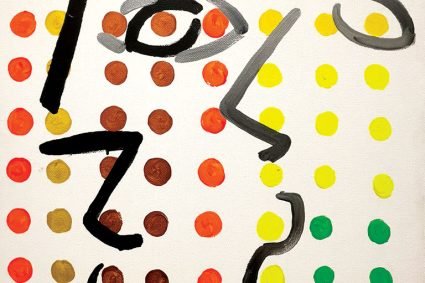
Zen painting 1971, Ink and colour on paper, Lui Shou-Kwan
Lui Shou-kwan evolution of Chinese ink painting
The Chinese ink paintings of Lui Shou-kwan is presented in the exhibition Hong Kong Experience – Hong Kong Experiment.
Chinese ink painting emerged during the Han dynasty (206 BC – 220 AD). At that time, they were painted on silk (until the invention of paper in the first century), using animal hairbrush pens and black ink made from pine soot and animal glue.
Related Hon Chi-fun traditional Chinese ink painting
Because paper absorbs ink quickly, marks had to be applied quickly and spontaneously. Artists would invest years learning the subtleties of making confident lines and strokes.
Over the decades before and after the two World Wars, eastern and western art influenced this Chinese art form.
Related 20/20 Hong Kong Print Art
Ink painting flourished in Hong Kong, and the evolution of artistic styles and methods is represented by many fine examples in the exhibition at the Hong Kong Museum of Art.

Zen painting 1971, (detail)
Hong Kong Experience – Hong Kong Experiment brings together an eclectic mix that highlights fifty years of a changing art scene and showcases the creative talent working locally, who pushed the evolution of artistic styles and methods.
Related Chinese art from the collectors of Min Chiu Society
Since 1962, the Hong Kong Museum of Art has added works of local artists to its permanent collection.
The works of Lui Shou-kwan (1919 – 1975) is part of the museum’s collection. He was a Hong Kong born and educated artist who strove to emote the individuality and spirit of the artist, no matter the rules and techniques that might be abandoned in that pursuit.
Related Zhao Hai Tien colorful abstract art beyond simple expression
He absorbed the essence of Abstract Expressionism and combined them with elements of Chinese ink painting to develop an abstract ink painting style he called “Zen painting”.
New Ink Movement is the standard for contemporary ink art
As an artist and teacher, he was a revolutionary force behind what was later termed the New Ink Movement, but which is now the standard for contemporary ink art.
Related Pang Jiun monumental vibrant hues and expressive marks
Easily overlooked are the Chinese ink paintings in the Hong Kong Museum of Art collection. To the uninitiated, traditional ink paintings all look remarkably similar, and without an understanding of the history and techniques involved, they may be difficult to appreciate.
Related Art and Life of the Astonishing Gaylord Chan
However, the last 100 years has seen an intersection of eastern and western art influence this traditional Chinese art form. The evolution of Chinese ink painting is represented by many fine examples in this exhibit including those of Lui Shou-kwan.

Zen painting 1971, (detail)
With Chinese ink painting, colours could be used, but only sparingly. Brush marks had to be applied rapidly and instinctively.
Very much like Chinese calligraphy, ink paintings were created fluidly with brushes dipped in pigment and applied quickly on paper and silk scrolls.
Related History of China in Silk and The Chris Hall Collection
Subjects varied, but traditionally included landscapes, flora and fauna. For centuries, not much changed until the beginning of the twentieth century.
Contemporary ink paintings link it back to traditional art form
Traditional conservative artists would argue that a work may only be considered an ink painting if it fulfils the above technical requirements.
Related Daring and irresistibly new Chinese Calligraphy
Modern liberal artists posit that regardless of its medium, subject or style, a work can be an ink painting if it has characteristics that link it back to the traditional art form.
Text Martin Wray / Photos Cammy Yiu