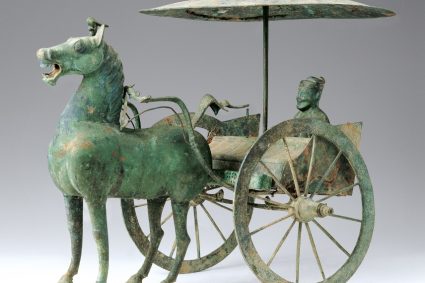
Origins of Chinese Civilisation fantastic artefacts make astonishing Debut

Neolithic period clues to origins of Chinese civilisation
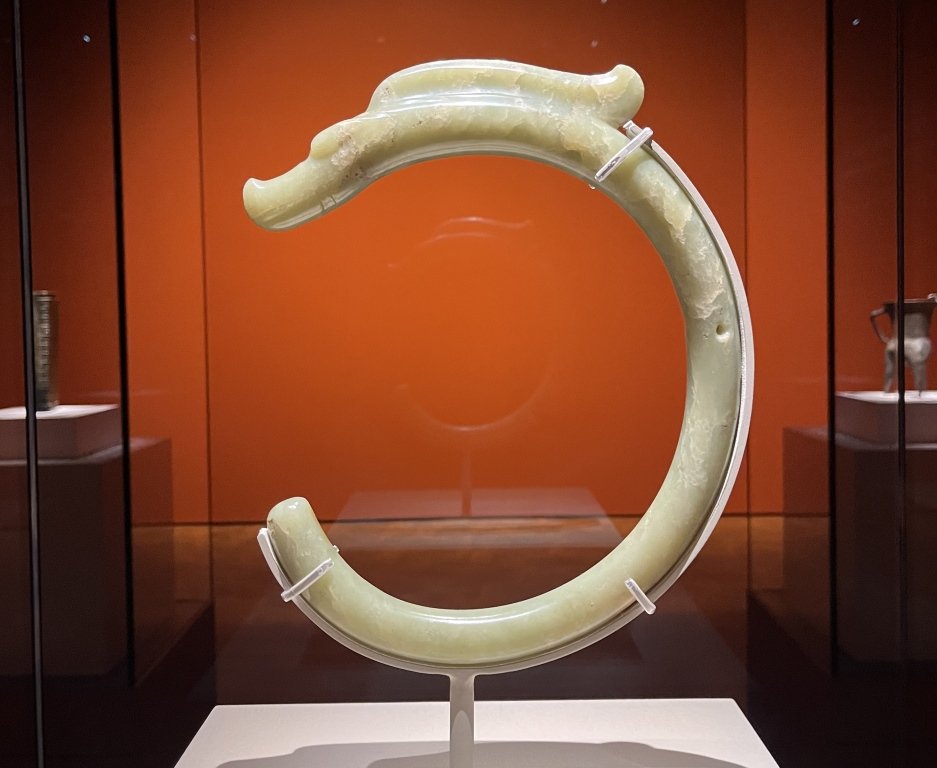
Dragon (C-shaped), Jade Mid to late Hongshan culture (6,000-5,000 BP), The Palace Museum
Ancient treasures illustrate Origins of Chinese Civilisation
The Origins of Chinese Civilisation is richly illustrated in a display of precious objects and ancient treasures on loan from museums and archaeological institutions from across China. The exhibition on display at the Hong Kong Palace Museum, examines China’s origin story and provides insight into the Chinese nation’s broad ancestry.
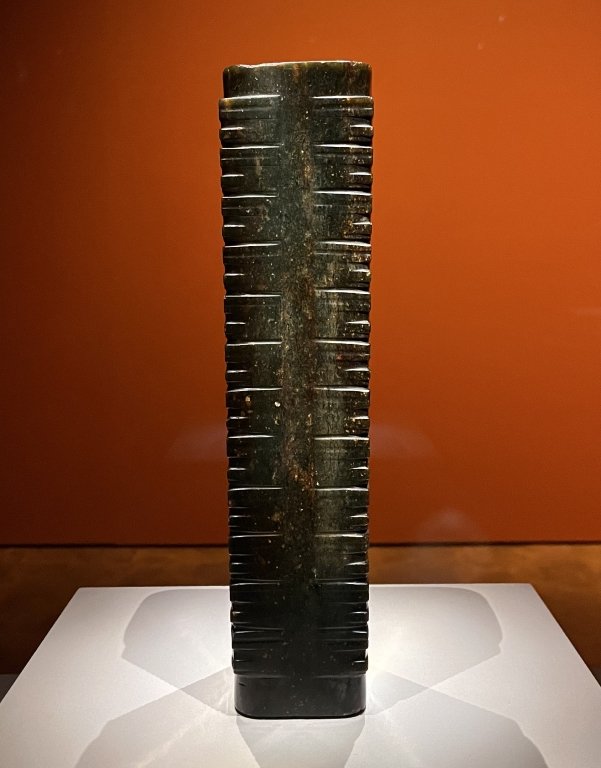
Cong tube, Liangzhu culture (5,300-4,300 BP), Jade, The Palace Museum
Archaeological discoveries from 9 distinct ancient cultures
The Origins of Chinese Civilisation exhibition is arranged and told through archaeological discoveries from nine distinct ancient cultures that flourished during the Neolithic period and the most recent findings recovered from nine major archaeological sites.
Related Way of the Sword: Warrior Traditions in China and Italy
It shows the developments and cross-fertilisation of ideas and goods over 5,000 years, from the Neolithic period to the Xia dynasty.
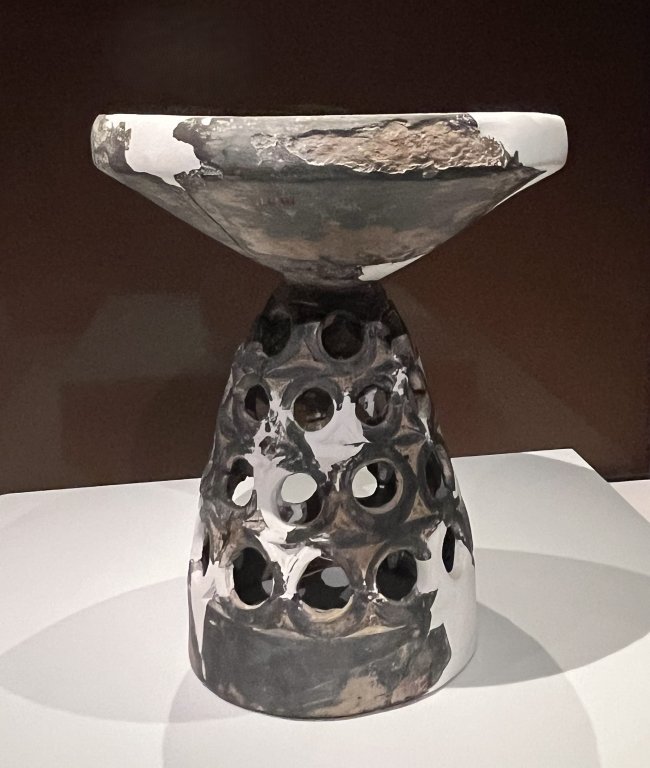
Dou-vessel, Mid to late Kawenkou culture (5,500-4,600 BP), Earthenware, Shangdong University Museum
Recent excavations provide examples of ancient pottery, bronze and jades. These artefacts clarify the heritage bequeathed by ancient societies, informing modern understanding of ancient cultures’ beliefs, myths and values, which has shaped the development of Chinese society.
Fortifications show the emergence of defensive communities
The origins of Chinese Civilisation began over 10,000 years ago. The ancestors of the Chinese, lived in the Yangtze and Yellow River basins and gathered in settlements that grew into small cities. Evidence of man-made walls, fortifications and moats built to protect settlements shows the emergence of defensive communities, which was the start of early civilisation in China.
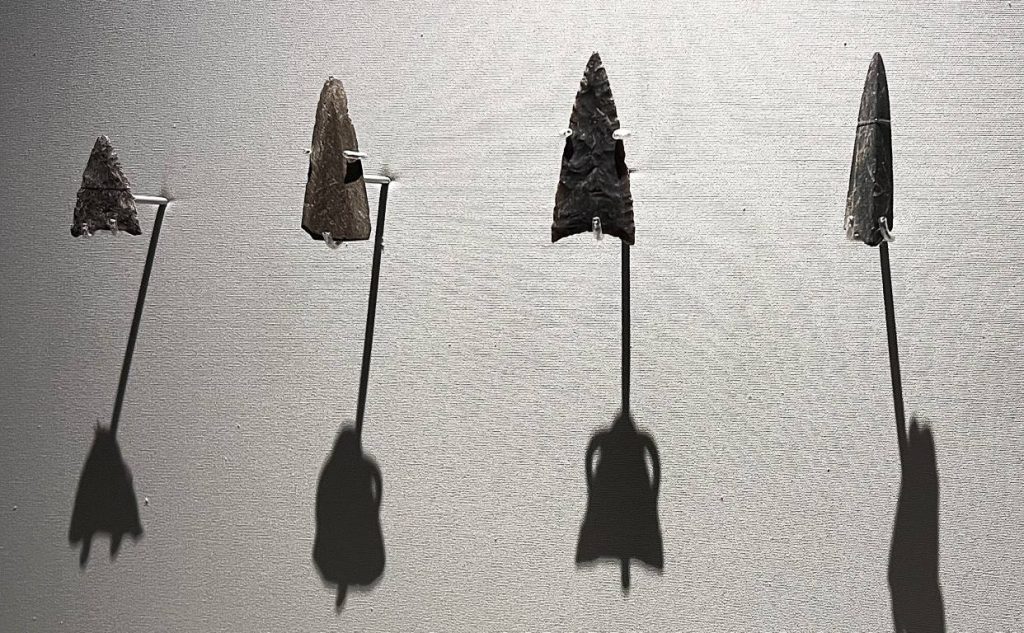
Arrowheads, Shimao culture (4,300-3,800 BP) Stone, Shaanxi Provincial Institute of Archaeology
These primitive societies slowly pivoted from nomadic hunting and gathering to agrarian practices of growing and raising their food.
Related Yi O rice fields grown with heart and heritage
These early stages of social development created enduring communities whereby people remained rooted in a primary location for cultivating plants and raising animals. With their strength as a collective and success in growing and storing food, these societies prospered, ensuring population growth. This era progressed through China’s Neolithic period.
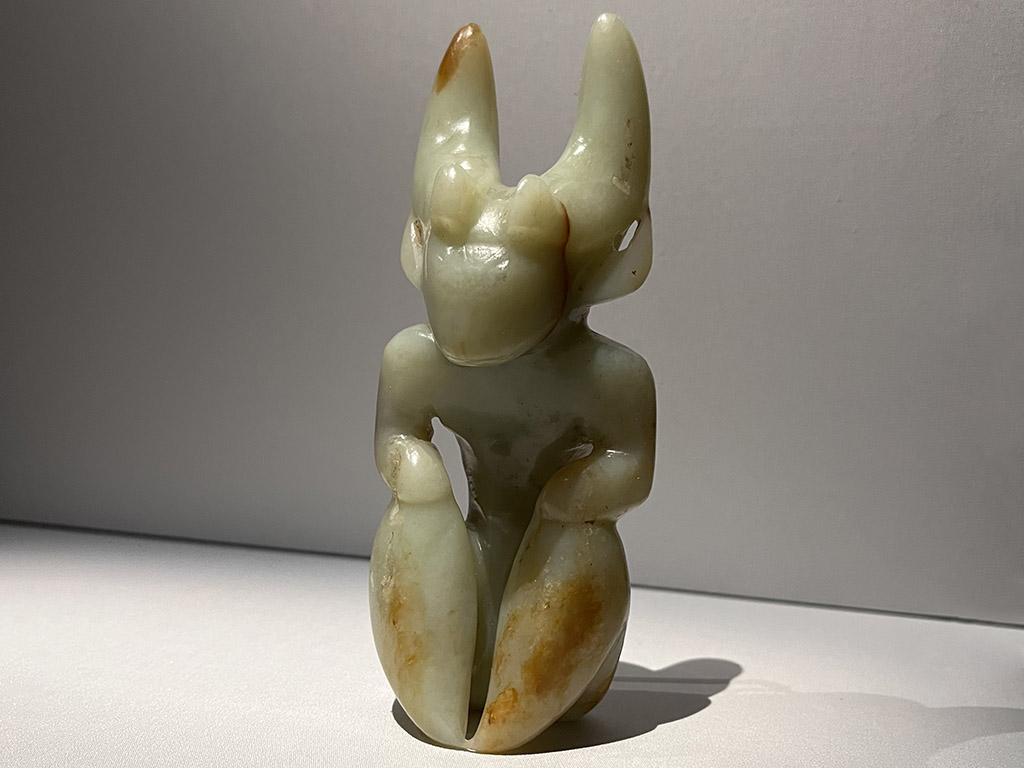
Sitting figure, Mid to late Hongshang culture (6,000-5,000 BP), Jade, The Palace Museum
Each new archaeological discovery deepens the modern understanding of origins of Chinese civilisation, revealing how these ancient societies survived. As this was prehistoric times, before the invention of writing, the variances of burial practices revealed the beliefs and values of these Neolithic cultures.
Related Fabulous ancient treasures mysteriously abandoned at Sanxingdui
The Origins of Chinese Civilisation exhibition is an essential adjunct to understanding China’s general history. It is alongside the immensely pivotal Gazing at Sanxingdui: New Archaeological Discoveries in Sichuan, previously exhibited at the Hong Kong Palace Museum.
Origins of Chinese Civilisation flourished near Yellow and Luo Rivers
Likewise, the Hong Kong Museum of History’s recent exhibition detailing the three oldest dynasties of China that flourished near the Yellow and Luo Rivers provided insight into the Xia, Shang and Zhou dynasties in Henan Province.
Related Origin of Chinese civilization Xia, Shang, Zhou dynasties
Some of the oldest items on display show the earliest representations of dragons made of jade. These artefacts reflect the importance of two key elements of Chinese ancestry: the precious material of jade and the mythical subject of the dragon. Both elements remain of reverential significance in Chinese culture today.
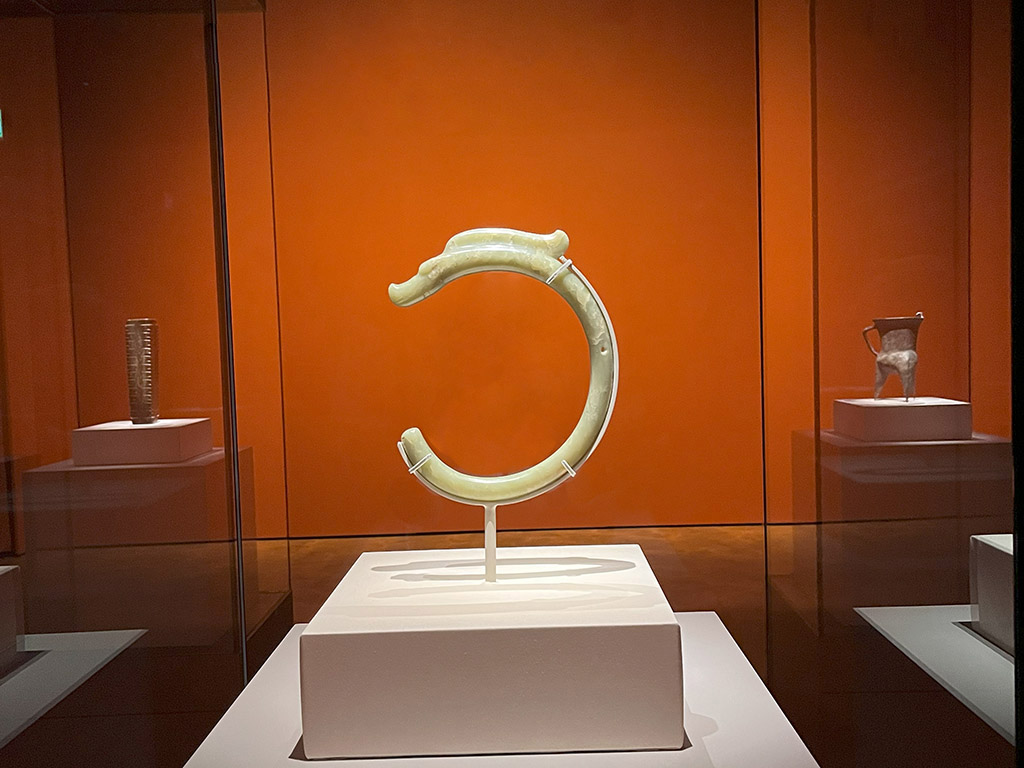
Dragon (C-shaped), Jade, Mid to late Hongshan culture (6,000-5,000 BP), The Palace Museum
Neolithic mythical C-shaped dragon made of jade
The fabulous C-shaped Dragon with a long snout and mane is one of the earliest representations of a Chinese dragon and is dated from the mid to late Hongshan culture (6,000-5,000 BP/4,050-3,050 BCE*).
Related Year of the Dragon celebrated with stunning watercolour & video
The similarly dated Pig dragon, referred to as such because of its pig-like snout, is an exquisite example from one of the most ancient Neolithic cultures that proliferated near the Liao River in the Northeast.
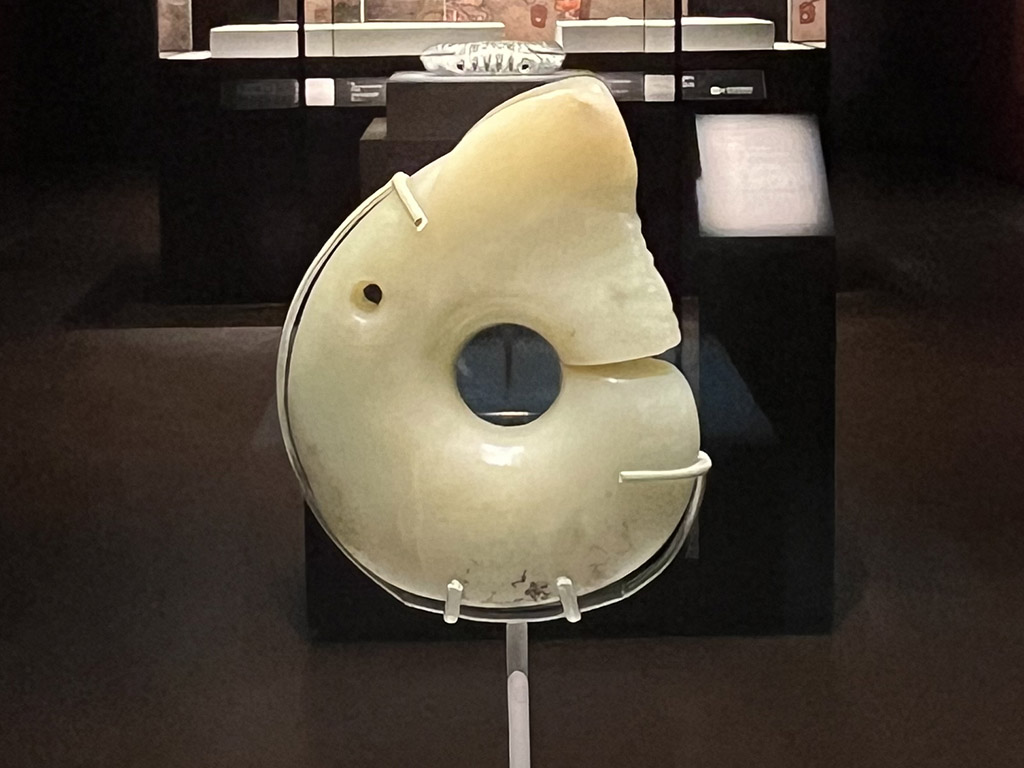
Pig dragon, Jade Mid to late Hongshan culture (6,000-5,000 BP), Liaoning Provincial Institute of Cultural Relics and Archaeology
The C-shaped Dragon and Pig dragon show stylised venerated forms that were prodigiously reproduced. Many similar artefacts excavated from sites around the same time indicate that these were symbols of spiritual significance.
Related Myth to Muse the Year of the Dragon
The reverence for animals as divine is given further credence by a large light green jade ornamental mask-like plaque. The mask shows a hybrid animal-human, with features displaying a pair of eyes, eyebrows, and a mouth-like opening with a row of fearsome teeth-like details.
Divine mask animal-human hybrid mystical creature
This mask may represent an owl or mythical bird-like creature and provides clues to the rich spiritual life enjoyed by a highly developed society. It was recovered from the Hongshan era Niuheliang site, which also yielded a massive stone altar, temple and tombs containing artefacts that allude to the presence of primitive mythology and the worship of animals.

Ornamental plaque (hybrid animal-human features), Jade, Mid to late Hongshan culture (6,000-5,000 BP), Liaoning Provincial Institute of Cultural Relics and Archaeology
These crafted artefacts indicate that jade has been highly desirable in China since prehistoric times. For the wealthy elite, jade was used decoratively and as an emblem of their social standing, signifying their status in life and death. Numerous jade items found as burial objects throughout the millenniums attest to this reverence.
Jade highly coveted since prehistoric times
From the Neolithic period to the present, jade of many different colours was found locally within China and imported from distant sources. However, being a very tough material and harder than any metal tool, even modern steel, it cannot be carved.
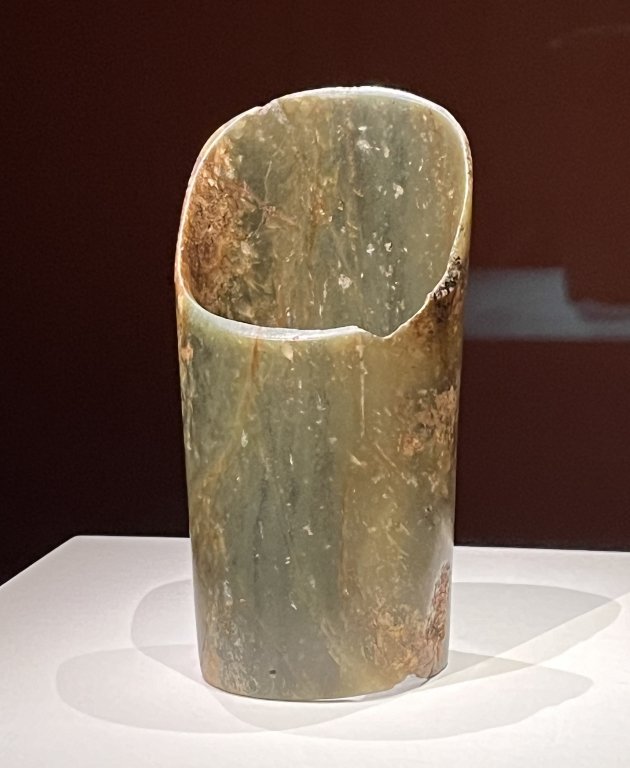
Tube with slanted mouth, Mid to late Hongshan culture (6,000-5,000 BP), Jade, Liaoning Provincial Institute of Cultural Relics and Archaeology
Instead, a harder, more abrasive medium, such as powdered minerals like crushed garnet or quartz, is required to grind jade into its desired shape and to incise details onto its surface.
Related Ancient Chinese Gold symbol of power and wealth
The production of jade items was a skilled and laborious task requiring hours, days and months of repetitive motion to cut, polish and refine. This required an affluent society able to provide for artisans devoted to crafting these delicate objects.
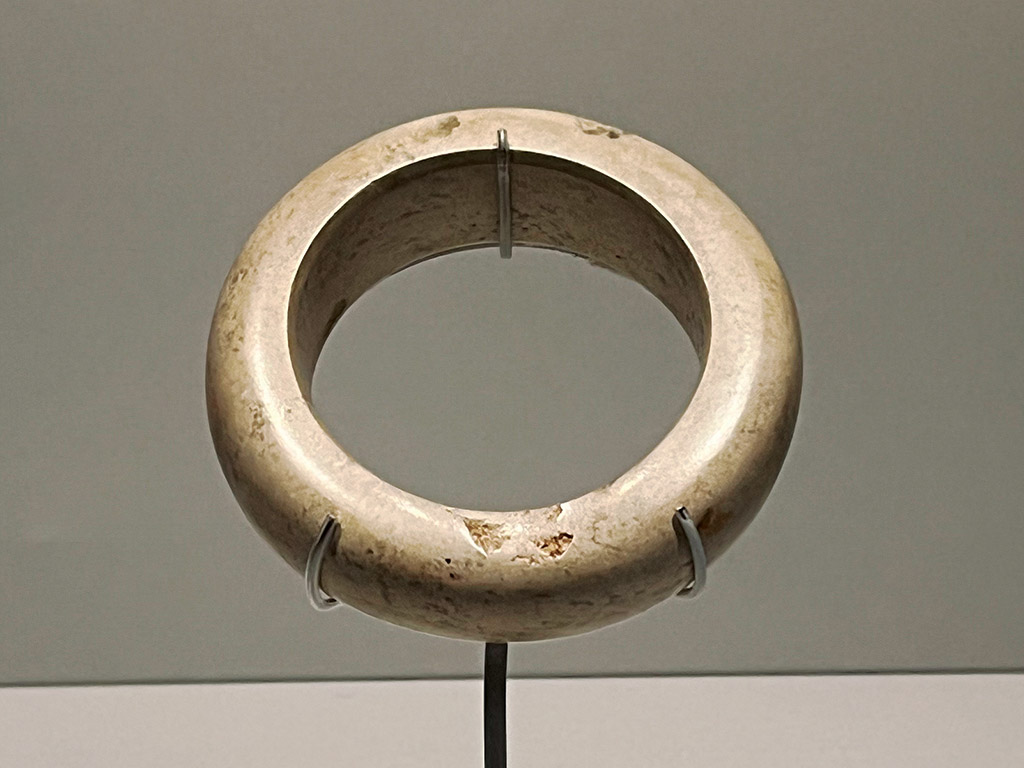
Bracelet, Jade, Liangzhu culture (5,300-4,300 BP), Liangzhu Museum
Jade a high value status symbol since origins of Chinese civilisation
The difficulty of manufacturing jade items attests to its exclusiveness and high value as a status symbol. The jade artefacts found in Hongshan burial sites show the earliest examples of its production on a larger scale. The quantity and quality of jade items denoted a growing upper class and expanding inequality.
Related Historic whispers of Inkstone genuine tools of forgotten years
The archaeological sites of the Liangzhu culture (5,300-4,300 BP) show that their reverence for jade objects continued unabetted. The Liangzhu was a society of immense size and affluence.
One uncovered site revealed an enormous palatial city with a water management system, flourishing agriculture, and crafts produced with increasing technical sophistication.

Bi-disc, Jade, Liangzhu culture (5,300-4,300 BP), Zhejiang Provincial Museum
Their jade workmanship went beyond polishing to include an innovative drilling technique to make tubular pieces and round and square shapes. These new shapes were incorporated into designs for personal adornments and prestige items, including necklaces and bracelets.
Related Women and Femininity in Ancient China Treasures from the Nanjing Museum
Jades were found in tombs, placed on top and covering the deceased. The finest items, such as a Cong-tube and a Bi-disc, signified the wealth of the tomb owner and would have been made specially for burial.
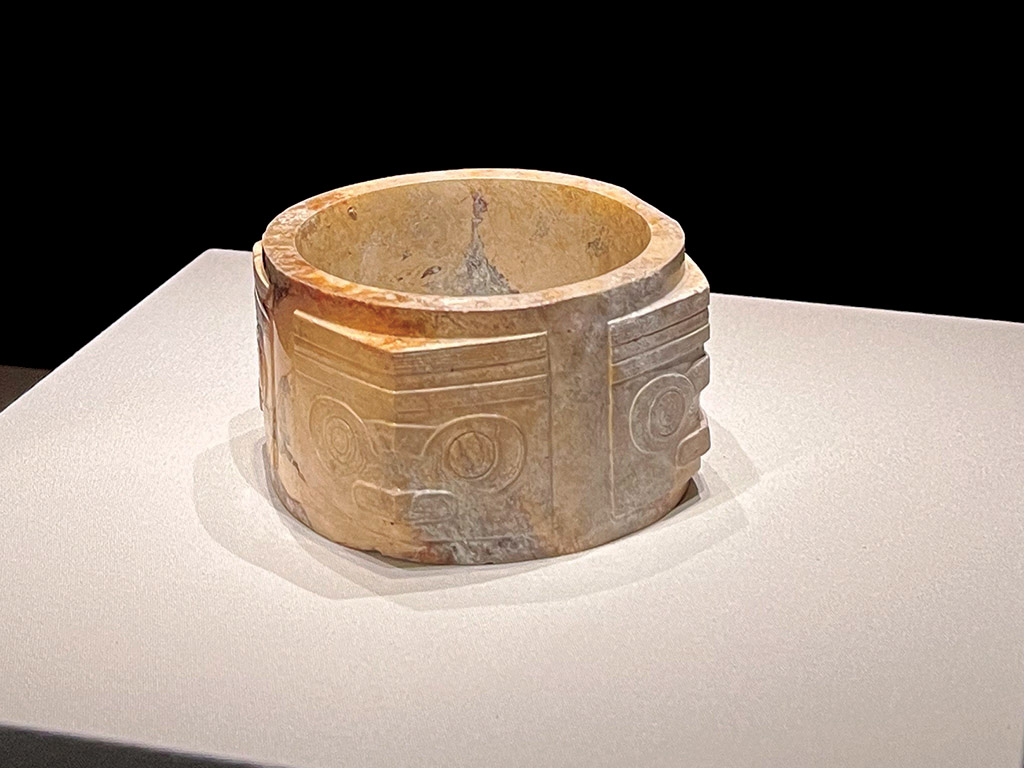
Cong-tube with imaginative animal, Jade, Liangzhu culture (5,300-4,300 BP), Liangzhu Museum
Cong-tube and a Bi-disc signified the wealth of the tomb owner
A jade Cong tube with an imaginative animal made during the Liangzhu era shows their pinnacle of craftsmanship. This item, with a sequence of fine thin lines, incised to a width of one millimetre and decorated with facial features at the four corners, marks a prowess in workmanship like never before.
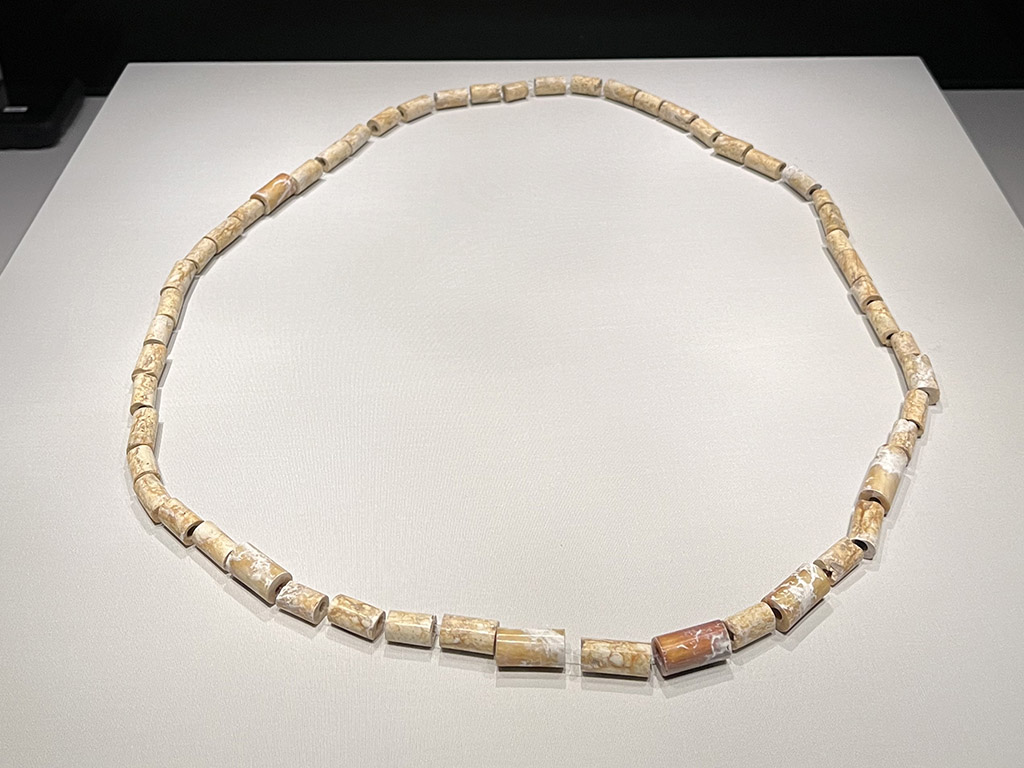
Tubular bead necklace, Liangzhu culture (5,300-4,300), Jade, Liangzhu Museum
The development of pottery was one of the most important accomplishments and the best archaeological evidence of Neolithic culture. Its production, manufacturing and design development show regional differences and stylisation indicative of the culture of the people who produced it.
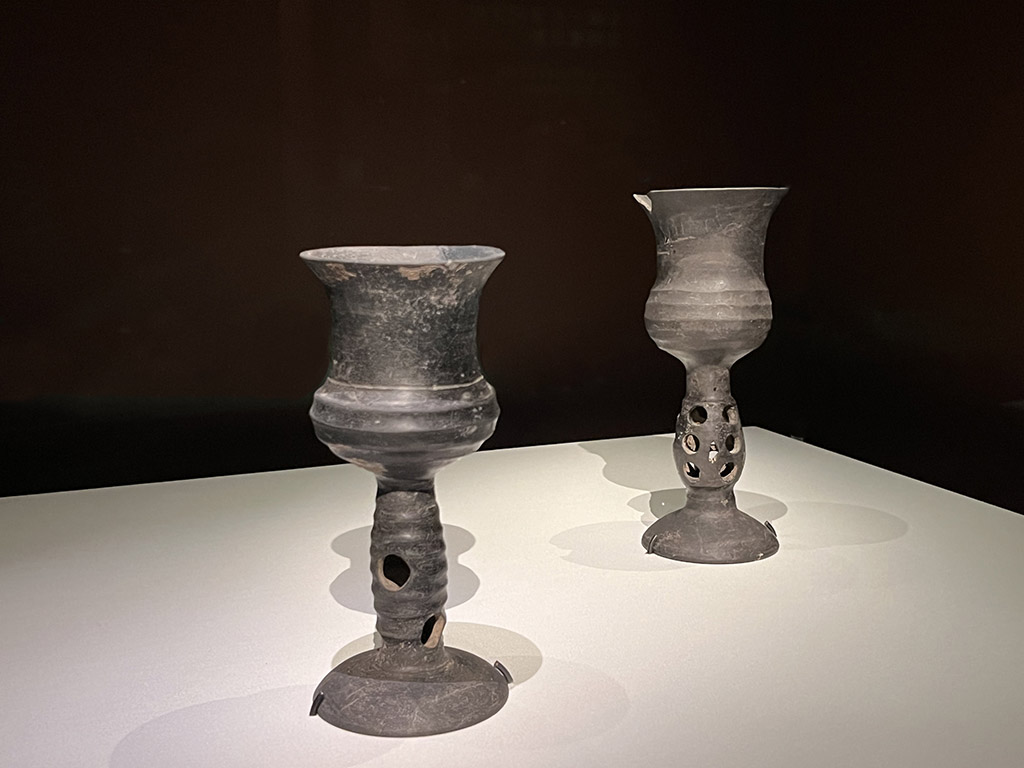
Stem Cups, Mid to late Dawenkou culture (5,500-4,600 BP), Earthenware, Shangdong University Museum
Fanciful pottery show creative ornamentation and novel designs
Painted and unpainted pottery were fabricated in wonderful shapes and sizes. Potters applied pigments and painted motifs of plants, animals, geometric patterns and inscribed symbols onto the surfaces, as demonstrated by the fine earthenware Jar with plant motifs and Basin with geometric motifs.
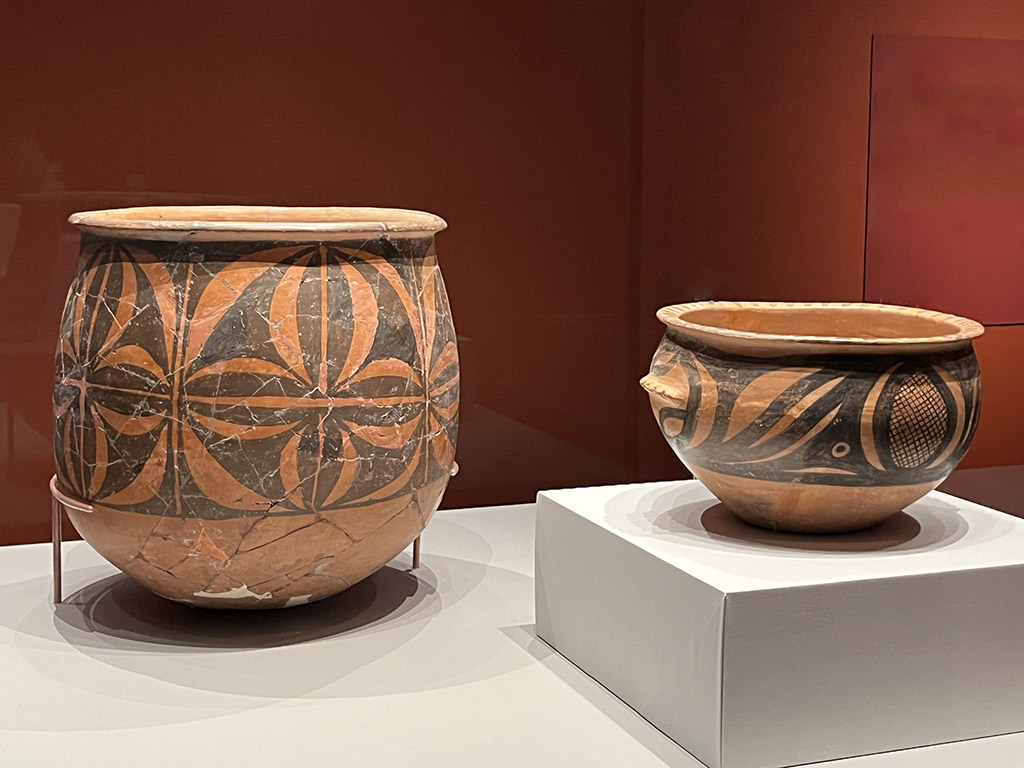
Right: Jar with plant motifs and Left: Basin with geometric motifs, Mid-late Yangshao culture (6,000-5,000 BP), Earthenware, Gansu Provincial Museum
Novel shapes, such as a Gui-vessel, with conical legs, bulbous body and beak-like spout, show a fanciful design that is ornamental as well as practical. The tripod legs allowed the vessel to be positioned over a fire to boil water or to warm wine, and the elongated mouth allowed for the safe pouring of the hot liquid.
Exquisite white pottery represented a technical breakthrough
Contrasting commonly found red pottery made of coarse clay, the emergence of exquisite white pottery with thin, even walls and hard texture represented a technical breakthrough.
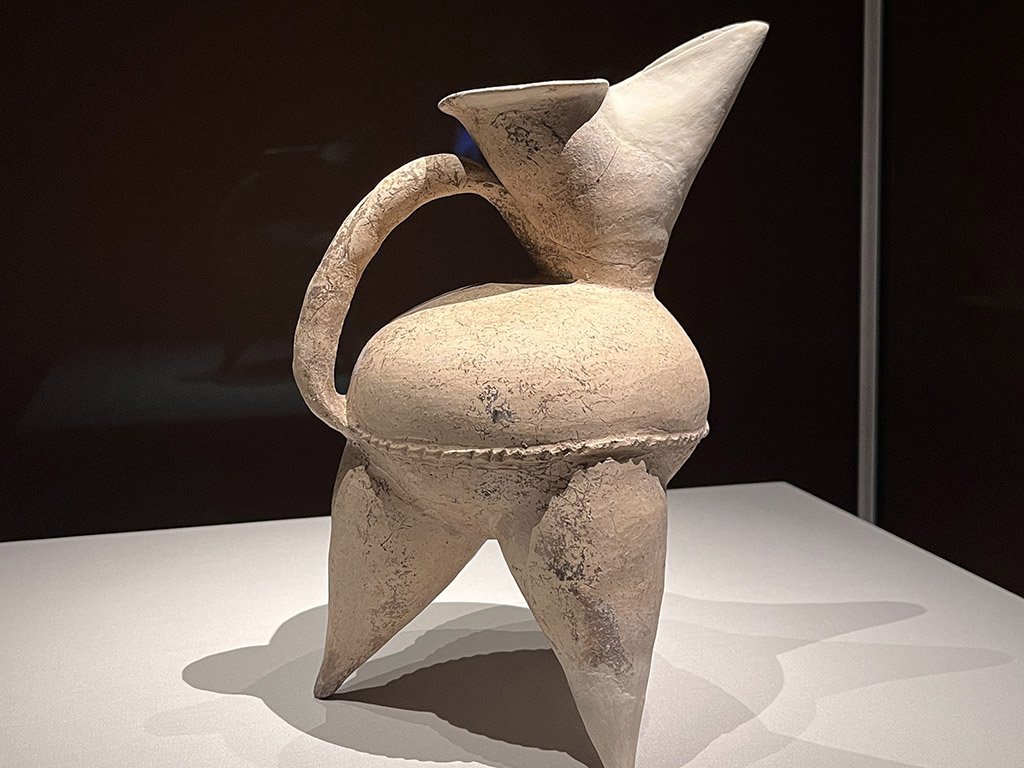
Gui-vessel, Mid to late Dawenkou culture (5,500-4,600 BP), Earthenware, Shangdong University Museum
Requiring firing at high temperatures and delicate hand building, white pottery was often reserved as burial objects for society’s elite. Items such as the white-coloured earthenware Gui-vessel were placed together with other white-pottery cups, vessels and jars, further endowing the prestige of the tomb owner.
Related Fantastic Chinese Blue and White Porcelain
Terra cotta sculptures, mostly handmade from red clay, of human and animal figures in various poses were unearthed by the tens of thousands in tombs such as from a site dated from the Shijiahe culture (5,300-3,800 BP).
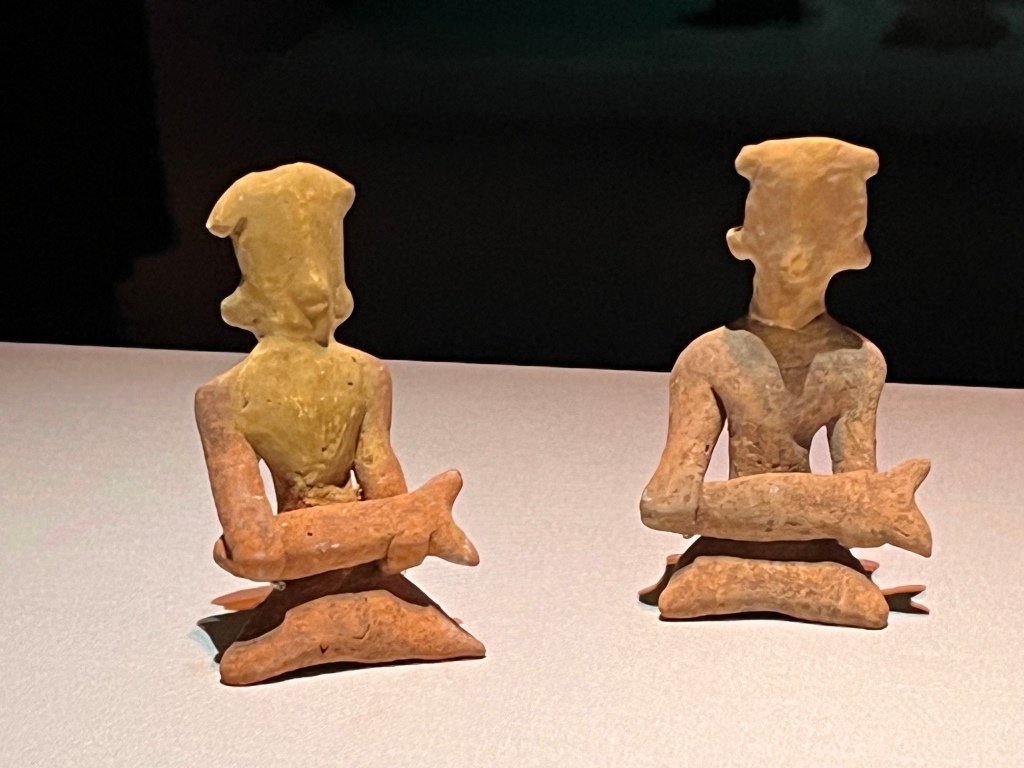
Human figure holding fish, Earthenware Shijiahe culture (5,300-3,800 BP), Jingzhou Museum
Clay figurines like those of a man holding a fish or fish-like instrument, a chicken and an elephant offer insights into the spiritual life of the ancients and the origins of Chinese civilisation.
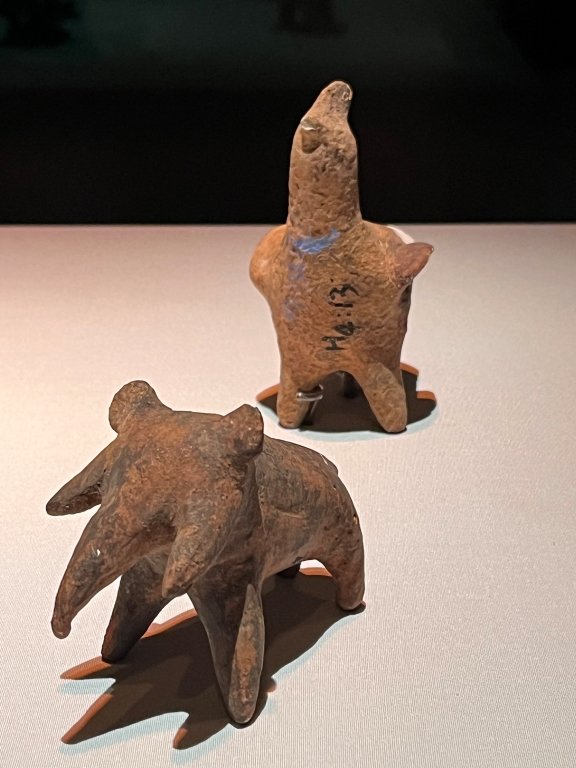
Elephant & Chicken, Earthenware Shijiahe culture (5,300-3,800 BP), Jingzhou Museum
Clay figurines a direct lineage to grave goods produced in proceeding cultures
These clay figurines provide a direct lineage to grave goods produced in proceeding cultures, such as in the grand Qin dynasty’s terracotta warrior army, complete with horses and individualised portraits of soldiers.
Related The Ancients believed the soul had an afterlife history of the world in 100 objects
Likewise, the Han dynasty popularised Mingqi, inexpensive, simply crafted clay funerary objects representing a comfortable, earthly life for burial purposes. Items replicated included farm animals, domestic servants, architectural structures, food and effigies of entertainers desired in the afterlife.
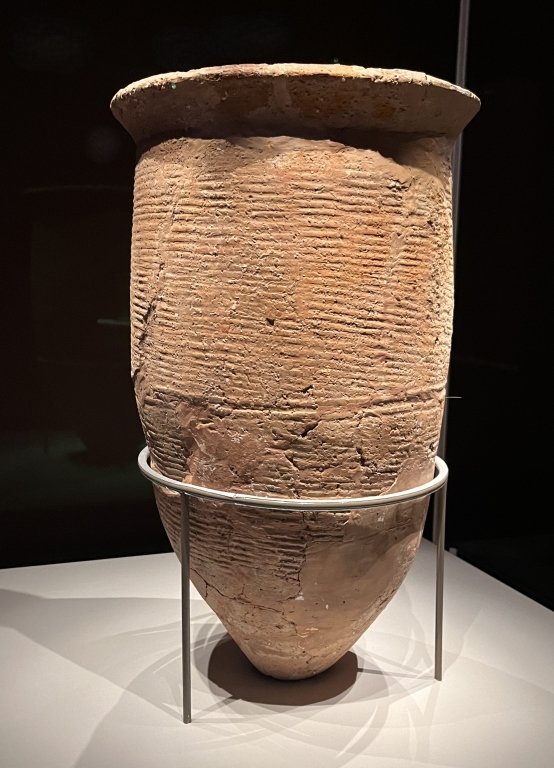
Jar, Earthenware, Shijiahe culture (5,300-3,800 BP), Shangdong University Museum
The volume and quality of potter production evolved. Standardisation and consistency of size and shape suggest that rudimentary industries made earthenware with some level of planned organisation.
Related Majestic Han dynasty China’s first Golden Age
With the use of the groundbreaking pottery wheel as a tool of production, earthenware leapt from being simply ordinary utilitarian products to luxury goods for the elites of society.
Taosi archeologic sites show advanced society of artisans
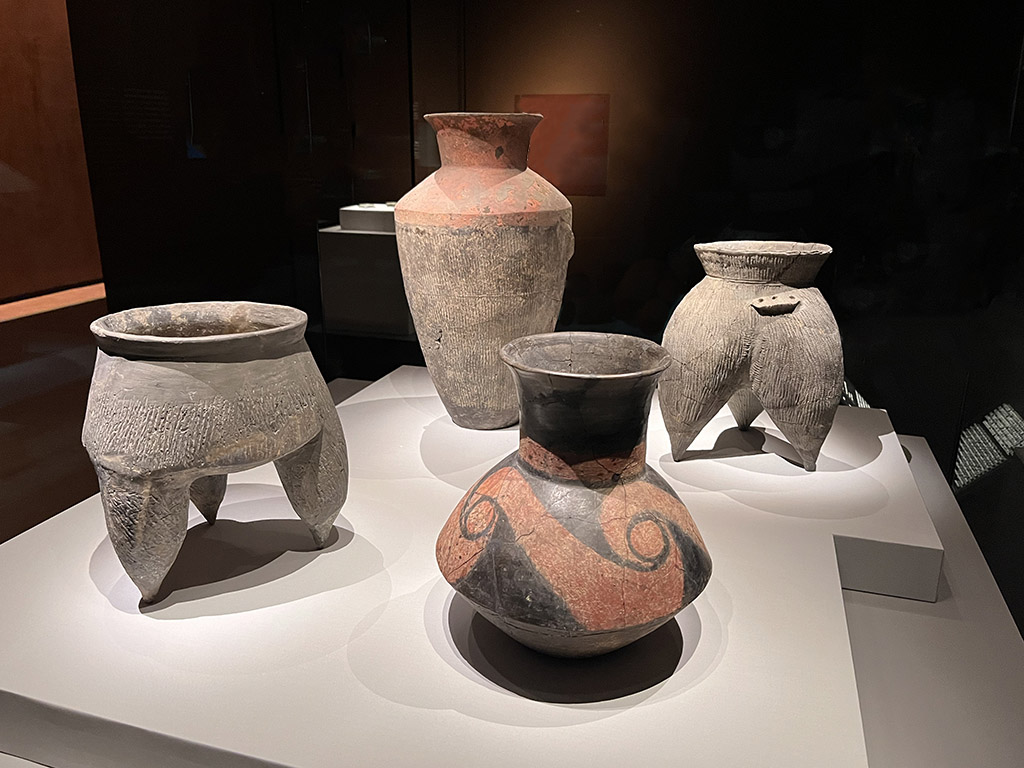
Jia vessels and Pot, Earthenware, Taosi culture (4,300-3,900 BP), Shanxi Museum
Earthenware Jia vessel pots and a drum found in the tombs of the Taosi culture (4,300-3,900 BP) reflected it was a hub of advanced craftsmanship. They carried forward characters of the technical innovations and techniques of pottery production and artistic traditions of earlier Neolithic societies.
Related Beautiful Tea Pots and Ware by Hong Kong Potters
The decorative patterns on the surface are like those produced thousands of years earlier, and items featuring a form of dragons further propel this motif and imagery onward to later times.
Related Year of the Snake artefacts exhibition
The Taosi culture archeologic sites show their cities were political and social centres, with surrounding areas populated with thousands of inhabitants. This would have provided the labour needed to build and defend a huge city enclosing large structures fortified with rammed earth walls encircled by a moat.
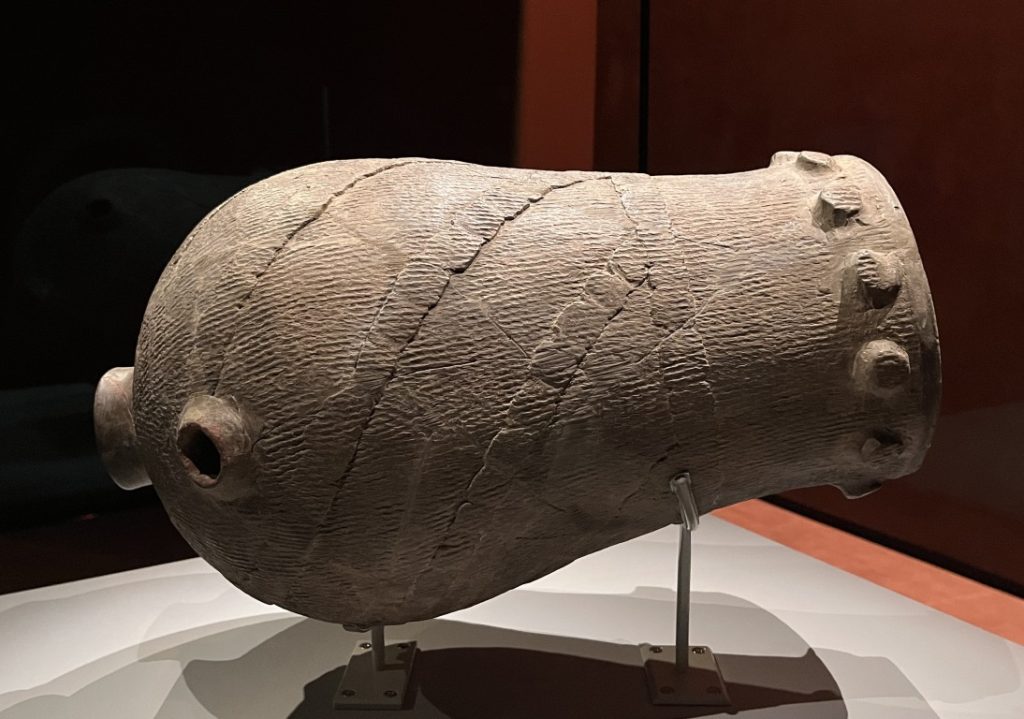
Drum, Earthenware, Taosi culture (4,300-3,900 BP), Shanxi Museum
Thousands of individual graves show hierarchy and socioeconomic differences. Most contained corpses without grave goods. Some tombs included a moderate amount of pottery and jade ornaments.
Related Tang dynasty golden age artistic highlights
A tiny percentage were laden with hundreds of burial goods, such as jade, pottery, skeletons of animals and musical instruments such as drums.
Shimao wealthy culture mysteriously abandoned
Of the most significant archaeological discoveries, the Shimao culture (4,300–3,800 BP) site is one of twenty-first-century China’s most intriguing and essential archaeological discoveries. The city’s enormous area included pavement, walls and grand carved stone structures decorated with low reliefs of human and animal features.
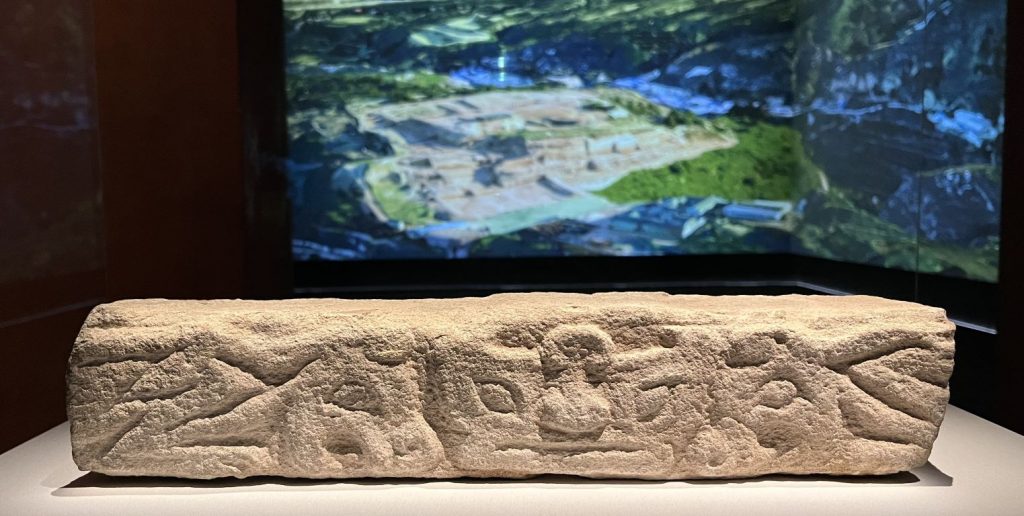
Relief with a tiger and a human face, Stone Shimao culture (4,300-3,800 BP), Shaanxi Provincial Institute of Archaeology
A highlight item from the site is a stone sculpture with relief designs of a human figure and tigers. These carvings reflect the people’s social complexity and religious beliefs.
Related Big Buddha a colossal gift for people of religious faith
The city’s construction was monumental, covering an area exceeding four million square metres. The effort required to build and maintain the city reflects that the Shimao culture had the power to mobilise hundreds of thousands of workers.
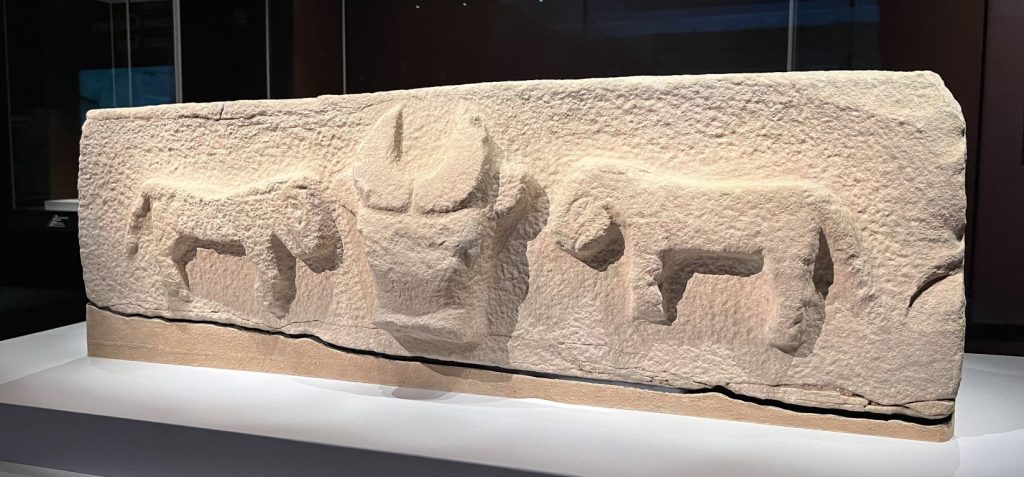
Relief, Shimao culture (4,300-3,800 BP), Stone, Shaanxi Provincial Institute of archaeology
This required considerable wealth, as it was the largest city in East Asia during its time. It reshaped the understanding that the Central Plain was the cradle of Chinese civilisation. Although the city was inhabited for around 500 years, mysteriously, it was abandoned.
Origins of Chinese Civilisation revealed by Neolithic societies
The Shimao site shows evidence of planned goods manufacturing on a scale purpose-built for export. The finding of more than 12,000 exquisite bone needles, linen and silk suggests they were made for trade.
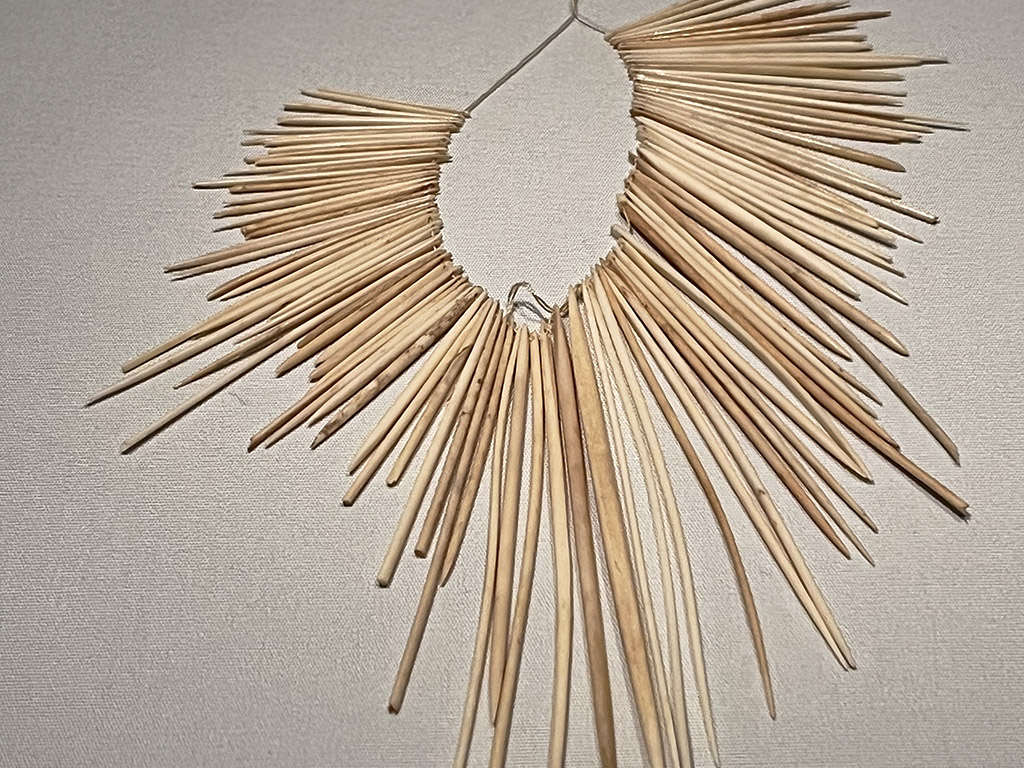
Needles, Bone Shimao culture (4,300-3,800 BP), Shaanxi Provincial Institute of Archaeology
The needles are exceptionally well produced, demonstrating advanced bone-tool-making techniques. They vary in length from two to ten centimetres and have tiny eyes requiring meticulous craftsmanship. These needles and other items made of bone suggest that Shimao was a regional bone-tool manufacturing centre.
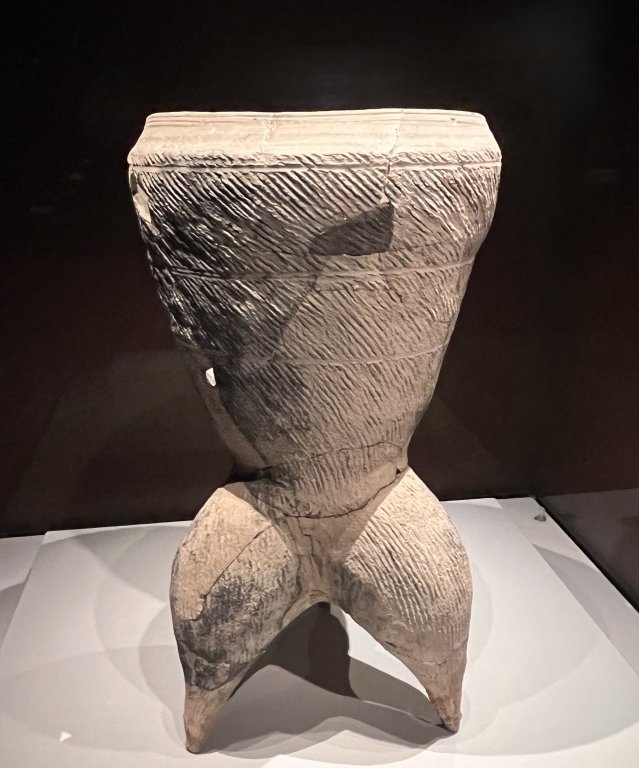
Yan vessel, Shimao culture (4,300-3,800 BP), Earthenware, Shaanxi Provincial Institute of archaeology
Archaeological findings from these Neolithic societies reveal the formative stages and the origins of Chinese civilisation, which laid the foundations for the beginning of the dynastic era with the establishment of the Xia dynasty.
Bronze Age Erlitou mysterious ancient culture Origins of Chinese Civilisation
With no written records from the Xia dynasty, people only knew of a mysterious ancient culture on the Central Plains based on folklore and fables passed on by oral tradition. Supplemental understanding of the artefacts and remains found in archaeological sites further supports the ancestry and history of the Xia dynasty.
Related Funerary pottery of the Tang dynasty
The ruins of large settlements, such as the Bronze Age Erlitou site in Henan province, are believed to be physical proof of a Xia dynasty-era society.
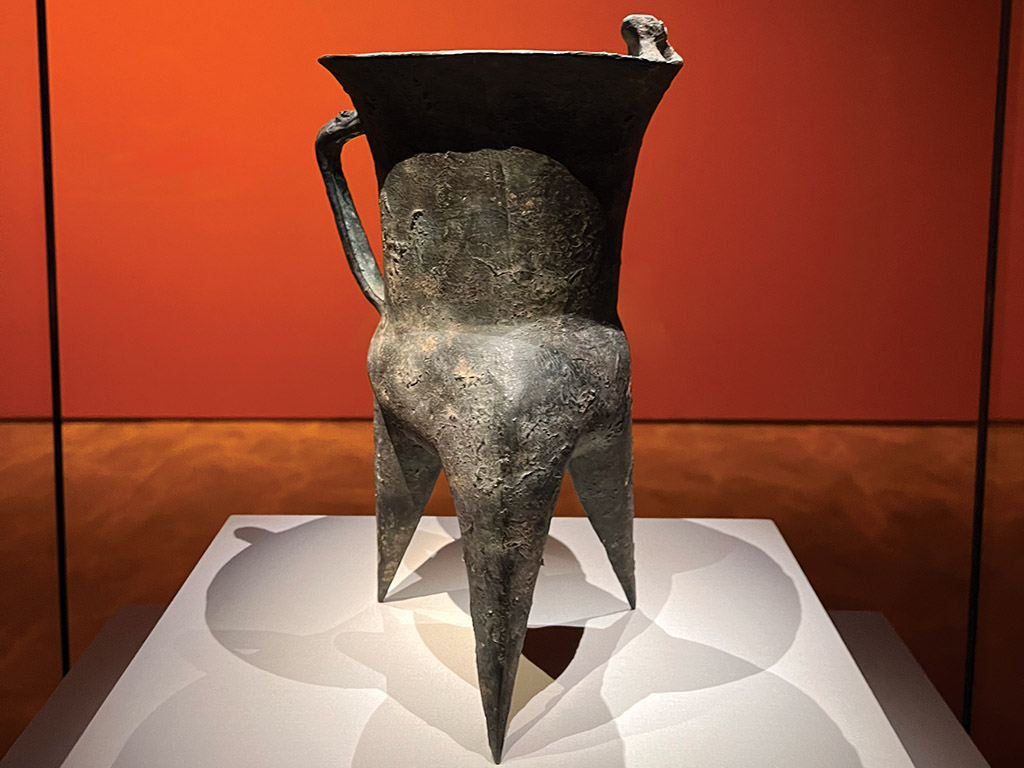
Jia Vessel, Bronze Erlitou culture (3,800-3,500 BP), Erlitou Site Museum of the Xia Capital
Many fine artefacts unearthed from the Erlitou site, such as a bronze Jia vessel and a Jue-vessel, used to warm alcoholic beverages, show the advances in metallurgy that signified the beginning of the Chinese bronze age and the formation of a complex and prosperous society.
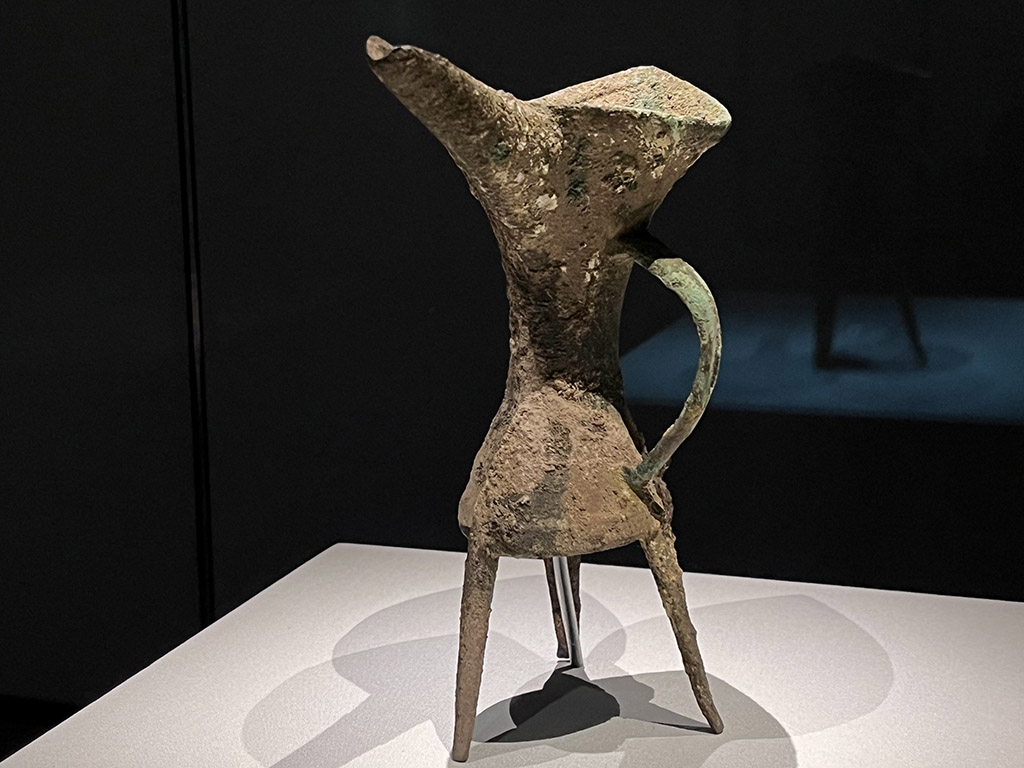
Jue-vessel, Erlitou Culture (3,800-3,500 BP), Bronze, Erlitou Site Museum of Xia Capital
Xia, Shang and then Zhou dynasty dynasties led to unified China
The Xia dynasty was the first state with a kingship, it was followed by the Shang and then the Zhou dynasty, which lasted almost 800 years – the longest reign in Chinese history.
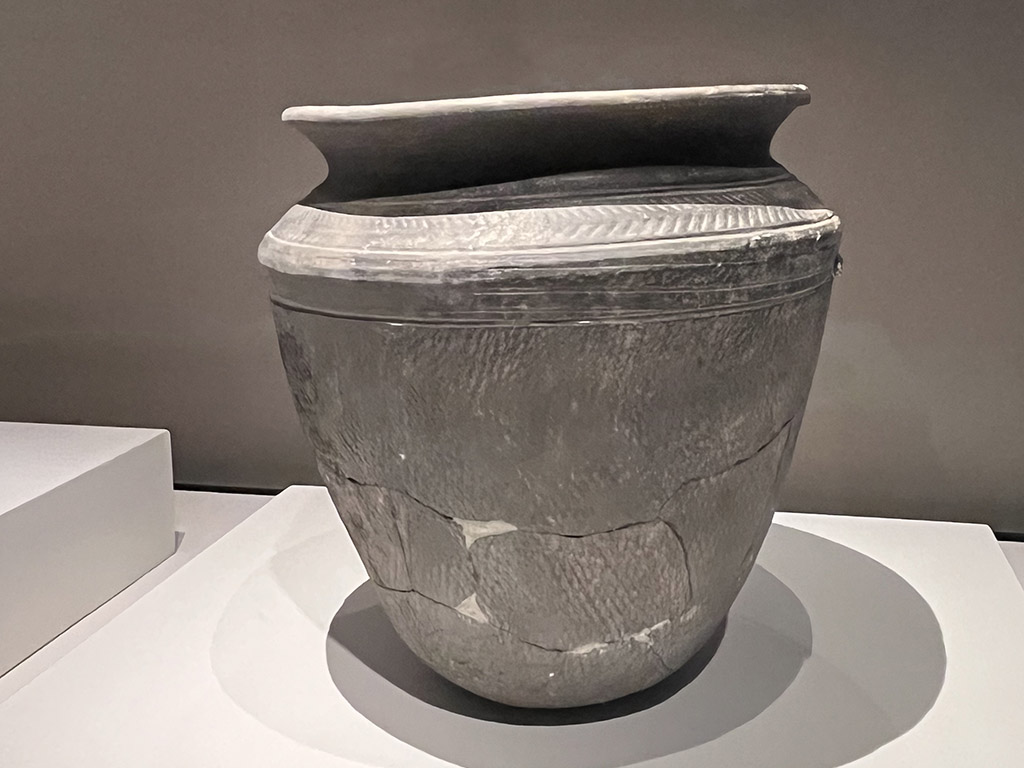
Zun-vessel, Erlitou culture (3,800-3,500 BP), Earthenware, Erlitou Site Museum of the Xia Capital
The decline and fall of the Zhou led to the Warring States period, which ended when the story of China pivoted dramatically as the Qin dynasty rose after defeating and then consolidating the territories from multiple states.
Related Forbidden City and Palace of Versailles most remarkable treasures
This was the first unified state under Qin Shi Huang, the first Emperor of China. This title would be used by the ruling monarch for the next two millennia until the end of imperial rule, with the fall of the Qing in 1911 and the establishment of the Republic of China in 1912.
Related Imperial portraits of luxurious life of Qing Emperors and Empresses
The Origins of Chinese Civilisation exhibition provides a much welcomed foundation story leading to the founding of the modern Chinese nation.
*A note about the date scale used. Throughout the exhibition, the time scale of “BP”, meaning “Before Present”, is used to notate the age scale. The BP scale references 1 January 1950 as the standard present year and is often used in historical archaeology that spans a significant length of time. So, the date of 6,000-5,000 BP is converted by 6,000 BP minus 1950, equalling 4,050 BCE.
Text & Photos Cammy Yiu