
Seductively beautiful Chinese and Swiss Paper Cutting art

Paper Cutting tradition and perfection from China and Switzerland
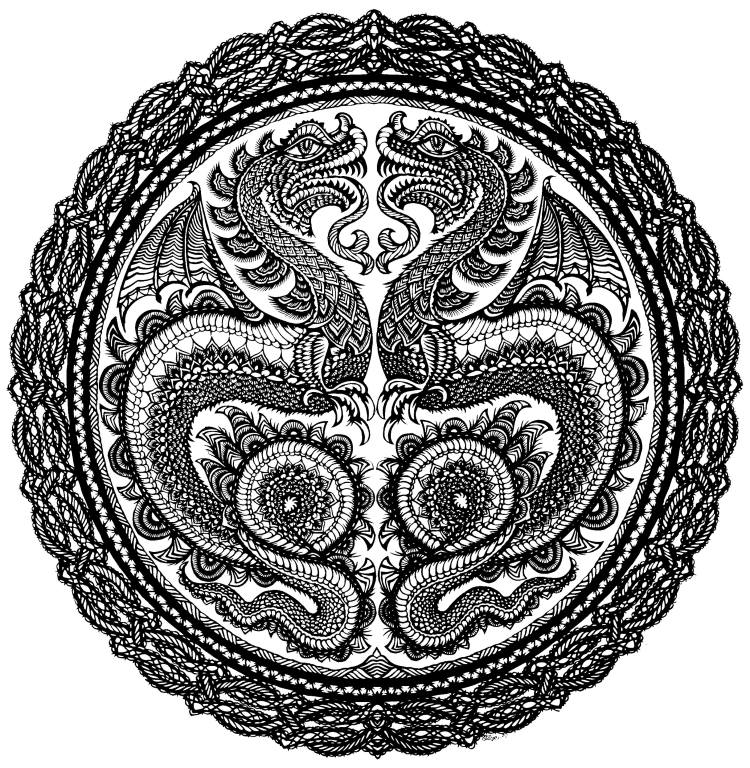
Two Dragons, Ernst Oppliger, 1990, Photo courtesy of UMAG
Paper Cutting: Invented in China, Traded to the world
First came paper, then came scissors. As you might have guessed, the tradition of paper cutting originated in the country where paper was invented – China. Seventeen hundred years later, international trade brought the art form to Switzerland.
Basket with Ducks & Rabbits, Albertus Cerbrand Reesen, 1713
This month, the University Museum and Art Gallery (UMAG) of the University of Hong Kong is bringing these two paper-cutting traditions together again.
Related Chinese Reverse Glass Painting from the Mei Lin Collection
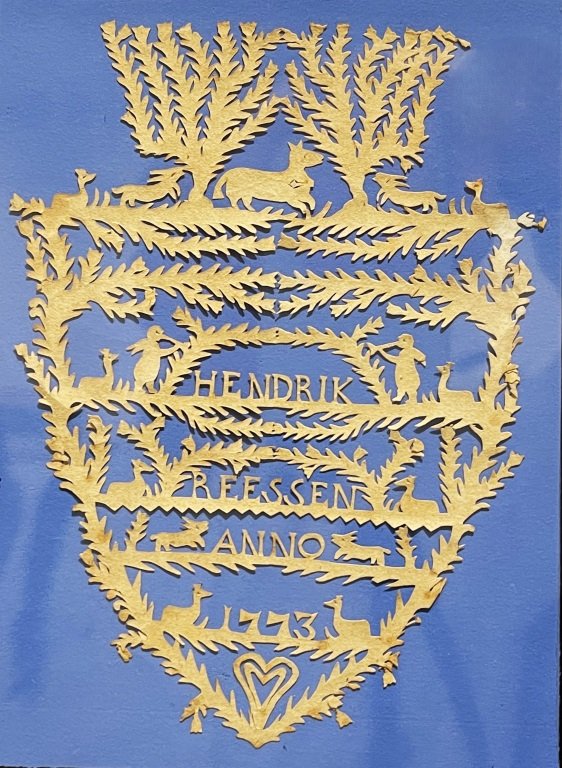
The idea for this cultural exchange came from curator Dr Harald Kraemer, who, while visiting the town of Interlaken in Switzerland, heard about a collection of paper cuttings dating back to 1773.
Related Neolithic Clues to the Origins of Chinese Civilisation
He visited with the collector, Niklaus Wyss, and they realised that, combined with UMAG’s Chinese paper cuttings, they could tell stories about art, trade, history, propaganda, and religion using aesthetically pleasing objects. So instead of one exhibition, they created two.
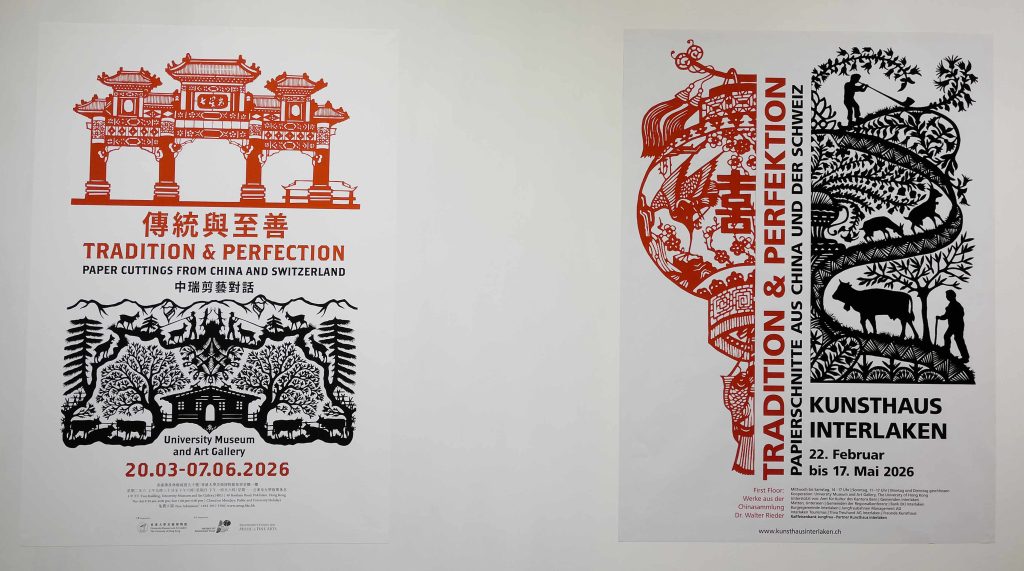
Catalogue Covers, UMAG Paper Cutting Exhibitions
This exhibition, Tradition & Perfection Paper Cuttings from China and Switzerland, is paired with a similar exhibition at the Kunsthaus Museum in Interlaken.
Related Bingyi contemporary artist, breakthrough Chinese ink painting
Content for the shows comes from the Elsbeth and Niklaus Wyss collection, 1,600 Chinese paper cuttings in the UMAG’s collection, the Guanling Paper Cutting Art Museum in Guizhou, and the Jieyiyuan Paper Cutting Art Center in Pingyao, both in Shanxi province.
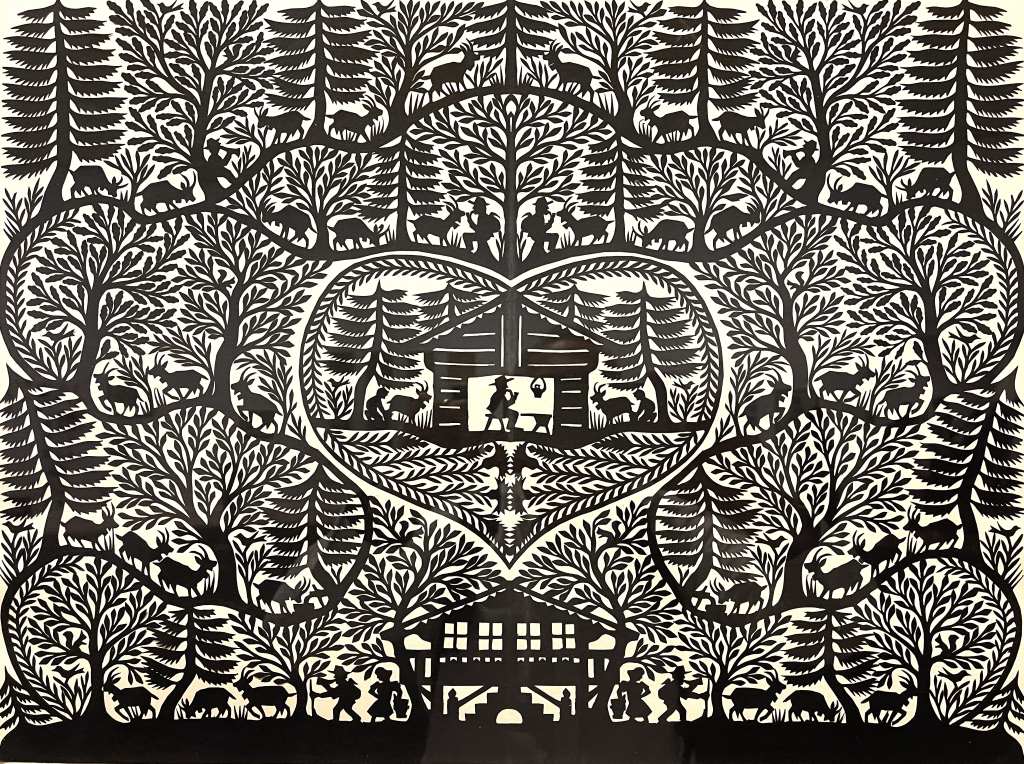
Alpine Life in Summer, David Regex, 1975
The invention of paper is attributed to Cai Lun, who recorded the method of paper production during the Eastern Han dynasty (25–220 CE).
Related Lei Chung Uk Han Tomb and Garden
The craft of paper cutting, also known as jianzhi, became a tradition during the Ming (1368-1644) and Qing (1644-1912) dynasties. The paper cuttings were used to decorate walls, doors and windows; and to adorn lanterns and fans.
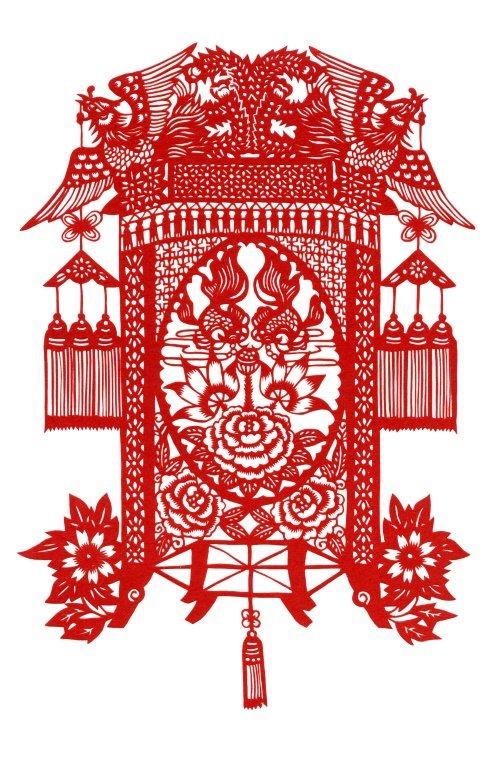
Lantern from the Imperial Palace,
From the series’ Palace Lanterns’, Photo courtesy of UMAG
Because paper was inexpensive and cutting could be learned by anyone, the practice developed into a community-based tradition, predominantly in rural areas, often passed down within families, especially from mother to daughter.
Listed as a UNESCO Intangible Cultural Heritage
In 2009, Chinese Paper Cutting was inscribed on UNESCO’s Representative List of the Intangible Cultural Heritage of Humanity.
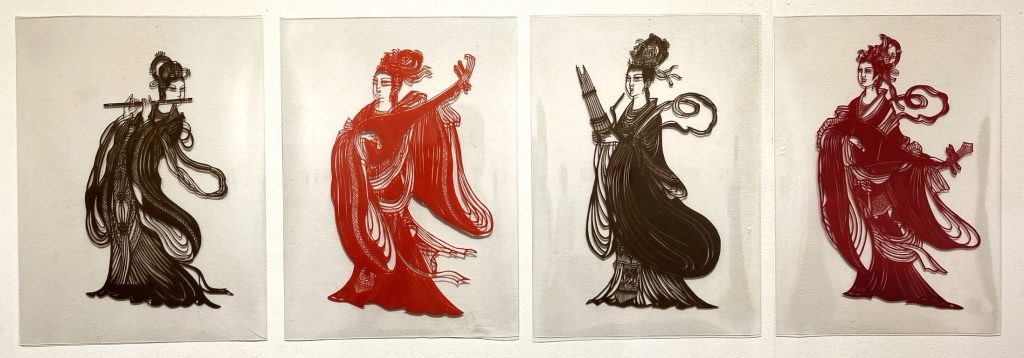
Beauties of Ancient China
Swiss paper cutting (Scherenschnitte) originated from jianzhi and spread to Europe via the Silk Roads in the seventeenth century.
Related Yuan Blue and White porcelain from Jingdezhen
Amsterdam, being the global headquarters of the Dutch East India Company, was the hub, receiving Chinese paper cuttings and the associated techniques either from company ships or overland from Italy and Spain.
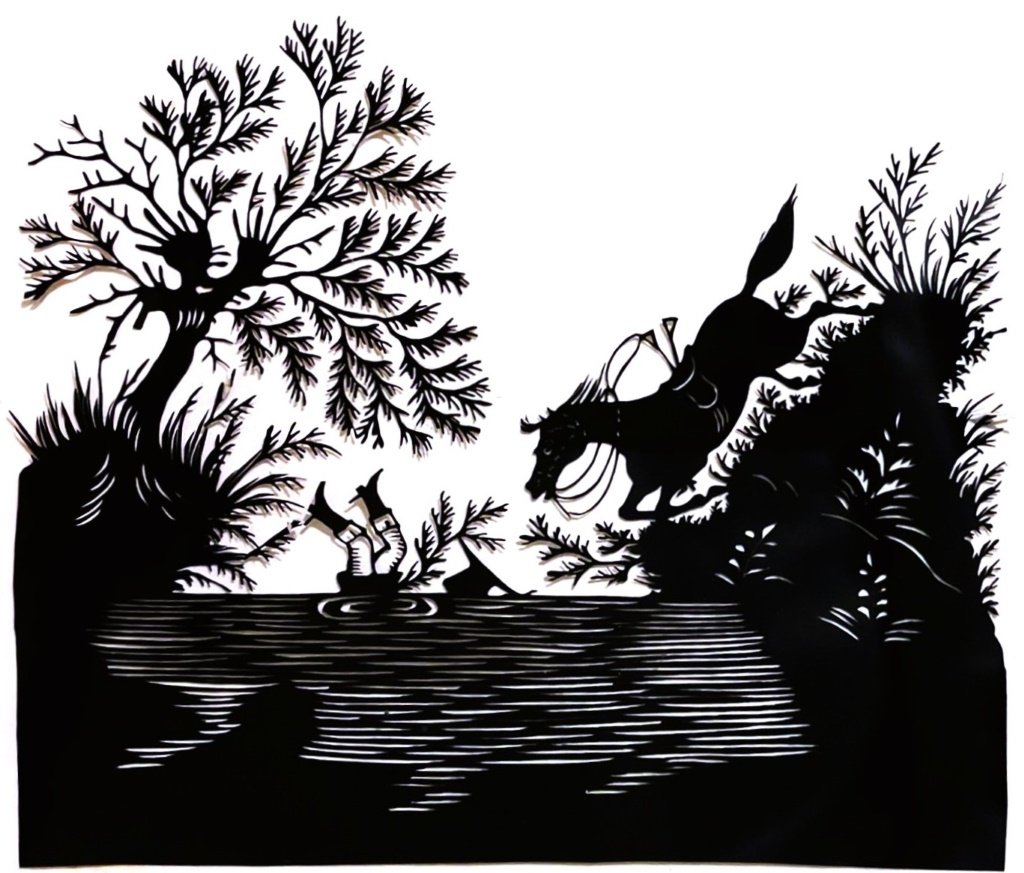
Falling off Horseback, Karl Fohlich, 19th century
Jianzhi is usually used to commemorate Chinese practices and festivals. Red, being the colour of good luck, is the default choice for paper. Themes include tigers or peacocks, Beijing opera masks, views of pagoda towers, or the scenic beauty of a particular region.
Designs prioritise symmetry and auspicious meanings, such as fish for abundance, peonies for prosperity, and bats for good fortune.
Related The exciting Year of the Horse
Elements are often combined and use word play (homonyms and homophones), words that either sound the same or have alternate meanings, to create motifs. For example, a pine tree with a crane symbolises longevity and represents wishes for health in old age or a lasting marriage.
Stories depict well-known tales or instructive narratives
Subjects also tell stories, depicting scenes from well-known tales or presenting instructive narratives.
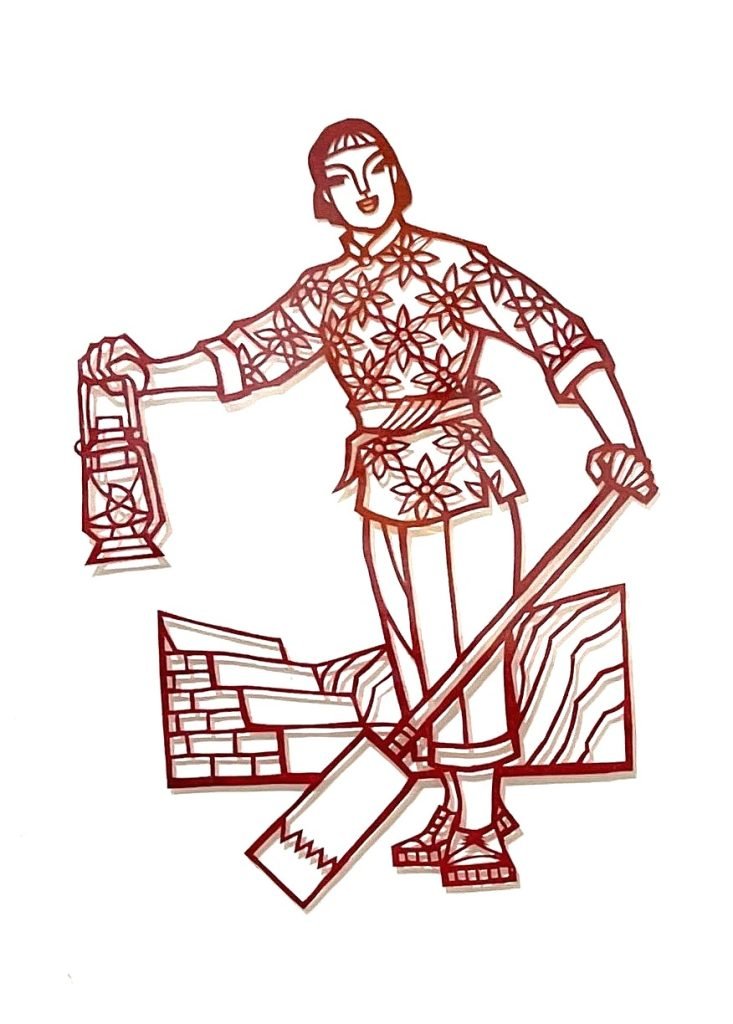
Woman with Lantern & Spade, Dancer from The Red Detachment of Women
As with any tradition, there are rules. Traditional jianzhi begins by folding the paper, drawing or tracing a motif and then cutting it with either scissors or a sharp blade.
Related Chinese Reverse Glass Painting from the Mei Lin Collection
Cuts must connect without breaking the structure, using only scissors or knives on a single unmarked sheet. Using glue is taboo.
Related Tea ware from the Song dynasty on show alongside contemporary artists Yan Yung and Inkgo Lam
Cutting folded paper results in balanced yin-yang symmetry, with cutting styles of either yin ke (removing the image to leave outlines) or yang ke (removing the background to reveal solid figures).
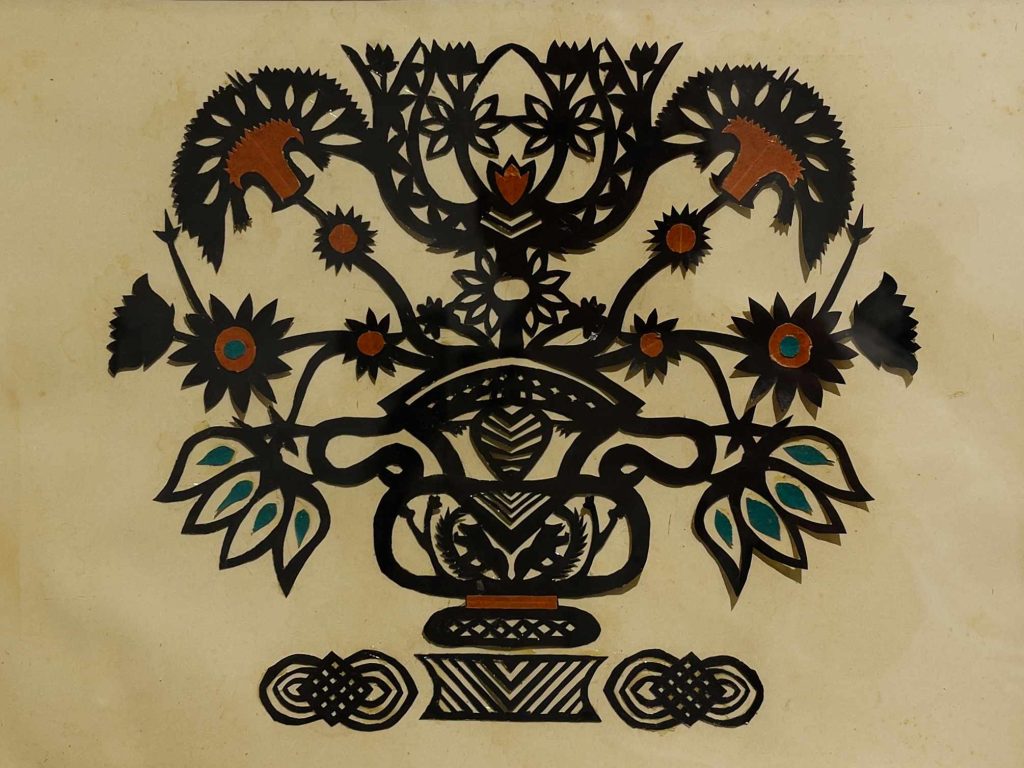
Flower Vase, Johann Jakob Hauswirth, 1860
Based on Chinese practices, Scherenschnitte took root in the 18th-19th centuries, with Johann Jakob Hauswirth credited as its pioneer around the mid-19th century for creating dense, detailed, black-paper scenes of Alpine life.
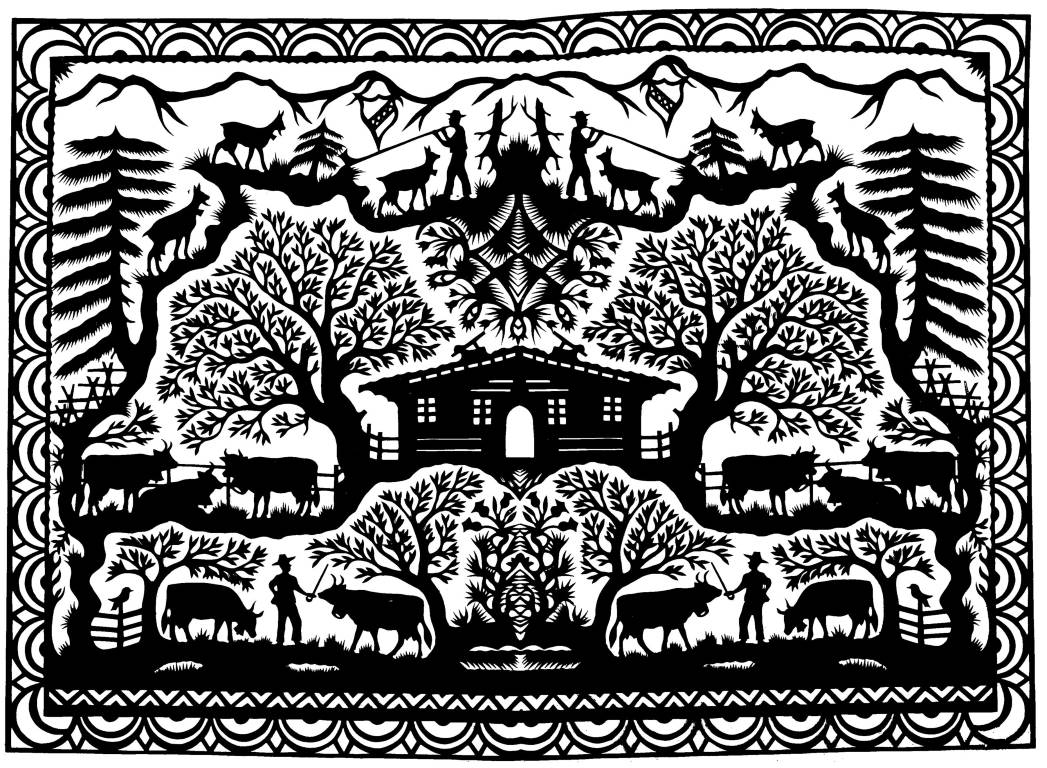
Mountain Hut with Cows, Goats, and Alphorn Players, 1980, Christian Schwizgebel, Photo courtesy of UMAG
When asked what he appreciated about Swiss paper cuttings, Niklaus Wyss, the collector on hand for the opening, pointed to Ernst Oppliger’s Large Tree. He says, “If you are five metres away, you can see it’s a tree, it’s cows, it’s anything else.
Related History of China in Silk and The Chris Hall Collection
But if you go near, you can see here: these are goats; here also; but here you have squirrels, for example, everything. You have birds, and here also, a squirrel or something like this, he caught. That’s one thing that is interesting for me: it has a double intention.
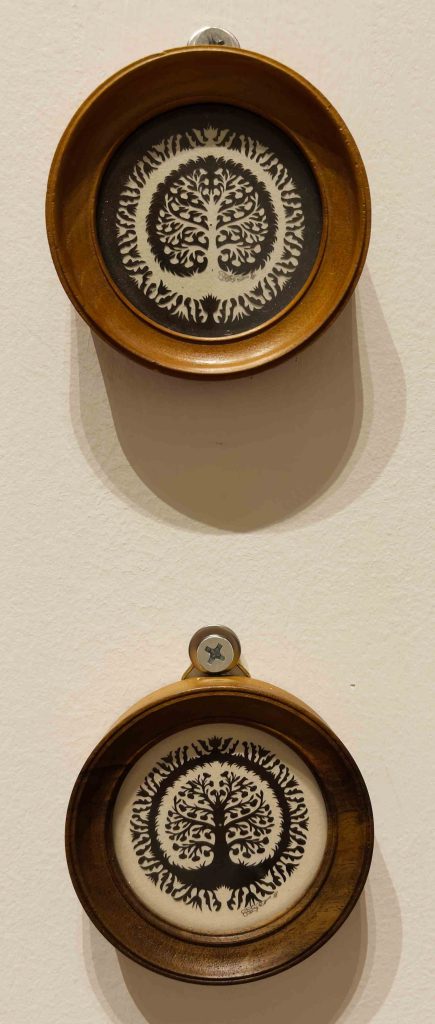
Ernst Oppliger, Small Tree, 1990
From far away, you can see it’s a paper cut, and if you go near, you can see the details.” The density of detail tells a story and invites lingering.
Related Sigg Collection Inner Worlds Chinese art from the mid-1990s to 2010
Yin-yang, which in the Swiss vernacular is referred to as “as above, so below”, can be found in Ernst Oppliger’s tree series. In his two Small Tree works, one is the negative of the other.
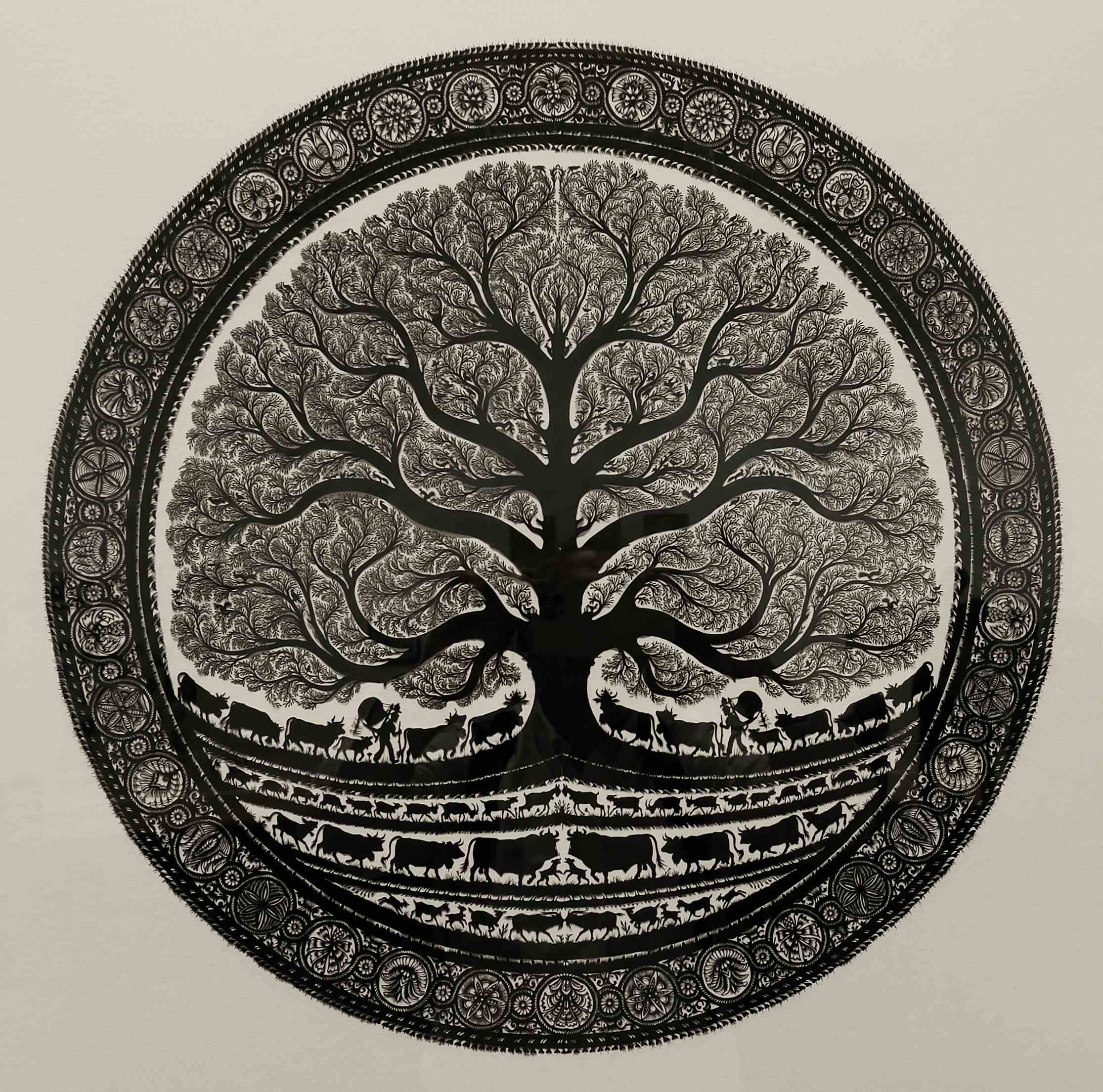
Ernst Oppliger, Large Tree, 1983
In his Large Tree, the narrative refers to springtime cattle herding up the mountain. This Scherenschnitte speaks to the ever-recurring cycle of the seasons depicted by the ascent and descent from the Alps.
Related Kings’ Inscriptions: Contemporary Interpretations of Traditional Calligraphy
Oppliger gives homage to jianzhi with his Two Dragons, and Hou Quanying’s Phoenix and Dragon (symbolic of male–female or heaven–earth relationship) is positioned beside it in this exhibition.
Related Year of the Dragon celebrated with stunning watercolour & video
The motif of the ever-recurring cycle of the waxing and waning forces of life, as seen in the dragon and phoenix, is mirrored in this Scherenschnitte depiction of the ascent and descent from the Alps.
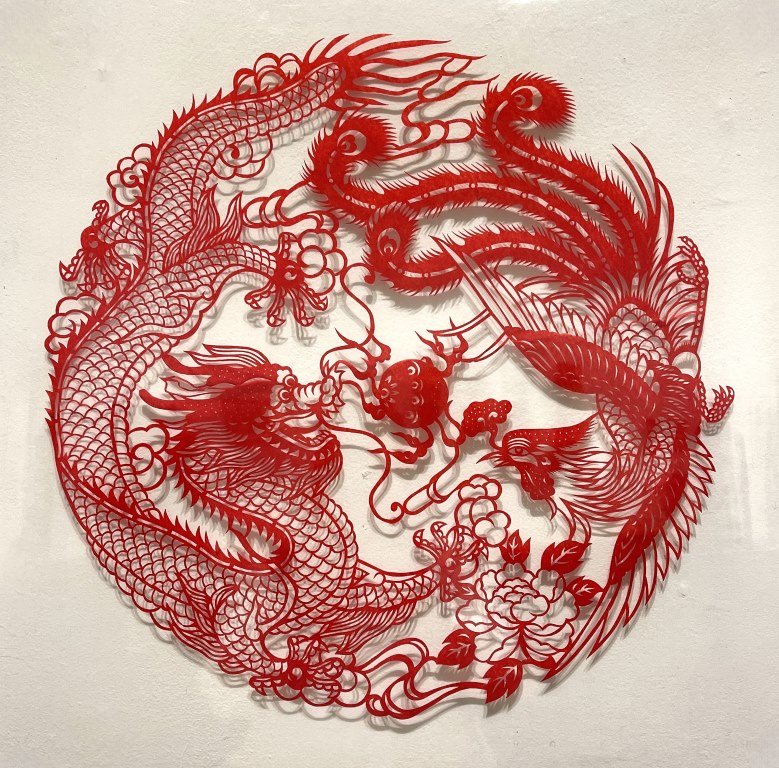
Phoenix & Dragon, Hou Quanying, 2025
The biggest difference between jianzhi and Scherenschnitte is permanence: in China, a cutting is produced and then discarded. The next year, you make a new one.
Related Inkstones history, artistry, and passion of Chinese culture
They are not dated or signed and, when working at scale, use CNC machines (Computer Numerical Control machines that automate cutting with a laser or an oscillating knife).
The difference between jianzhi and Scherenschnitte is permanence
In Switzerland, Dr Kraemer says, “you make one, you work hard on it for months, and then you put it in a frame, you sign it.”
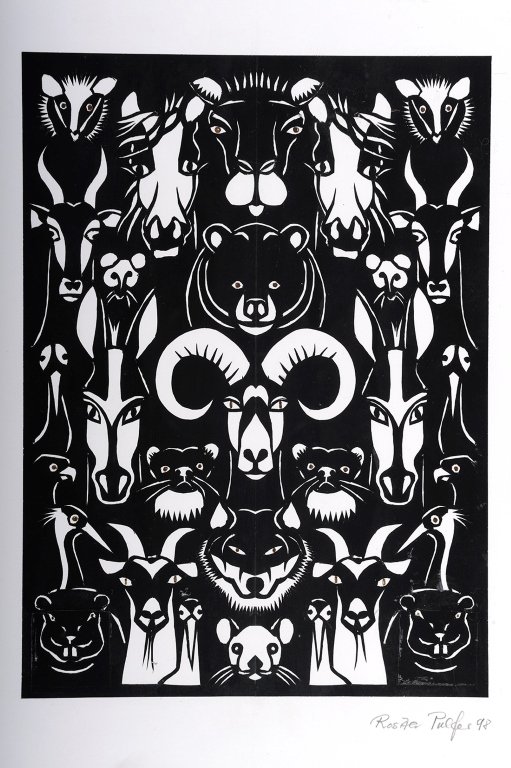
Wild Animals, 1998, Rosita Pulver, Photo UMAG
The Swiss continue to prefer traditional methods and value the minor imperfections of objects made by hand.
Related Chinese-Cuban Wifredo Lam, a friend of Picasso, found his voice through art
Hong Kong Snowflake by Nick Tsao, a Hong Kong-based architect, was commissioned by Dr Kraemer for this exhibition because he “wanted also to have something for the 21st century, something really modern, something unusual, very unique and related to Hong Kong.”
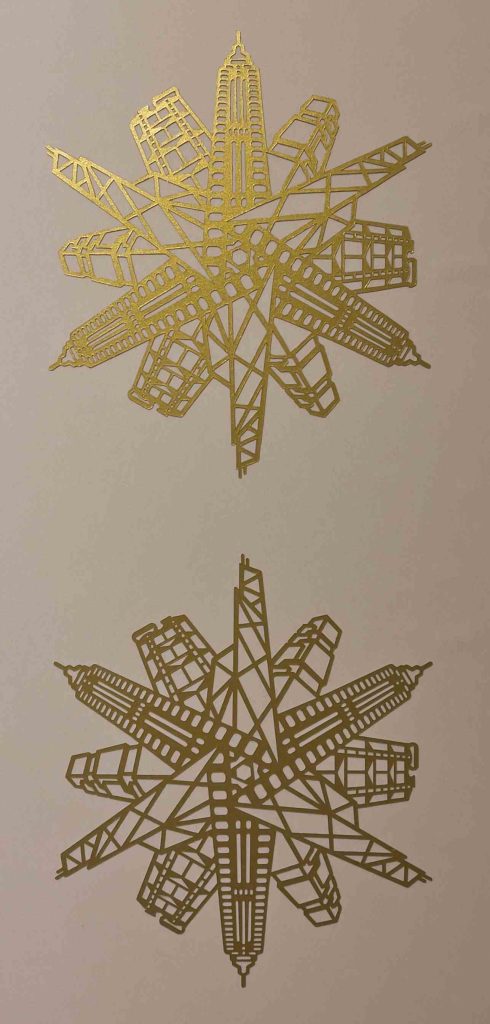
Hong Kong Snowflake, Nick Tsao, 2026 (Top hand cut, bottom CNC machine)
Tsao did this by creating a snowflake from some of Hong Kong’s most prominent buildings. To honour both tradition and new technology, one is hand‑cut, the other by a CNC machine.
Related Architectural legacy, fabulously designed buildings by I M Pei
The exhibition draws on over 1,600 jianzhi from the UMAG collection, and Dr Kraemer wanted to show as many as possible.
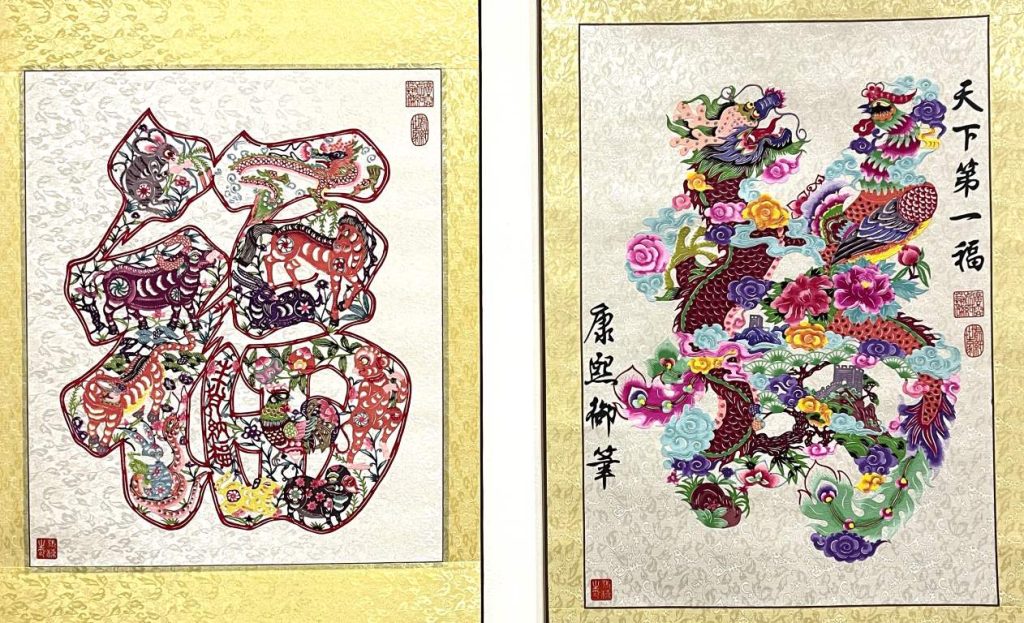
Zodiac Blessing & Phoenix and Dragon, Zhang Dong, 2025
They include landscape and architecture, the Great Wall and the Summer Palace, and many pagodas, including Ying Ying Pagoda of the Pujiu Temple and Yongji, Twin Pagoda Towers of the Yongzuo Temple, Taiyuan, by Zhang Duotang from the Guangling Paper Cutting Art Museum.
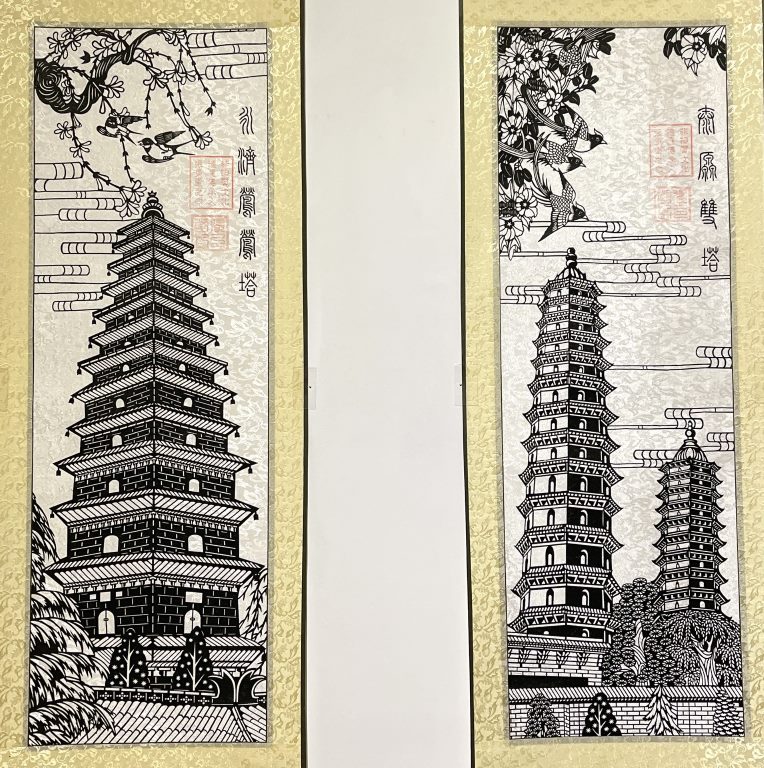
Ying Ying Pagoda of the Pujiu Temple (left), Yongji Twin Pagoda Towers of the Yongzuo Temple, Taiyuan (right), by Zhang Duotang, 2025
The four noble characters created in Zhang Dong’s negative style consist of plum blossoms as a sign of endurance (winter), orchids as a symbol of righteousness (spring), empty bamboo as a symbol of humility (summer), and chrysanthemums as a sign of purity (autumn).
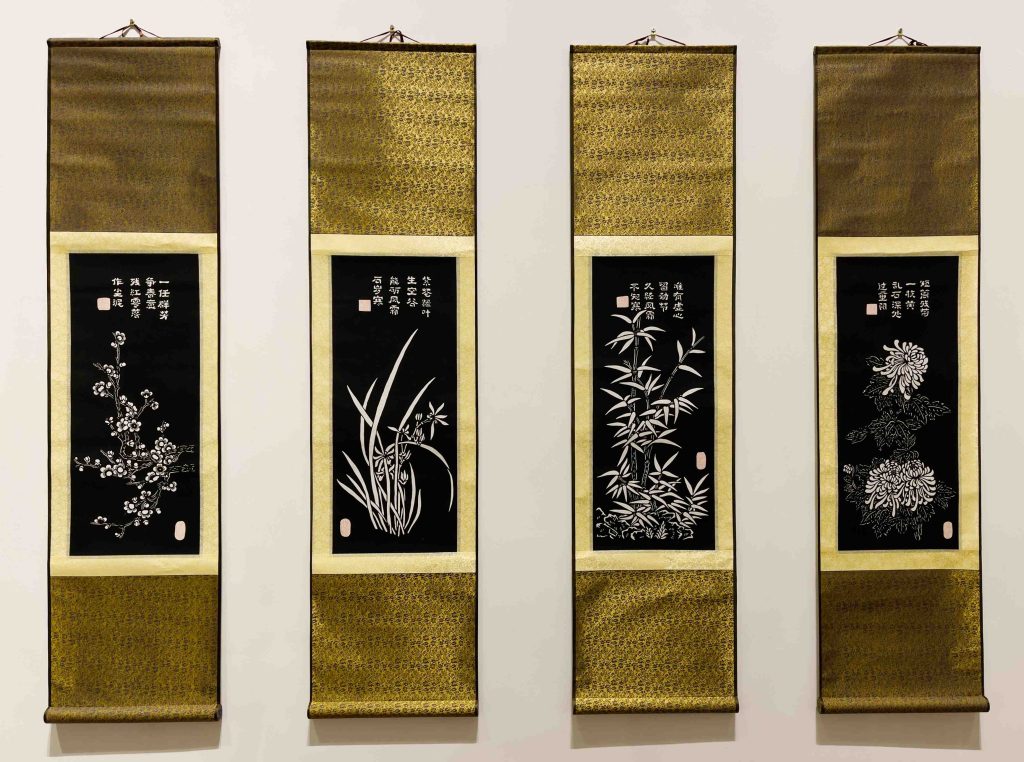
The Four Noble Ones, Zhang Dong, 2025
While four different plants characterise the four seasons, this is represented by a single tree made by Matthias Kundig, containing four smaller trees that show what the tree looks like in winter, spring, summer and autumn.
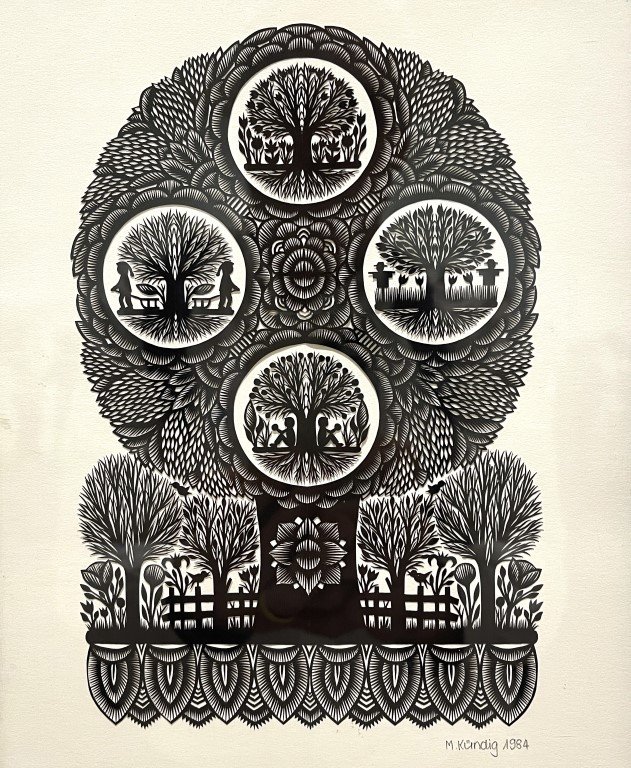
Tree with Four Seasons, Matthias Kundig,1984
The most controversial paper cut in the exhibition is Landscape, which captures the soul of Chinese landscape painting, including fog. But it breaks all the traditional rules; glue and three colours of discontinuous paper.
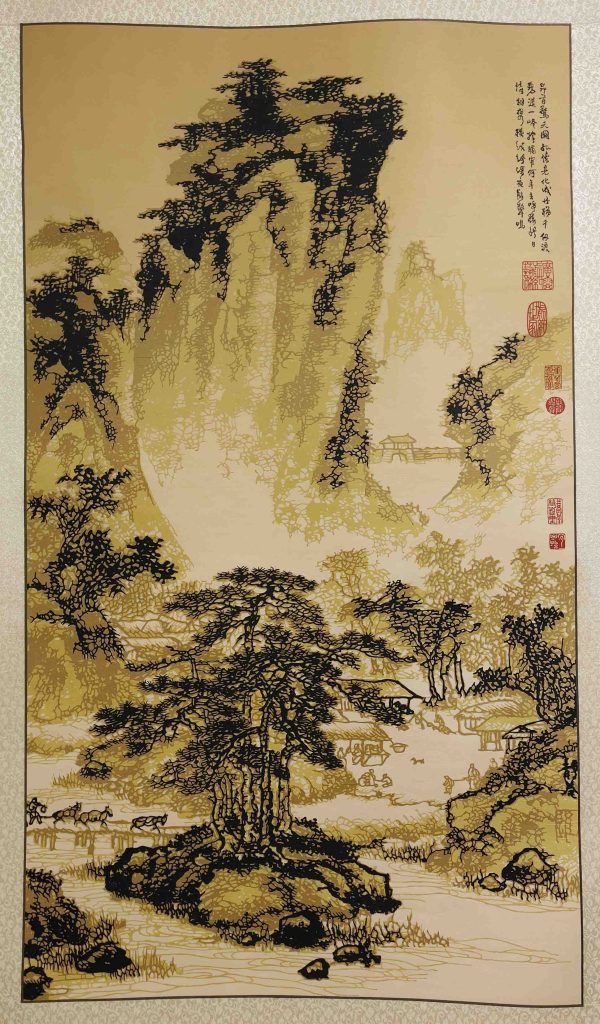
Landscape, 3 colored paper cutting, Guangling Paper Cutting Art Museum
Dr Kraemer said the Swiss’s initial reaction was, “This artist will burn in hell.” But they also say, “This is amazing.” Sometimes it is necessary to break the rules to innovate.
Related Qing dynasty Zodiac sculptures from Old Summer Palace
There you have it, from ancient Chinese jianzhi to Swiss Scherenschnitte, paper cutting embodies trade, culture, and innovation. From rural traditions to modern CNC precision, this UMAG showcases an art form that accurately reflects the world we live in.
Text and photos Martin Wray


