
Bargain Feast Makes Memories at the Temple Street Night Market

Night of Delicious Delights at Temple Street
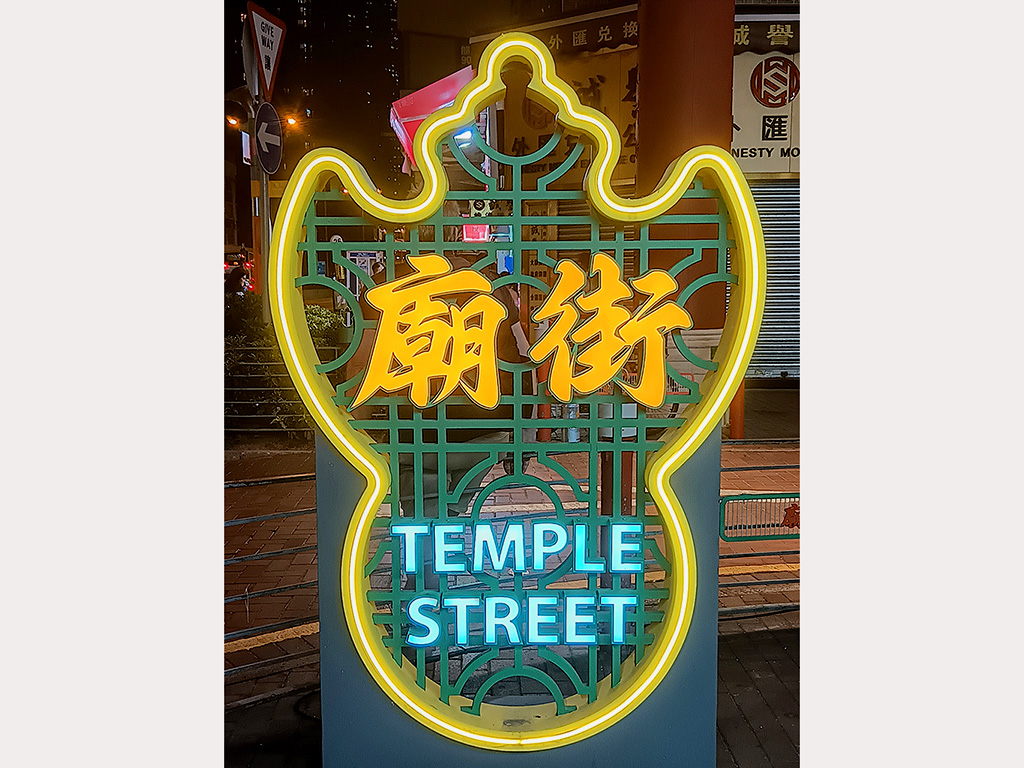
Iconic Hong Kong Temple Street
Fabric lanterns, yellow and red, illuminate the wide Temple street with their warm glow. Friendly chatter is heard all around, amid wide eyes and nibbling mouths.
We’re at the entry point to Temple Street, and it’s like something out of a movie.
Originating in China, the rich history of night markets begins with the Tang dynasty (618-907), whereafter they gradually spread through Southeast Asia and the rest of the world.
Night Market stretches 100 metres
Nestled at the edges of large cities, their energetic nature stands in welcome contrast to the surrounding sleeping districts. On our visit to Hong Kong’s Temple Street, we were eager to see what this particular night market offered.
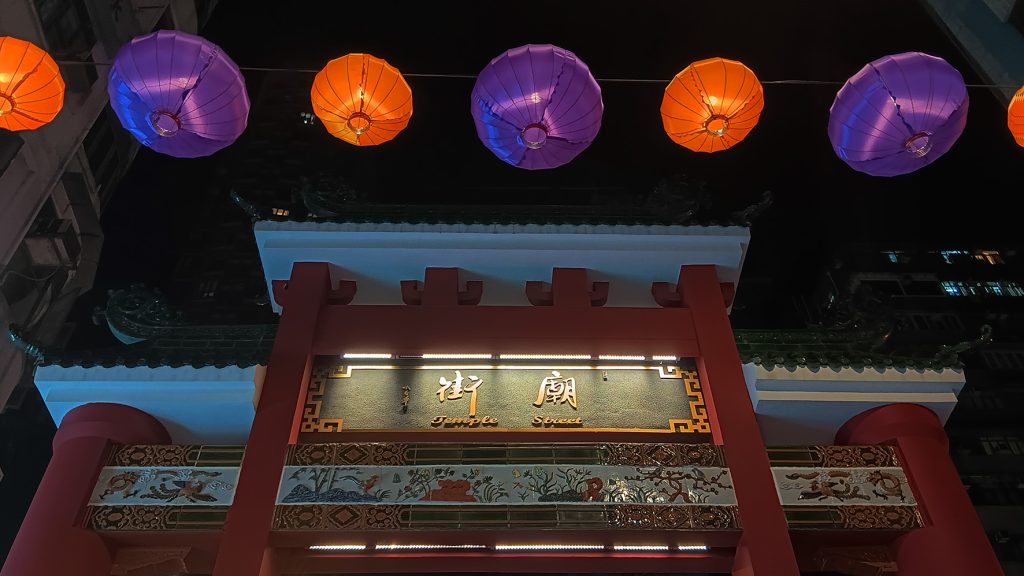
From Jordan Road to Nanking Street, the Temple Street Night Market stretches approximately 100 metres.
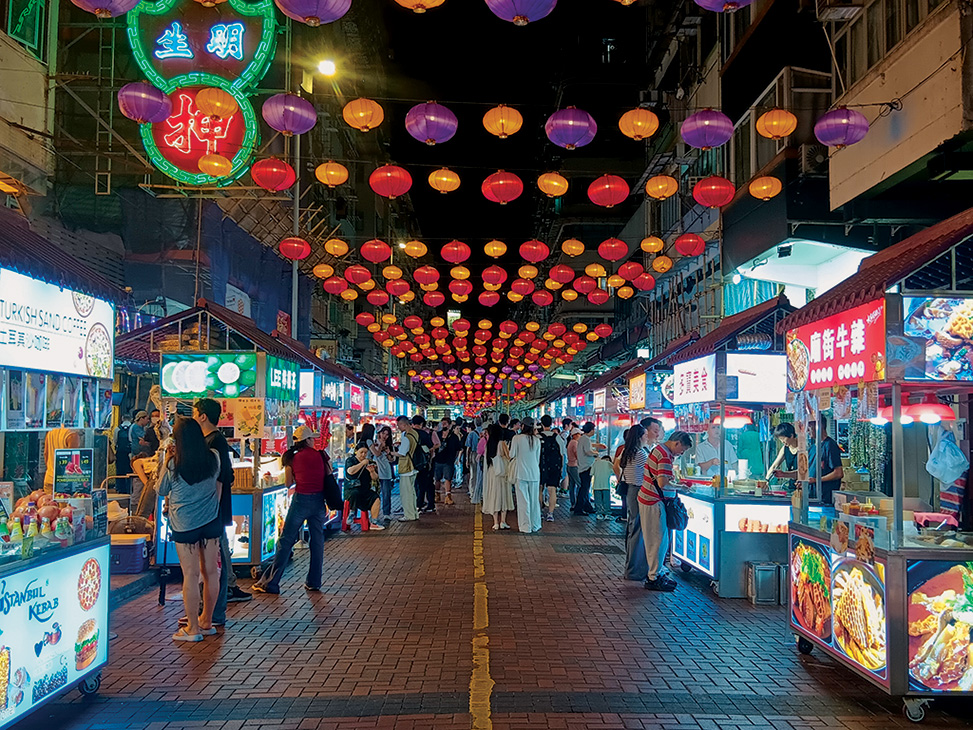
Visitors are immediately greeted with a neat sentry of food stalls – eleven lining up on either side, making twenty-two in all. Comprised mainly of local Cantonese fare, regional neighbours such as Nepal and India make their appearance in the odd stall or two.
Related Lumbini Nepal birth place of Buddha World Heritage
If you keep your eyes open, you’ll notice that all of the stall roofs are plastic but designed to evoke the tile-roofed stalls of centuries past.
Yau Ma Tei Temple Street Association
Since re-opening a few months back, Temple Street has enjoyed a footfall of up to 8,000 visitors daily.
Most of these visitors are tourists. Funnily enough, my friend was asked how long he had been staying in Hong Kong, as his camera and tripod marked him as a tourist.
Visitors are very welcome
After politely informing her that we actually lived in the city, our questioner revealed that she was leaving in a few days and cheerily went on her way. Visitors like her are essential to a night market’s upkeep.
In fact, the chairman of the Yau Ma Tei Temple Street Association of Hawkers and Shop Operators stated in a radio interview that tourists make up about seventy-five per cent of the night market’s visitors.
Night Vibes Campaign boost economy
As part of the government’s Night Vibes campaign to boost Hong Kong’s evening economy, Temple Street has become a bustling site that showcases unique aspects of local culture through a language we can all speak – food.
We began with a local classic: cheung fun – rice rolls made from rice flour, starch and water. They are typically bare of seasonings, which customers can add at their discretion.
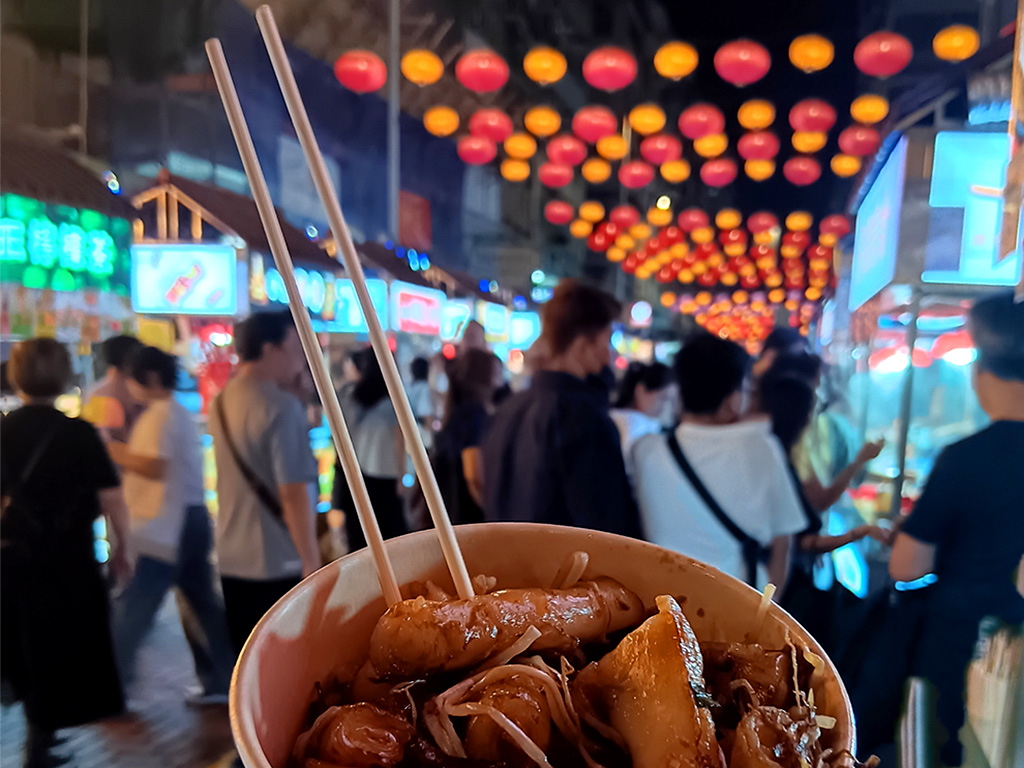
Thankfully, this particular stand was not afraid of taste. Marinated in soy sauce and cooked with bean sprouts, scallions and beef strips, the dish was a salivating start to our food journey.
Related Teahouses and dim sum tradition alive Hong Kong
Cow offal simmered in spicy marinades, its smells wafting well past the stall. While I hovered near the offerings for a considerable amount of time, the stall owner gave me a look now and then, but another stall won my attention by selling deep-fried pig intestine.
Hong Kong street foods
That might have given you pause, but trust me, it’s an absolute delight. Wrapped into sausage-like bundles and skewered in groups of three or four, its crisp exterior perfectly balances the moist and slightly chewy interior. I only recalled that it’s usually eaten with sweet sauce after I finished the whole thing!
Spicy fish balls – one of Hong Kong’s most iconic street foods – appear abundantly. But given my sheer access to it daily, I gave it a miss and looked for rarer delicacies.
Related History and culinary delights awaits in Macau
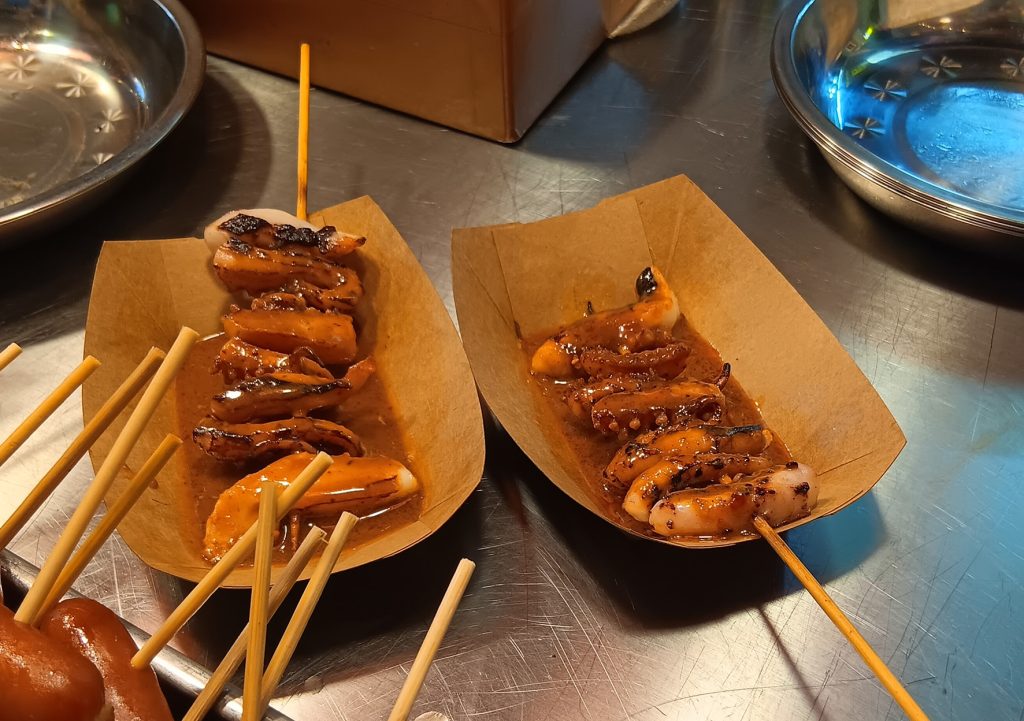
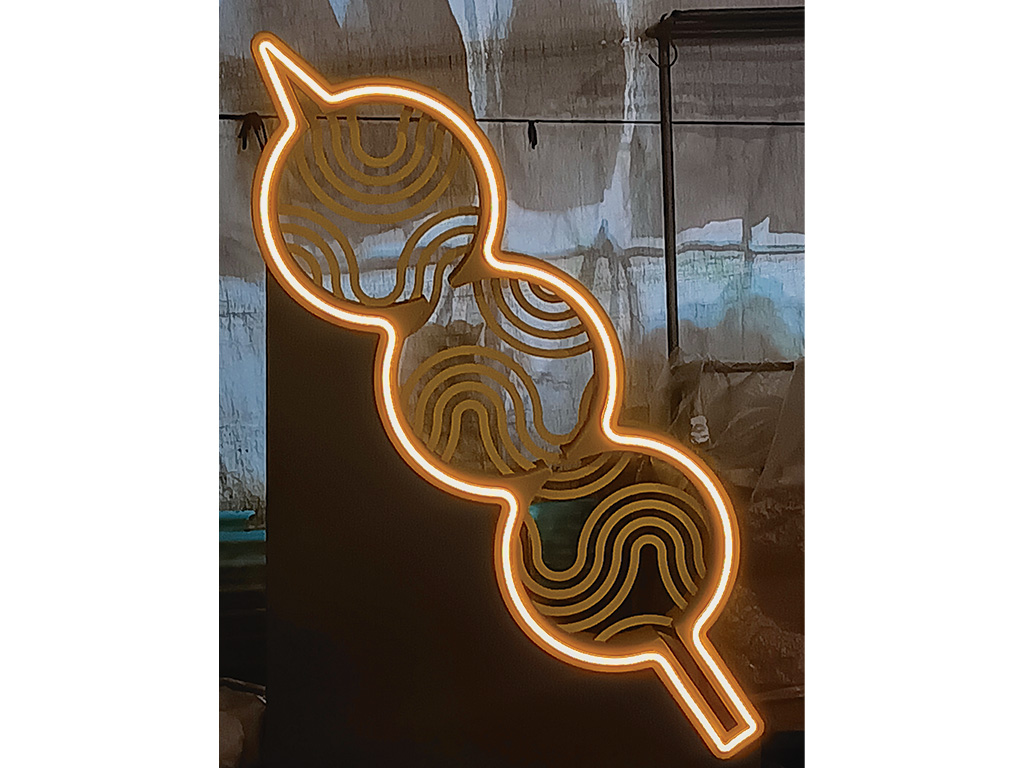
At the next stall, soy-braised skewers were the order of the day. With beef, chicken, pork, cuttlefish and squid, it was all down to the customer’s preference.
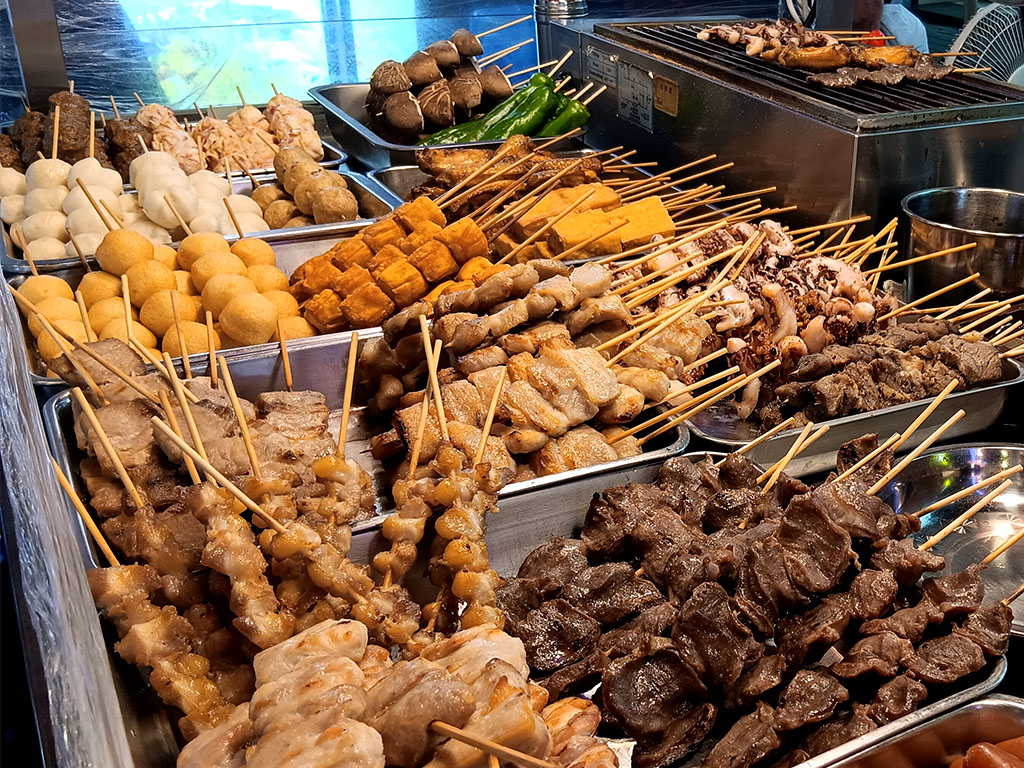
My friend had never tried squid before, so I ordered one for each of us. The sectioned legs – suction cups very evident – were a sight to see! As I took photos of the stall’s wares and the small grill that was hard at work, one of the stall keepers smiled at me knowingly.
Related Exploring Singapore’s Hawker Centres
In Cantonese, she asked, “Do you want me to take a photo of you holding the food?” I’ll admit I did take a few moments to think of my answer. Ultimately, I replied sheepishly, “No,” but happily accepted when she offered to let me sit the cooked skewers on the stall counter to photograph.
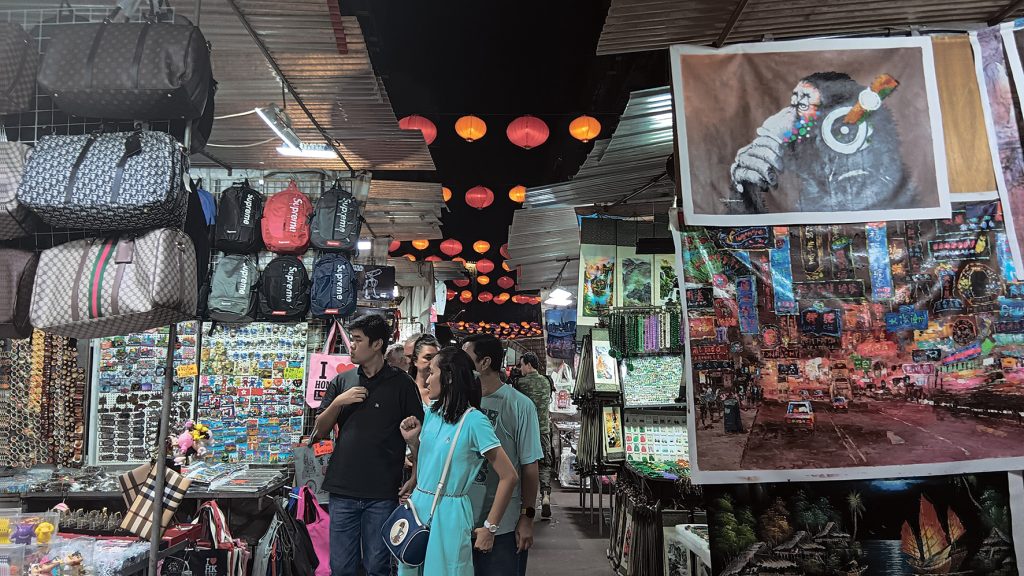
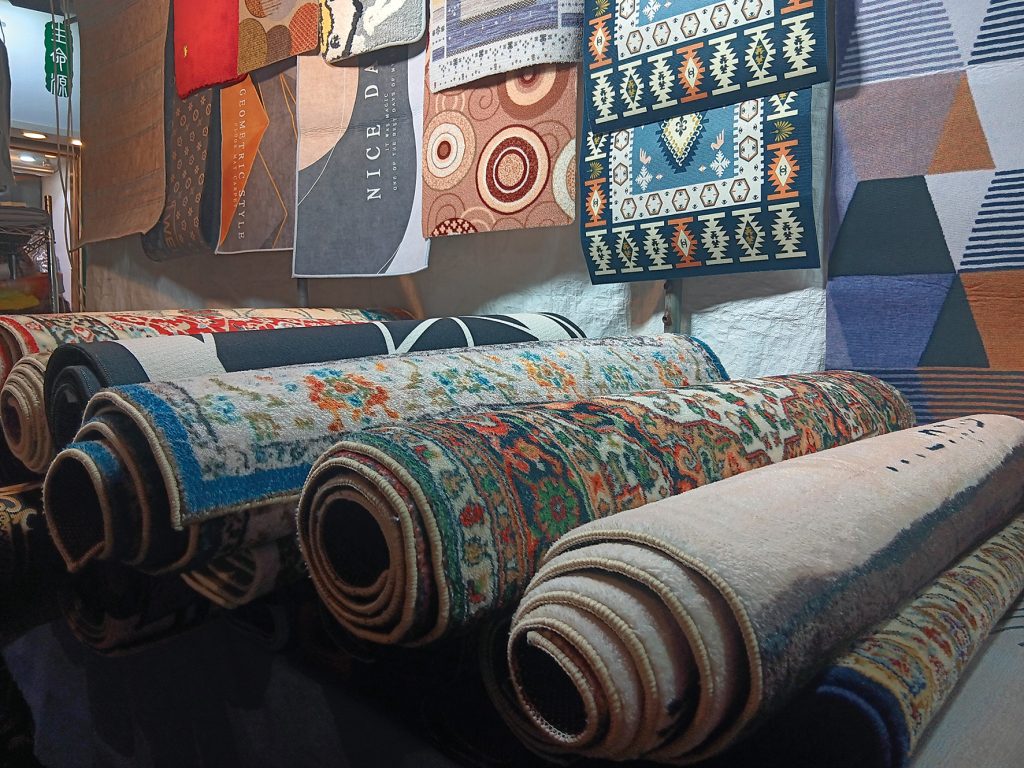
We passed through the mouth-watering food stalls and entered the merchant’s section. A variety of wares were on display. Every off-brand luxury designer you can imagine is available. Off-brand toys are in similar abundance, with not-quite-Lego sets, kind-of-Barbie dolls, off-kilter-printed not-Pokémon cards, and more.
Touristy trinkets on offer at Temple Street
No outdoor market would be complete without a barrage of touristy trinkets, and Temple Street has them in spades. Landmark-shaped magnets, Hong Kong branded t-shirts, and embossed tote bags are just some of the keepsakes visitors can purchase to remember their time in the city.
Related Hong Kong Man Mo Temple for Faith and Fortune
Colourful decorations, including woven Chinese knots, miniature door couplets and auspicious paper cuttings, promise to brighten any living space.
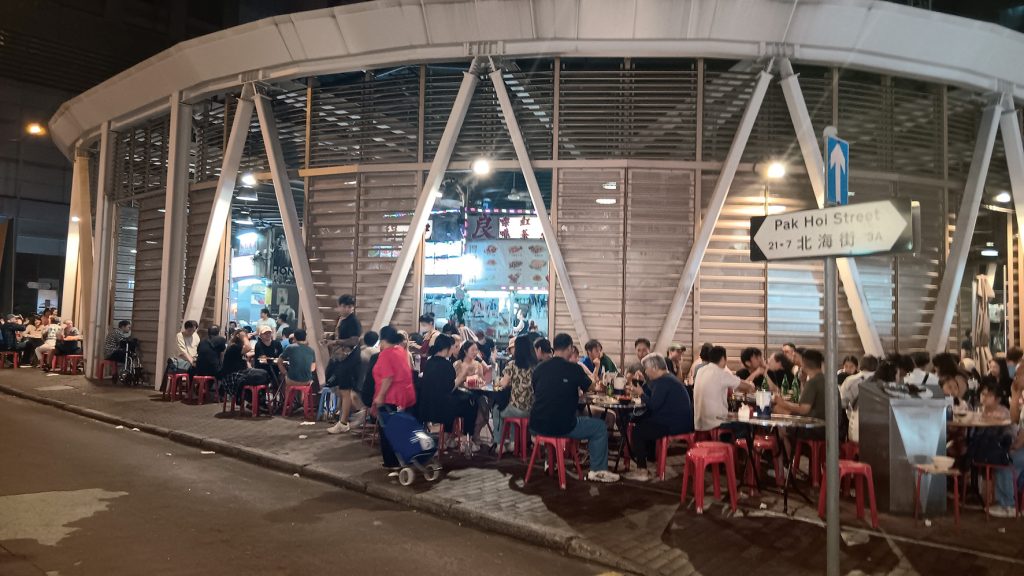
Further along, we passed a large outdoor dining hall with crowded foldout tables parked just outside a cluster of heavy-duty food stalls. Unlike the ones at the beginning, these were fully equipped with refrigerators, industrially-sized grills, stoves and cutting boards.
Related Big Buddha a colossal gift for people of faith
A genial buzz thrummed through the sea of diners as they enjoyed their meals with friends and family. We were tempted to join the fray but decided to continue on for the whole Temple Street Night Market experience.
The further we went, the more the landscape changed – Cantonese restaurants gave way to Nepalese and Indian, and the end of the market was much calmer than the beginning.
Related Traditional family-style Pun Choi is the must for celebratory feasts
Besides the initial excitement of the twenty-two food stalls, this also likely attributed to a slight drop in variety as the storefronts gradually took up more space than those before.
Past the archway that marked the end of Temple Street stood a smattering of open red tents – local fortune tellers ready to answer your questions through many divination techniques, including palm reading, five elements appraisal (determining one’s fate based on their body shape), and kau cim (interpreting one incense stick that jumps out of a bamboo cylinder).
Related Life memories as Hong Kong Miniatures
Heading back to the entryway, we were determined to finish our excursion with a bang. One food stall promised such an ending.
Grilled oyster delicacy
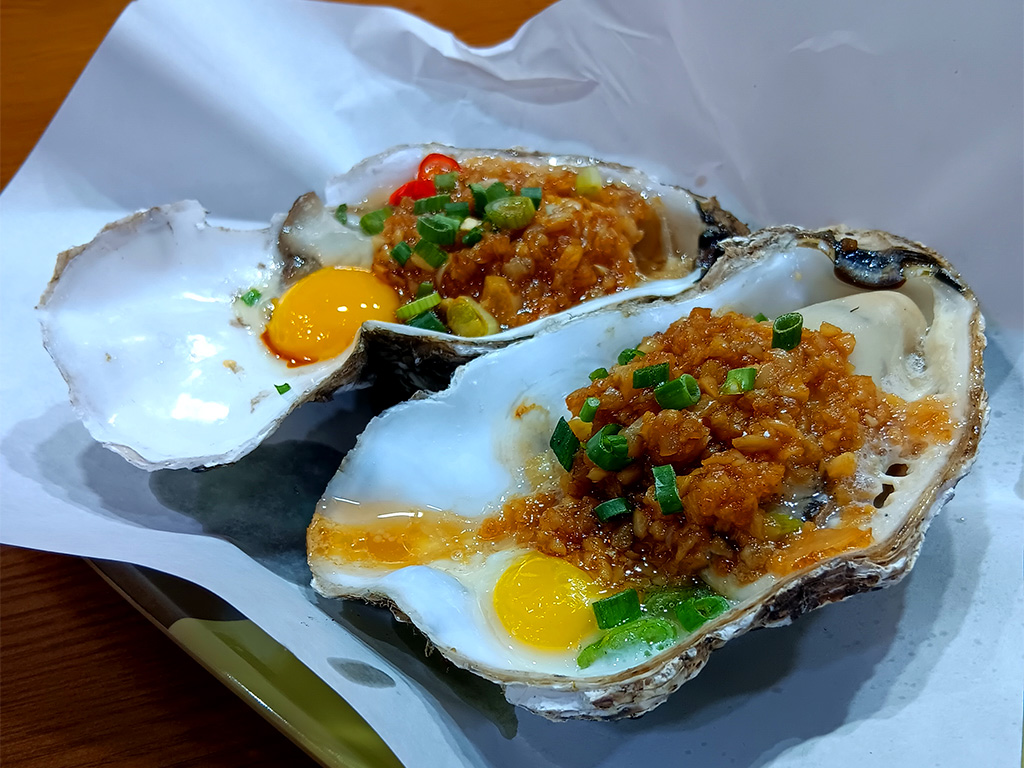
Earlier in the evening, I had been tempted to order this delicacy but restrained myself so that we could eat it to mark the end of a lovely evening. While two stalls offered grilled oysters, one went above and beyond.
Related Wine language the easy ABC of the good grape
Garnishes were lavish – chopped garlic in chilli oil, scallions, slivers of diced red chilis, and an egg yolk helped the grilled oyster pack a flavourful punch. We washed down our stacked oysters with a cool bottle of Blue Girl beer – clearly worth waiting for!
Temple Street has come a long way in recent decades. In the 1920s, street vendors primarily served temple visitors (hence the name).
Now, shopping, snacking and dining are the name of the game.
From its humble beginnings in the Qing dynasty (1644-1911) as a path to the local Tin Hau Temple, to its modern reputation as a must-visit night-time spot for locals and tourists alike, Temple Street Night Market has done an incredible job adapting to the times and ensuring that people keep on coming.
Text and Photos by Victoria Mae Martin


