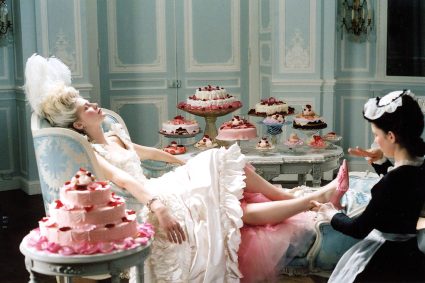
Lavishly beautiful Chateau de Versailles is awesome and fantastic

Versailles Palace is unparalleled in scale and grandeur

Chateau de Versailles
Situated just outside Paris, the Château de Versailles is a palace unparalleled in its scale and grandeur.
A UNESCO World Heritage site and renowned as one of the greatest achievements in French art and architecture, the palace is not only a museum of French history; it is also a testament to the passion and vision of King Louis XIV.

Louis XIV became heir to the French throne when he was only four.
Despite his young age when he came to power, he was self-confident, believing himself, like many monarchs of his day, to be ordained by God. He ruled as an absolute monarch.
Related Lavishly luxurious life of Qing Emperors and Empresses of Yuan Ming Yuan
His long, seventy-plus-year reign and his vision for building the magnificent royal palace and gardens at Versailles confirm him as one of France’s most iconic monarchs.

The site of the palace began as a simple hunting lodge built by King Louis XIII in 1629, close to the small town of Versailles.
Related Odysseys of Art Masterpieces, The Private Liechtenstein Art Collection
After Louis XIV inherited the lodge, he found himself spending much of his time there, to the point that he began to govern from Versailles and decided to build a palace to make it his permanent home and the official royal residence.

He set out to build his power base outside Paris and decided that Versailles would be the place where the monarchy would govern.
He insisted that all the leading nobles, his court, and his ministers should live there as well.
Louis XIV hired the greatest
To accommodate this new residential population, he started a major transformation and building works.
Related Ultimate destination Vatican Museums Sistine Chapel
Louis XIV hired the greatest architect of the time to transform the site into the largest palace complex in Europe.
Related Architectural legacy, fabulously designed buildings by I M Pei
The old hunting lodge was retained, but was surrounded by massive new buildings on three sides.

The palace had to be large enough to provide apartments for government ministers, as well as to accommodate the royal family, the nobility, the court and all the government departments.
Related The wealth and power of the Romanov rulers of Russia
The sheer scale of the project was monumental. The palace and its furnishings were crafted with the finest craftsmanship and materials.
The expansion and building works took over fifty years and cost billions of dollars.
Prestige of France at Chateau de Versailles
The project stretched the treasury and required the labour of thousands.

He envisioned the palace and gardens of Versailles as a showcase of France’s and his own prestige, especially as the leader and arbiter of art and culture in Europe.
Related Vatican Museum treasures and the world’s most renowned works of art
Louis XIV wanted a sensational and awe-inspiring symbol of his preeminence, and he succeeded.

Today, French Baroque, or Louis XIV, furniture is synonymous with the era of the Sun King and the Château de Versailles.
The distinctive style is characterised by elaborate decorations, brilliant colours, and the use of high-quality materials such as marble, granite, gold leaf, gilt ornaments, and fine upholstery.

The overall effect is grand and extravagant.
Louis XIV commissioned hundreds of portrait paintings and sculptures of himself.
Related The ancient architecture and culture of Italy’s capital city
He recruited the best artisans and painters to glorify his image and depict him as a grand conquering hero, analogous to those in ancient mythology, such as Jupiter and Apollo, as well as other powerful men of the past.
Related Donatello: One of the greatest Renaissance sculptors
These visual associations were a strategy to elevate him to the status of the most revered and important king of the time – the Sun King.

To maintain that aura of greatness, he hosted sumptuous, elaborate parties with hundreds of entertainers and guests.
Related French jewellery design from 1770 to 1970
Though extravagant, his display of wealth and grandeur turned the palace into the most fashionable and important seat of power and society in Europe.
Related Ancient Chinese Gold symbol of power and wealth
One of the most famous rooms in the palace is the Hall of Mirrors, which took six years to create.

The mirrors were made of Venetian glass, the finest glass available at the time. Fabulous crystal chandeliers hang from the vaulted, painted ceilings.
Related Chinese Reverse Glass Painting from the Mei Lin Collection
The effect of reflected light off the mirrored walls and thousands of crystal pieces dangling from the ceiling creates a dreamy, dazzling display.
Hall of Mirrors, Pride of Palace
At the time, there was nothing else comparable in the world. The Hall of Mirrors became the court’s main ceremonial reception area.

It was the pride of Louis XIV, and this ostentatious and extravagant room confirmed his royal power to his court and visiting dignitaries.
Related Silk Roads: The greatest link of civilisations in the world
Louis XIV lavished his attention and wealth also on the creation of the gardens and parks of Versailles.

He hired a celebrated landscape designer to create an earthly paradise. Gardens were commissioned, and ornamental lakes were made.
Related Sensational Picasso paintings sculpted in glass: Gemmail
Louis XIV had mature trees transported from other parts of France and replanted on-site, so he didn’t have to wait for them to grow.
Related Rare trees make life a joy in the city
The landscaped grounds are a key part of the royal residence and surround the palace on three sides.

There are hundreds of acres of formal lawns enhanced by paths, thousands of fountains and water features.
Arranged in a grid, each unit is treated as a unique space, with sculptures, architectural details, and foliage used to decorate each section.
Related Yue Minjun’s sculpture installation A-maze-ing laughter
Louis XIV had a love affair with his palace. He spent seventy-two years on the throne, and throughout his reign, he sought to bring glory to himself and his country.
Related Masterpieces of art and artefacts collected by the Princes of Liechtenstein
His lifelong devotion, expressed in the creation and construction of Versailles, made him the embodiment of France’s greatness at the time.

In his decline, before the end of his life, the Sun King’s glitter faded. His fortune waned, and some of the palace’s treasures were sold to finance France’s costly war with other European powers.
Related Adorned Body: French Fashion and Jewellery 1770-1910
By the time of his death in 1715, he left France deeply in debt.
The French monarchy was succeeded by two other Kings who had little success in restoring the Château de Versailles to the glory it had during the reign of Louis XIV.
Related Qing dynasty Zodiac sculptures from Old Summer Palace
In 1789, the French Revolution forced the royal family to leave the palace at Versailles.

After the revolution, the palace lost its prominence. Its painting collection was removed and taken to the Louvre Museum, and the furniture was auctioned off.
Related Fabulous artefacts of luxury Persia to Greece
The palace was preserved, and in 1832 it was transformed into a historical museum.
A large gallery of paintings was created, and, slowly, many of the palace’s key features were restored, including the fabulous Hall of Mirrors.

Now, the former royal palace at Versailles is a major tourist destination and host of annual festivals and shows.
Text & photos Cammy Yiu