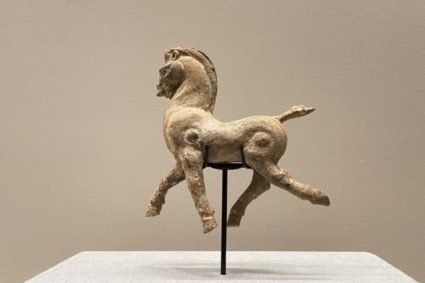
The epic Han dynasty – China’s first monumental unified era

Majestic Han dynasty – A Golden Age of Vigour and Cultural Integration
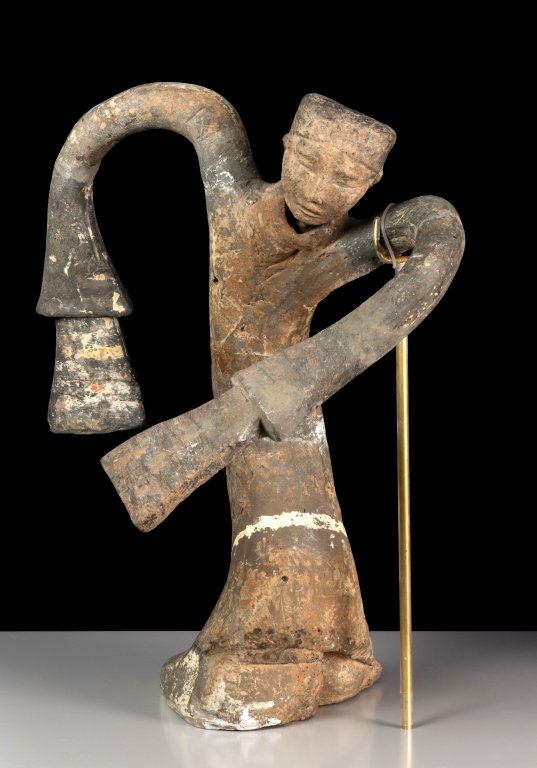
Pottery female dancing figurine in wrapped-collar costume, Western Han dynasty (202 BCE-8) Collection of Xuzhou Museum (Xuzhou Han Dynasty Stone Art Museum), Photo Antiquities and Monuments Office Development Bureau
Han dynasty and 400 years of Chinese history
An extensive collection of Han dynasty artefacts is on display at the Hong Kong Heritage Discovery Centre in Kowloon Park. These artefacts tell the story of the first golden age, which spanned 400 years of Chinese history.
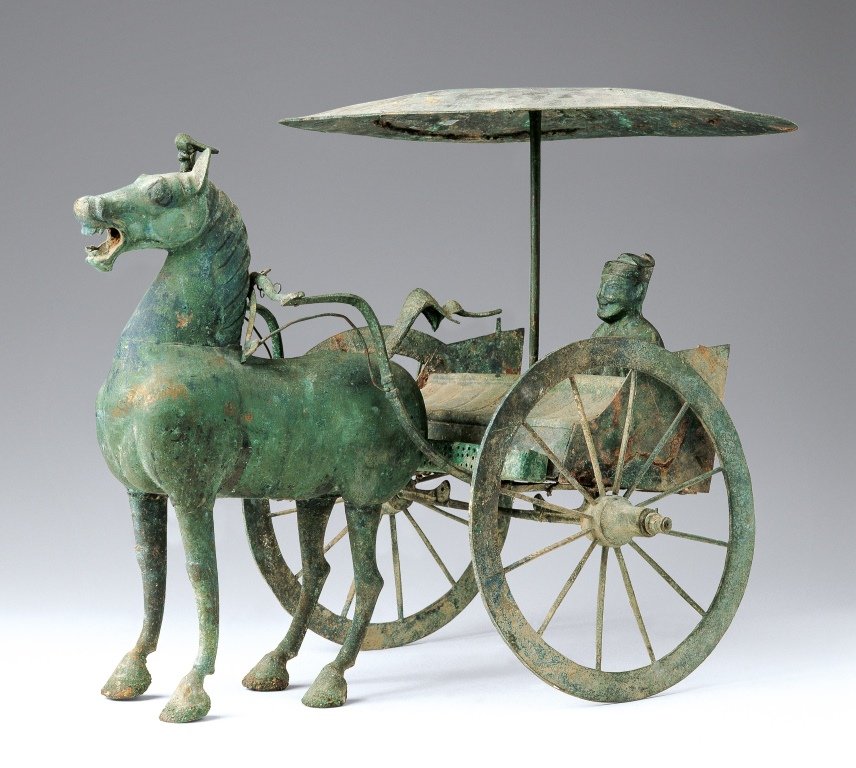
Bronze yao carriage, Han dynasty (202 BCE-220), Collection of Gansu Provincial Museum, Photo credit Antiquities and Monuments Office Development Bureau
This exhibition of cultural relics gathers collections from 29 museums and cultural institutions across 14 provinces and regions of China, including Hong Kong. It offers visible evidence of Han life and the many facets of Han society.
Related Neolithic Clues to the Origins of Chinese Civilisation
The 400 years of the Han dynasty (202 BCE-220 AD) marked a momentous and continuous period of unified China. The economic, technological, and cultural achievements of this period laid the foundations for future Chinese society.
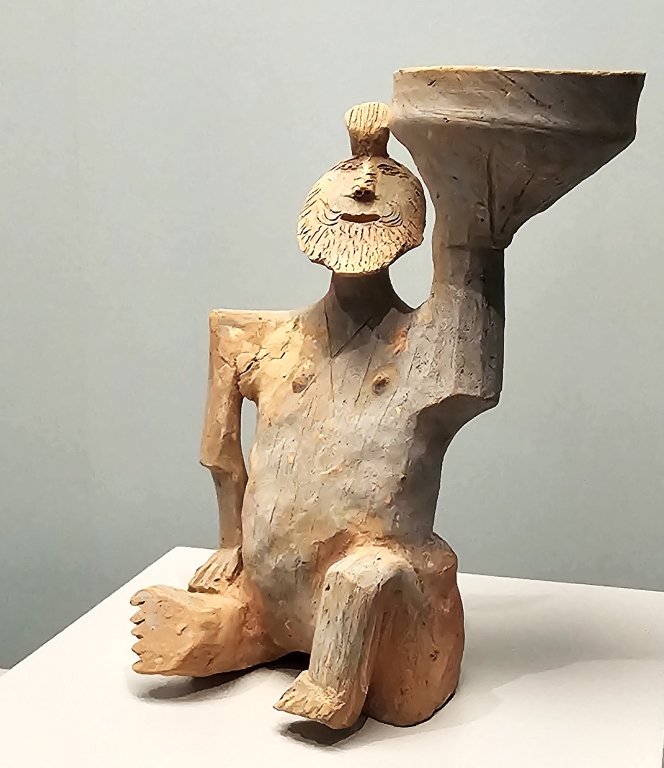
Pottery lamp with figurine stand, Western Han dynasty (202 BCE-8), Collection of Guangzhou Municipal Institute of Cultural Heritage and Archaeology
Today, most of China’s population is Han Chinese, the world’s largest ethnic group. The terms Han Ren – Han People – and Han Wen Hua – Han culture – have their origins in the Han era. In modern China, Han and Chinese are often used as synonyms.
Related Lavishly luxurious life of Qing Emperors and Empresses of Yuan Ming Yuan
Building on the legacy of Qin Shi Huang, the first emperor to end the Warring States period, the Han rulers continued and expanded the military and administrative practices of their predecessor, further unifying the nation.
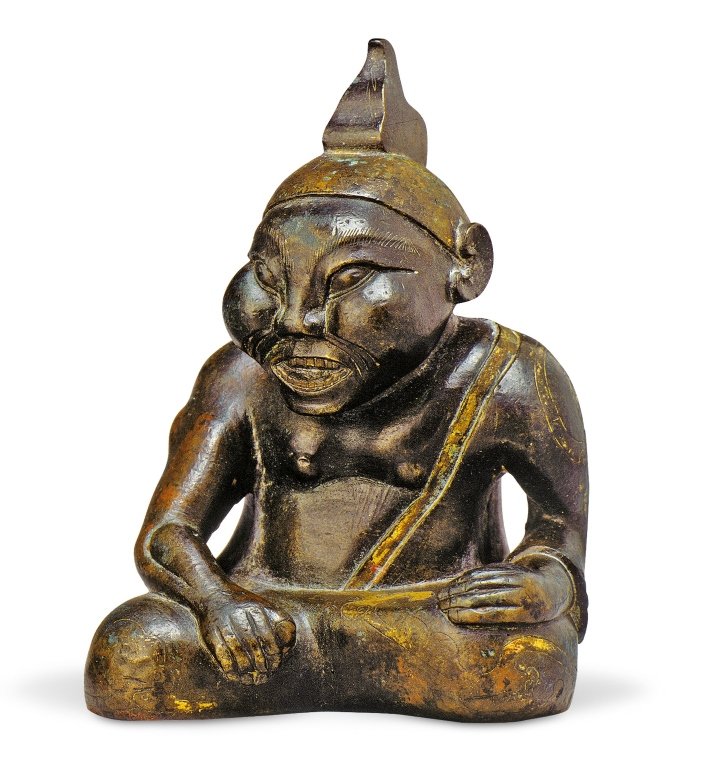
Bronze storyteller figurine mat weight, Western Han dynasty (202 BCE-8), Collection of Hebei Museum, Photo credit Antiquities and Monuments Office Development Bureau
Despite the Qin dynasty lasting just 14 years under two emperors, the Han dynasty capitalised on its consolidation of power and territory, further uniting China for centuries to come.
Related Qin dynasty’s astonishing rise and fall to the Han dynasty
This foundation of peace enabled the Han dynasty to foster dynamic and innovative exchanges with other civilisations. Their most notable achievement was advancing trade between China and the West by opening and protecting the Silk Road, paving the way for far-reaching exchanges.
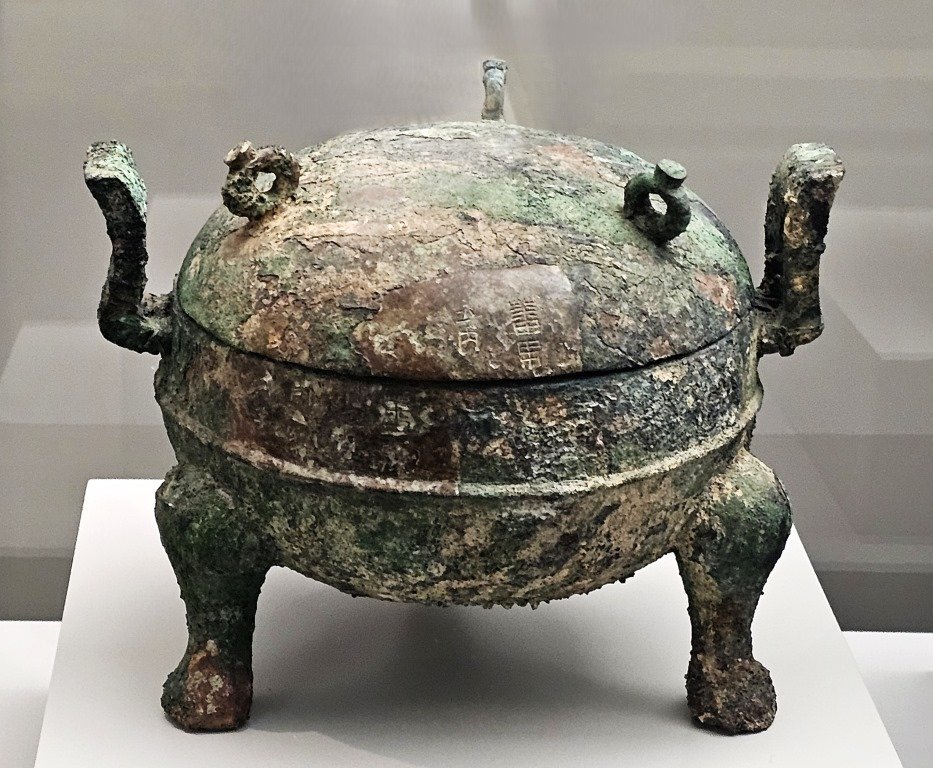
Bronze ding tripod with Chinese characters Pan Yu, Western Han dynasty (202 BCE-8), Collection of Nanyue King Museum (Research Centre for the History of Xihan Nanyue Kingdom)
The Majestic Han: A Golden Age of Vigour and Cultural Integration exhibition showcases the era’s immense influence and heritage through six thematic sections. Each section covers aspects such as politics, economy, culture, science and technology, social life, and external exchanges.
Related Treasures from the Forbidden City and Palace of Versailles
Antiquities such as manuscripts, silks, coins, bronze vessels, gold objects, jade items, jewellery, clothing, pottery figures, and pottery houses represent Han society’s innovative spirit. These items reveal different perspectives and daily lives of various social strata in the Han period.
Han dynasty benefited from the pioneering Qin
The first section of the exhibition, The Unified Realm, highlights the magnitude of a united China. As the second era of a unified dynasty, the Han benefited from consolidated territories and the institutional and bureaucratic framework inherited from the Qin.
Related Ancient dynasty currency and gold-like coveted Chinese Silk
Learning from the Qin’s demise, the Han established state governance and laid the foundation for a lasting bureaucracy. This created a mechanism for decision-making and execution that influenced subsequent dynasties.

Gold linzhi hoof and Gold niaoti hoot, Han dynasty (202 BCE-220), Collection of Nanchang Relic Museum of Marquis Haihun State of Han Dynasty
Power was centralised in the emperor, then diffused and supported by Excellencies and Ministers. These officials directed government affairs and oversaw distinct branches of administration. The Han set up a dual system, combining feudal kingdoms with commanderies and counties. In provinces, governors and magistrates administered local affairs.
Related Chinese Gold symbol of power and wealth
A Gold linzhi hoof, found in 2015 at the tomb of Liu He, Marquis of Haihun, in Jiangxi, is an example of such an item. It was bestowed upon imperial clan members and ministers who showed loyalty to the throne and military merit.
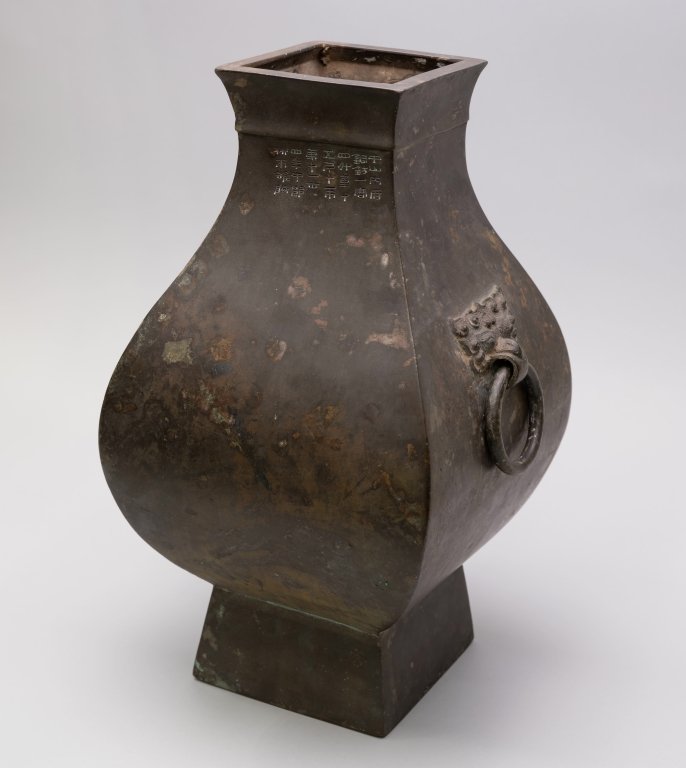
Bronze fang vessel with Chinese characters Zhong Shan Nei Fu (Inner Treasury of Zhongshan), Western Han dynasty (202 BCE-8), Collection of Hebei Museum, Photo credit Antiquities and Monuments Office Development Bureau
Qin Shi Huang established standard weights, measures, length, and currency to unite the empire. This legacy had a lasting influence on Han society and all later dynasties.
Related Chinese Blue and White porcelain from the Yuan and Ming dynasties
A Bronze fang vessel was used for holding food or wine. An inscription shows it was bought in Luoyang, capital of the Eastern Han dynasty. More importantly, the characters describe their capacity and weight, referencing the Han-period system of weights and measures.
Silk Roads enabled secure trade and exchange along China’s frontiers
This dispersion of administrative powers supported the expansion of control and defence across vast territories, enabling secure, smooth trade and exchange along China’s frontiers.
Related Silk Roads the greatest link of civilisations in the world
Trade routes for commerce and travel were strengthened with protected corridors. The Silk Roads and the villages and cities from east to west helped the flow of silk, spices, and ideas. These networks also provided safe passage for merchants.
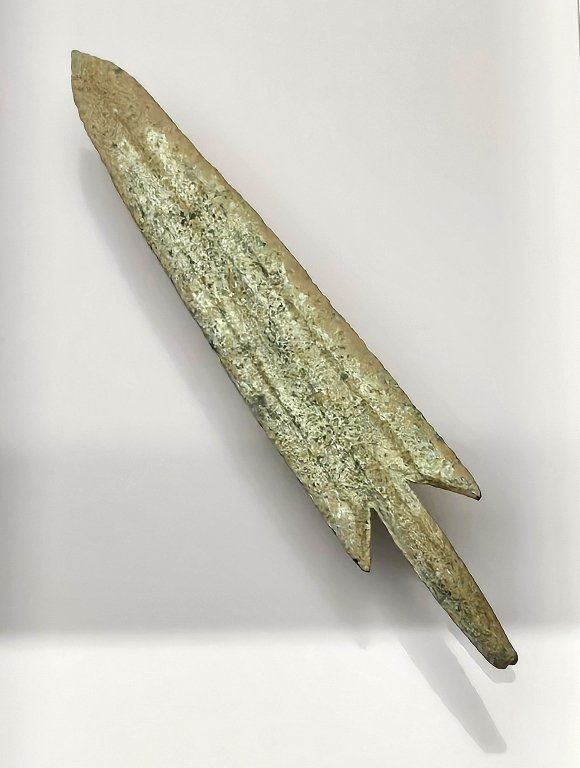
Bronze arrowheads, Han dynasty (202 BCE-220), Collection of Antiquities and Monuments Office, Hong Kong
A Bronze arrowhead, found in Hong Kong in 1994, shows the Han dynasty’s reach in Southeastern China. This sharp, finely crafted arrowhead was likely meant for hunting.
Related Lei Cheng Uk Han Tomb and Garden
In 1955, a barrel-vaulted brick tomb from the Eastern Han dynasty was found in Kowloon, Hong Kong. The Lei Cheng Uk Han tomb museum, its bronze wares, pottery, and the arrowhead help illuminate Han-period inhabitants there.
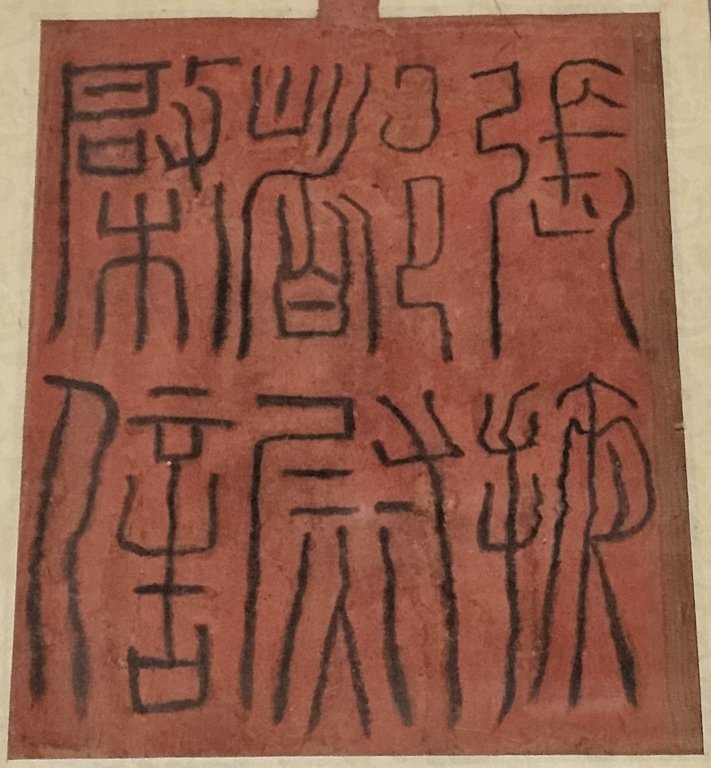
Qixin (credential) of the Commandant of Zhangye, Han dynasty (202 BCE-220), Collection of Gansu Jiandu Museum
Gansu province in Northwestern China was strategically important. The Han fortified it with fortresses, the Great Wall, and soldiers. The commanderies were vital refuges and defensive positions, protecting merchants and envoys from northern Xiongnu nomads.
Related Hiking on China’s Great Wall Ruins
A Qixin, or credential, of the Commandant of Zhangye was found in Gansu. It shows how important frontier defences were in the Han dynasty. This credential served as both a permit for passing through frontier gates and proof of a high-ranking official’s authority.
The second section, Wealth of the Country, highlights the prosperity of Han society during a period of great economic growth.
Related Chinese Ancient people of the Xia, Shang, and Zhou dynasties
During the reign of Emperors Wen and Jing (180-141 BCE), this prosperity was especially pronounced, with a strong central authority and stable governance fostering widespread affluence.
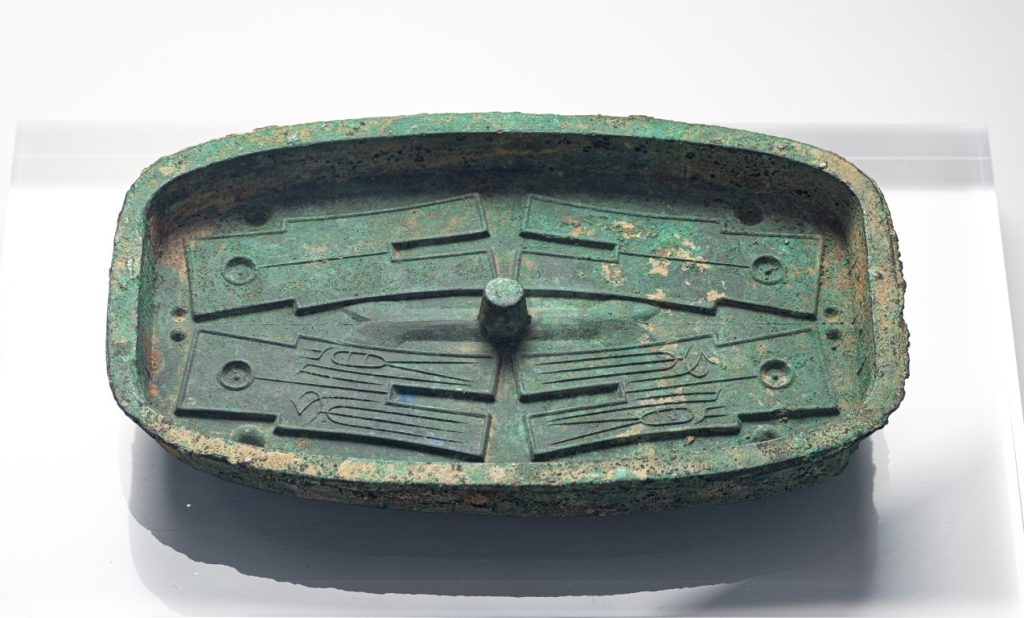
Bronze mould for casting Huobu coins, Han dynasty (202 BCE–220), Collection of Shaanxi History Museum, Photo credit Antiquities and Monuments Office Development Bureau
However, while the system of commanderies and feudal kingdoms encouraged local power, it also led local authorities to issue their own coins and to engage in rampant private casting, resulting in disorder in the currency system.
Related Daring and irresistibly new Chinese Calligraphy
To resolve this, Emperor Wu consolidated a monopoly over coinage and created an office to oversee minting, making the central authority the sole issuer and eliminating regional inconsistencies.
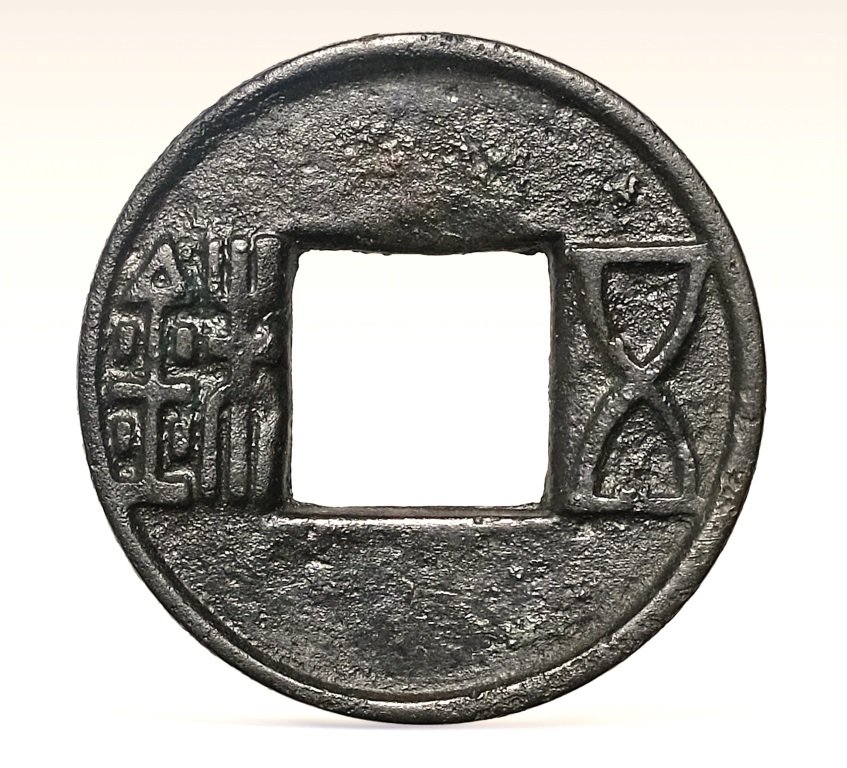
Wuzhu bronze coin, Han dynasty (202 BCE–220), Collection of Antiquities and Monuments Office, Hong Kong, Photo credit Antiquities and Monuments Office Development Bureau
The Wuzhu coin had a clean design, consistent and accurate weight, and elegant script. It quickly became the only legal currency of the Han dynasty, widely circulating throughout the country. The Wuzhu coin remained in use until Emperor Gaozu of the Tang dynasty (621).
The Wuzhu coins circulated for 734 years, the longest in Chinese history. These coins were so valued that hoards have been found at many archaeological sites in China and Hong Kong.
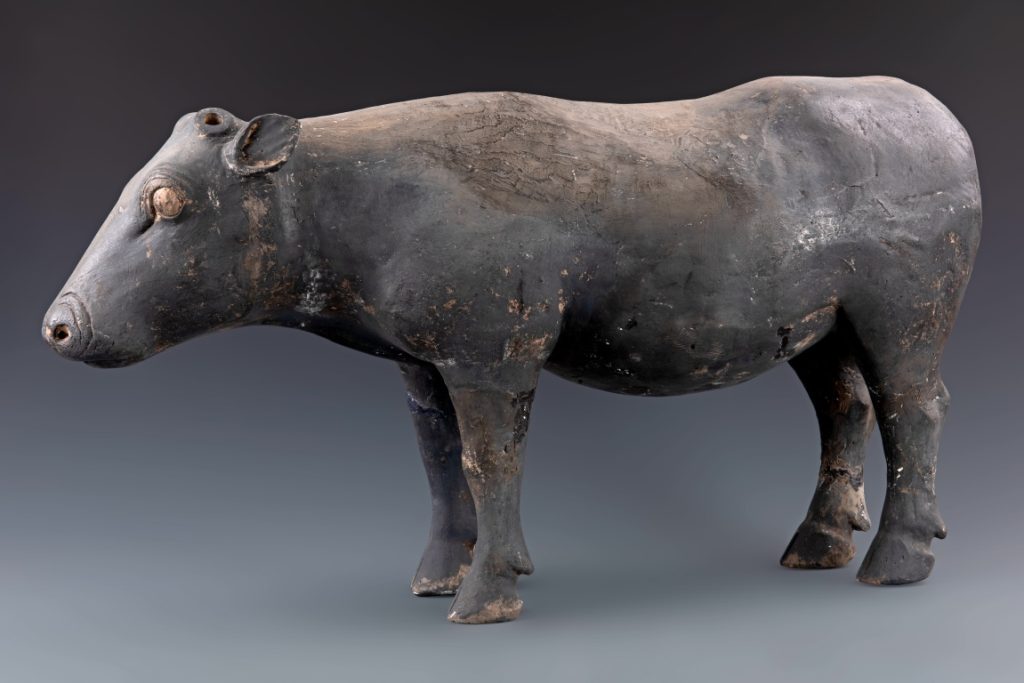
Painted pottery cow, Western Han dynasty (202 BCE-8), Collection of Hanyangling Museum, Photo credit Antiquities and Monuments Office Development Bureau
A policy of letting people rest and recover boosted farming and food production. Oxen gradually replaced much human labour in tillage and weeding.
Related Hong Kong feast of local organic vegetables
Iron-smelting technology led to stronger, more useful tools. Iron ploughshares, hoes, and sickles became critical to the booming agrarian economy.
Favourable policy and technology led to a boom in the economy
Farmers expanded land and refined techniques. Advances in animal husbandry and fishing also added to food production.
Vividly crafted pottery food animals, like a painted pregnant sow, have been found in Han-era tombs.
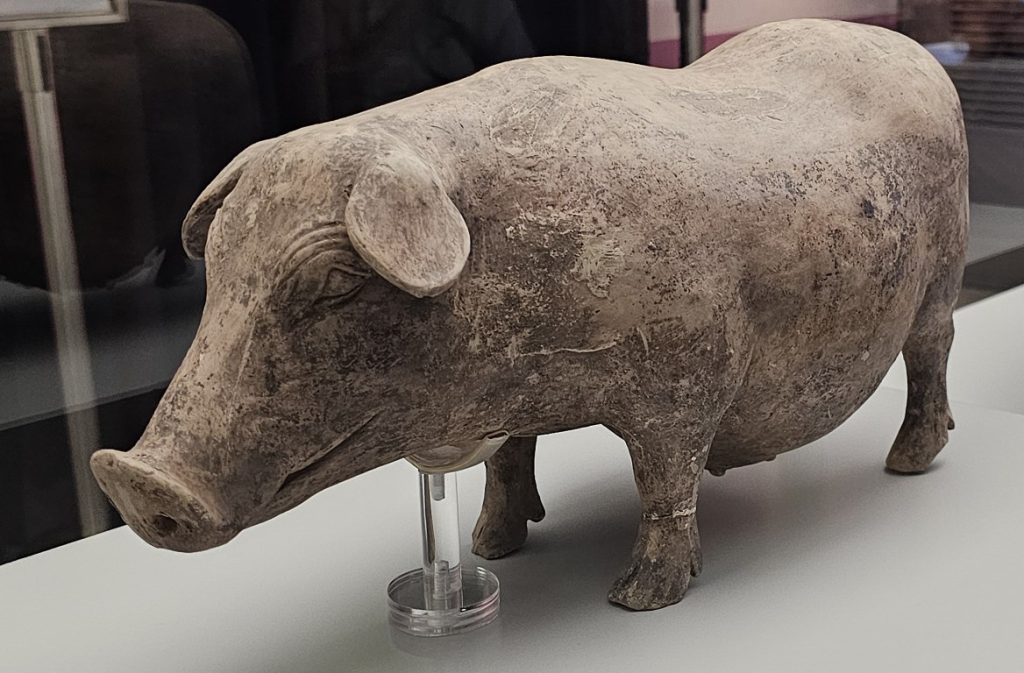
Painted pottery sow, Han dynasty (202 BCE-8), Collection of Hanyangling Museum
Many mausoleums, such as that of Emperor Jing of the Western Han, contained large numbers of pottery food animals. These included pigs, goats, chickens, ducks, and cattle.
Related Tea ware from the Song dynasty is on show alongside contemporary artists Yan Yung and Inkgo Lam
These pottery animals, found in tombs, showed the wealth of the tomb’s occupant. They also represented the premium foods aristocrats expected in the afterlife.
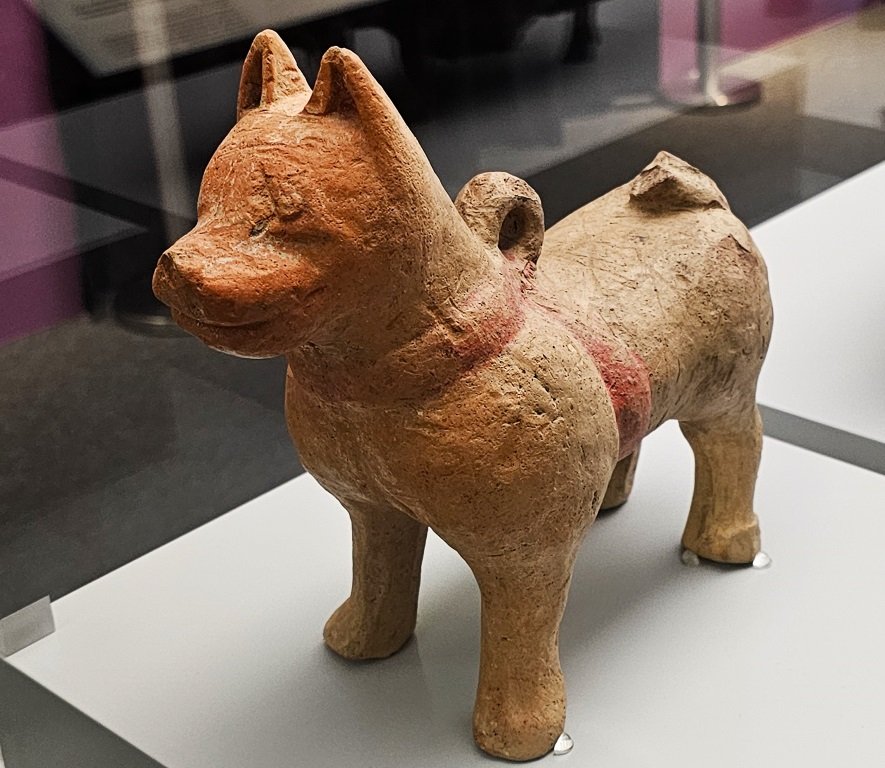
Pottery dog, Eastern Han dynasty (25-220), Collection of Chengdu Institute of Cultural Relics and Archaeology
People commonly raised dogs to guard their homes and as pets, not just for labour or food. Burying pottery dogs in tombs was a very common practice.
Related Beautiful Tea Pots and Ware by Hong Kong Potters
In the third section, titled Harmony of Heaven and Humanity, the focus shifts to Han culture and beliefs, with Confucianism emerging as the guiding ideology and official orthodoxy.
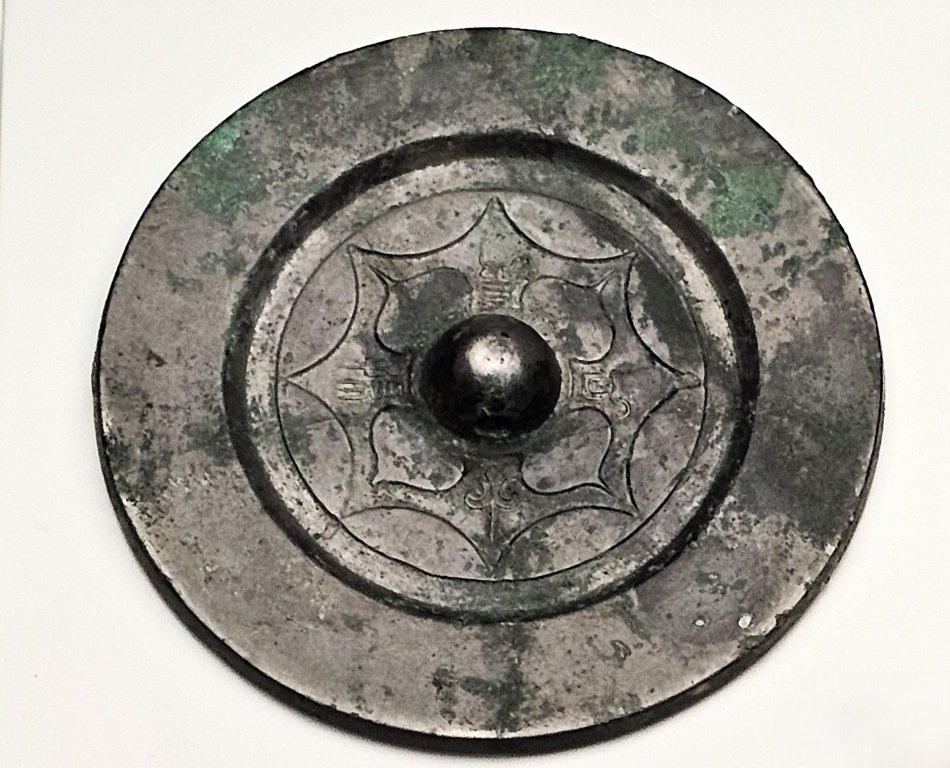
Bronze mirror with Chinese characters Chanq Yi Zi Sun (long suited for posterity), Han dynasty (202 BCE-220), Collection of Santai County Museum
Confucianism gradually became the official doctrine and exerted a profound influence on politics, the arts, culture, and the fabric of society.
Related The Art and Life of the Astonishing Gaylord Chan
A Bronze mirror with the Chinese characters Chanq Yi Zi Sun (long suited for posterity) inscription, common at the time, reflected Confucian ideas about establishing a strong foundation to ensure prosperity and stability for future generations.
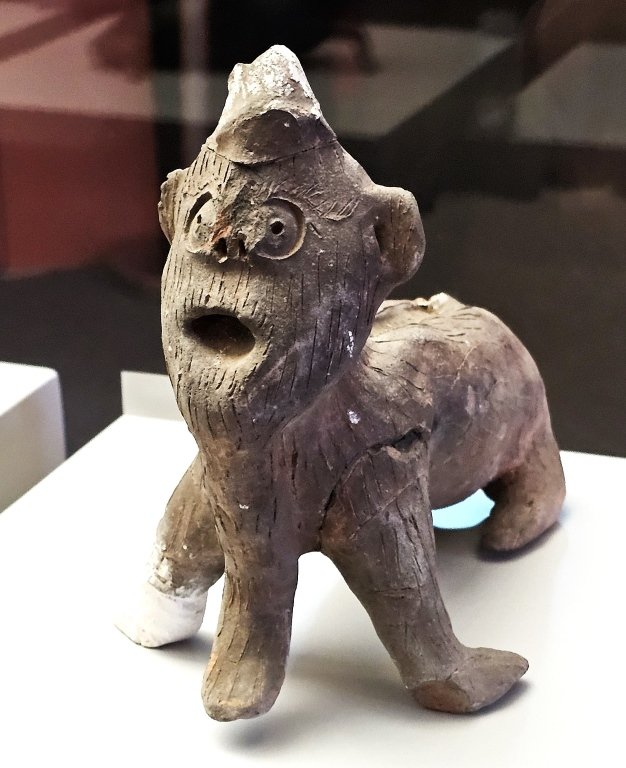
Tomb guardian beast, Eastern Han dynasty (25-220), Collection of Guangdong Provincial Institute of Cultural Relics and Archaeology
Confucianism set a code for earthly conduct and individual expectations. Yet, the reality of life’s transience and inevitable death occupied everyone’s thoughts. Preparing for death became a sophisticated, lifelong concern for nobles and commoners alike.
Related Tsz Shan Monastery Tranquil Nature Leads to Grateful Awareness
The accumulation of grave goods for one’s tomb, to ensure that life beyond the earthly realm will be comfortable, was essential. A Tomb guardian beast displays a relic commonly buried with its owner. This beast has a human head and an animal body, with round, staring eyes and an open mouth, the tongue sticking out and extending close to the ground. Its fierce appearance was meant to guard the tomb and ward off evil spirits.
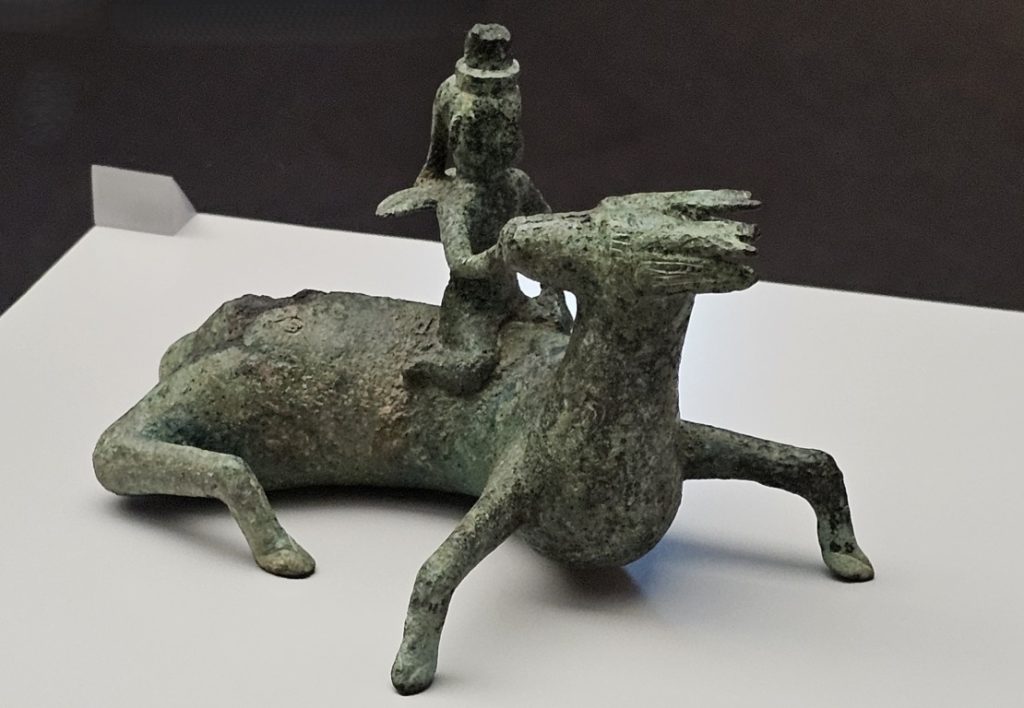
Bronze statue of an immortal riding a deer, Eastern Han dynasty (25-220), Yibin, Sichuan Collection of Yibin Museum
The belief in immortals, spirit beings with eternal life and powers to move between heaven and earth, was widespread. In Han thought, alongside the hope of an immortal realm, the deer was imagined to possess transcendental powers and was regarded as an immortal beast and a symbol of longevity.
Related Mythical Sanxingdui creatures discovered in Sichuan
Images of immortals riding deer and driving deer-drawn chariots appear frequently in paintings and tomb artefacts. Artistic representations, such as a bronze statue depicting an immortal with wings riding a deer, ensured the tomb occupant would have a spiritual guide for their ascent to the immortal realm.
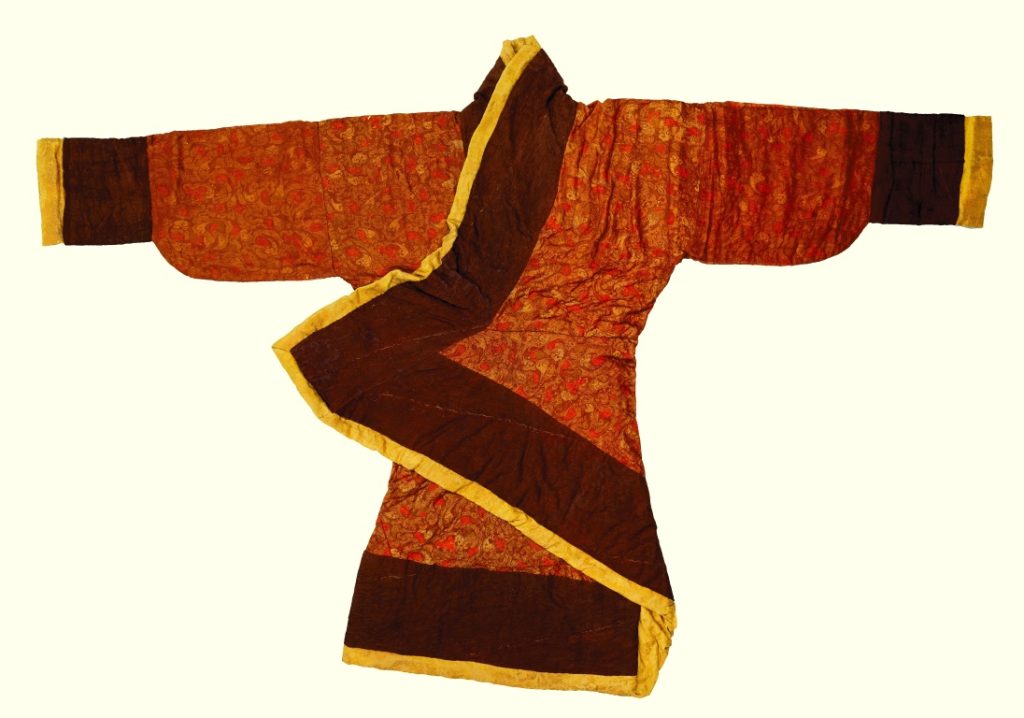
Silk-padded robe with Chang Shou (longevity) embroidery on a crimson-purple juan (plain weave silk), Western Han dynasty (202 BCE-8), Collection of Hunan Museum, Photo credit Antiquities and Monuments Office Development Bureau
In the fourth section, Innovation and Model-Making, the scientific and technological developments during the Han dynasty are highlighted, beginning with a display of precious textiles. Silk was a primary item traded along the Silk Roads and was valued at a weight equivalent to that of gold.
Related History of China in Silk and The Chris Hall Collection
Silk was highly desired and worn to denote wealth and status. Chinese-made silk was exported to the farthest reaches of foreign territories and even clothed the elite of the Roman Empire. A silk-padded robe made of plain weave and embroidered with longevity motifs is an example of fashionable attire for the upper class in the early Han dynasty.
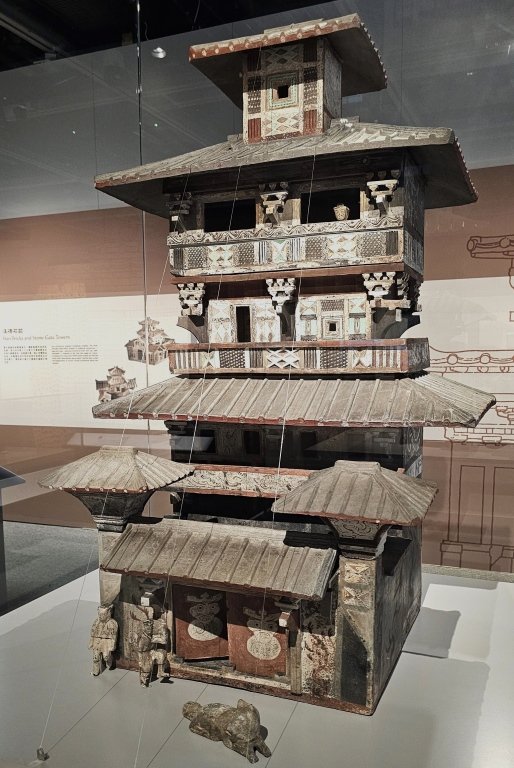
Five-storey painted granary house, Han dynasty (202-220), Collection of Jiaozuo Museum
Han architecture achieved remarkable progress, and examples of structures from this period are found among the grave goods in tombs. A Five-storey painted granary house shows an immense multi-storey structure with a front courtyard guarded by a dog. This sophisticated architectural form integrated storage, residential living and defence.
Related Architectural legacy, fabulously designed buildings by I M Pei
The pottery granary house was designed to be disassembled and reassembled. The building’s grand height was a reference to the Han belief that living in towers would bring them closer to the immortals.
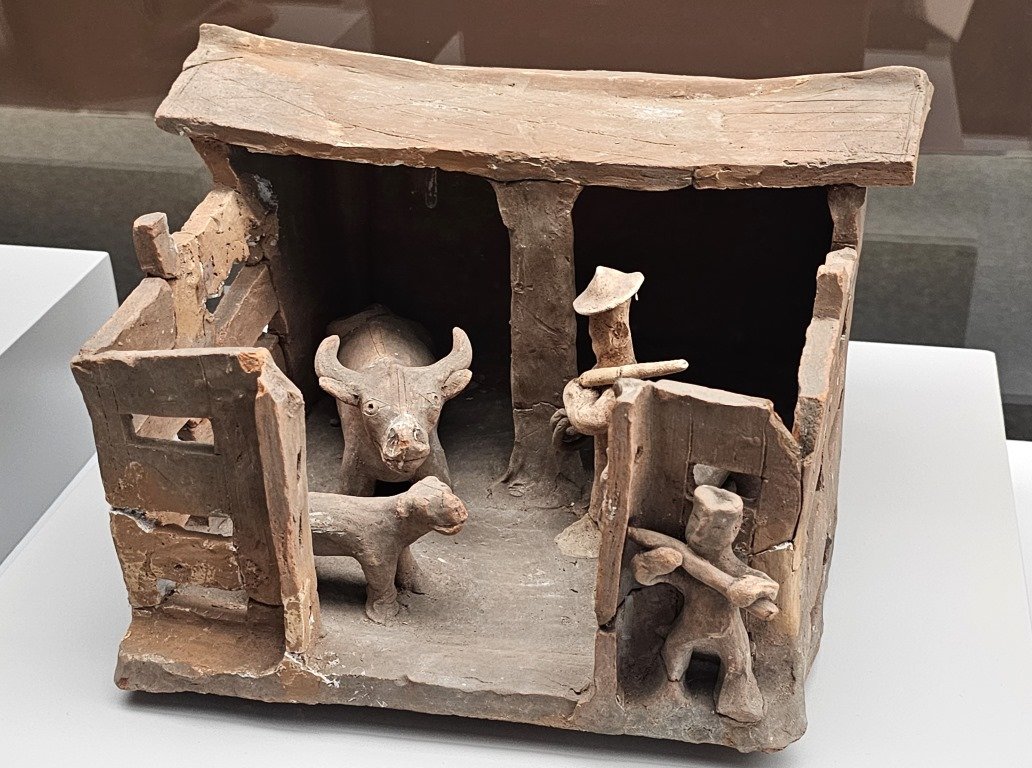
Pottery house Eastern, Han dynasty (25-220), Collection of Guangdong Provincial Institute of Cultural Relics and Archaeology
A Pottery house reveals the residence of ordinary folks. The back of this simple structure shows a small enclosure with human figurines, inside and outside the fence, with farm animals.
Related Ceramic treasures from the Tang dynasty
The front half is enclosed by a fence, and the rear half is sealed by walls. Both the human and animal figurines are vivid and full of life. This charming artefact reflects the life of a farming household at that time.
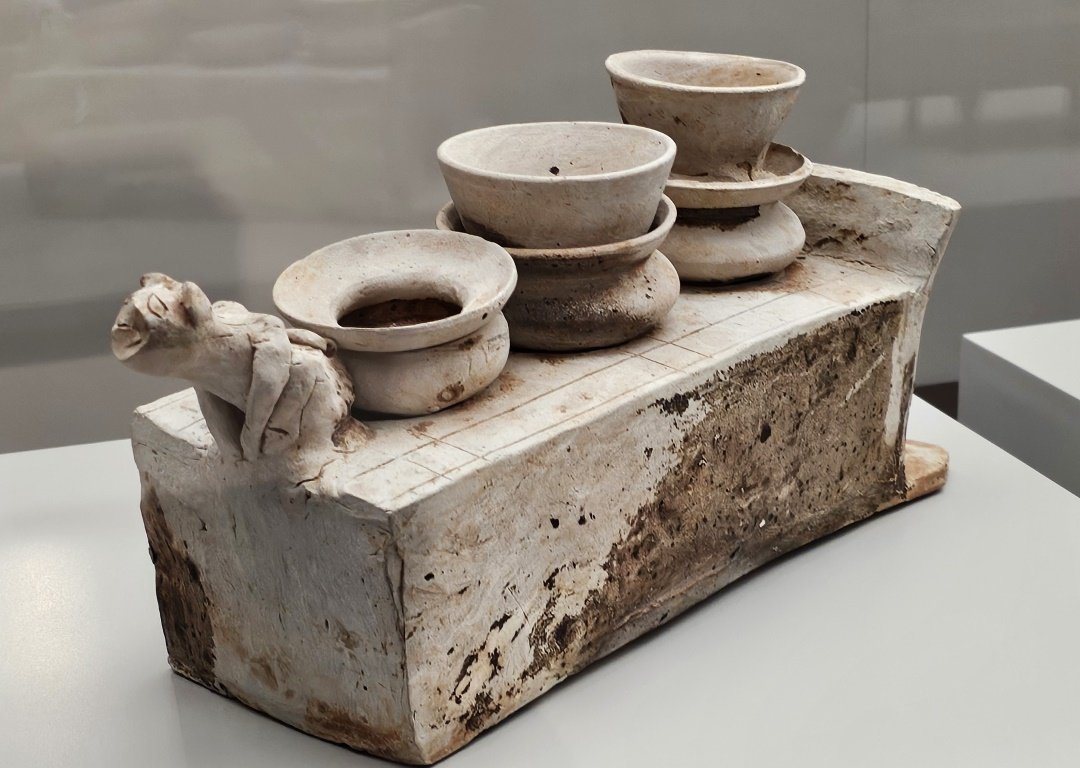
Rectangular grey pottery stove (with three cauldrons and two zeng rice cookers), Eastern Han dynasty (25-220), Collection of Guangzhou Municipal Institute of Cultural Heritage and Archaeology
Grave goods of ordinary items display the many things enjoyed in life, and also expected afterwards. A Rectangular grey pottery stove with three cauldrons and two zeng rice cookers reveals the importance of food and the standard equipment for a Han kitchen.
Related Traditional family-style Pun Choi is a must for celebratory feasts
Along with pottery servants, food, and animals, the pottery stove was a common burial object. This was to provide the deceased with the essential set-up and supplies needed to maintain a busy kitchen for daily meals.
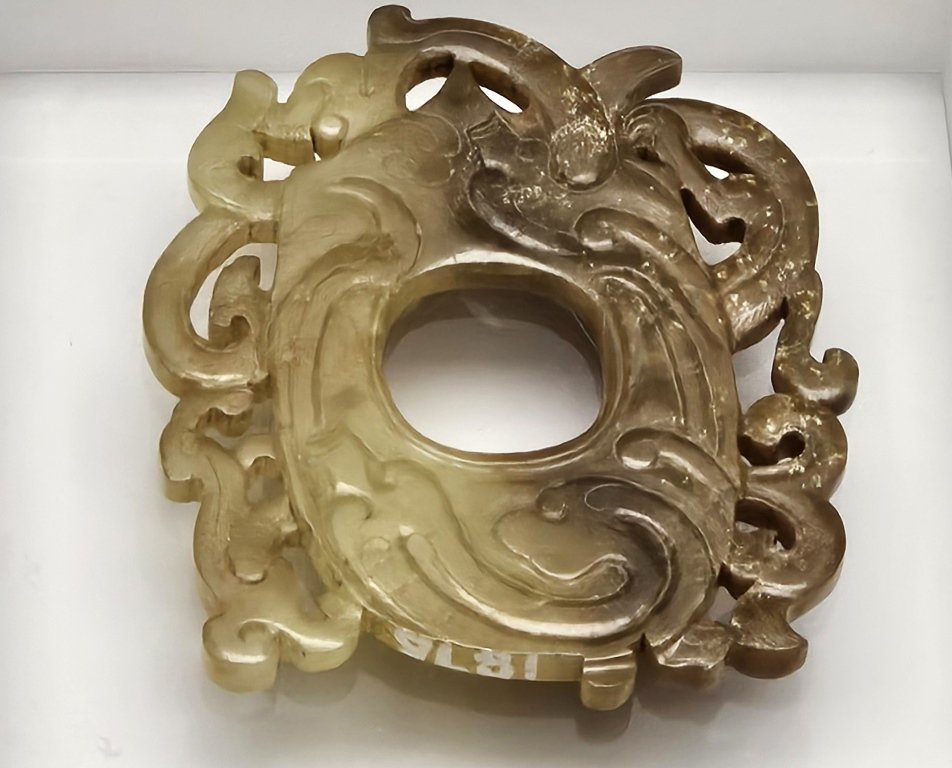
Jade slotted ring with chi dragon motifs, Western Han dynasty (202 BCE-8), Collection of Qingdao West Coast Museum
The economic prosperity and various Facets of Daily Life during the Han Dynasty are featured in section five through exquisite artefacts, such as a jade-slotted ring with chi dragon motifs.
Related Amazing Auspicious Dragon
A splendid jade object, the slotted ring has a circular perforation resembling a chicken heart at the centre and openwork carving of chi dragons on both sides. It is a distinctive and common type of pendant from the Han dynasty.
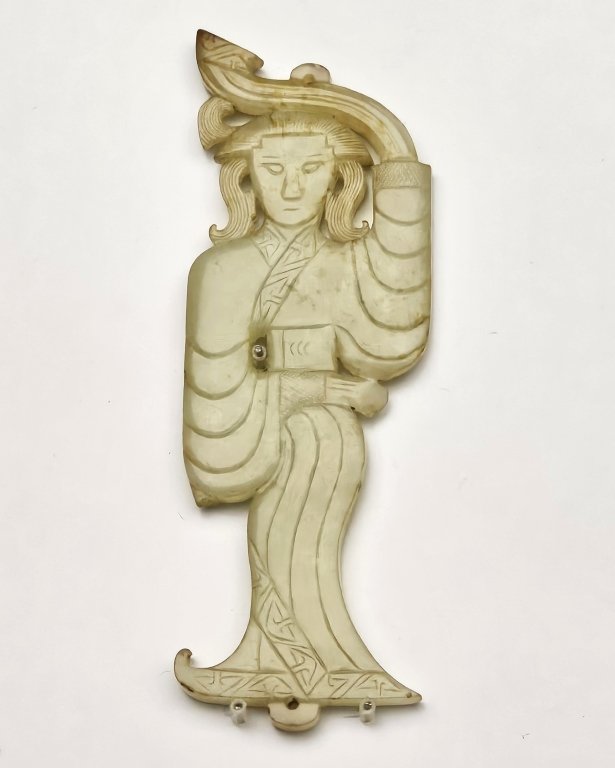
Jade dancing figurine, Han dynasty (202 BCE-220), Collection of Nanchang Relic Museum of Marquis Haihun State of Han Dynasty
A delicate and finely crafted Jade dancing figurine found in the tomb of Liu He, Marquis of Haihun, attests to the material wealth of its owner. The piece is flat in form and carved in openwork on both sides. This dancing-figure jade pendant has a warm lustre. Its graceful lines render the dancer lifelike.
Related Women and Femininity in Ancient China: A Revealing Way of Life
The holes at the top and bottom of the piece indicate that it was likely intended as a piece of jewellery or for bodily adornment. Unlike items made solely for burial, this jade piece would have been worn during the owner’s lifetime.
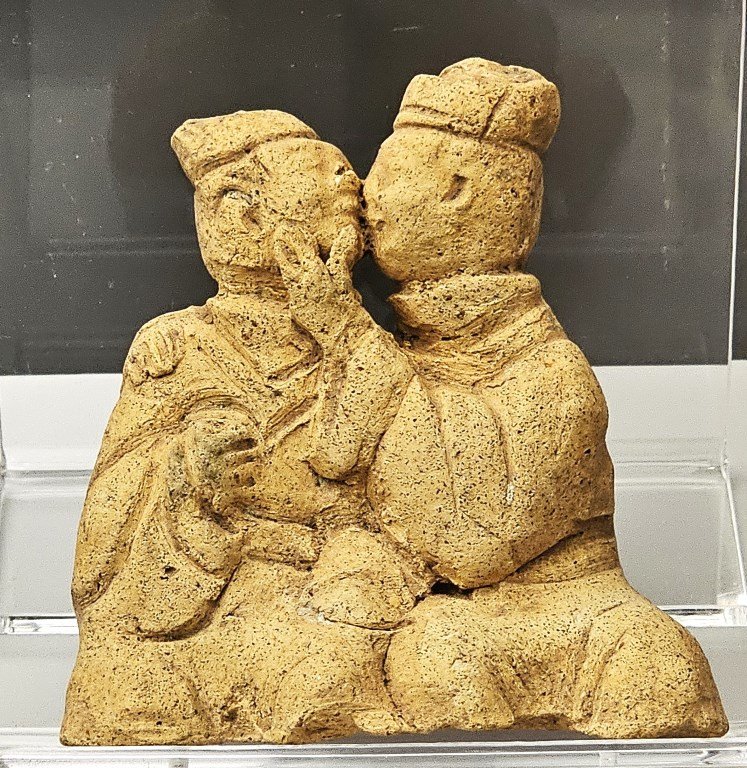
Intimate pottery figurines, Eastern Han dynasty (25-220), Collection of Hejiang Museum
Portraits of amorous figures are exceedingly scarce. A find in Sichuan in 1987, unearthed a sculpted couple in a romantic embrace. The Intimate pottery figurines conveyed a rarely seen private facet of life and interpersonal dynamics during the Han period.
Related British Museum History of the World in 100 Objects
In the Han dynasty, maintaining the patrilineal line was of great importance. Intimate scenes conveyed the wish for fertility.
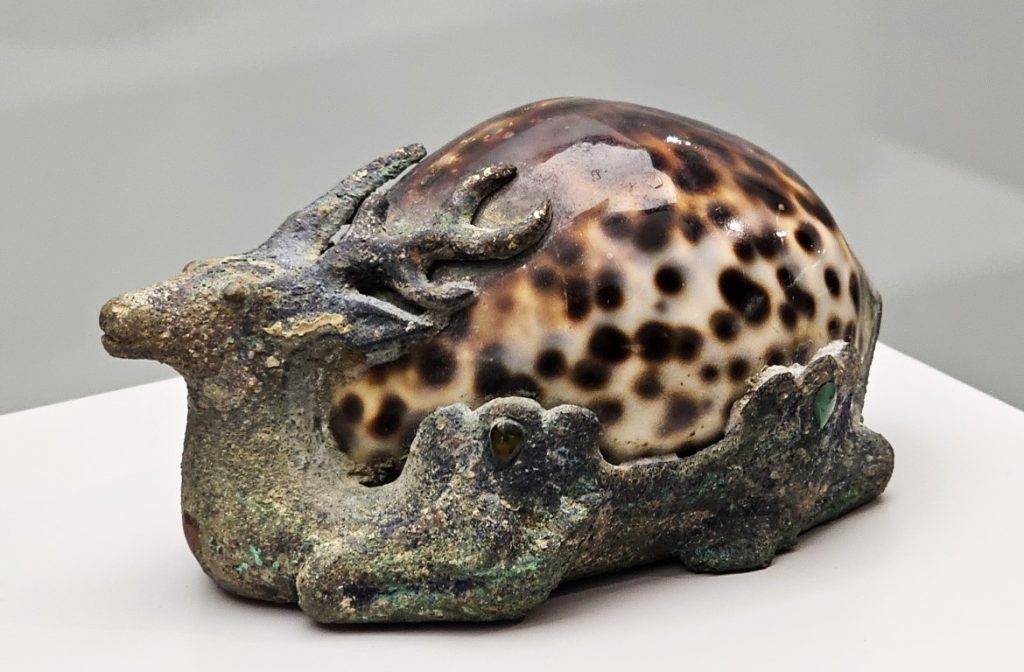
Deer-shaped gilt-bronze weight inlaid with shell, Han dynasty (202 BCE-220), Collection of Hanyangling Museum
During the Han dynasty, it was customary to sit on mats on the floor. Bronze weights, such as a Deer-shaped gilt-bronze weight inlaid with shell, were used to hold down the corners of the mats.
Related Tian Tan Big Buddha bronze statue is a colossal gift for people of faith
This bronze weight combines a bronze deer with a delicate seashell, making it a masterpiece among similar Han-period artefacts.

Pottery figurine in handstand pose, Eastern Han dynasty (25-220), Collection of Yibin Museum
Entertainer figurines were popular subjects in Chinese sculpture, showcasing the rich and diverse forms of entertainment available to the people. A pottery figurine in a handstand pose captures the liveliness of an ancient acrobatic performance.
Related Tang dynasty golden age artistic highlights
Given the belief in honouring the dead as the living, it was common to find ensembles of pottery figurines performing music and dance in tombs, providing the occupant with musical and acrobatic entertainment.
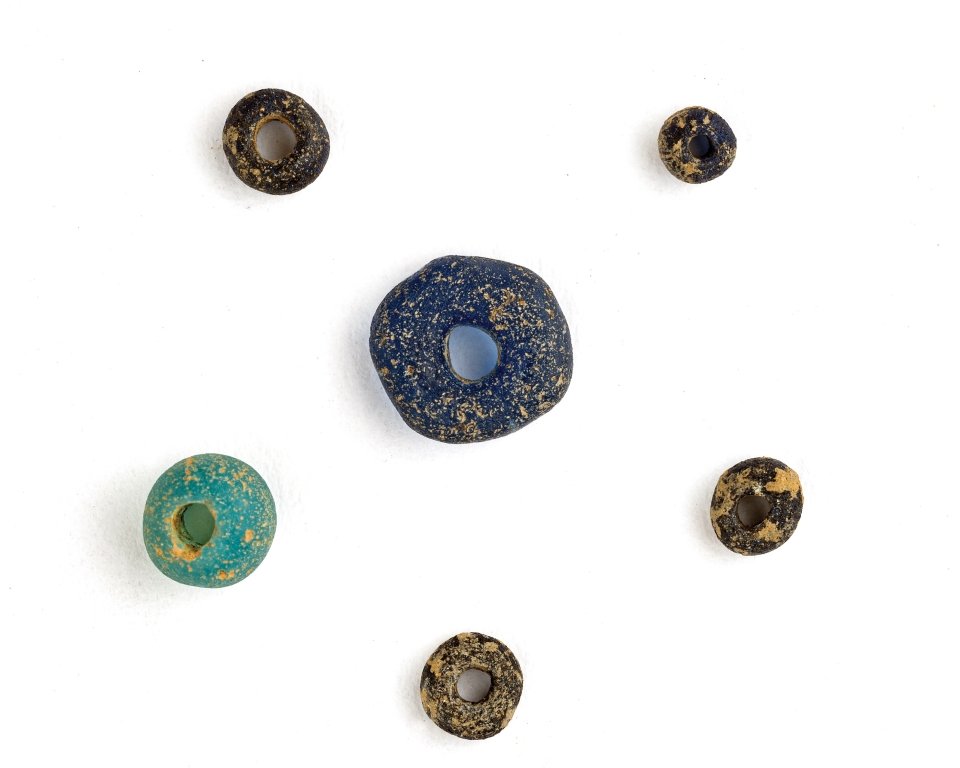
Glass beads, Han dynasty (202 BCE-220) Collection of Antiquities and Monuments Office, Hong Kong
Integration of East and West, the exhibition’s sixth and final section, pivots the focus to external exchanges via the Silk Roads, which progressed significantly during the Han Dynasty. During the reign of Emperor Wu, two missions to the Western regions strengthened the protected corridors along the Silk Roads. It marked the commencement of large-scale exchanges linking Asia and Europe.
Related Silk Roads movement of people and ideas that changed the world
The exploration of the southern region was also actively promoted. Overseas commerce was opened from the southeastern coast of China, fostering the Han-period Maritime Silk Road. Six glass beads excavated in Hong Kong are evidence of imported goods linked to maritime trade originating in South Asia and Southeast Asia.

Bronze yue axe with yuren (feathered men) boat racing motif, Warring States period, Western Han dynasty, Collection of Cultural Relics Protection and Management Center of Yinzhou District, Ningbo City, Photo credit Antiquities and Monuments Office Development Bureau
A Bronze yue axe (similar to an axe but with a wider, more curved blade) featuring yuren (feathered men) vividly evokes life on the waterways of the Jiangnan region, underscoring the reach and importance of maritime trade originating in Southeast China.
Related Way of the Sword: Warrior Traditions in China and Italy
This bronze yue axe is flat and shaped like the character feng or phoenix. At the top of the front are two dragons facing each other. Below them, a narrow boat is indicated. Four figures within, wearing feathered headdresses and gripping oars, are shown rowing with vigorous effort.
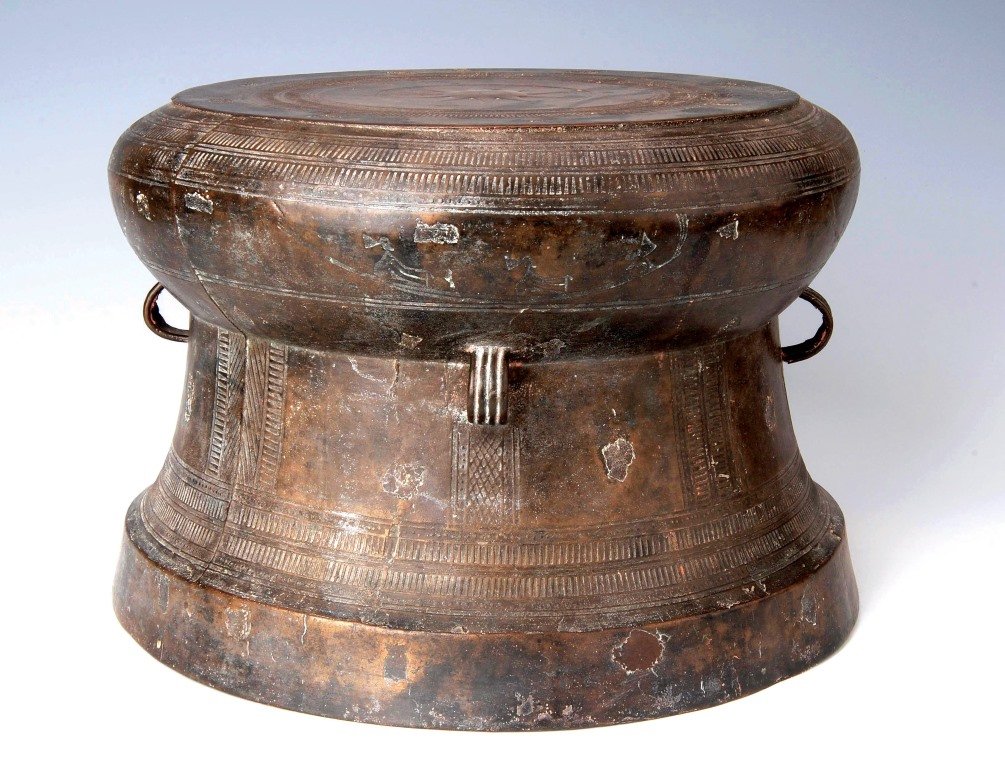
Bronze drum featuring yuren (feathered men) with boat and jie comb patterns, Western Han dynasty (202 BCE-8), Collection of The Museum of Guangxi Zhuang Autonomous Region, Photo credit Antiquities and Monuments Office Development Bureau
The significance of maritime trade is vividly depicted on a Bronze drum depicting men rowing a boat. The drum face is decorated with diagonal lines and comb patterns, a design originating with the Shizhaishan culture in southern China.
Related Maritime Silk Road Zodiac Heads from the Old Summer Palace fountain clock
The men rowing motif possesses distinct regional cultural characteristics of the South and is likely related to the ancient Baiyue people’s reverence for river and marine culture, as well as their totemic worship of birds and the sun.
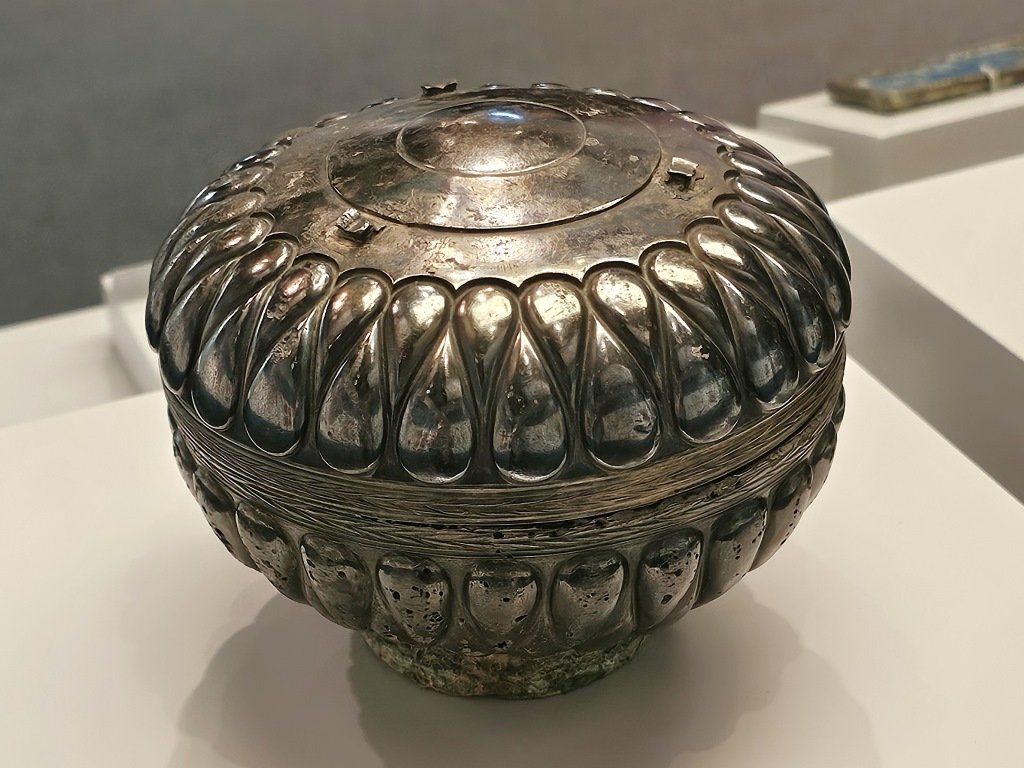
Silver box with garlic pattern, Western Han dynasty (202 BCE-8), Collection of Nanyue King Museum (Research Centre for the History of Xihan Nanyue Kingdom, Photo credit Antiquities and Monuments Office Development Bureau
A Silver box with a garlic pattern, discovered in the Mausoleum of the Nanyue King in Guangdong, is the earliest known imported Western artefact on display. It verifies trade from the Middle East to the southeasternmost parts of China.
The shape and decoration of this box are starkly different from traditional Chinese styles and resemble silverware unearthed in the ancient city of Susa, Iran, inscribed with the name of a Persian King (fifth century BCE).
Related Glistening Treasures in the Dust: Ancient Treasures of Afghanistan
The Han dynasty’s large-scale, multifaceted exchanges and interactions with cultures from East to West and North to South stimulated commerce that fertilised four hundred years of economic growth and expansion.
Their success in all areas of society laid the foundations for China’s development to the present day.
Text & Photos Cammy Yiu / Additional photos as credited