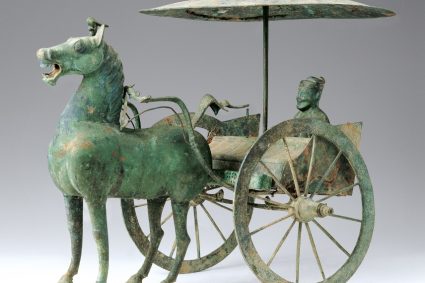
The unique Sui and rich history of the Tang Dynasty

Prosperity and Magnificence: The Sui Dynasty and Tang Dynasty in Shaanxi Province
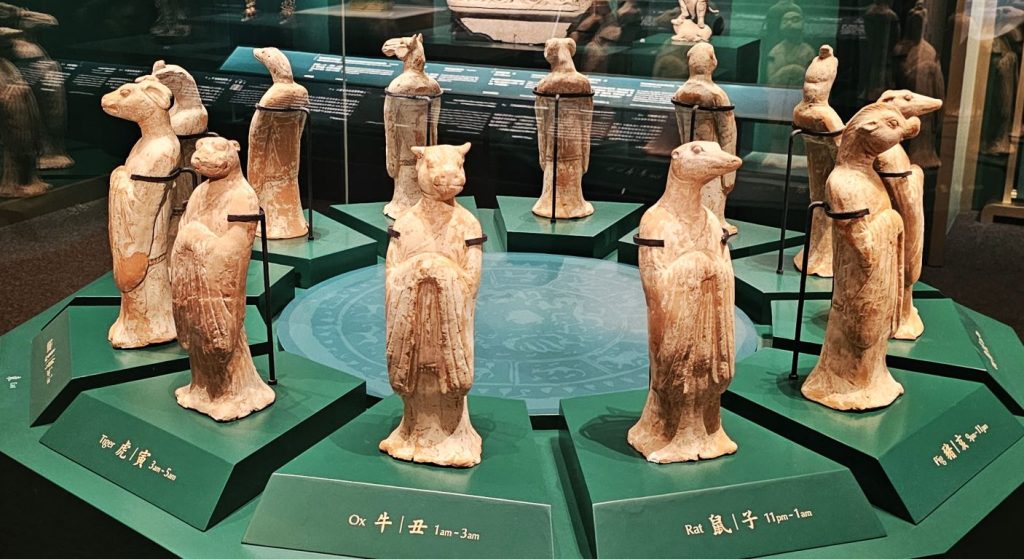
Twelve zodiac figurines. Tang dynasty
Sui led to the golden age of the Tang Dynasty
The golden age of China is presented in an exhibition that spotlights the circumstances that led to the rise of the Tang dynasty. Prosperity and Magnificence – Civilisation of the Sui and Tang Dynasties in Shaanxi Province is the third programme in the General History of China series, which chronicles the evolution of Chinese civilisation.
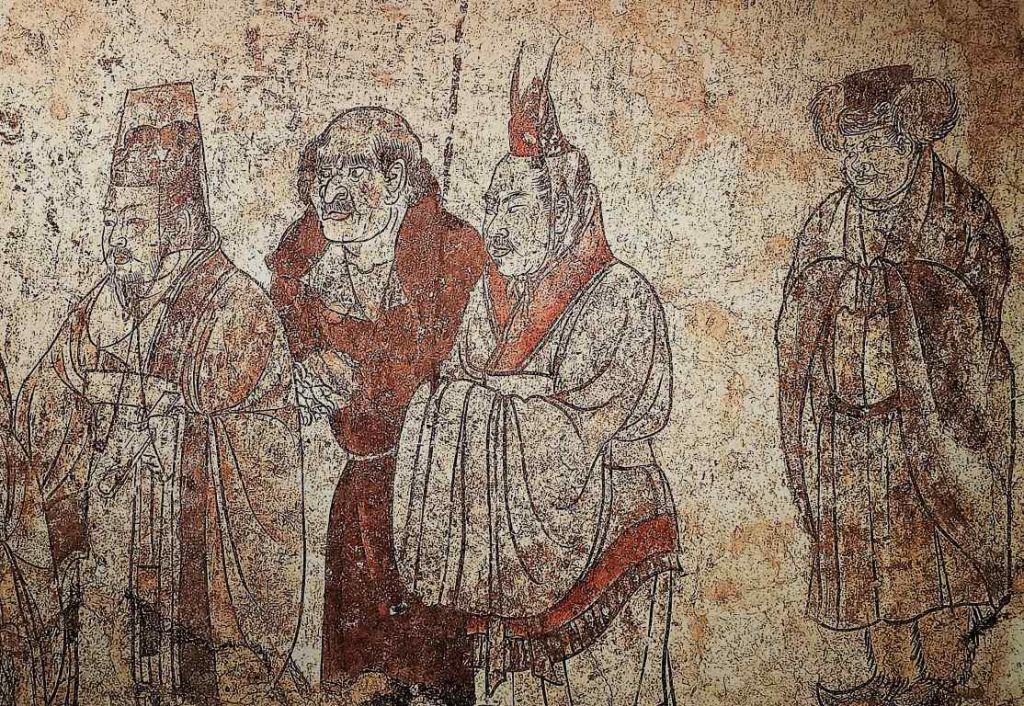
Mural showing guests and envoys. Tang dynasty
The deep roots and long history of Chinese culture are complex and convoluted. Although the elements of Chinese society have existed for thousands of years, its development has undergone many alternating seasons of advancement and disruption.
Related Neolithic Clues to the Origins of Chinese Civilisation
The Chinese Culture Promotion Office was established by the Hong Kong Leisure and Cultural Services Department to promote and foster a deeper understanding of the many facets and periods of China’s history. Their goal is to provide a foundational and comprehensive background to the origins, emergence and progression of Chinese civilisation.
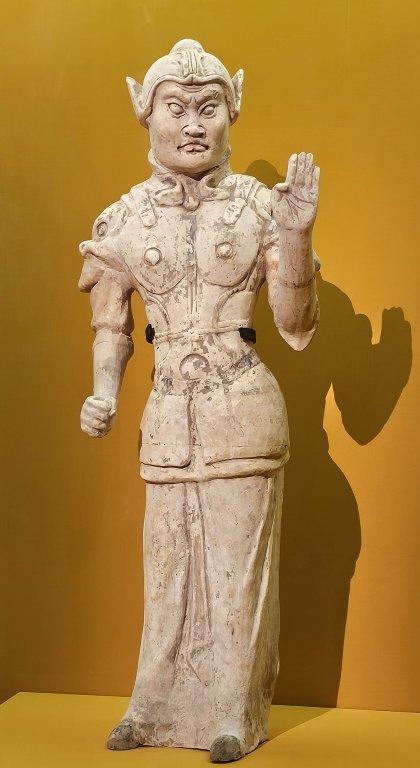
Painted figurine of a military officer wearing a helmet and armour, his right hand is clenched to form an empty fist, as if it once held a weapon. Tang dynasty
The General History of China series began with an exhibition showcasing the earliest known origins of Chinese civilisations. The showcase of invaluable treasures dating from the Xia, Shang, and Zhou dynasties provided a chronological narrative of the development of the three oldest dynasties that flourished along the Yellow and Luo rivers from 2070-221 BCE.
Related Ancient societies of the Xia, Shang and Zhou dynasties
Although the history of Chinese society extends back over 5,000 years, documentation of the oldest societies and civilisations began only around 841 BCE. It was through archaeological evidence, ancient scripts, oracle bones, and bronze inscriptions on objects from later periods that the earliest stages of Chinese culture and its development were revealed.
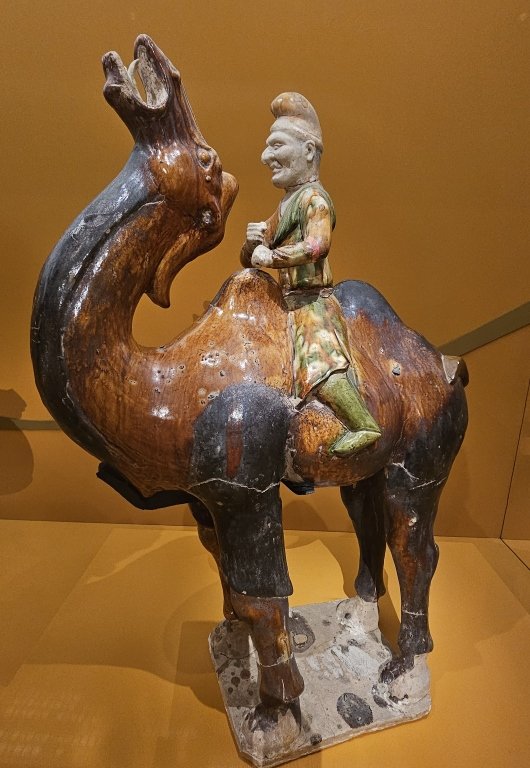
Sancai (tri-colour) glazed Hu (foreign) camel rider with deep-set eyes and a high nose, wearing a foreign-style hat. Camels were the main mode of transport along the Silk Road. Their ability to find water and withstand sandstorms earned them the name ships of the desert. Tang dynasty
In the second edition of the General History of China series, the unification of China under the Qin and Han dynasties was chronicled. The Great Unity: Civilisation of the Qin and Han Dynasties in Shaanxi Province presented life-sized terracotta warriors, bronze chariots, and priceless artefacts to showcase the development of politics, economics, culture, technology and cross-border transportation.
Related The Great Unity: Civilisation of the Qin and Han Dynasties
This narrative introduced Chinese history from 221 BCE to 220 CE, following the Xia, Shang, and Zhou dynasties. Both the Qin and Han dynasties built their capitals in Shaanxi province, where their emperors erected mausoleums from which many of these artefacts were excavated.
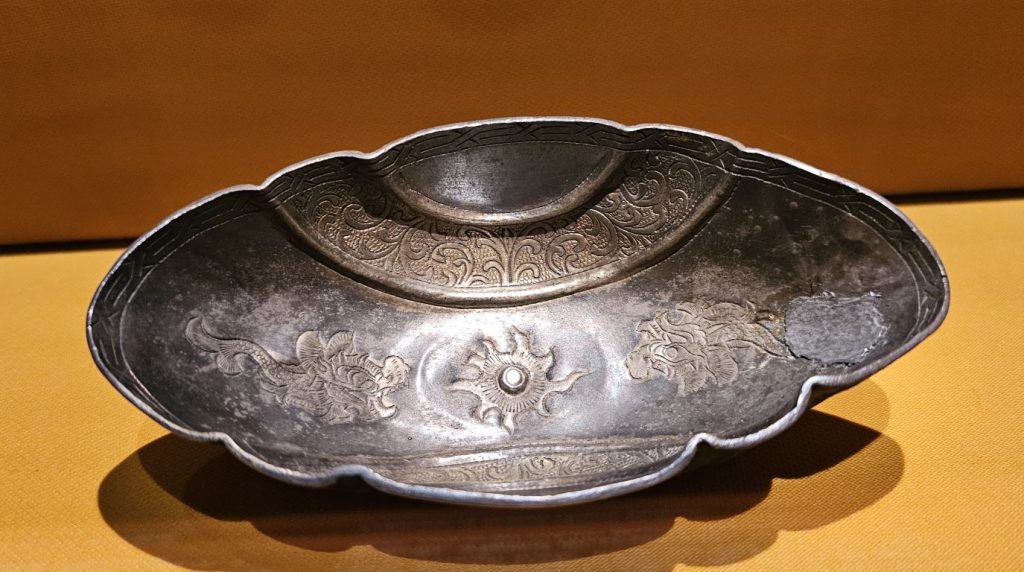
Silver-lobed cup, its shape inspired by Sasanian silverware from Persia, is decorated with the makara motif, a mythical sea creature in Indian legend. The makara decoration travelled to China alongside the spread of Buddhism and became a popular design in precious metalwork. Tang dynasty
Prosperity and Magnificence – Civilisation of the Sui and Tang Dynasties in Shaanxi Province continues the series after the fall of the Han dynasty and the tumultuous three centuries of the Wei, Jin, and Northern and Southern dynasties (220-581 CE). This exhibition follows China’s historical timeline, beginning with the end of these fragmented dynasties, and the pioneering achievements of the short-lived yet pivotal Sui dynasty (581-618 CE).
Related Ceramic treasures from the Tang dynasty
The Sui dynasty rose amid a turbulent period, yet they established a fertile environment for governance and growth. Amongst their significant achievement was the reunification of China, once again under a single Emperor and a centralised government. The Sui dynasty adopted the most effective aspects of earlier dynasties and revived the civil service through merit-based appointments, thus laying the foundation for the Tang dynasty.
The Grand Canal connected the north with the south
Their most monumental accomplishment was the massive construction of the Grand Canal. This major thoroughfare connected the Yellow River in the north with the Yangtze River in the south, providing an extensive network for the transport of grain and supplies, as well as for the movement of people to and from the capital city of Chang’an (present-day Xi’an) in Shaanxi Province.
Related Maritime Silk Road daring time for world myths
Stable governance, ambitious policies, and economic reforms initiated during the Sui dynasty enhanced trade along the Silk Roads. Although the dynasty lasted only 37 years, its pivotal contributions to economic progress, cultural development, and social integration forged momentum that reached a zenith during the golden age of the Tang dynasty.
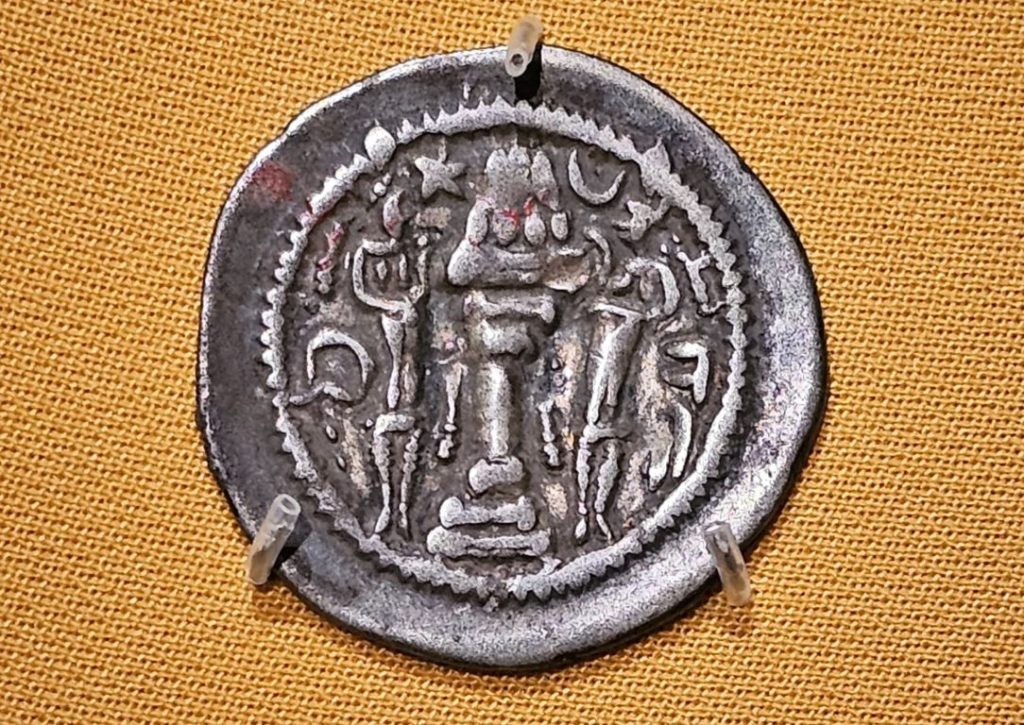
Persian silver coin. This coin features a Zoroastrian fire altar. The other side of it is the profile of a king. Many Persian coins have been unearthed from Xi’an and Luoyang – evidence of the thriving trade and cultural exchanges along the Silk Road. Tang dynasty
The Tang dynasty was a period of tremendous achievements and growth. From 618 to 907, China flourished under strong military control and a stable, capable civil administration, fostering peace and prosperity. Progress was made in agriculture, handicrafts, industry, and commerce. This accelerated the prosperity and development of the society.
Related Way of the Sword: Warrior Traditions in China and Italy
Central to the success of the Tang dynasty was the international trade and exchange of ideas, goods, and people, which it facilitated through the Silk Roads – a series of routes, by land and sea, that linked the east, from Chang’an, to the west, as far as Rome. A Persian silver coin is evidence of the thriving trade and cultural exchanges along the Silk Roads.
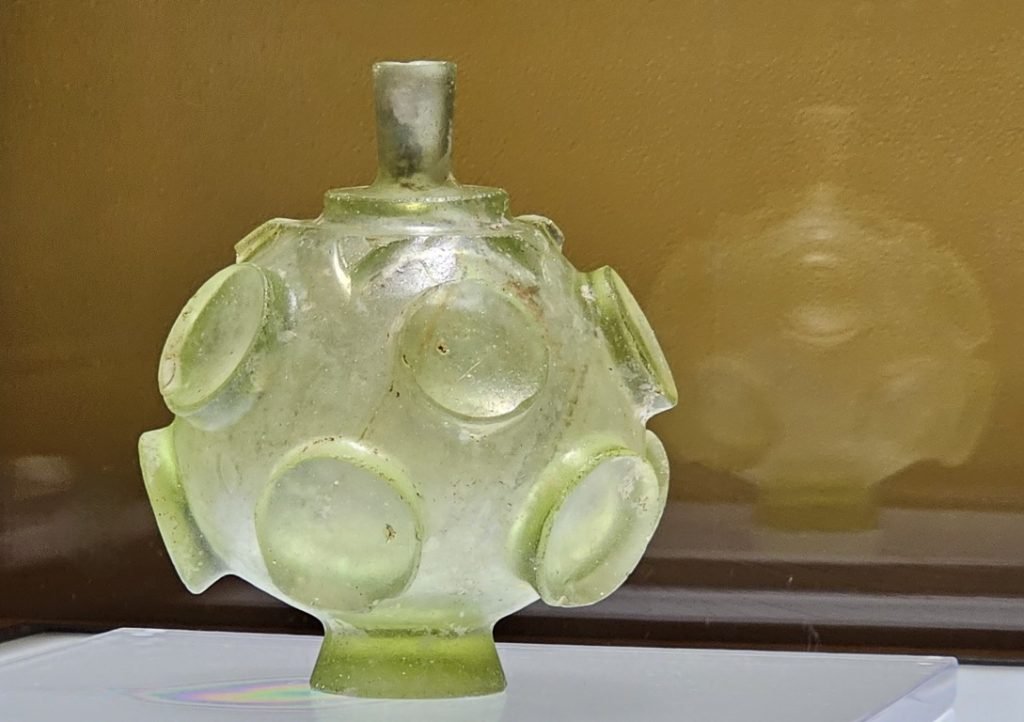
Glass bottle. Liuli, an old term for glass, was imported from places such as Persia during the Tang dynasty. It was considered a treasure reserved for the imperial family and the high nobility.
Smooth and safe passage along the routes was maintained, often by military garrisons, so that merchants had confidence in their ability to travel and trade. A unique spherical glass bottle illustrates the extent of the Silk Roads’ connections. Decorated with raised circular bosses, it was imported from places such as Persia for the elite and nobility. This item denoted wealth and status and was buried as a grave good to reinforce the owner’s position in life and in death.
Related British Museum Silk Roads movement of people and ideas that changed the world
The accumulation of grave goods for one’s tomb, ensuring a comfortable life beyond the earthly realm, was an essential and long-held tradition from the earliest times. Artefacts dating from the Qin dynasty, such as the Terracotta army from the tomb of the first emperor, Qin Shihuang, provide evidence of these enormous efforts.
Sacred belief that death was a continuation of life
The Han dynasty, which followed the Qin’s brief 15 years, endured 400 years and took the task of preparing and accumulating grave goods to monumental heights. The prevailing belief was that death was a continuation of life. It was paramount that the earthly comforts enjoyed by the nobility, in terms of quality and quantity, accompanied the dead at their burial.
Related Majestic Han dynasty, China’s first Golden Age
Successive dynasties followed these burial practices, and many of the items on display were unearthed from Sui- and Tang-era tombs. A White pottery dancing horse unearthed from the tomb of Zhang Shigui is one such example. The sculpture depicts a dancing horse introduced to China from the West. This White pottery dancing horse, with its head lowered and its right front hoof raised, is unadorned and showcases the exquisite work of Tang dynasty artisans, with extremely high ornamental and artistic value.
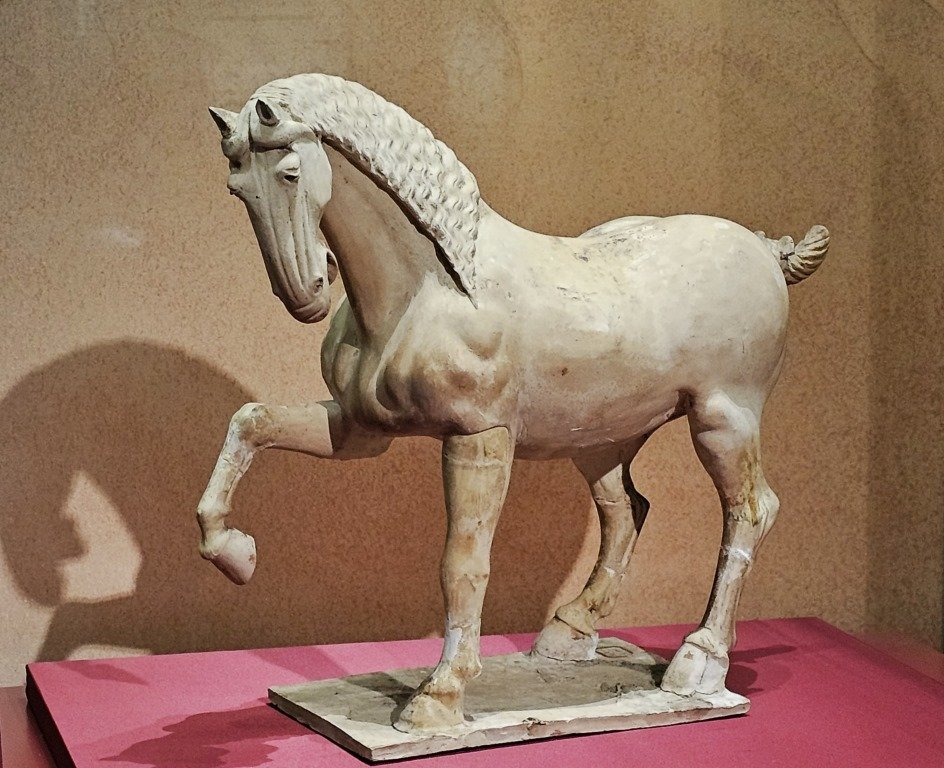
White pottery dancing horse. The tradition of performing horses originated in the West and reached central China during the Wei, Jin, and Northern and Southern dynasties.
Dancing and performing horses were a unique form of entertainment and part of variety shows called Baixi. Combining horse movements with music and dance, they symbolised this prosperous and auspicious period.
Related Contemporary ceramic sculptures from the imagination of Solan Chiu
The dancing horses were specially trained and deployed to heighten the prestige and gaiety at grand banquets and festivities. On occasion, hundreds of these lavishly-adorned horses would move in rhythm with the music.
Related The exciting Year of the Horse
Baixi, which means ‘one hundred acts’, flourished during the Tang dynasty. Performing arts became highly popular and desirable forms of entertainment. Song-and-dance acts, comedy plays, acrobatics, and illusions were performed in public spaces, markets and temple fairs.
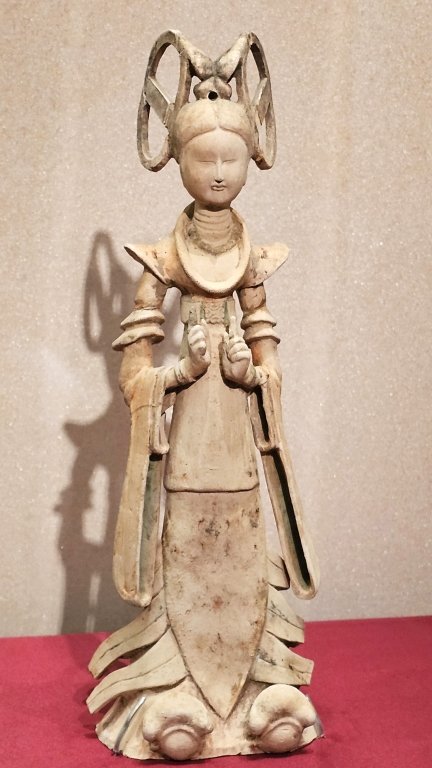
Painted female figurine of a dancer with a double-looped bun, portrayed in an elegant dancing pose. Tang dynasty
Music and dance were built upon traditions of earlier periods and blended with styles from foreign regions, creating a fusion of exotic and Chinese elements. Dances from the western regions were championed by the aristocracy and the literati and, for a time, were fashionable throughout the Tang empire.
A painted female figurine of a dancer with a double-looped bun is an example of this type of entertainer. The figurine is tall and slender, portrayed in an elegant dance pose. Her hair is arranged in a double-looped bun, a style known as ‘Gazing at the Immortals’. She wears fashionable, brightly coloured clothes and cloud-toed slippers.
Related Ancient dynasty currency and gold-like coveted Chinese Silk
Hu figurines of musicians show a group of performers in concert. The instruments these musicians hold are damaged. One figurine holds a pair of cymbals. Based on their poses, the others likely played the flute, the bili (a wind instrument), and the sheng (a wind instrument). All but the bili player are depicted as Hu (foreigners), with high noses and large eyes.
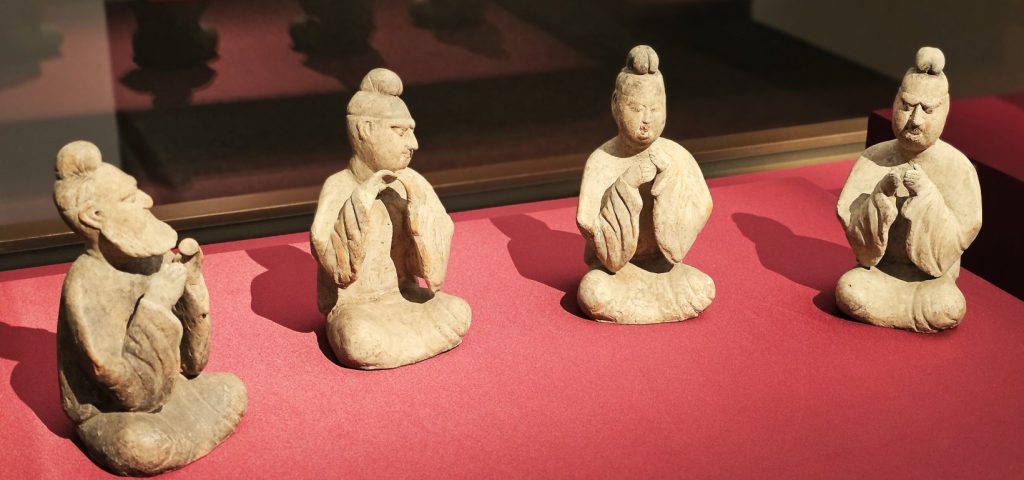
Hu figurines of musicians. Tang dynasty
The figurine of a dark-skinned dancer with curly hair, unearthed from the tomb of Zhang Chenhe, depicts an entertainer in a dynamic pose with a twisted waist and a raised leg. Pottery sculptures of black people are relatively common in Tang tombs, but dancing figurines like this are very rare.
Related Silk Roads the greatest link of civilisations in the world
This black dancer wears a yingluo necklace and dance rings on his wrists and ankles. This figure is expressive and conveys movement. He is also a foreigner, and as such, this sculpture serves as an illustration of cultural exchange between China and the wider world.
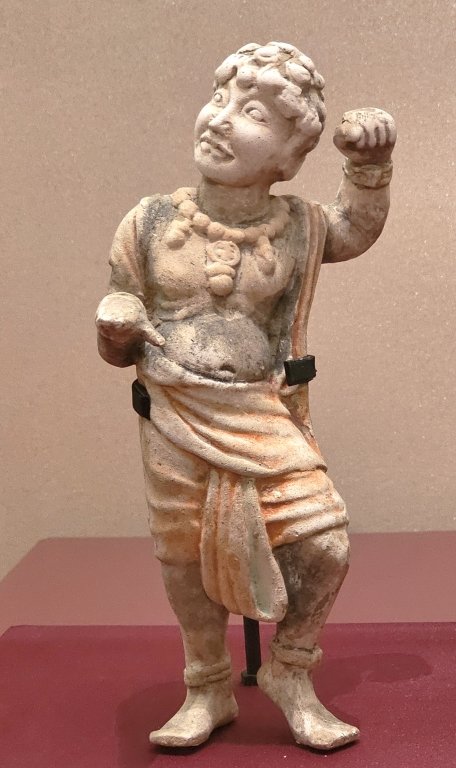
Figurine of a black dancer. While figurines of black people are relatively common in Tang tombs, dancing figurines like this are very rare.
The belief that death was an extension of living was sacred. Pottery depicting dancing horses, dancers, and musicians unearthed in these tombs provides evidence of the importance of providing abundant and varied musical and entertainment for the tomb’s occupants.
Related Chinese calligraphy artworks echo joys and resonate
Tomb guardians were essential for protecting grave goods. Pottery figurines of soldiers and mythical beasts were placed with the deceased to repel attacks and intrusions by spirits and tomb raiders.
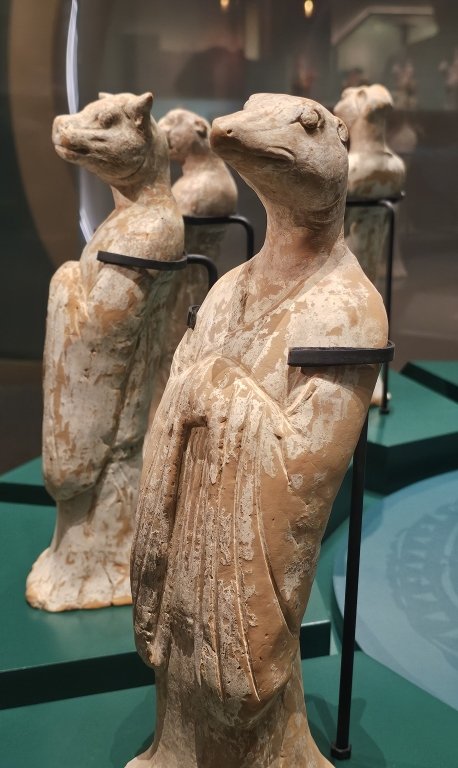
Twelve zodiac figurines: detail of the snake guardian, one of the spirits that take turns around the clock to protect the tomb occupant. Tang dynasty
A fabulous set of twelve zodiac figurines, unearthed from a tomb in Xi’an, is arranged clockwise and aligned with the four cardinal points. This symbolised a complete set of guardian spirits taking turns around the clock to protect the tomb occupant.
Related Bronze Zodiac sculptures survived the destruction of the Old Summer Palace
The twelve zodiac figures of Rat, Ox, Tiger, Rabbit, Dragon, Snake, Horse, Goat, Monkey, Rooster, Dog, and Pig represent a year within the 12-year Chinese lunar calendar. The origins of these animals reside with the myth of the Jade Emperor, the primordial god who held a contest to decide which animal would be included in the calendar.
12 zodiac figurines, a complete set of guardian spirits
Each zodiac animal was chosen for their traits and revered status. The year of one’s birth and the associated zodiac animal are believed to influence a person’s personality, life, marriage, and fortune. Having a full retinue of all twelve zodiac figurines, with the heads of the animal faces on human bodies dressed in elegant, wide-sleeved robes, provided powerful, all-encompassing protection for the tomb occupants.
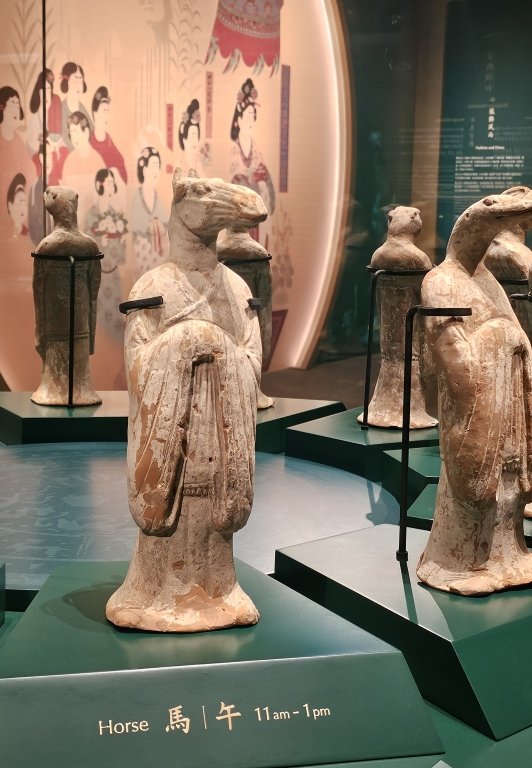
Twelve zodiac figurines, detail of the horse, arranged in a clockwise sequence and aligned with the four cardinal points.
Another artefact, a white-glazed figurine head of a eunuch, unearthed from the tomb of a princess, shows that other kinds of attendants and those who provide service were also part of the essential corteges (a line of people at a funeral) needed in a royal tomb. The figurine depicts the head of a court eunuch, who most likely held a high-ranking position in the imperial service.
Related Yuan Ming Yuan, a beautiful garden palace for China’s emperors
In the late Tang dynasty, eunuchs became so powerful that they could interfere in court politics. They could override imperial authority and even control the succession of emperors. This stern-looking eunuch, with a furrowed brow and proud expression, reveals his power and authority, which would position him well to serve the deceased in the afterlife.
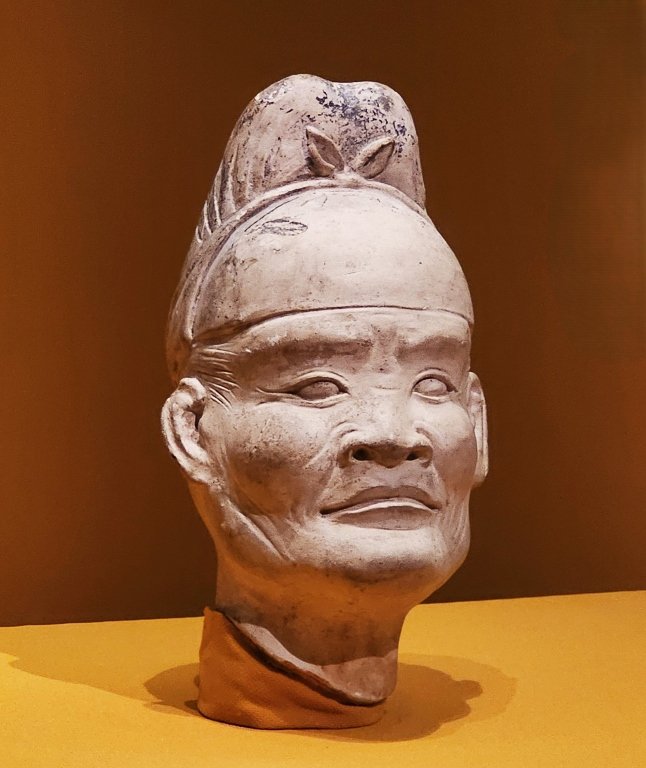
White-glazed figurine’s head of a eunuch, who most likely held a high-ranking position. He is wearing a futou (soft cloth cap) and is clean-shaven.
Talented people from east and west were attracted to the powerful and prosperous Tang dynasty. While the Grand Canal linked north and south, the Silk Roads served as a conduit from east to west. The capital, Chang’an, was the nation’s political, economic and cultural centre.
Related Treasures of the Mughal Court presents 100 examples from the golden age
As the start and end point of the Silk Road, Chang’an was a magnet for foreign merchants, envoys, monks and students. The capital brought together diverse cultures, with thousands of travellers living there for decades. At one time, it was the world’s largest and most prosperous metropolis.
Related Tale of 3 cities: Maritime Silk Trade in Guangdong – Hong Kong – Macau
Neighbouring states sent missions to learn from Chang’an culture. Wa (present-day Japan) modelled its legal code, tea culture, Confucianism, and calligraphy, as well as its capital, on the Tang dynasty’s Chang’an. To manage frequent diplomatic and commercial exchanges, both Sui and Tang rulers established the Court of State Ceremonials dedicated to foreign affairs and promoting exchange.
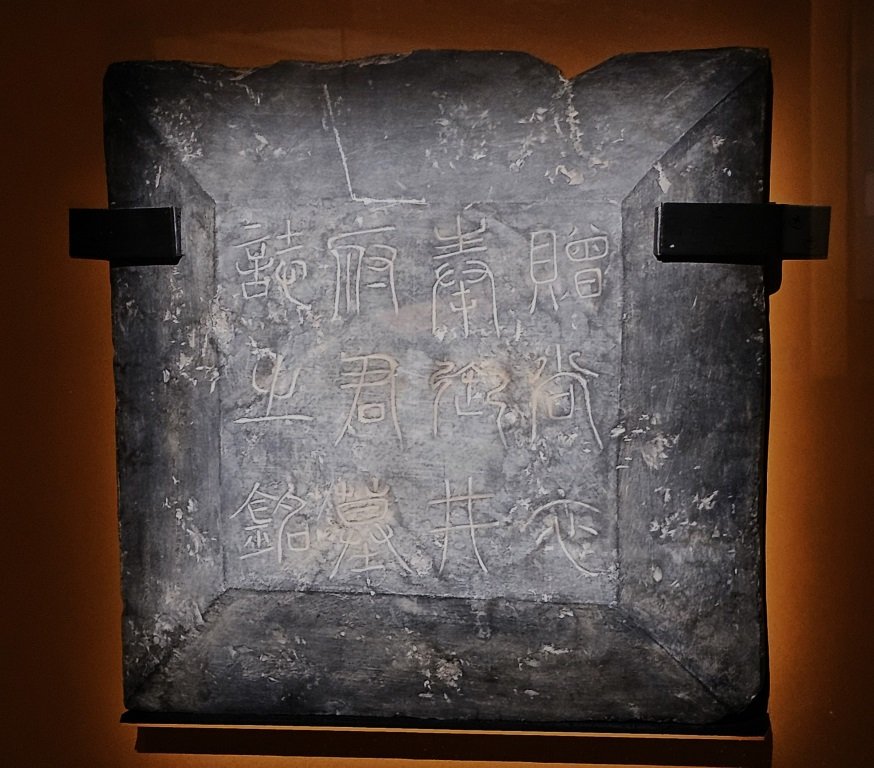
Replica of an Epitaph for No Manari, a Japanese student who travelled to China with an official mission to the Tang court.
An Epitaph for Ino Manari commemorates an individual who came on an exchange. Ino Manari was a Japanese student who travelled to China with an official mission to the Tang court. He died in 734 at the age of 36, before he could return to Japan. In recognition of his life, the Tang court conferred an honorary title on him.
Related Ukiyo-e Japanese wood block prints of Utagawa Hiroshige
The industrial scale and massive undertaking of pottery production during the Tang dynasty are exemplified by an Animal-faced tile unearthed from the Sangyuan kiln site. The style of this tile was used at the ends of roof ridges on premium buildings such as palaces, government offices, and temples.

Animal-faced tiles such as this one were placed at the ends of roof ridges of premium buildings.
The site where this artefact was found was close to more than 500 kilns and to five Tang imperial mausoleums. This suggests that this area was dedicated to the substantial production of pottery and ceramics for general construction materials as well as for grave goods in mausoleums and tombs of subordinates, nobility, and important officials.
Related Chinese history and the Sanxingdui artefacts discovered in Sichuan
A tri-colour glazed tripod jar showcases the iconic colour palette of masterfully crafted sancai ceramics. Although this colour combination was used in earlier dynasties, the three colours of brown or amber, green, and off-white are often associated with the Tang dynasty, as many fine examples were produced during this era.
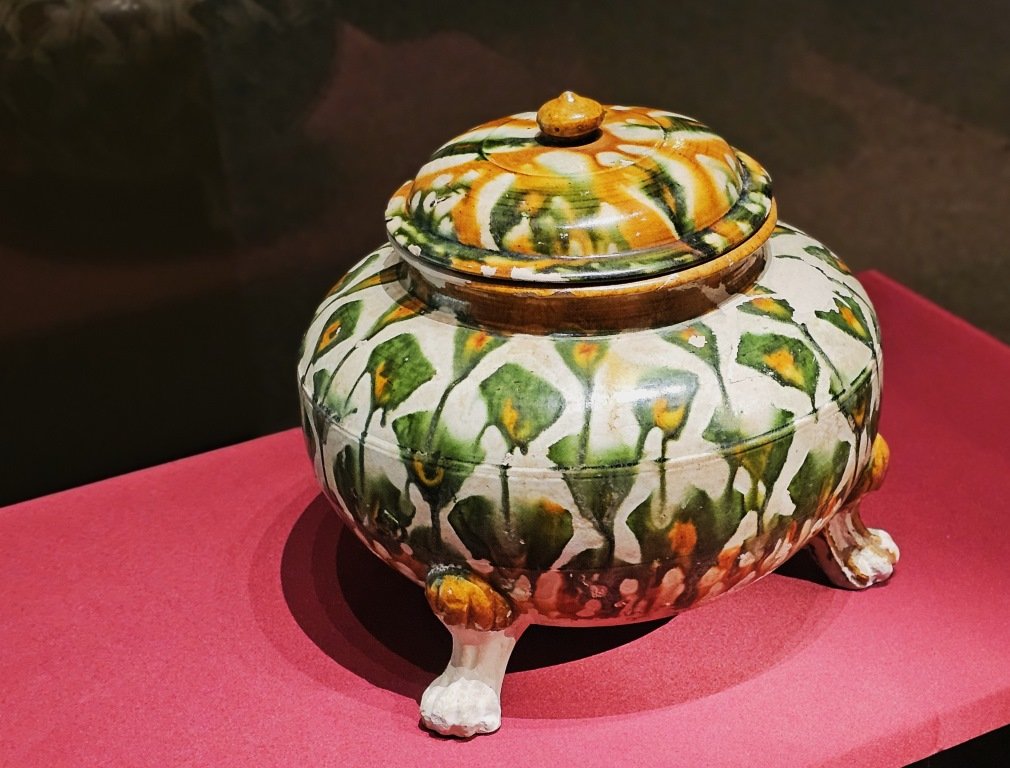
Sancai (tri-colour) glazed tripod jar
This tripod was created by artisans who skilfully fused glazes with different melting points in the kiln. The exceptional abstract application of the glaze on the lid is a striking contrast to the more controlled leaf-like patterns on the white body. It exemplifies the peak of Tang dynasty sancai production.
Related Fantastic Chinese Blue and White Porcelain
An extremely rare and precious Marbled-ware pillow showcases the remarkable creativity of artisans during the high Tang period. The marbled effect was created using an innovative, complex technique involving kneading and twisting two different-coloured clays together. The resulting clay was then sliced into layers to reveal the surface effect.
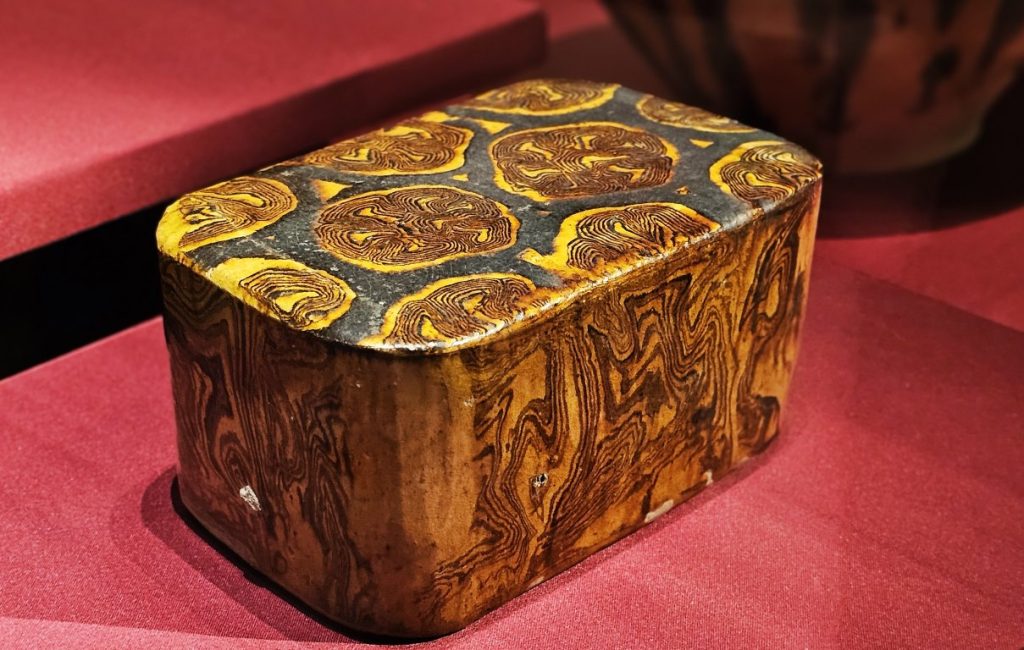
Marbled-ware pillows, rare and extremely precious
The layers of clay, using the marbling technique, yielded wholly individual pieces, each with unique features. This Marbled-ware pillow has the swirling grain patterns and knots of burled wood, making it an unparalleled and distinctive example of Tang art and design.
Related Ancient Chinese Gold symbol of power and wealth
The Tang dynasty was a golden age for art and design. Many relics from that era attest to innovations in materials, production, and craftsmanship. Alongside the breadth and depth of pottery figurine production and sancai-glazed ceramics, artefacts also show other key areas of prominence.
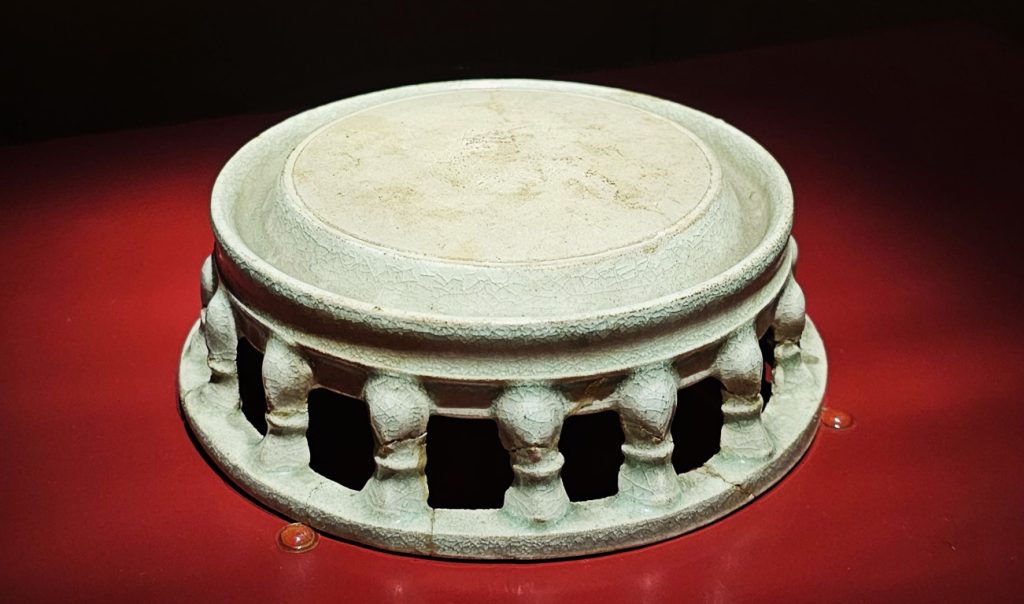
White Porcelain Biyong Inkstone
Ink-wash landscape paintings were highly desirable, and a White Porcelain Biyong Inkstone was the requisite tool for their creation. A channel for holding ink runs between the circular grinding surface and the outer rim.
Related Inkstones history, artistry, and passion of Chinese culture
This inkstone is named after Biyong, an imperial college set up by the emperor of the Western Zhou dynasty. The college was a circular building surrounded by a moat design, which this inkstone clearly resembles.
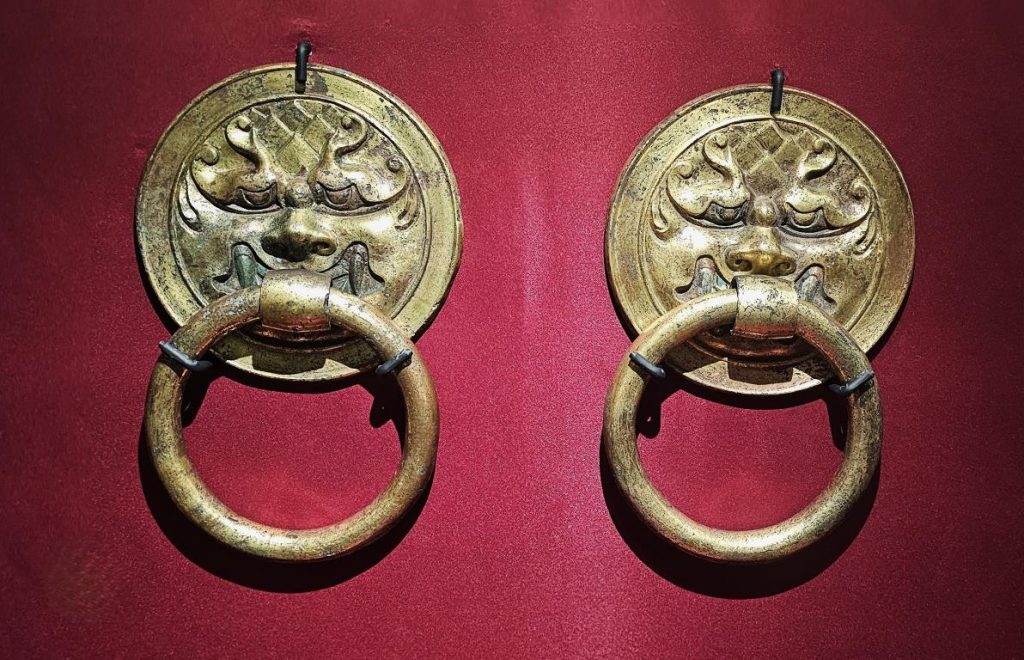
Bronze-gilt pushou (door knockers)
Exquisitely crafted metal artefacts reveal the development of imaginative techniques and the influence of foreign materials and design. A Bronze-gilt pushou – door knocker, shows a fine example of skilful craftsmanship and also affirms the affluence of the times.
Related Imperial portraits of the luxurious life of Qing Emperors and Empresses
The animal-face door knocker has the face of a jiaotu, one of the nine sons of the loong (Chinese dragon) in mythology. The jiaotu resembles a clam, which could shut its shell tightly when threatened. For this reason, a jiaotu is often used as a door knocker to guard entrances.
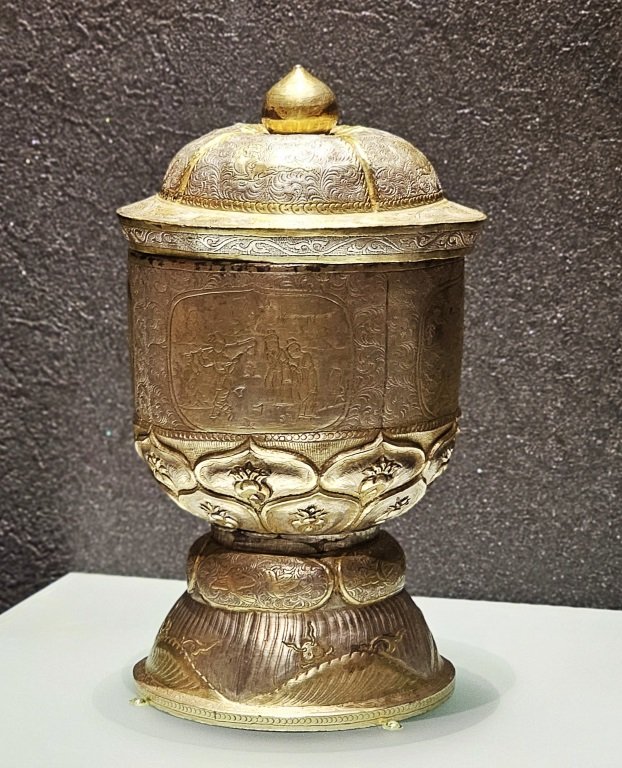
Silver-gilt incense caddy with scenes showing human figures
The design and techniques for metalwork flowed from international trade along the Silk Roads. These conduits allowed people, goods, ideas and religions to flow into China. Buddhism originated in India along the Silk Roads, carried by merchants and their goods that traversed towns and trade hubs like Dunhuang, a historic and key city in northwestern Gansu province at the edge of the Taklamakan Desert.
Related Chinese Fragrance: A Feast of Sensational Scents
A fabulously forged Silver-gilt incense caddy includes the tale of Buddha’s enlightenment. The container was used to store incense pellets or cakes. It has four engraved panels depicting human figures. Each side is adorned with depictions of famous tales. One is of the Buddha’s spiritual awakening.
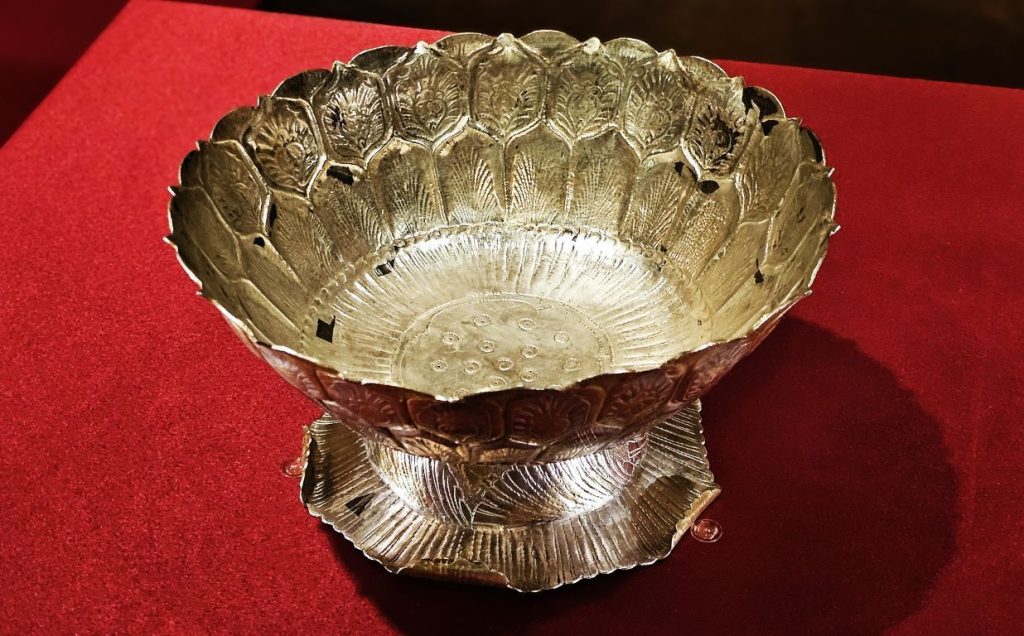
Gilt-silver bowl with an upturned lotus petal design and cylindrical foot
Antiquities such as the Gilt-silver bowl with an upturned lotus-petal design and a cylindrical foot feature Buddhist motifs. The bowl’s body is decorated with two layers of lotus petals, and the cylindrical foot is shaped like an upturned lotus leaf. In Buddhism, lotus petals symbolise purity and spiritual awakening.
Related Lumbini Nepal, birthplace of Buddha, a World UNESCO Heritage Site
A Pure gold reliquary casket with a roof-curb shaped lid is the most extravagant Buddhist-related item in the exhibition. The inscription on the front is a dedication from the monk Zhihuilun, dated the 10th day of the intercalary 8th month in the 12th year of the Xi’antong reign of Emperor Yizong (871).
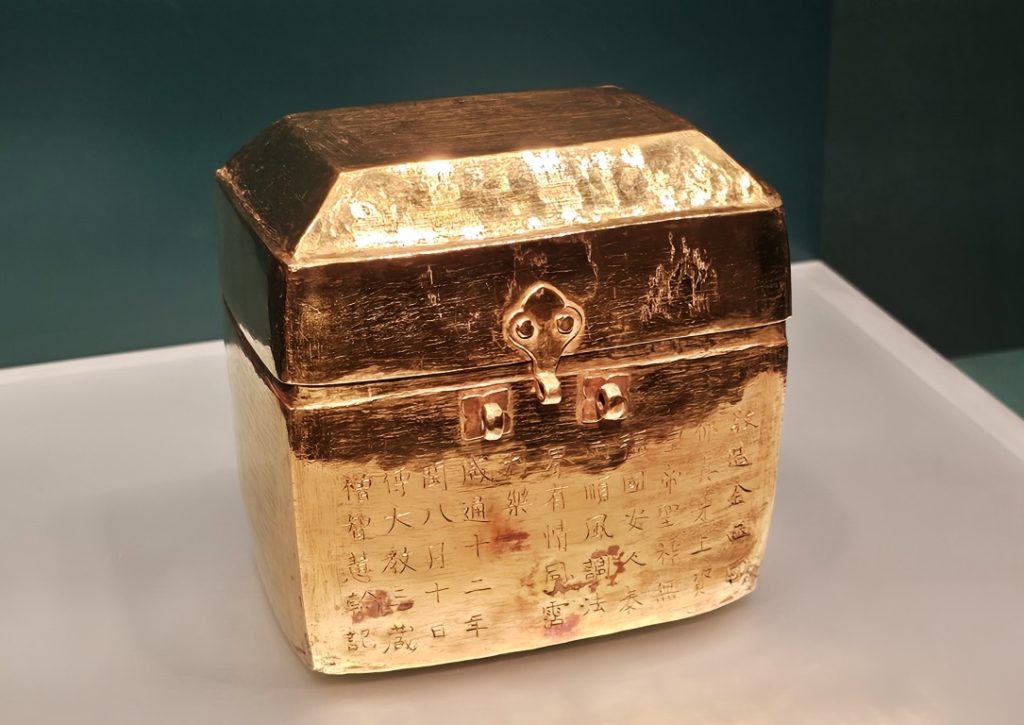
Pure gold reliquary casket with roof, curb-shaped lid
The dedication says: “This gold casket is reverently made to hold the true body of the Buddha. For the Emperor, may his holy reign be boundless; may the state be secure and the people at peace; may the weather be favourable; and may all living beings share in these benefits and joy.”
Related Tian Tan Big Buddha bronze statue is a colossal gift for people of faith
A mural shows a prominent female figure, the wife of a governor, followed by a procession of ladies worshipping the Buddha. Found in the Mogao Grottoes in Dunhuang, a prominent Silk Road trade hub, the mural provides evidence of reverence for Buddhism, as well as the engagement and status of Women during the Tang dynasty.
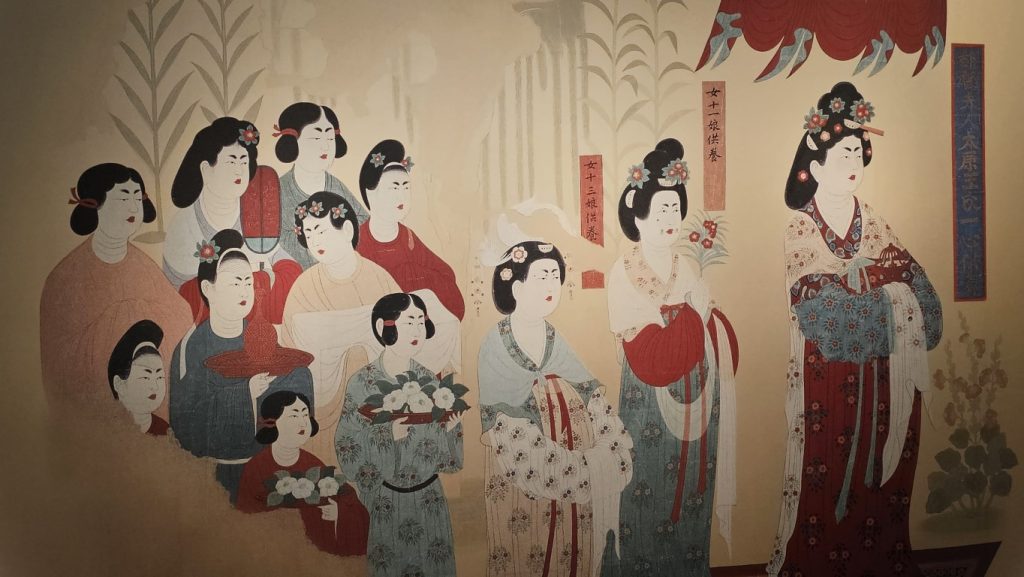
Mural showing the governor’s wife worshipping the Buddha (Copied by Duan Wenjie).
The Tang dynasty was an era of freedom and openness for women. In daily life, they had the power to choose their spouse, remarry, manage property, and participate in everyday activities. Women were celebrated in period artefacts, which depict their demure confidence in fashionable attire and elaborate hairstyles.
Related Women and Femininity in Ancient China: A Revealing Way of Life
In both public and private spheres, the women of that era reflected the unique spirit of the age. They participated in politics, travel and in sports such as polo. A pottery sculpture with a female rider aside a horse confirms this. The painted and glazed pottery female figurine on horseback wears a veiled hat, a green blouse, and a red skirt. She is riding a yellow horse with red markings, its head lowered as if neighing.
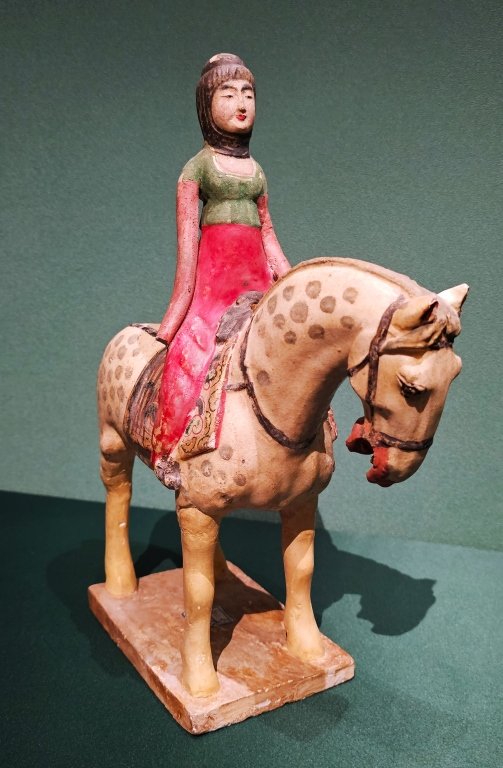
Painted and glazed pottery female figurine on horseback.
The Tang dynasty imperial court included female officials who assisted in government, and many became involved in state affairs. China’s first and only female emperor, Wu Xetian, rose to power during a brief period in the Tang dynasty. Starting as a teenage concubine of Emperor Taizong, Wu Xetian outlived him and married his successor, Emperor Gaozong, becoming empress in 655.
Related Treasures from the Forbidden City and Palace of Versailles
After Emperor Gaozong suffered a debilitating stroke in 660, she effectively administered the empire in his place until his death. After this, she manoeuvred and consolidated her own powers. She prevented her own sons from ruling, and in 690 she crowned herself emperor and founded the brief Zhou dynasty.
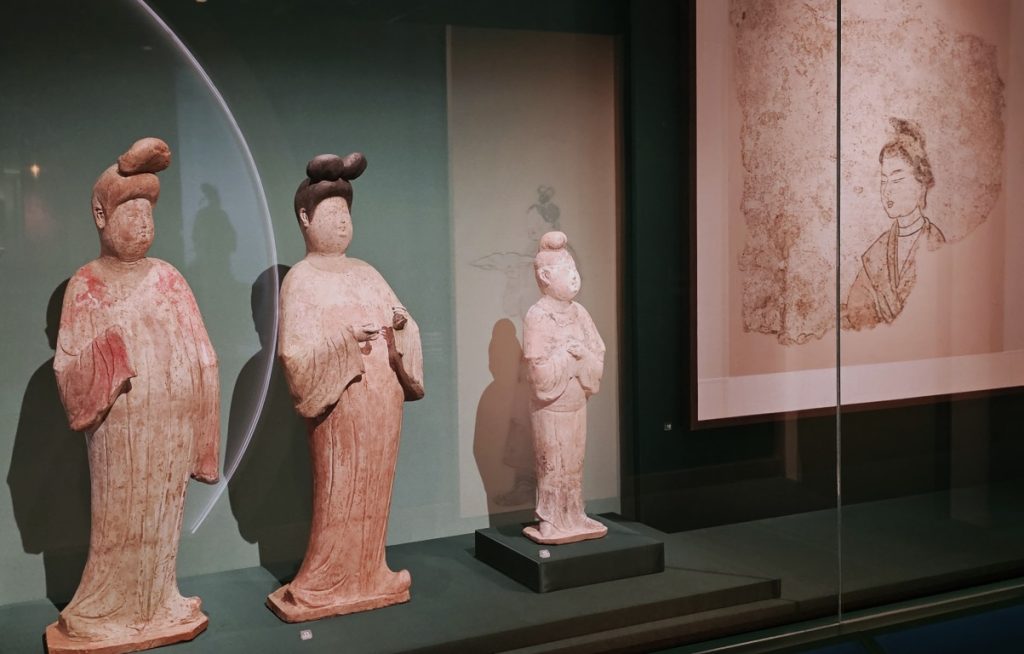
Tang pottery sculptures of court ladies
Wu Xetian’s reign ended with a coup in 705, which restored imperial authority to her son and restored the Tang dynasty. To this day, her rise to power and her exploits as one of the most powerful women in history are revisited through many historical dramas and television serials. Her story continues to fascinate as it marked the pinnacle of political power for women in the Tang era.
Related Hiking on China’s Great Wall Ruins
The Tang dynasty was China’s golden age. Achievements in civil governance, military prowess, economic prosperity, cultural exchange, gender integration and international prestige were defining characteristics of the age. This success was the culmination of earlier developments, including the Sui dynasty’s construction of the Grand Canal and the opening of the Silk Road.
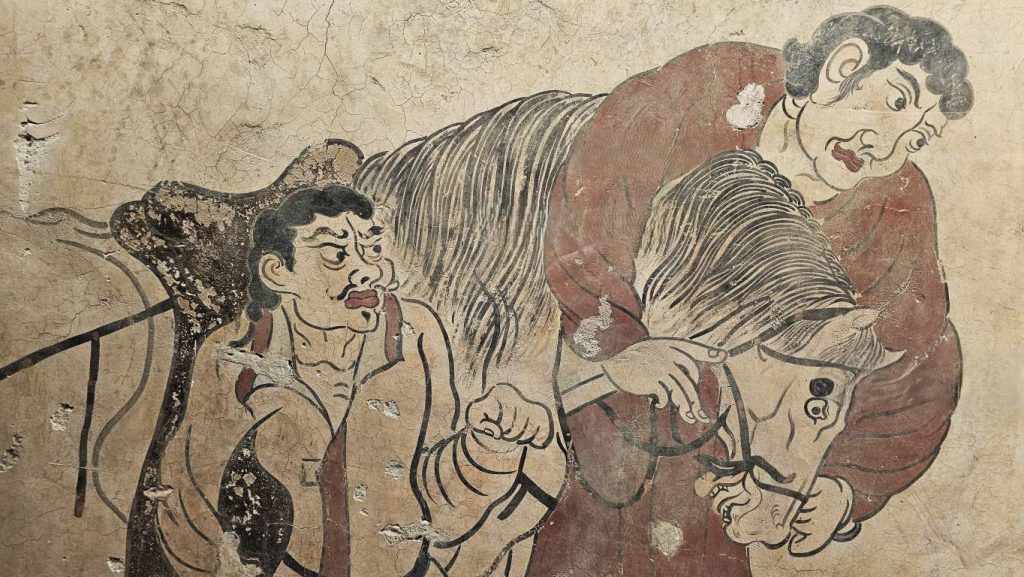
Two Hu (foreigner) attendants presenting a white horse as a tribute to the Tang court (replica of a mural).
Prosperity and Magnificence – Civilisation of the Sui and Tang Dynasties in Shaanxi Province presents a curated exhibition of artefacts through which objects of ancient material culture, including pottery figurines, gold and silver wares, jade carvings, porcelain, and sancai glazed wares, help visitors learn about and experience the splendour of the Sui and Tang periods.
Text & Photo Cammy Yiu