
Magic of Jubilant Childhood found in Chinese Ceramics

Poignant reflections of cherished childhood memories
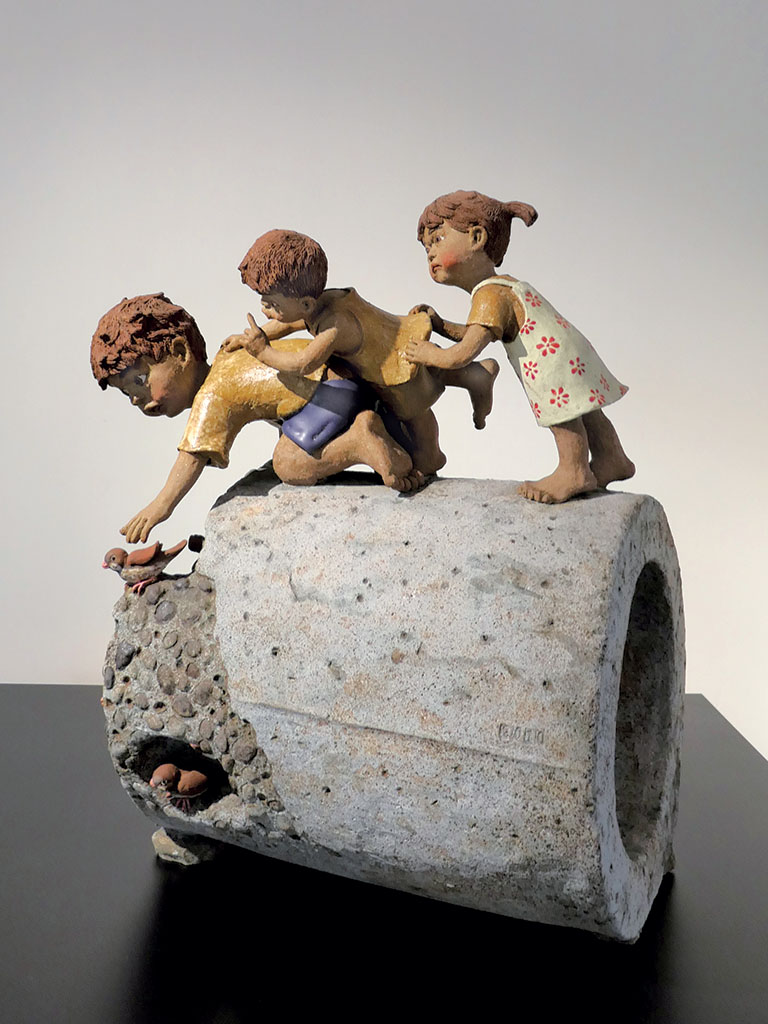
Summer Feast, Lee Chin-Sheng, Ceramic, 2010
Childhood in Chinese Ceramics
The Childhood in Chinese Ceramics exhibition gathers three acclaimed ceramic artists from Taiwan: Lee Chin-Sheng, Leo Tang (Tang Shou-Nan) and Ah Leon (Chen Ching-Liang).
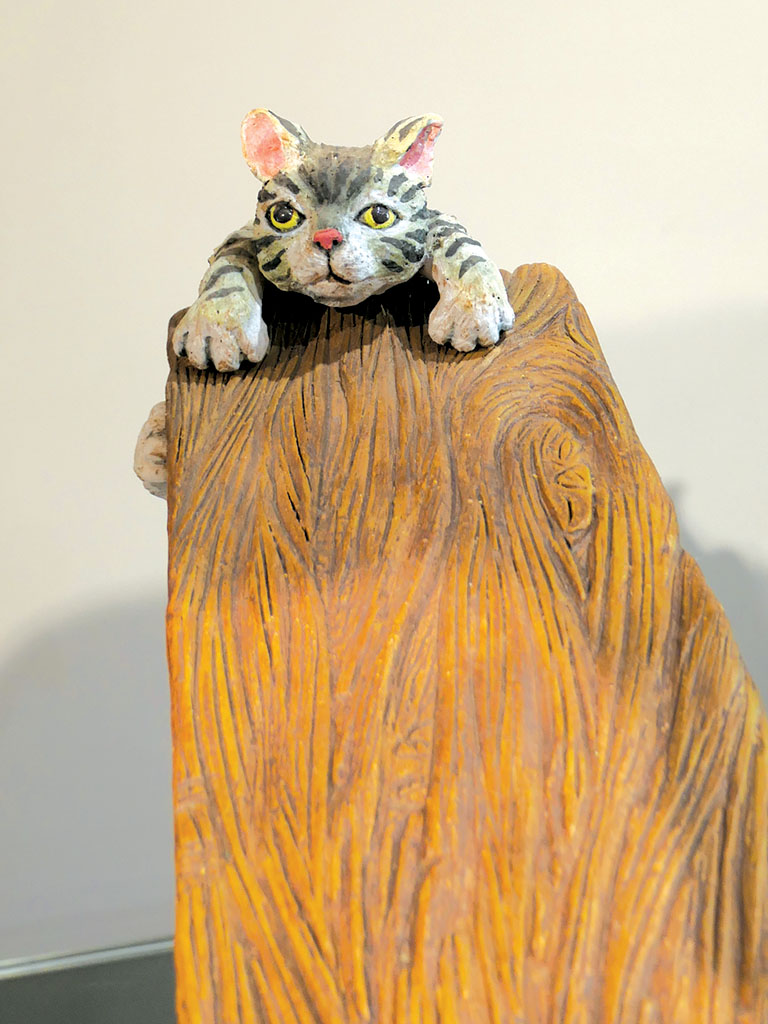
Flying Hero (detail), Lee Chin-Sheng, Ceramic, 2002
On show are thirty-five sculptural ceramic works, including twelve from Lee Chin-Sheng, twenty new Chinese ceramics based on the theme of tin toys by Leo Tang and three internationally recognized sculptures by Ah Leon.
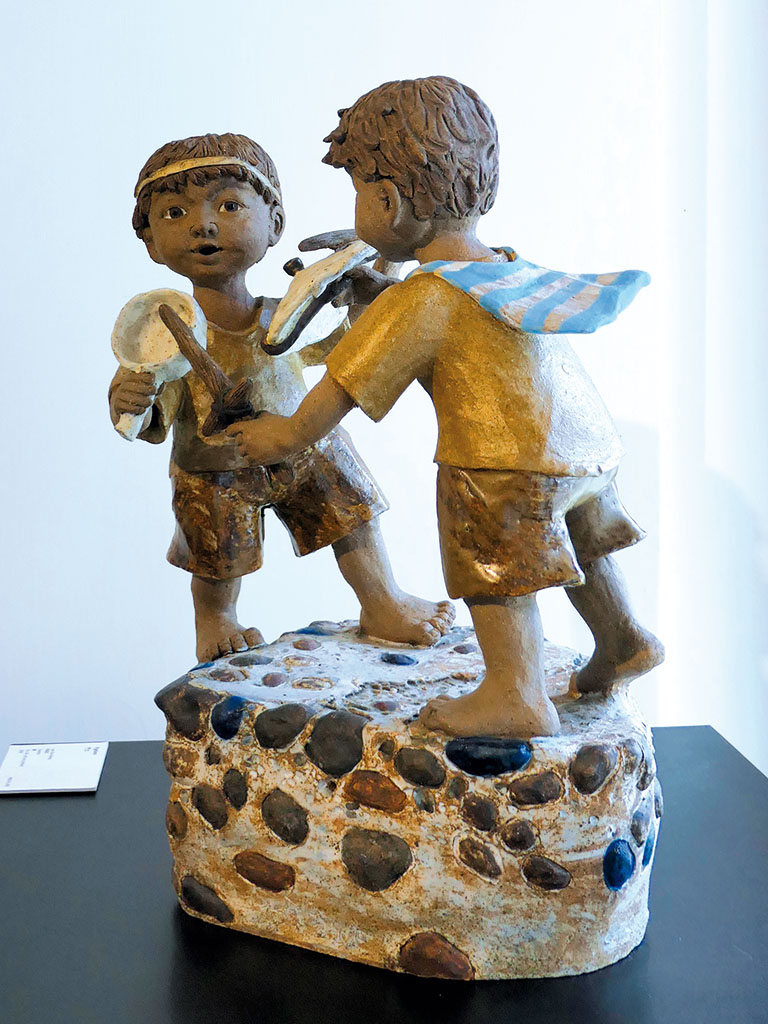
Fighters, Lee Chin-Sheng, Ceramic, 2009
Curator Monica Lee says that the exhibition portrays the naiveté and innocence of childhood through the works of these three Taiwanese artists.
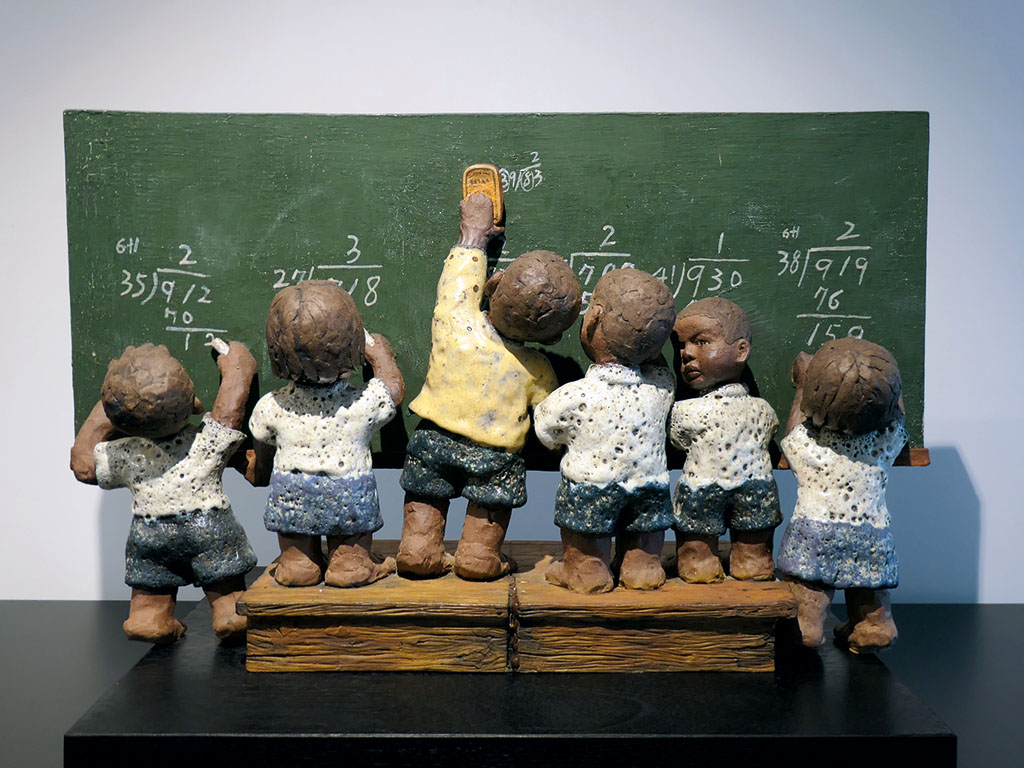
The Story of the Blackboard, Lee Chin-Sheng, Ceramic, 2004
The “Childhood Series” by artist Lee Chin-Sheng has preserved the artist’s own youth in realism and echoes childlike innocence.
Related Contemporary ceramics from the imagination of Solan Chiu
Through the mixture of various clays and the heating of clay under high temperatures, the tinged and plain textures show traces of joy from simple childhood activities.
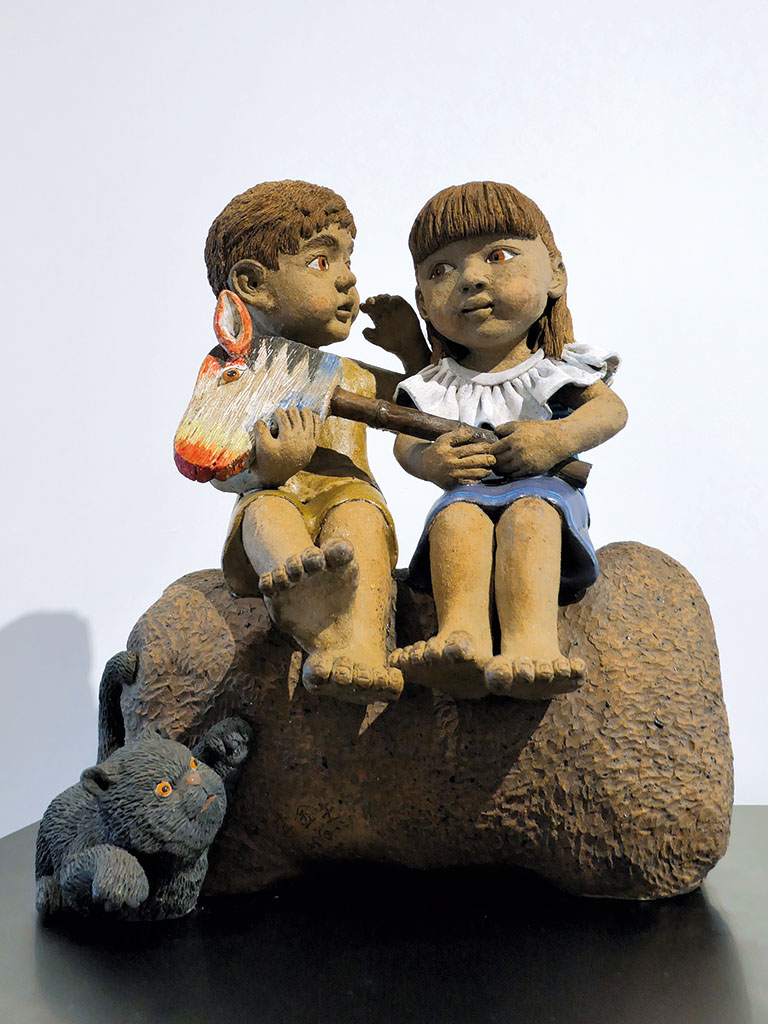
Childhood Sweetheart, Lee Chin-Sheng, Ceramic, 2009
This is also reflected in the details of children’s simple clothing, shy faces and bare feet.
Related: Groundbreaking art, ceramics and prints by Picasso
The series leads viewers to reminisce about their own childhood days, creating resonance in memories.
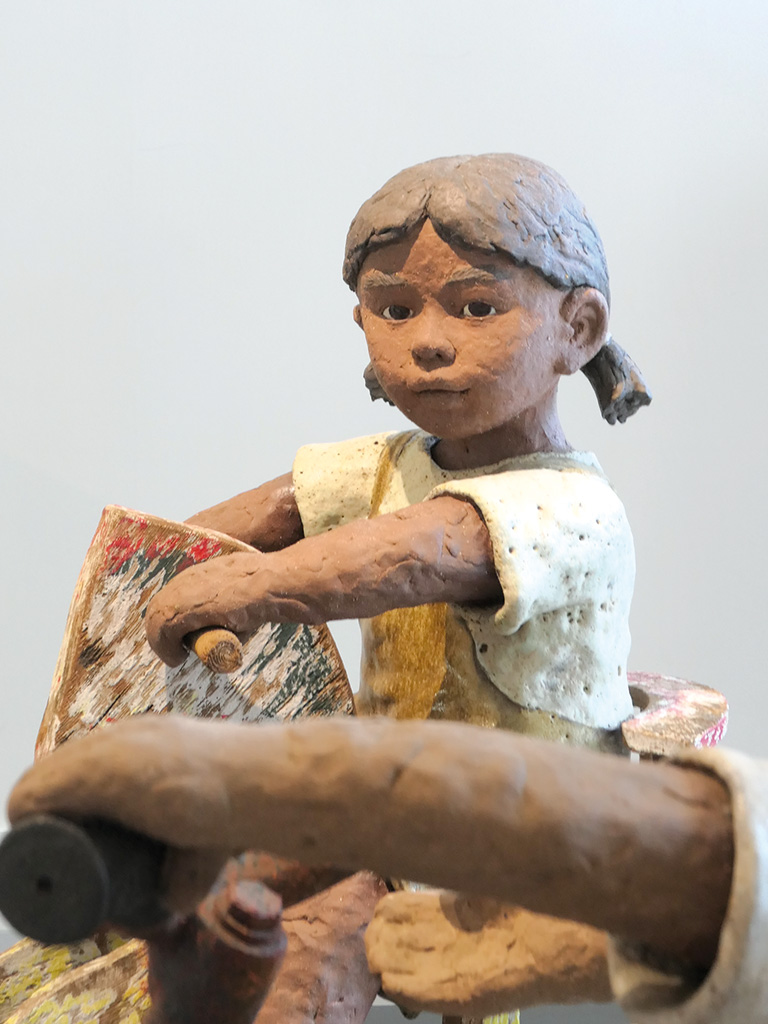
Elder Sister, Lee Chin-Sheng, Ceramic, 2003
Lee was born in Yunlin, Taiwan in 1962. His artworks focus on children being children, depicting rural life and social environments from the 1940s to 1960s.
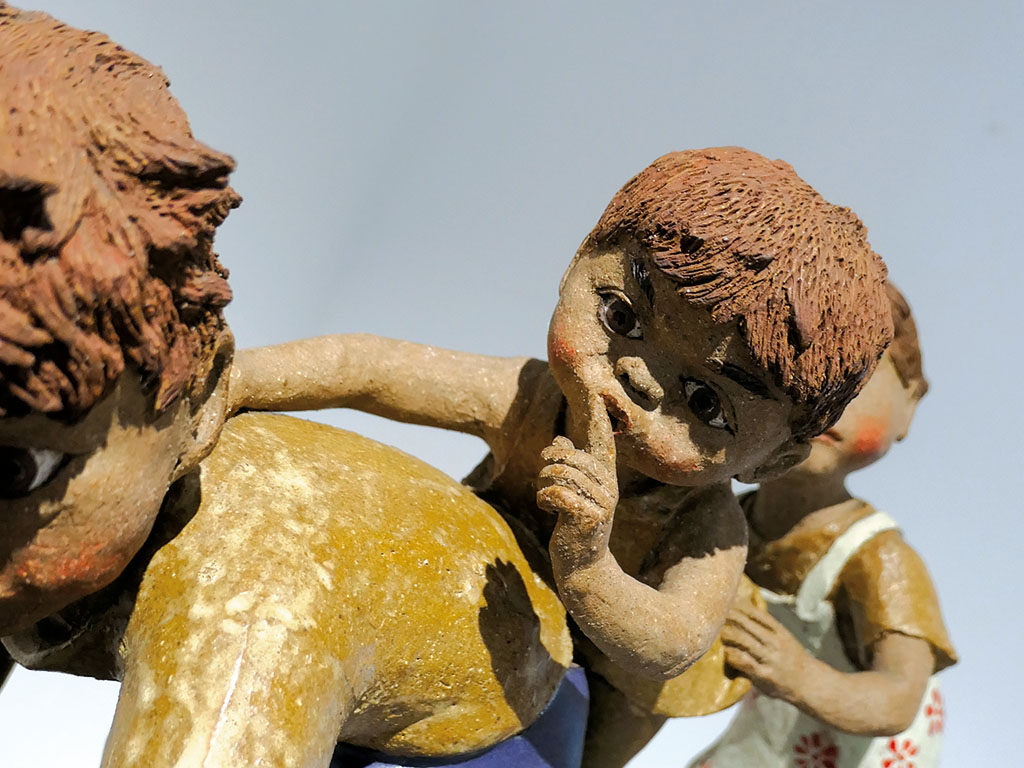
Summer Feast (detail), Lee Chin-Sheng, Ceramic, 2010
He portrays simple and vivid characters that project an appealing naiveté, curiosity and mischievousness that are a reminder of simpler times.
Lee Chin-Sheng
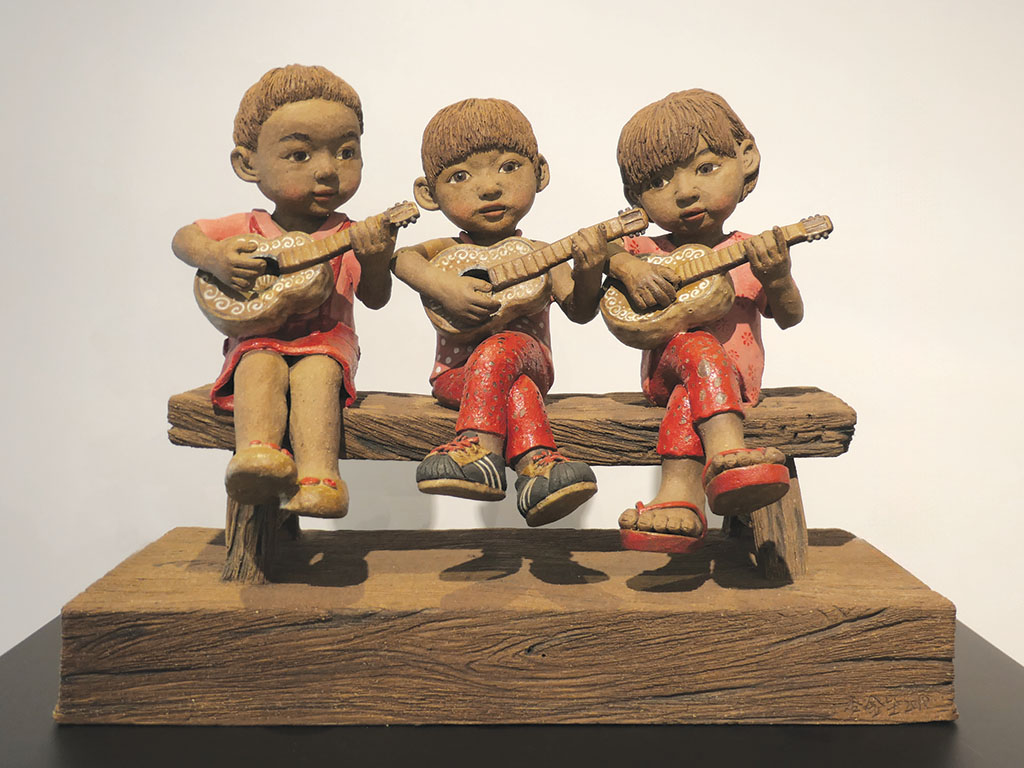
The Guitar Trio, Lee Chin-Sheng, Ceramic, 2010
There is a deep connection between clay and human beings.
Related Chinese Blue and White porcelain from Yuan and Ming dynasties
Clay somehow marks the trajectory of human development and the birth of civilization.
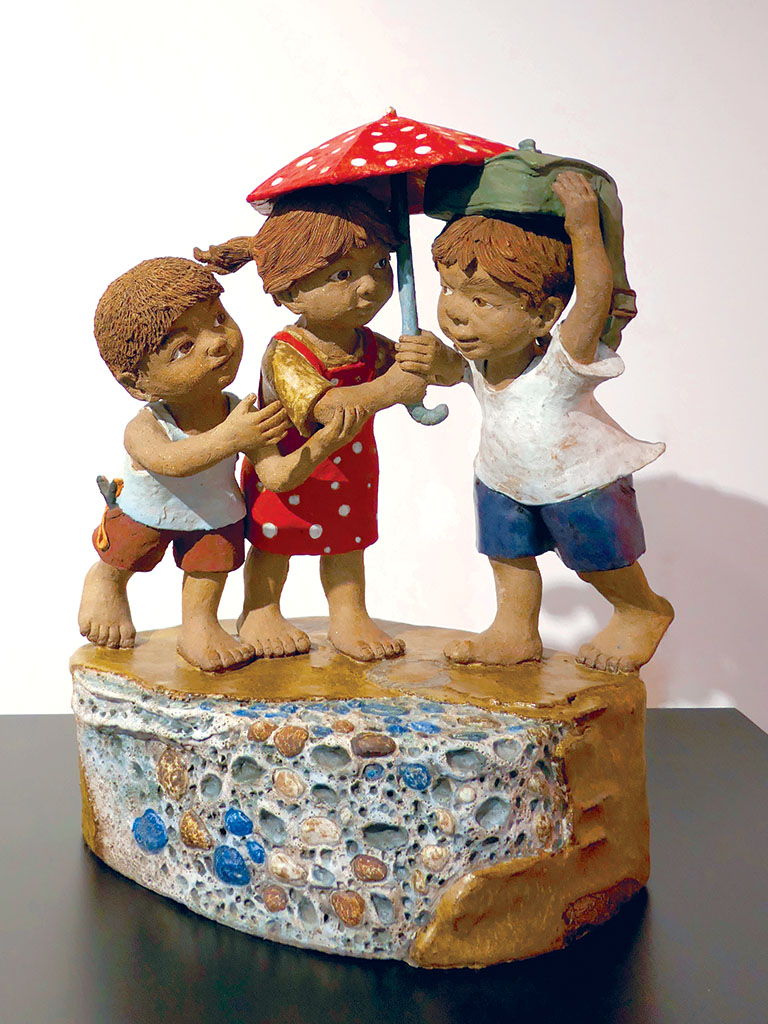
Reminiscence of a Rainy Day, Lee Chin-Sheng, Ceramic, 2009
Lee applies this ancient and time-honoured material to illustrate his memories of life.
Related Gold glitters in luxurious hand made ceramics linked by Jingdezhen
He tries hard to break from tradition while creating new themes and forms. Instead of deliberately following the rules, he pursues inner spiritual expressions via materials.
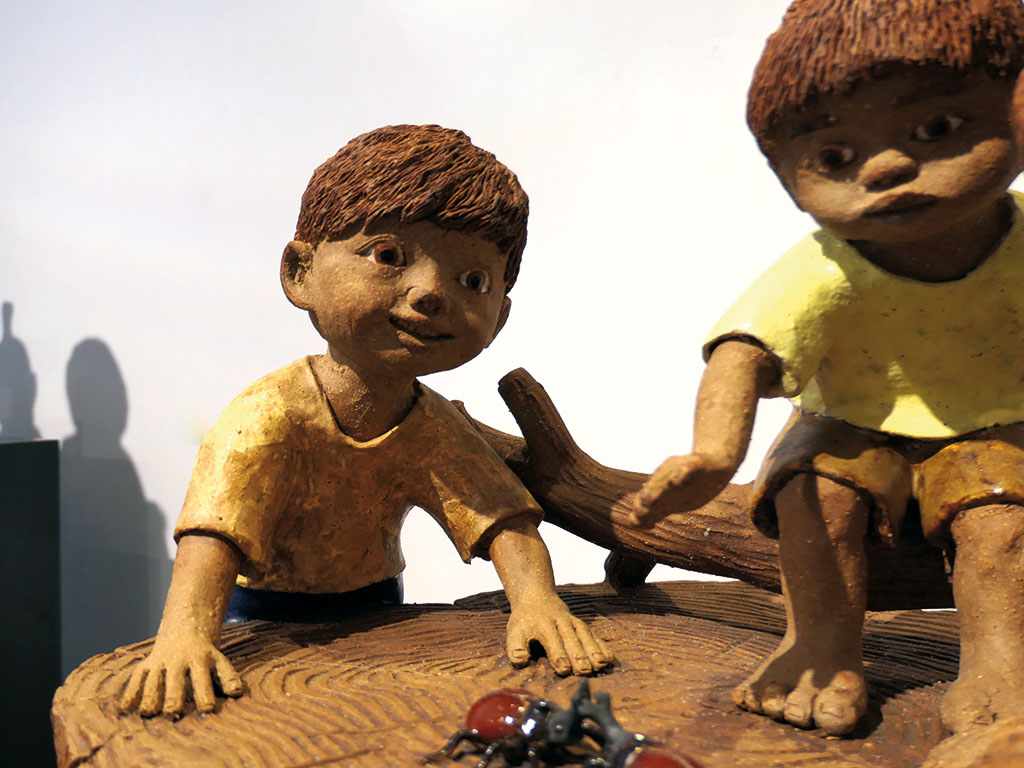
Summer Fun, Lee Chin-Sheng Ceramic, 2010
Lee suffered a myocardial infarction in 2014. Although he survived treatment, he now suffers from amnesia and dementia, sadly ending his artistic career.
The artworks in this exhibition were all created prior to his illness and have rarely appeared in recent years.
Leo Tang (Tang Shou-Nan)
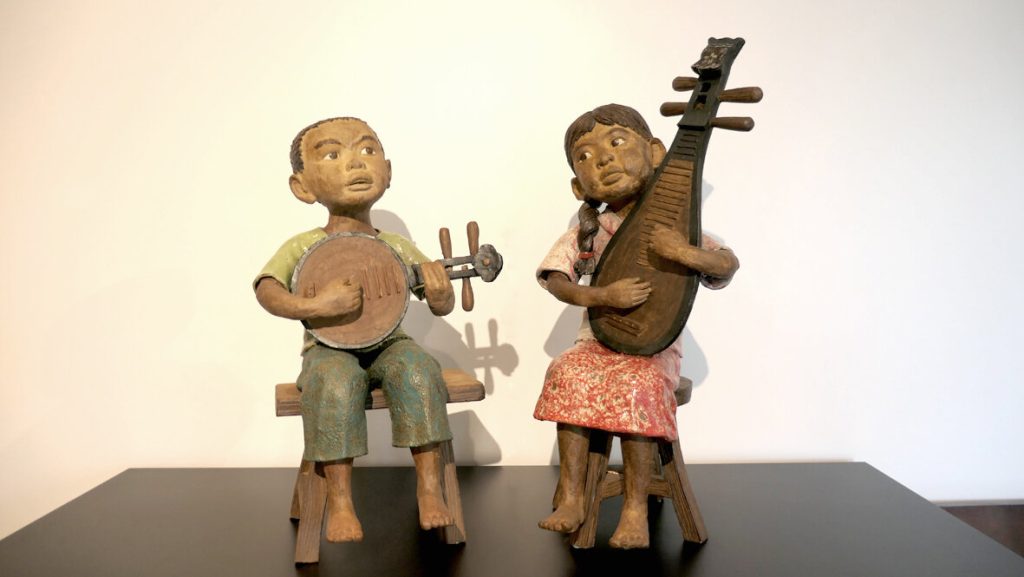
Thinking of, Lee Chin-Sheng, Ceramic, 2003
Artist Leo Tang, initially an illustrator of children’s books, later shifted to creating contemporary art, evolving his artistic practices from 2-dimensional to 3-dimensional works.
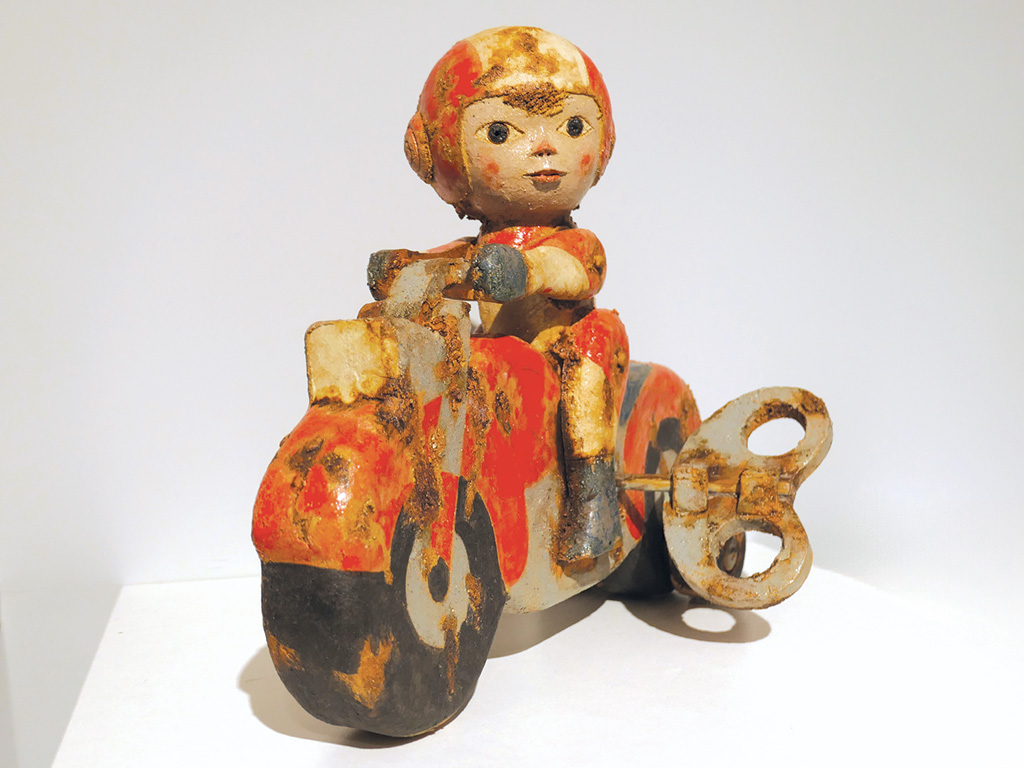
Racing Driver, Leo Tang, Ceramic, 2021
He was born in Hualien, Taiwan in 1966. In 2003 he began writing his own picture books under the pen name of Tang Tang.
Related Rosanna Li Imagination of Enormous and Happy People
To date, he has written ten best-selling stories about a short-eared rabbit.
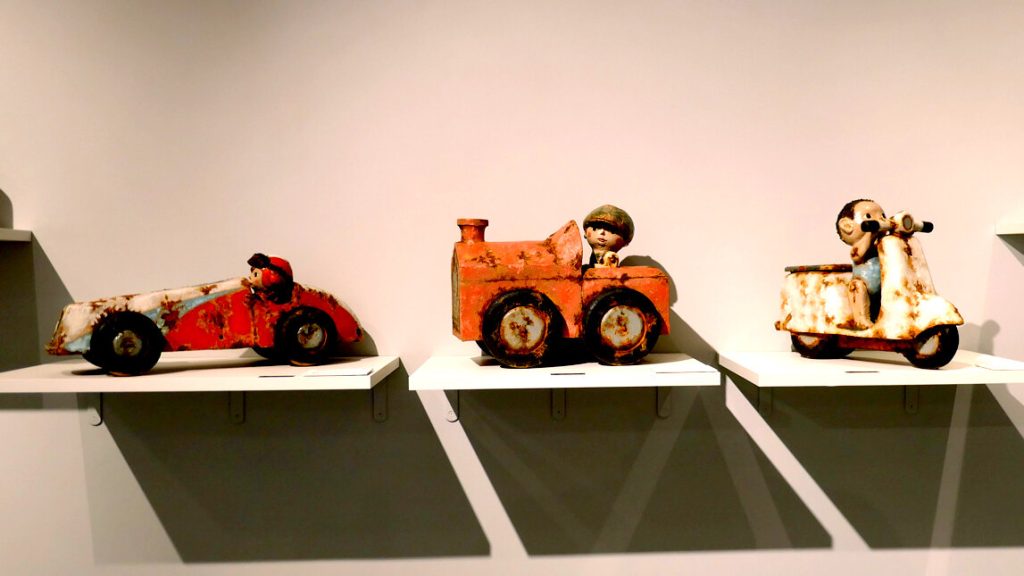
From Left to Right: Racing Driver, Newsboy Cap, Vespa, Leo Tang, Ceramic, 2021
In 2009 Tang began creating contemporary art and by 2016 was focused on Chinese ceramics and sculptures.
Related Tang dynasty golden age artistic highlights
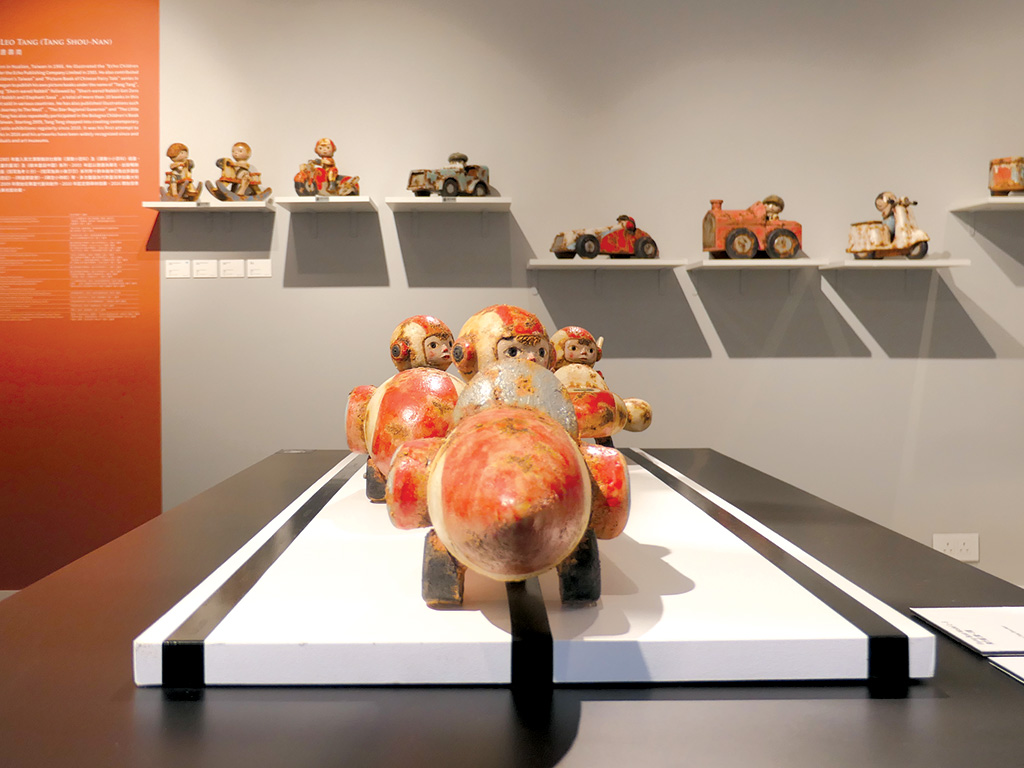
Tang’s ceramic work centres on the fun of childhood, reminding audiences of favourite tin toys from decades past.

Flying Boat Model 2, Leo Tang, Ceramic, 2021
Tang’s fascination with the rusty nature of tin toys worn out by the lapse of time is translated to clay with darker colours and a thin glaze to allow earthy colours to emerge.
Related Ceramic treasures from the Tang dynasty
After the heating process, the rusting and worn-out textures of the metal are brought to life.
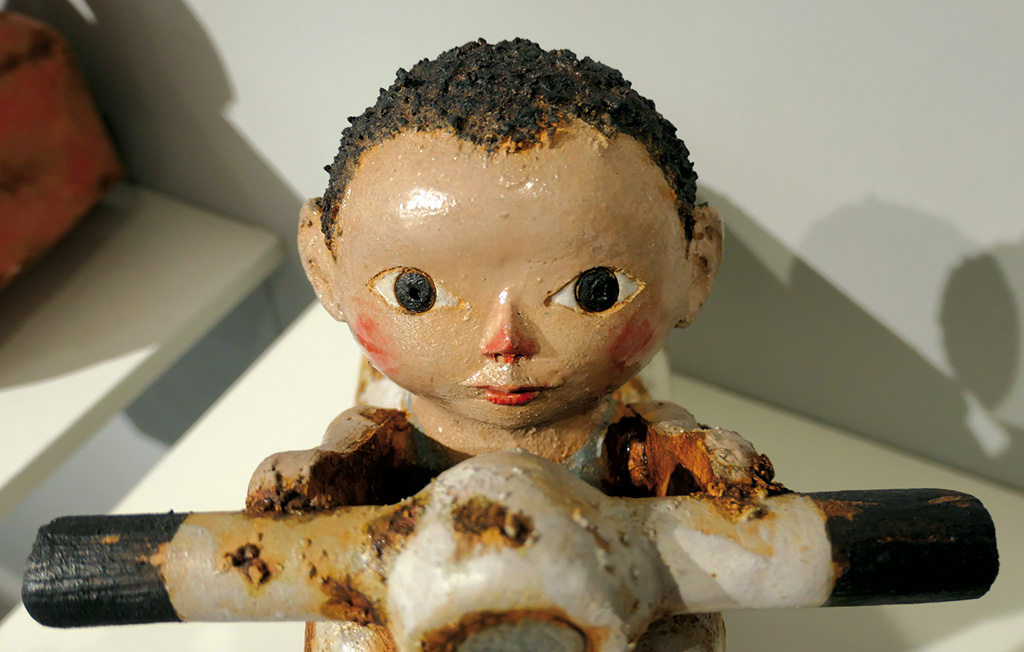
Vespa, Leo Tang, Ceramic, 2021
As the children drive, fly and ride the tin toys, their cherub-like faces with big eyes and blushed cheeks truly capture the innocence of childhood.
These facial expressions are reminders of cherished moments a child may have experienced.
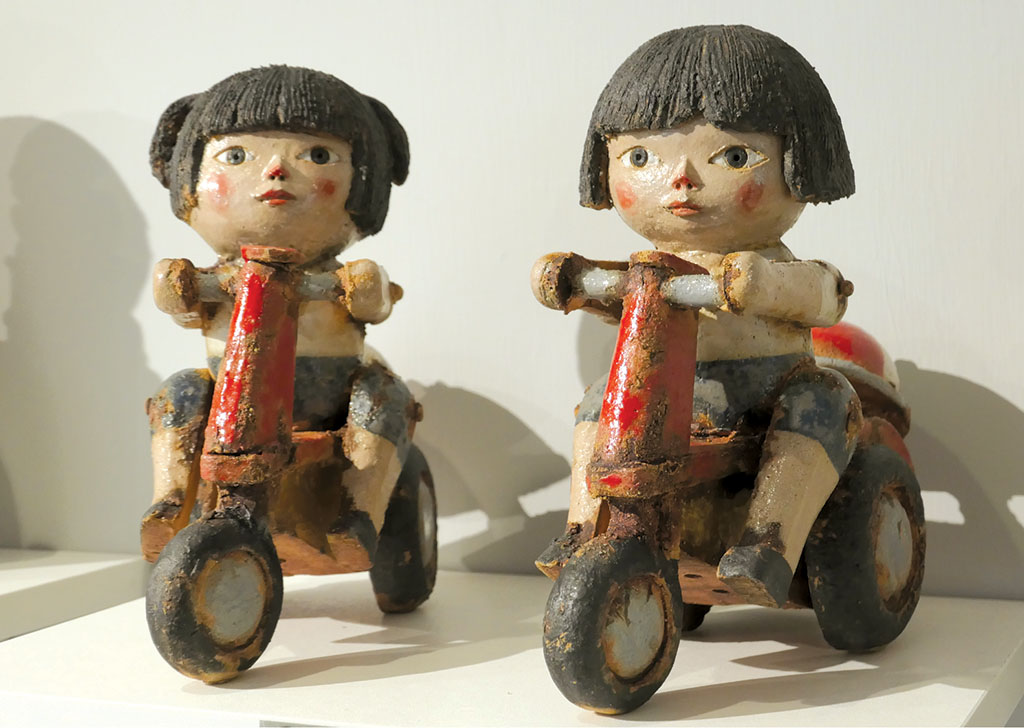
Three-Wheel Bike, Leo Tang, Ceramic, 2020
Hyperrealism, as shown in the fine examples of Chinese ceramics, is Ah Leon’s domain.
He draws on “fool-the-eye” realism, which not only demonstrates the sculptural conception of hyperrealism, but also the artful craftsmanship in which the viewer experiences an extraordinary visual and sensory experience.
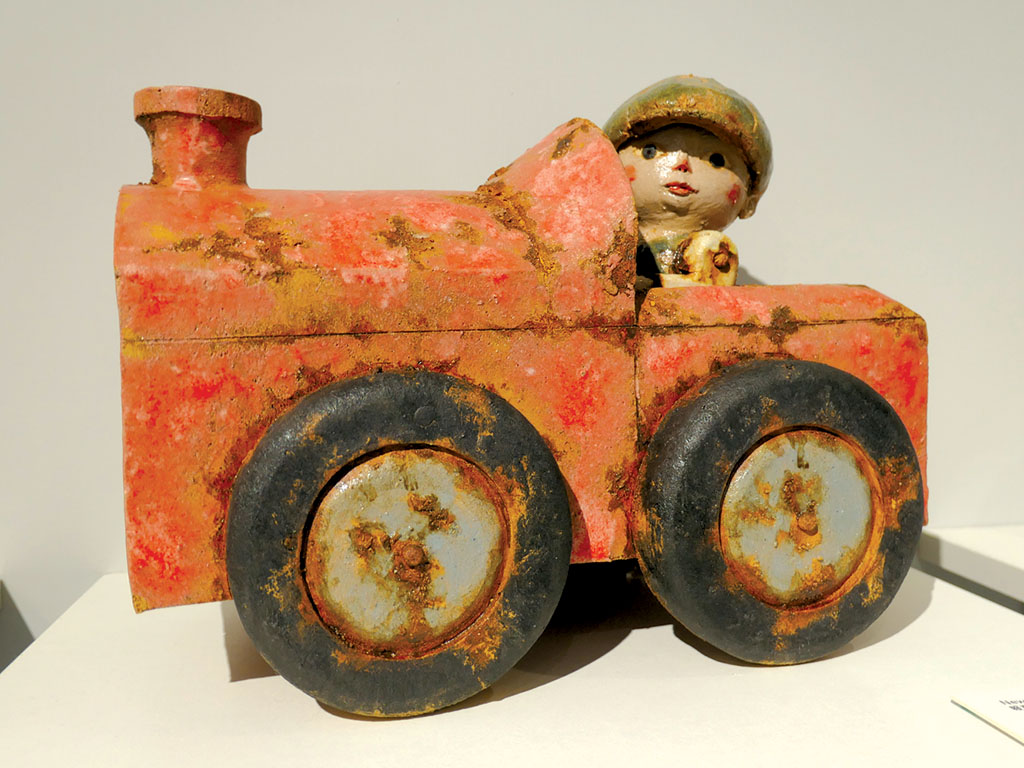
Newsboy Cap, Leo Tang, Ceramic, 2021
His work elicits childhood memories and images, especially with the artwork of a life-sized desk and chair from an elementary school.
Related Ludwig Pollak Collection Museum of Ancient Sculpture in Rome
In this masterpiece, he skilfully mimicked the marks of vandalism, eroded textures of old wood and nails.
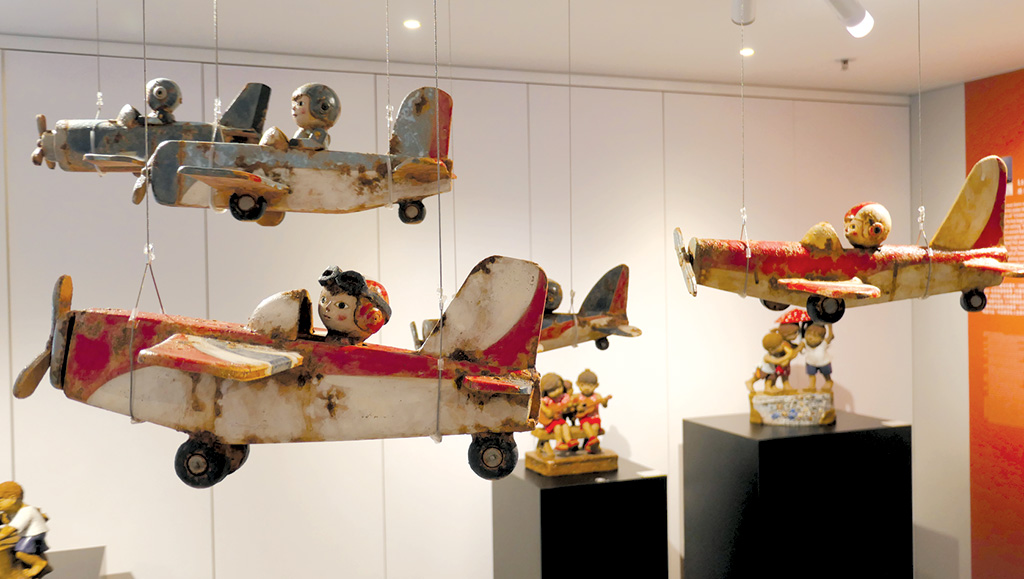
Flying to the Future 1 – 5, Leo Tang, Ceramic, 2021
These sophisticated details can be found in each corner of the work.
Ah Leon (Chen Ching-Liang)
Ah Leon was born in 1953 in Pingtung, Taiwan.
Related Yue Minjun’s sculpture installation A-maze-ing laughter
He graduated from the National Taiwan Academy of Arts in 1976 and then apprenticed under the famous ceramic artist, Li Jhao-Ching from Miaoli, Taiwan.
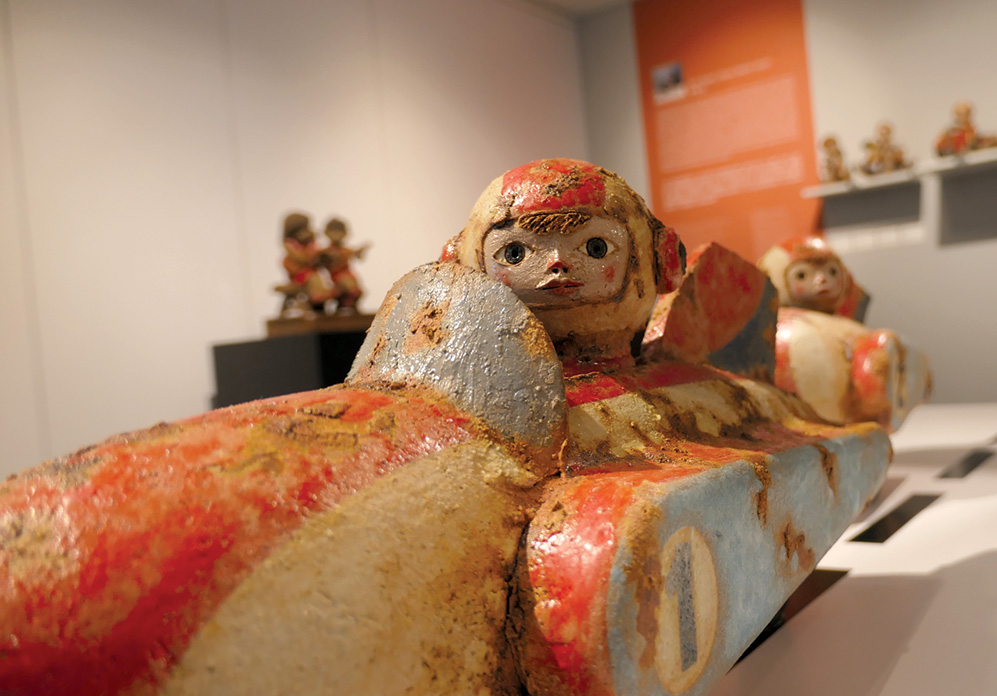
Flying Boat Model 1, Leo Tang Ceramic, 2021
Ah Leon’s ceramic art is based on the aesthetic and working attitudes of the Yixing pottery tradition.
Related Beautiful Tea Pots and Ware by Hong Kong Potters
Yixing, a city in the province of Jiangsu, China has produced teapots since the sixteenth century.
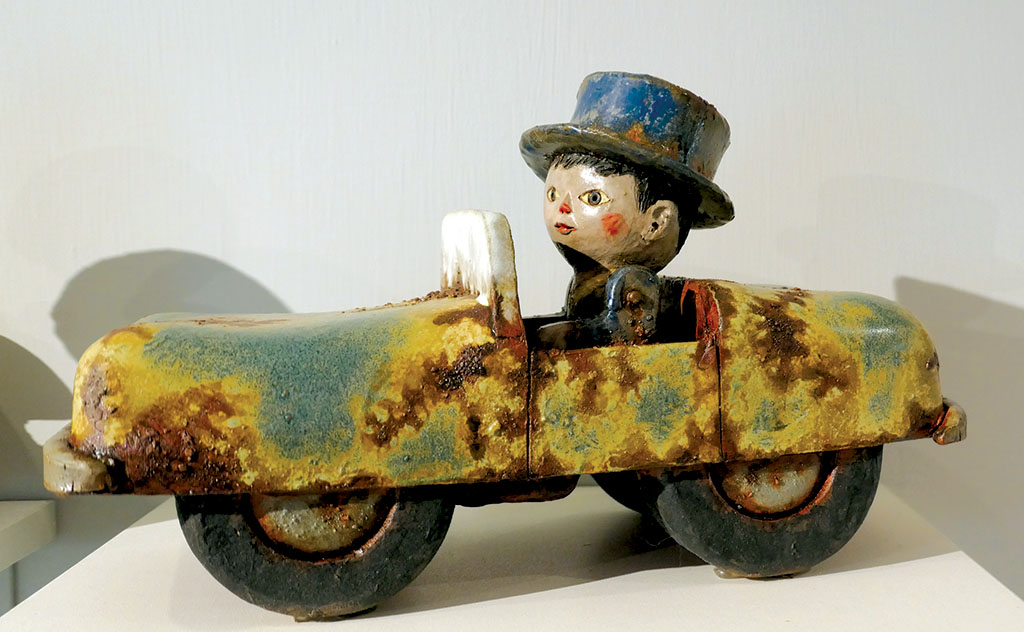
Little Top Hat, Leo Tang, Ceramic, 2021
They are hand-made rather than being thrown on the wheel. The hard clay is pounded with a heavy wooden mallet into slabs.
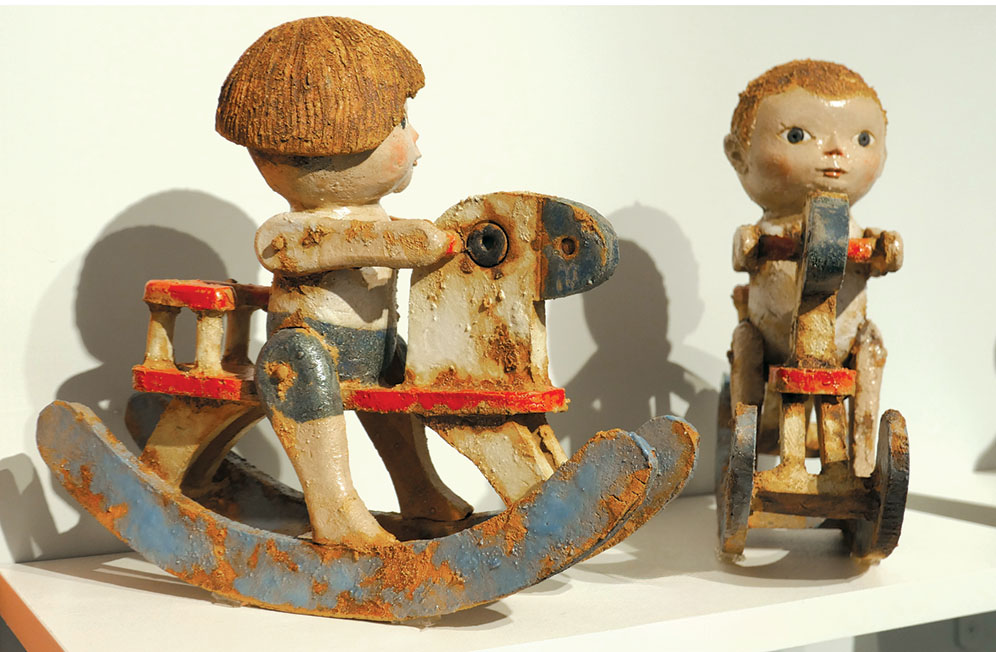
Riding Rocking Horse, Leo Tang, Ceramic, 2021
For Ah Leon, as a potter, it was important to master the Yixing method of making teapots, as this created a connection with his heritage.
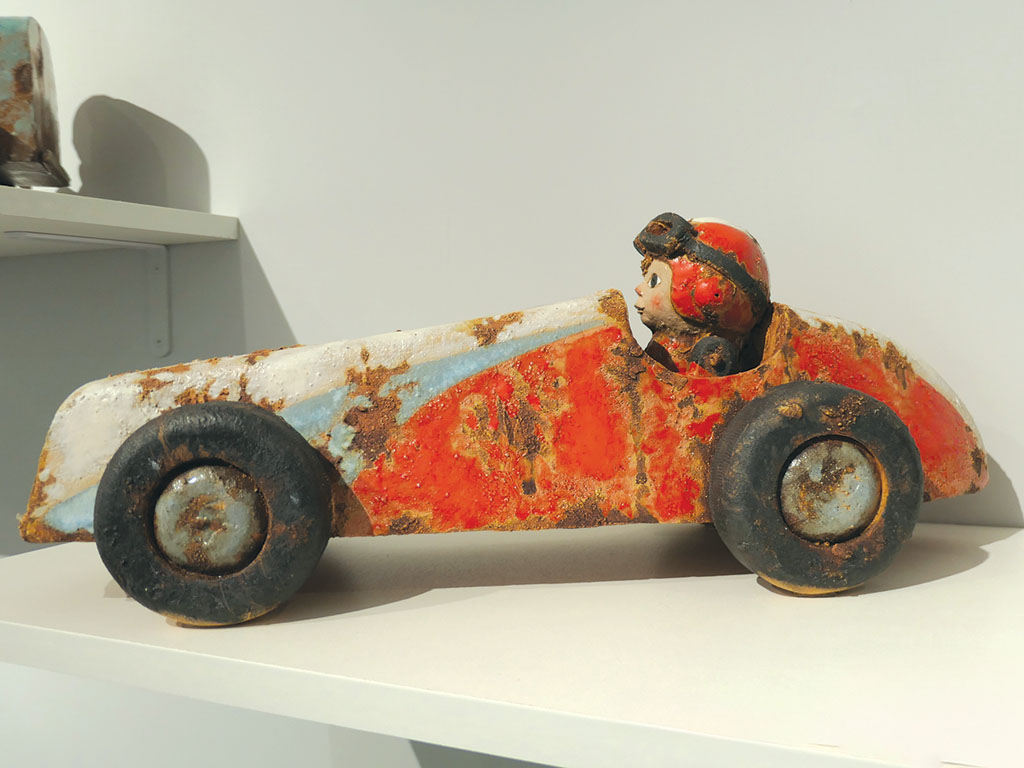
Racing Driver, Leo Tang, Ceramic, 2021
Many years of learning, teaching, practice and exposure to ceramic artists in the West led him to combine the foundational discipline from the East with the creative freedom encouraged by the West.
Textures recreated in Chinese ceramics
In 1987, Ah Leon discovered that he could use clay to closely recreate wood textures.
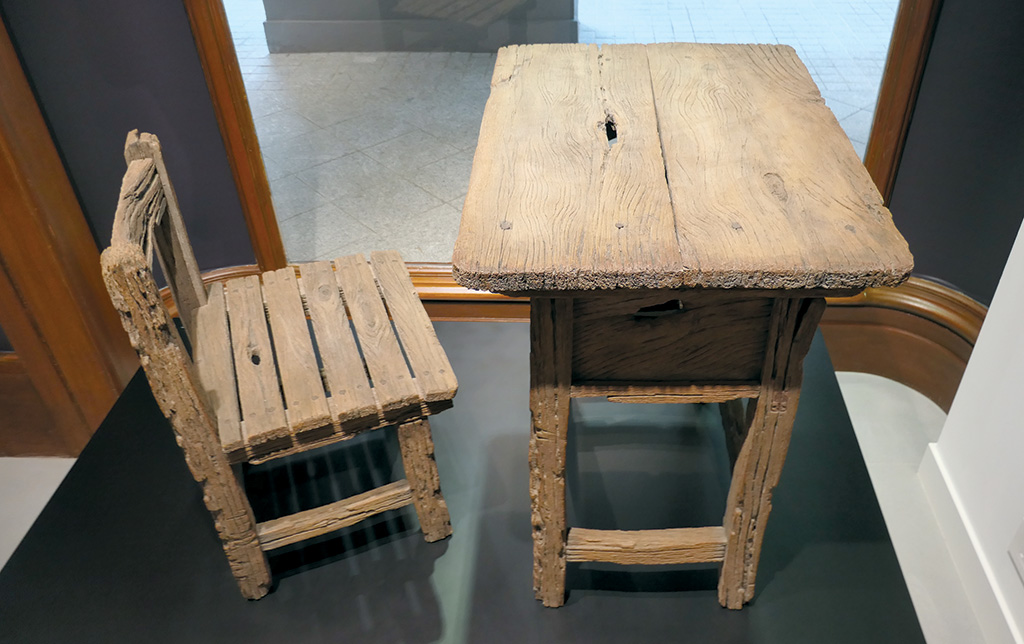
The Memory of the Elementary School, Ah Leon, Stoneware, 2010
Initially, he made functional unvarnished teapots that resembled tree trunks and branches before creating larger structures like the elementary school chair and table.
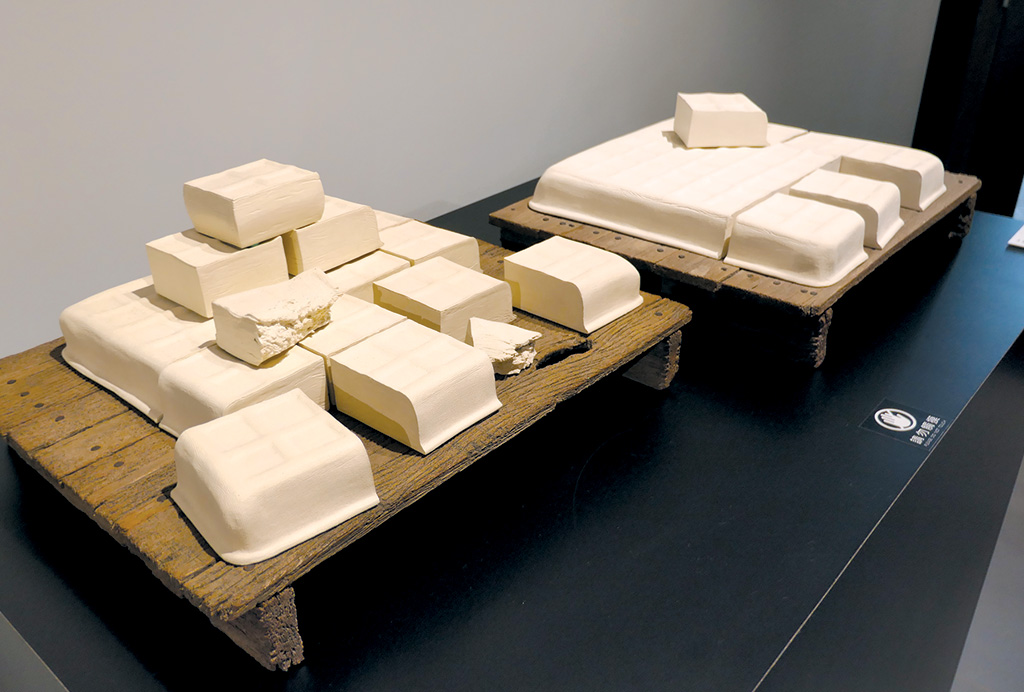
Tofu, Ah Leon, Ceramic, 2001
With the natural sense of warmth embedded in clay, Chinese ceramics from these three artists awaken memories of the innocence and joy of childhood by taking viewers on a trip back to their own childhood.
Text Artspace K & Martin Wray and photos Martin Wray


