Breakthrough ways of the family Rossetti

Radical Rossetti generation of artists and poets

Proserpine, Dante Gabriel Rossetti, 1874 © Tate
Four Rossetti children
Growing up in Victorian England as the sons and daughters of an Italian political refugee profoundly affected the four Rossetti children.
They became poets and painters worthy of being celebrated by the Tate Modern. This exhibition combines their poetry and paintings and seeks to explain why they should be remembered.
Related Gothic Christian Art of the 13th-14th Century
Gabriele Rossetti, the family patriarch, was an expert in Italian literature – specifically The Divine Comedy by Dante Alighieri (1265-1321) – and a member of a secret society advocating liberal ideas that ran afoul of the ruling Italian conservative regimes.
Related Dean Village, Edinburgh, Scotland
In 1824, he and his wife, Frances Mary Lavinia, became political refugees in England. He supported himself as a professor at King’s College, and they had four children: Maria Francesca, Gabriel Charles Dante (1828-1882), William Michael and Christina Georgina (1830-1894).
Most importantly, the couple instilled in their children a fierce patriotism for Italy, a love of literature (especially Dante), and an appreciation for the arts.
Related Singapore leading realist artist Chua Mia Tee
While all the children were talented, Gabriel (who went by his middle name, Dante) and Christina were the stars. Christina and Dante published poems when they were fifteen and sixteen.
Dante chose to focus on painting at the advice of an advisor, who told him he could make more as a painter.
Related Icons of Modern Art: Picasso and El Greco
In 1846, he began studies at the Royal Academy of Arts. Christina went on to publish more than 900 poems and became the more famous poet of the two.
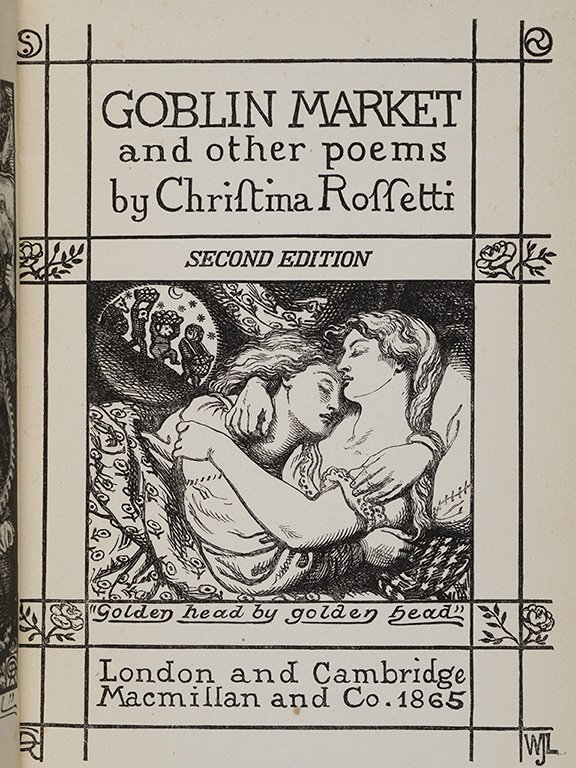
Goblin Market, Christina Rossetti, 1865 © Tate
Christina’s most renowned poem, Goblin Market, is a complex and allegorical work that explores themes of temptation, sisterhood, desire and redemption. Dante drew the book’s illustrations.
Holman Hunt and John Everett Millais
At the Royal Academy of Arts, Dante and his fellow artists Holman Hunt and John Everett Millais became frustrated with the artistic conventions of the time.
Related Odysseys of Art Masterpieces, private Liechtenstein Princely art collection
They criticised the Academy’s adherence to academic rules and standards, prioritising heroic narratives, superficial beauty and decorative effects over emotional depth and sincerity.
They acknowledged that Renaissance painter Raphael (1483-1520) did this best, but now the Academy stifles creativity.
Related Women and Femininity in Ancient China: A Revealing Way of Life
It was also disingenuous, as it was disconnected from contemporary life and lacked relevance to the concerns and experiences of the Victorian era.
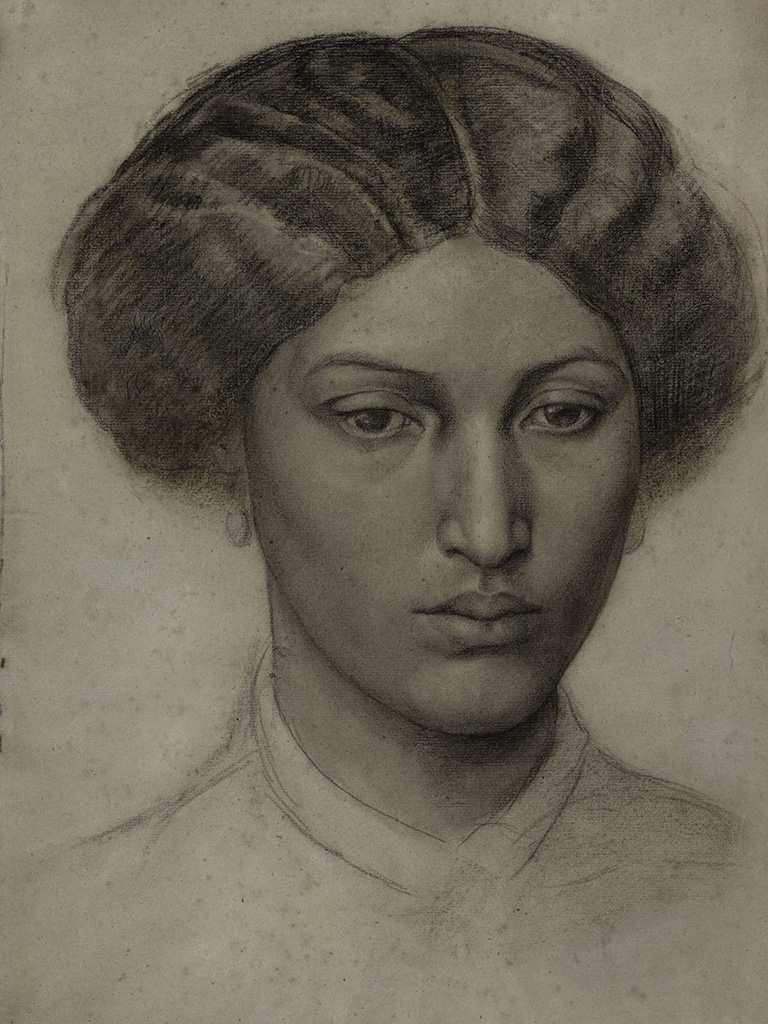
Head of a Young Woman (Mrs Eaton ?) Dante Gabriel Rossetti, 1863-65 (c) Tate
Victorian England, and London, in particular, was at the receiving end of both the wealth and the harsh consequences of the Industrial Revolution.
Related Warwick Castle Falconer’s Quest and War of Roses show
Inequality between classes, industrialists and labourers, and men and women (particularly ‘fallen women’) was at its peak.
Pre-Raphaelite Brotherhood
The Rossettis saw this inequality and needed to address it in their poetry and paintings.
In 1848, following in his father’s footsteps, Dante founded a secret society with his siblings and artist friends.
The Pre-Raphaelite Brotherhood (PRB) aimed for a more genuine and detailed approach to art by emphasising attention to nature, avoiding studio props or artificial settings, and instead capturing the natural world in its authentic form.
Related Foundation collection of works by avant-garde Spanish artist Joan Miró
The Pre-Raphaelites drew inspiration from Arthurian legends, biblical themes, mythology, and literary classics, but their favourites were Dante Alighieri’s The Divine Comedy and Tennyson’s poems.
They painted in a style similar to medieval and early Renaissance, but with minute attention to every detail.
Related Donatello: One of the greatest Renaissance sculptors
They painted natural outdoor scenes, used each other as models and favoured vibrant, intense colours to create a heightened sense of realism and emotional impact.
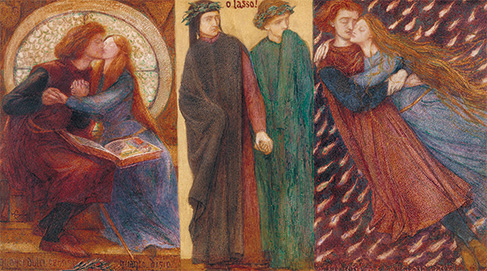
Paolo and Francesca da Rimini, Dante Gabriel Rossetti, 1855 © Tate
They celebrated the individual at a time when so many people were just part of an industrial machine.
They packed their paintings with layers of meaning using symbols, hand gestures and settings to evoke specific emotions. They added PRB to their painting’s signatures.
Dante’s first two PRB paintings were The Girlhood of Mary Virgin and The Annunciation.
Related Michelangelo’s awesome art created during his last decades
At the time, critics did not receive him well – the author Charles Dickens hated his work. Dante did not take criticism well and vowed not to exhibit again.

The Girlhood of Mary Virgin, Dante Gabriel Rossetti, 1848-9 © Tate
Critics did not like the way Dante portrayed Mary in The Annunciation; unlike traditional paintings receiving the news that she is pregnant with Jesus, in this version, she is a scared girl in her bedroom wearing only a nightgown (modelled by his sister Christina) leaning away from the angel Gabrial (modelled by his brother William) who is naked under a simple frock.

Ecce Ancilla Domini (The Annunciation), Dante Gabriel Rossetti, 1849-50 © Tate, Purchased 1886
Mary’s hair is down, which, during Victorian times, alluded to sexual promiscuity.
The implications of the painting were too scandalous for mainstream audiences – but it still sold.
Related Horrific stories of the lives and wives of Henry VIII
The secret of the PRB did not last long, mainly because they published a magazine that revealed their manifesto, and the society was dissolved in 1853.
Pre-Raphaelite stunners of mystery & sensuality
A less publicised activity of the PRB was their lookout for “stunners”, their term for unconventionally beautiful women they could paint.
These stunners were known for their lustrous, flowing hair, pale complexions, and enchanting, almost ethereal appearances.
Related Surrealism beyond Mythologies
They often embodied a sense of mystery, sensuality, and otherworldliness. For Dante, these relationships often went beyond modelling.
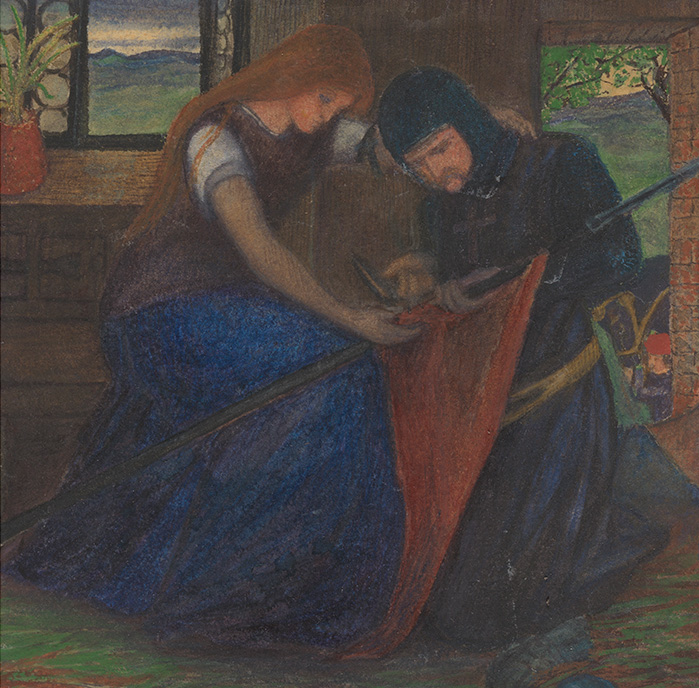
Lady Affixing Pennant to a Knight’s Spear, Elizabeth Eleanor Siddal, 1856 © Tate
Dante’s first muse was Elizabeth Siddal, who was not only his model but also became a painter and his partner.
Her painting, Lady Affixing Pennant to a Knight’s Spear, is in the exhibition. They lived together for ten years before they married, but a miscarriage and Dante’s infidelities led to her committing suicide in 1862.
Related The wealth and power of the Romanov rulers of Russia
As a homage to Elizabeth, Dante used her image in Beata Beatrix. In his guilt and grief, his drinking and drug use increased.

Beata Beatrix, Dante Gabriel Rossetti, 1864 © Tate
He also buried the only manuscript of his latest poems with her, but a few years later, he had her body exhumed and published them.
As he aged, Dante’s artistic principle shifted to “art for art’s sake”, meaning that his art needed no justification, nor served any political, didactic, or other ends.
Related Horror wedding day haunts Bride’s Pool
Dante continued to paint but no longer sought to overturn the system. His muses included a working girl named Fanny Cornforth and the wife of his friend William Morris.
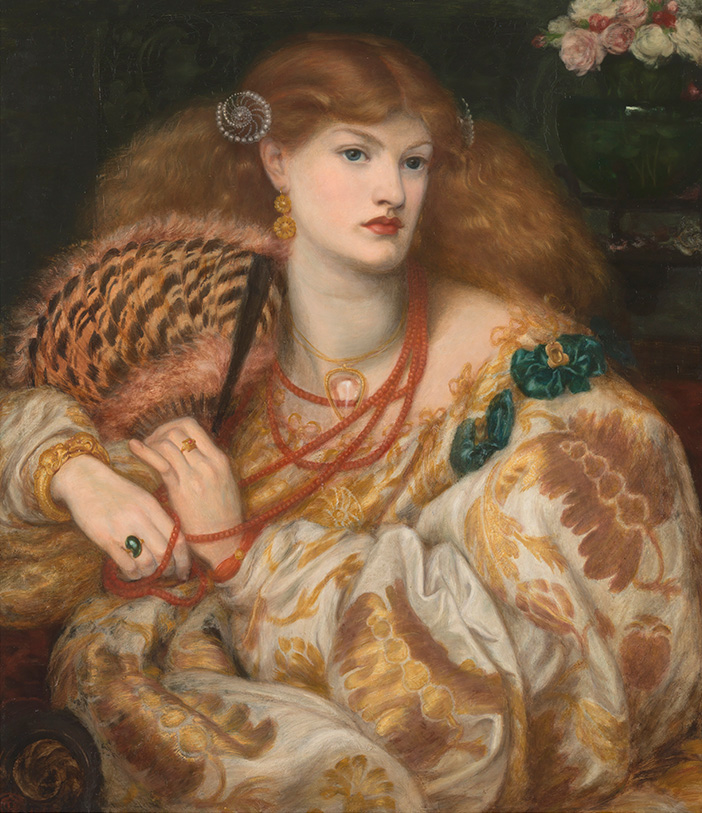
Monna Vanna, Dante Gabriel Rossetti, 1866 (c) Tate
Dante immortalised Jane Morris in his painting Proserpine, depicting the goddess of agriculture and fertility, whom Pluto, the god of the underworld, abducts to become his queen.
Because she has tasted the fruit of the underworld, she must spend part of the year in the underworld and part on earth, symbolising the changing of the seasons.
Related A Sense of Place: British Landscapes from Turner to Hockney
During his later years, Alexa Wilding was his stunner. By this time, Dante’s drug and drinking habits were affecting his health, but his ability to paint did not diminish, as witnessed by his painting of Alexa in La Ghirlandata.
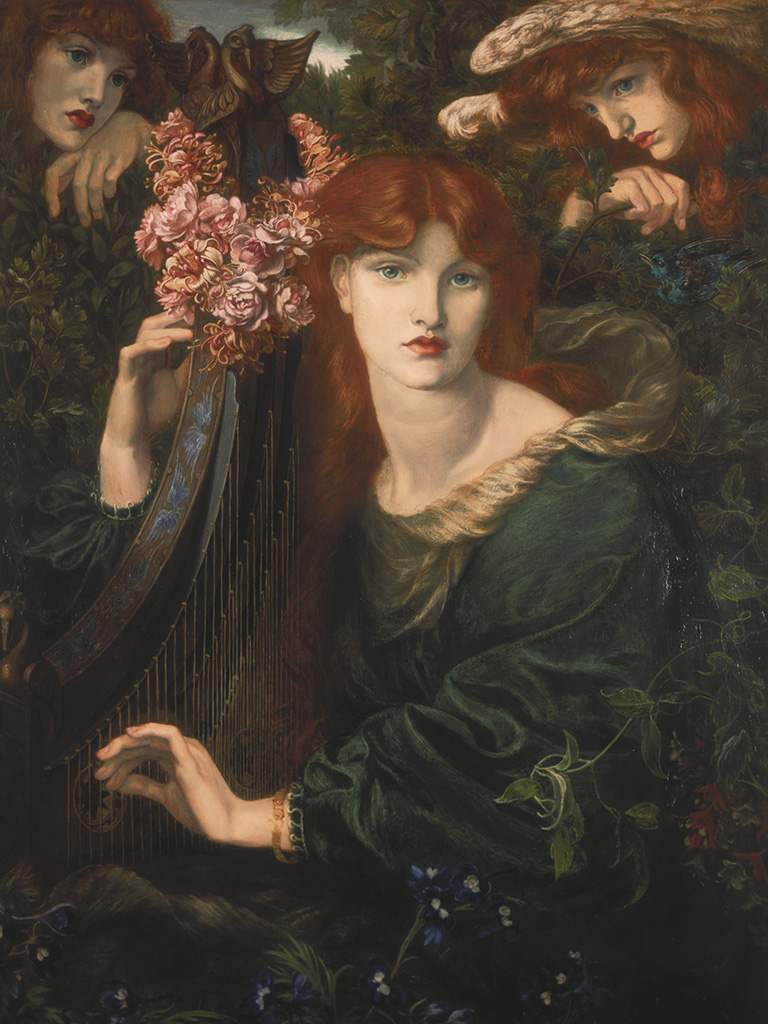
La Ghirlandata, Dante Gabriel Rossetti, 1873 © Guildhall Art Gallery
His mastery of hair and hands remains sublime, and every canvas section is so intricately detailed that it could be its own masterpiece.
Related Rosanna Li ceramic sculptures rotund and joyful appearance
Christina Rossetti’s poem Remember begins with the lines, “Remember me when I am gone away, Gone far away into the silent land; When you can no more hold me by the hand.”
The Tate Modern is remembering the Rossettis for good reasons. The Pre-Raphaelite Brotherhood secret society was short-lived but initiated a structural shift in British painting that influenced nineteenth and twentieth-century art and literature.
Related British Museum History of the World in 100 Objects
Before the PRB, the system supported by the Royal Academy made all European images indistinguishable from one country to the next. After the movement, British people had a class of paintings they could call their own.

Lady Lilith. Dante Gabriel Rossetti. 1866-1868 (altered 1872-1873), Delaware Art Museum, Samuel and Mary R. Bancroft Memorial, 1935
The Rossettis’ legacy touches lives through romantic fiction, TV drama, fashion, advertising, interior design, fantasy, cartoons and many more aspects of our culture.
Related Takashi Murakami’s pioneering art icons with massive social appeal
They celebrated individuality when conformity was the norm, inspired radical writers and artists and brought a new, poignant beauty into the world.
Text Martin Wray / Photo courtesy of Tate Modern