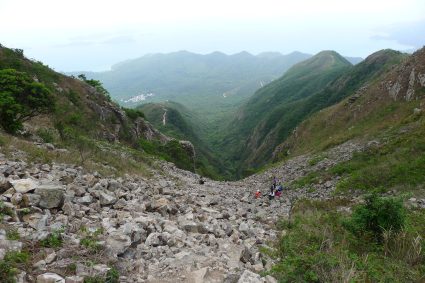
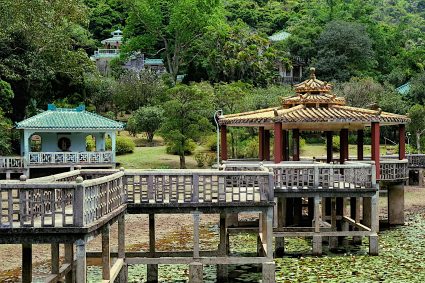
Wonderful Hiking on the Old Olympic Trail

Joyful wondering along Lantau’s Olympic trail
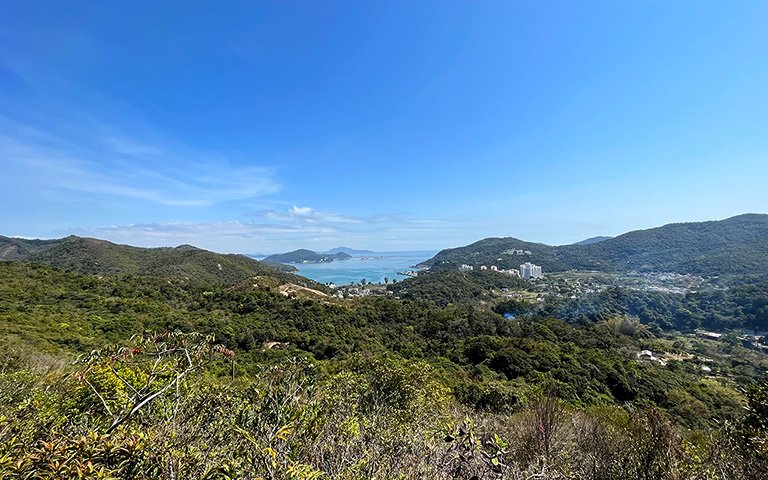
Silver Mine Bay & Mui Wo from above
Mui Wo to Tung Chung, Hong Kong’s backyard paradise
A joy of living in Hong Kong is the easy access to hiking and to the Olympic trail.
Even a deeply embedded urban dweller can reach a country park or hiking trail in twenty minutes. And we are spoiled for choice, as three-quarters of Hong Kong is countryside.
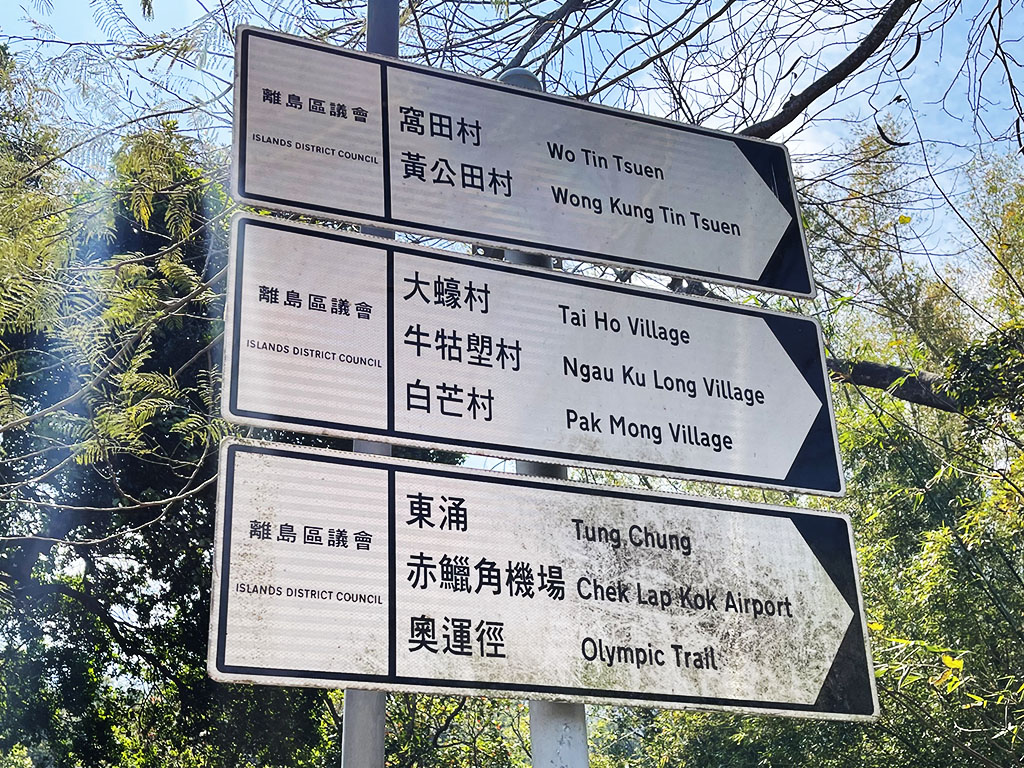
Many places to hike towards on the Olympic Trail
This ratio comes from the Hong Kong Agriculture, Fisheries and Conservation Department website, which indicates that there are forty-six Country Parks and Special Areas occupying 433 square kilometres of Hong Kong’s total 1108 square kilometres.
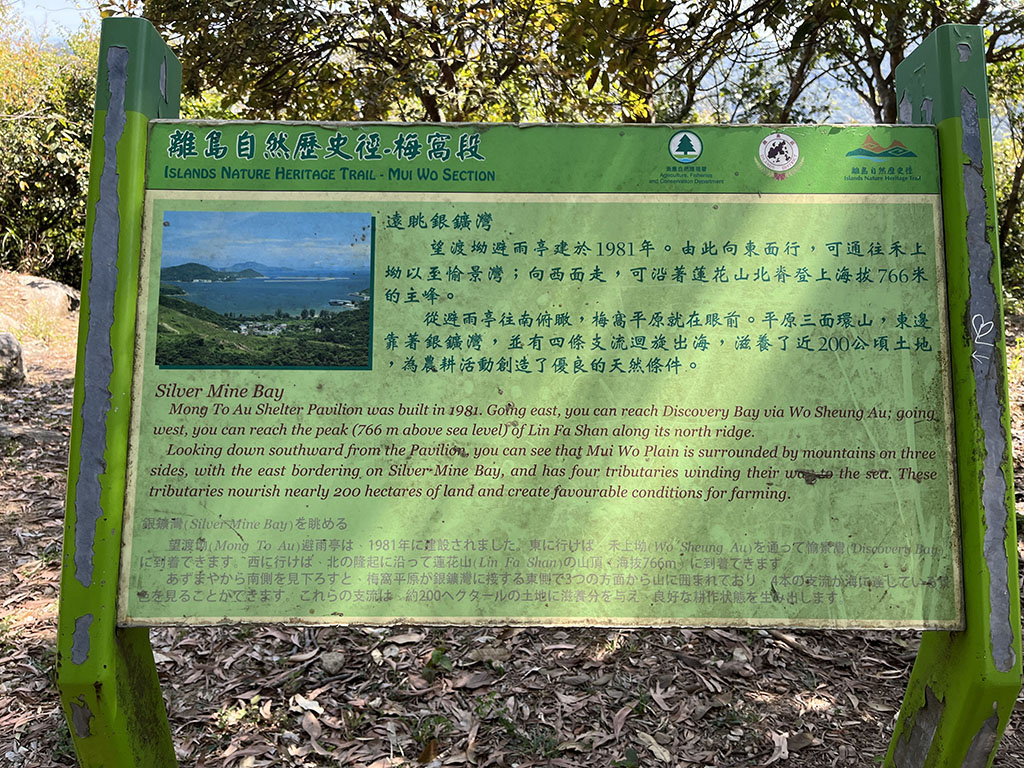
Mui Wo information board
Lantau Island is predominately designated as a country park, so on a comfortable spring day, I committed to the hike from Mui Wo to Tung Chung.
It is just shy of ten kilometres with a peak elevation of 227m and is purported to be a family-friendly hike.
Related Story Hiking on Mui Fa Ancient Trail
We arrived in Mui Wo by ferry, enjoyed lunch at a quaint local restaurant, grabbed a few provisions and headed out.
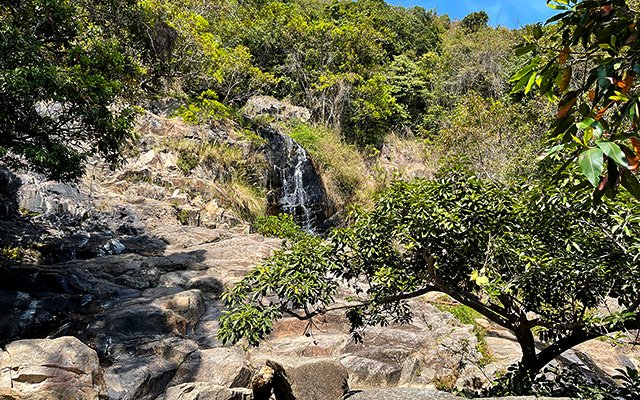
Silver Mine Bay Waterfall in the winter
We started by walking the immaculate waterfront promenade to the Silvermine Beach Resort, where we turned left and then right on Chung Shing Street before turning left again onto Mui Wo Rural Committee Road.
Related Voyage Through Time: Looking at Victoria Harbour, Hong Kong
From there we followed the signs pointing towards the Olympic Trail.
To commemorate the 2008 Beijing Olympic Games and Hong Kong co-hosting the Olympic Equestrian Event, the International Olympic Committee approved naming the trail from Mui Wo to Pak Mong Village as the “Hong Kong Olympic Trail”.
Follow the signage to Olympic Trail
Improvements to the trail were made including pavement, railings, signage, pedestrian bridges, standardised steps and inlays in the sidewalk representing summer Olympic events.
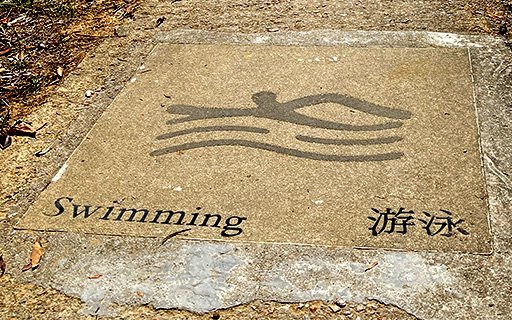
Swimming themed sidewalk inlay
The hike escapes from the rural roads of Mui Wo at Man Mo Temple, which is surprisingly old, yet well maintained.
Man Ho temple tribute to 2 gods literature and war
It was built during the Ming Dynasty (1573-1620) and pays tribute to Man Tai, the ‘civil’ god of Literature; and Mo Tai, the ‘martial’ god of War, hence the temple name Man Mo.
Related Hong Kong Man Mo Temple for Faith and Fortune
Now on a paved pedestrian path, we passed in quick succession the official start of the Olympic Trail, the always interesting, seemingly abandoned private villa and pool once owned by the boss of the Yee Wo Lung Rice company before arriving at the Silver Mine Bay Waterfall Garden.
Silver Mine Cave leads on to Olympic Trail
This time of year, there is very little water, so we continued our hike up to the Silver Mine Cave.
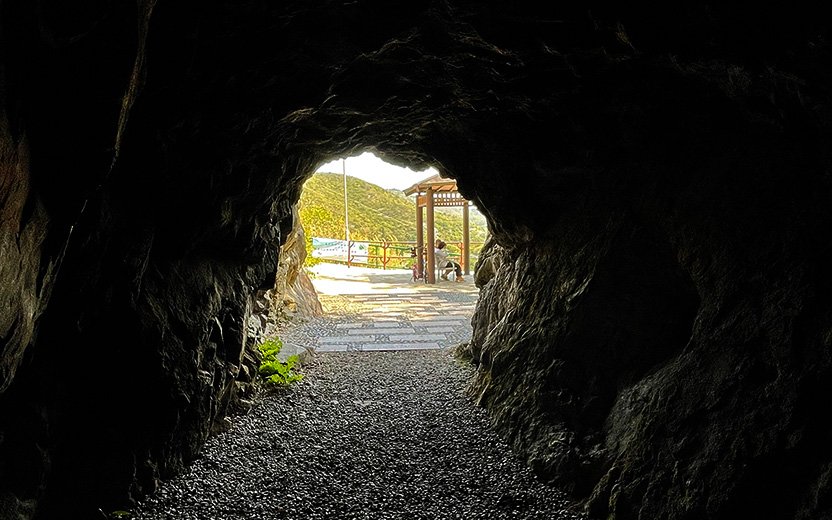
The Silver Mine cave
This former entrance to the actual silver mine has been blocked off about ten metres in and repurposed as an Instagram destination and sitting-out area complete with a covered pagoda and comfortable benches overlooking the ocean.
Wo Tin Tsuen farming village
As we continued our walk up, we passed through the picturesque Wo Tin Tsuen, an old but still inhabited farming village.
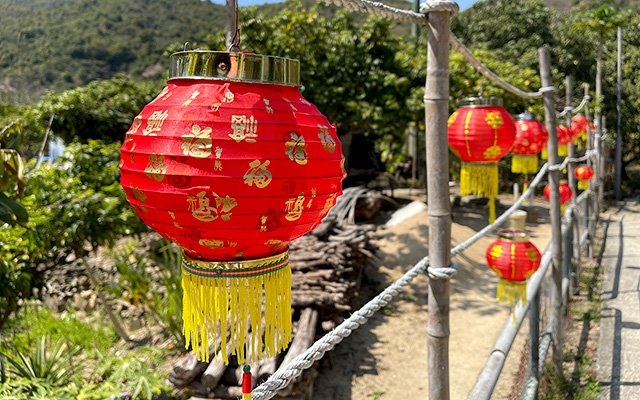
Lanterns in Wo Tin Tsuen
The locals seemed unmindful of the many hikers. It was here the real hike began, and the shade ended.
Related Peng Chau creative industry Leather Factory
Serious hikers would have started earlier but we enjoyed the experience by walking at a relaxed pace and stopping frequently to sit on the steps and admire the view.
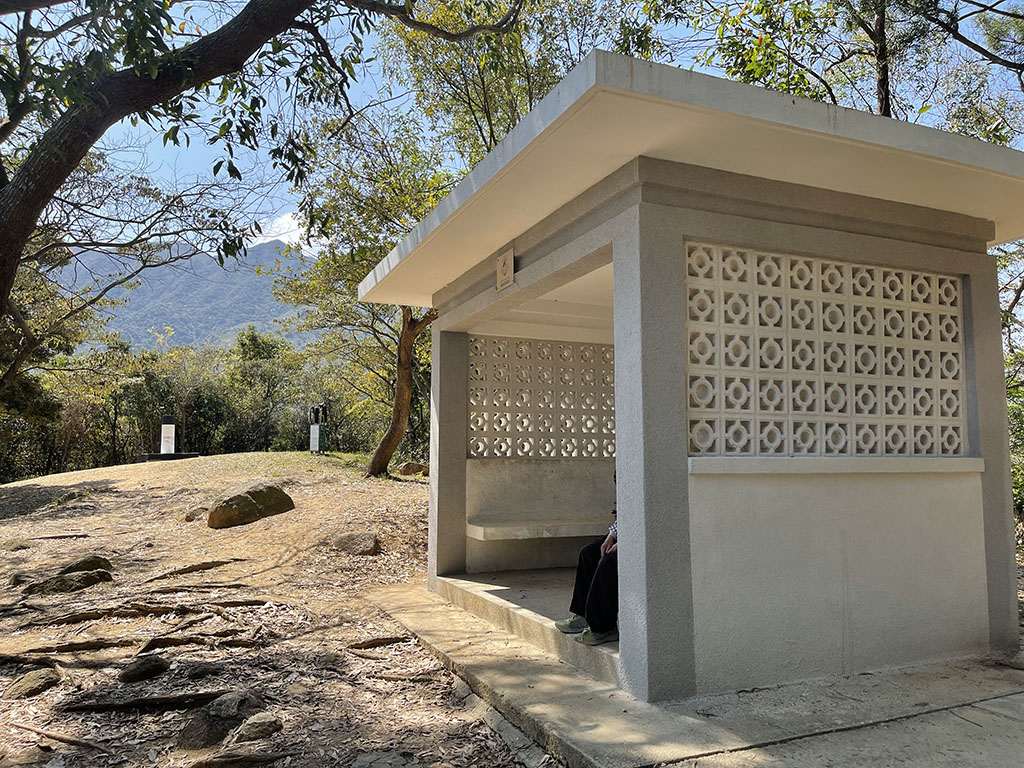
Mong To Au Shelter Pavilion
As we ascended, the vistas grew more impressive. Our reward for the climb was the Mong To Au Shelter Pavilion.
Related Leisurely hike to Trappist Haven Monastery Lantau Island
Built-in 1981, it sits on a shady peak that oversees all the Mui Wo plain and surrounding mountains.
Then came my favourite part of the hike where the trail was mostly level and shaded by trees.
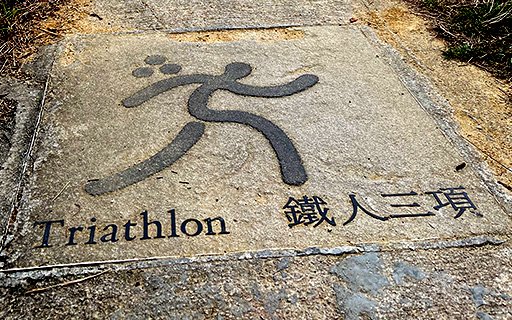
Triathlon themed sidewalk inlay
Photography perfect on the Olympic Trail
It was here in the absence of suburban distractions that one could enjoy the sounds of the forest, the play of light and shadow, the flowering plants and the occasional movement of moths and butterflies – a perfect place for meditation or practising photography.
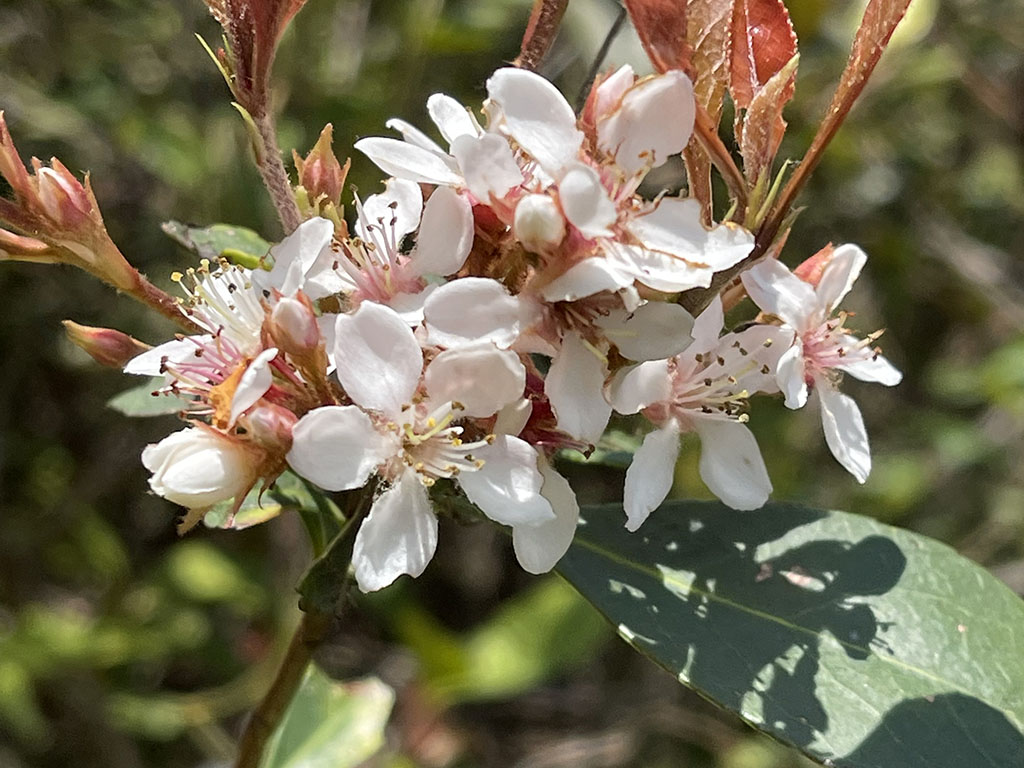
Common Melastoma flowers
The trail continued like this for about half a kilometre before we reached another pagoda and a fork connecting to Lo Fu Tau country trail, which leads to Lo Fu Tau (a.k.a. Tiger Head Mountain), but most people refer to it as the path to Discovery Bay.
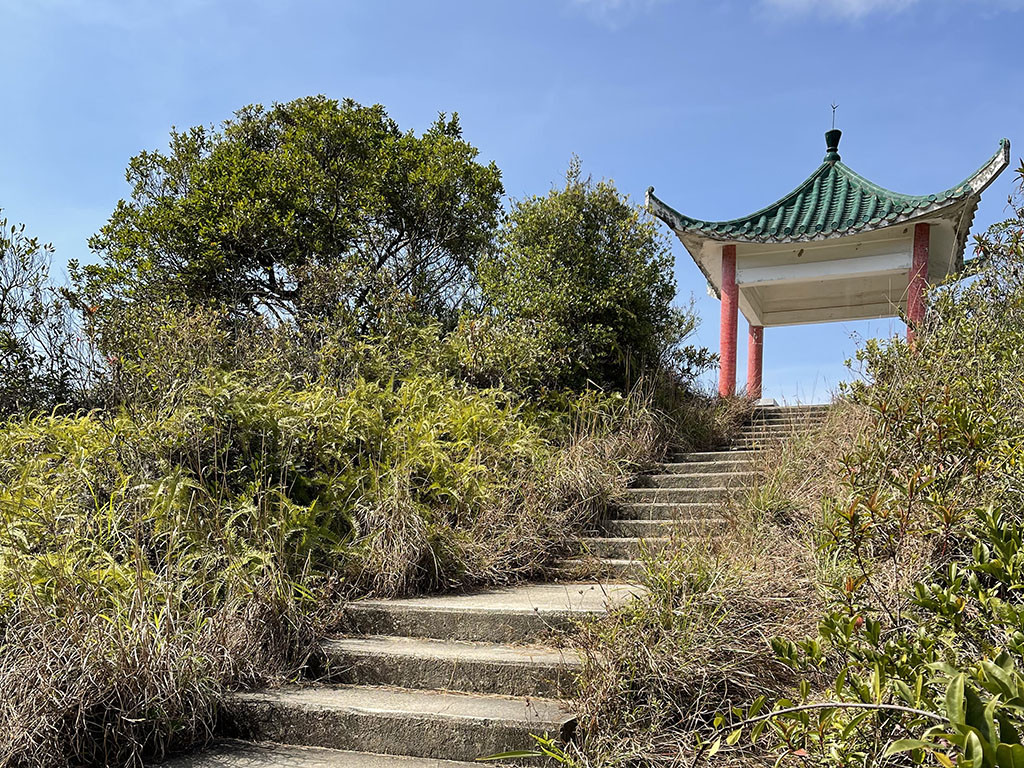
Mui Wo Trail – View Point No. 1
We continued straight, and the path started to descend to the other side of Lantau Island.
There we found the Mui Wo Trail – Viewpoint No. 1, a sitting-out pagoda with unobstructed views of the valley below and the stunning airport and overpass infrastructure.
Related Pak Tai Temple monument to people of faith and spirituality
We rested, ate the remains of our provisions and then continued down, passing by well-maintained village grave urns.
Just before Hung Fa Ngan village, the path crossed a tranquil stream bubbling over rocks and roots and shaded by trees.
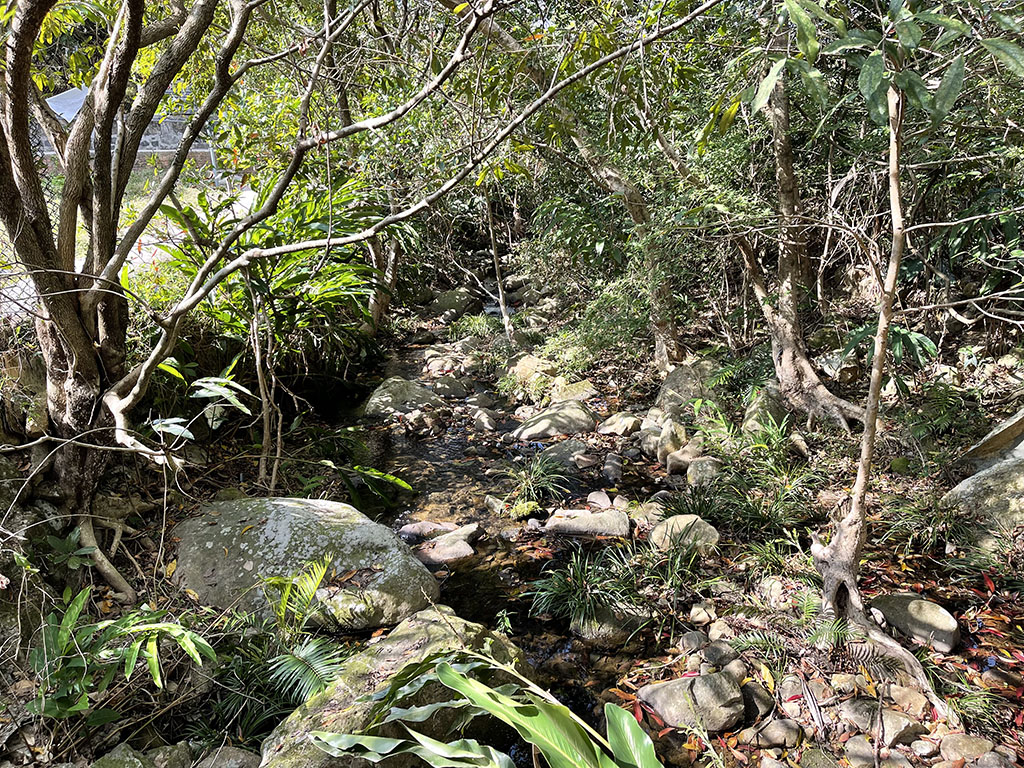
Stream by Hung Fa Ngan Village
We stopped to listen, relax and appreciate what exists in the backyard of our city.
Related Story Historic Tung Chung Fort defence from fearless pirates
By this time, we were getting tired and we walked in silence contemplating the scenery and some of the historic sites.
Hakka village of Pak Mong
The Olympic Trail ends at the Hakka village of Pak Mong. Settled during the Ming Dynasty, sites of interest here include the Entrance Gate and Republican-era Watchtower, both of which are declared monuments.
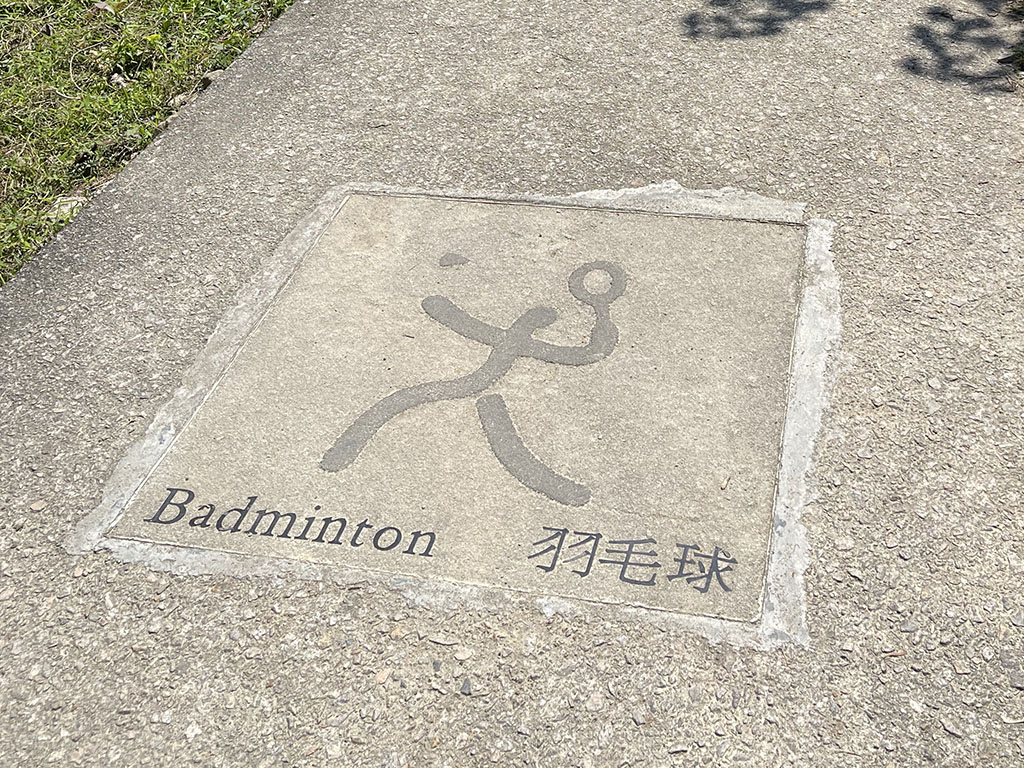
Badminton themed sidewalk inlay
Of more interest to me was the Tai Ho Wan, a bay that is largely fresh water and includes mangrove habitats as well as seagrass beds and mudflats.
Related Hong Kong Global Geopark UNESCO site
A Hong Kong University of Science and Technology study suggests it supports fifty-three species of freshwater fish and ten different species of amphibians.
As a result, the government is working to make it a nature reserve and restrict future construction, which does not please the local villagers.
Related Story Abandoned villages Hong Kong’s countryside
From this point, the hike became less serene. We walked through the tunnel under the North Lantau Highway, to the paved pedestrian road leading back to Tung Chung, not appreciating that the massive land reclamation project to expand Tung Chung meant there was a two-kilometre-long 3-metre-high corrugated steel fence to guide our way.
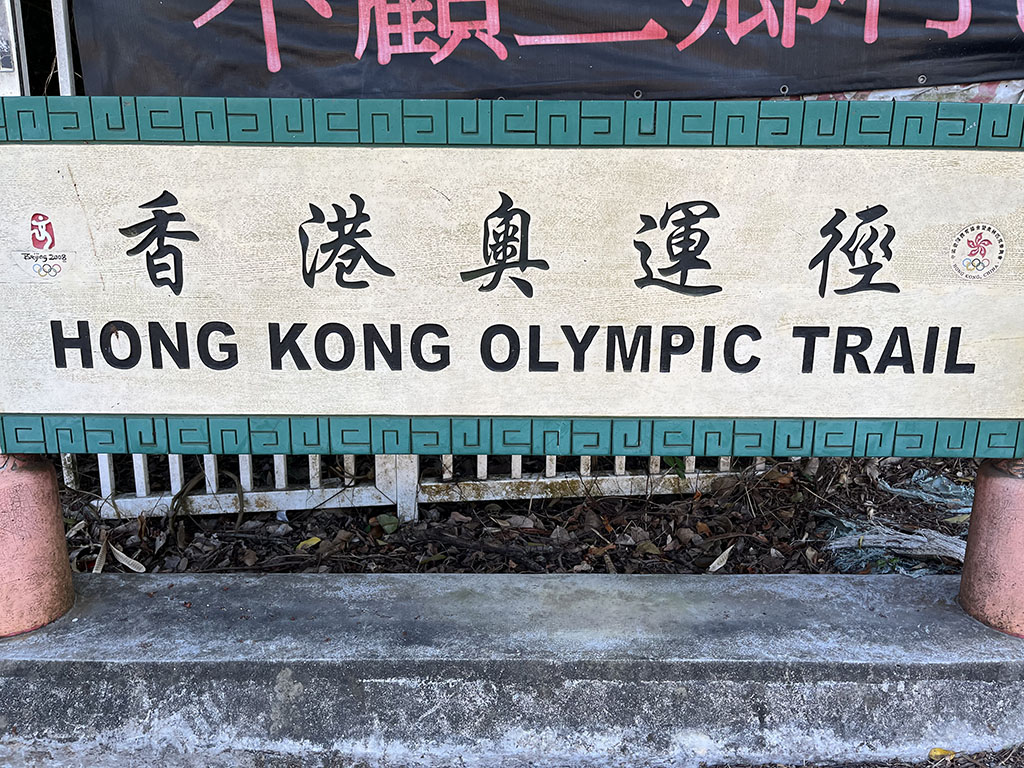
The trail is well marked from start to finish
Without any shade, this part of the journey started to feel like work. We made it to Ying Tung estate and treated ourselves to a cool drink in the park before hopping a bus to the Tung Chung MTR station.
Related Sam Tung Uk 200-year-old Hakka walled village built during the Qing dynasty
If I were to do it again, I would start in Tung Chung, take a taxi to Pak Mong and then hike towards Mui Wo.

Fencing themed sidewalk inlay
Our leisurely walk with frequent stops took us about four hours.
Related Tai O is more than stilt houses and beautiful sunsets
The climbs are significant, but this is a family-friendly hike, and it provides an enjoyable amount of exploration and exercise.
Text Martin Wray / Photos Cammy Yiu