
Picasso remarkable man of searing genius and controversy

Art of Picasso is like a symphony
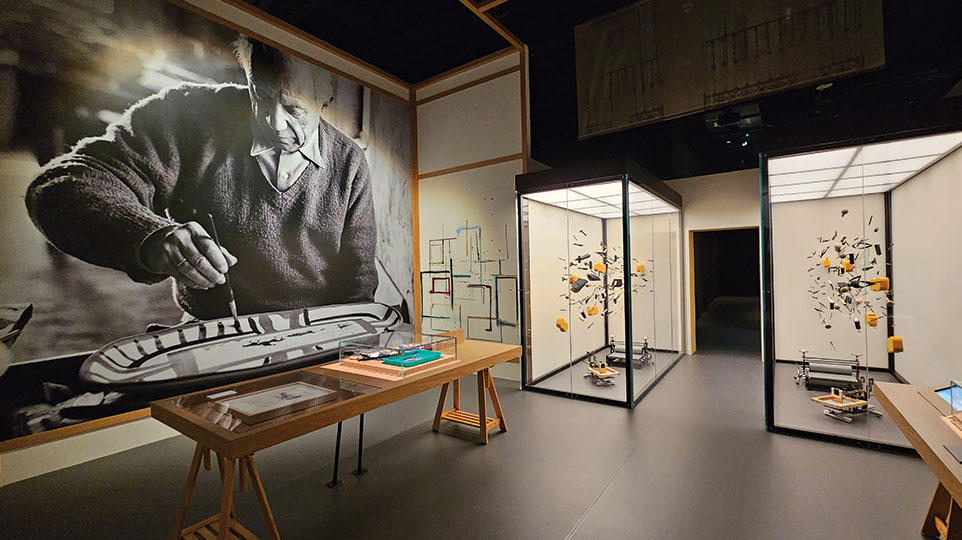
Pablo Picasso Beauty & Drama
Pablo Picasso is a name that instantly evokes genius, innovation, and controversy.
Born in Málaga, Spain, in 1881, he carried the spirit of his homeland wherever he went. Whether in Paris or on the sunlit shores of the French Riviera, traces of Spain always surfaced in his work.
Related Picasso inspired by Impressionist icons Paul Cezanne and Pierre-Auguste Renoir
I was thrilled to attend a preview of the Picasso: Beauty & Drama exhibition at the Grand Lisboa Palace Resort in Macau.

Joining a small group for a docent-led tour, I also had the chance to sit down with Mario Montañez, curator of the Centre Pompidou Málaga, and hear firsthand how Picasso’s Spanish roots shaped this intriguing show.
Related Pablo Picasso fascinating and hypnotic prints
My exhibition experience opens with introductions to our docents, Alma and Karen. Alma’s voice carries the authority of someone who has spent countless hours studying these works, while Karen projects contagious enthusiasm for everything Picasso.

Woman with Flower Bodice (Jacqueline in Profile), Picasso, Crayon, wash drawing , scraper and needle on Zinc (2nd state) 1957-1958
Alma starts the tour by establishing the foundation of everything that follows, pointing out the projected image of a delicate dove.
Related Sanctuary of rich flora and mesmerising birds
“He called his daughter, Paloma, which means dove in Spanish.” Before acknowledging his first known work: a vivid bull-fighting scene.
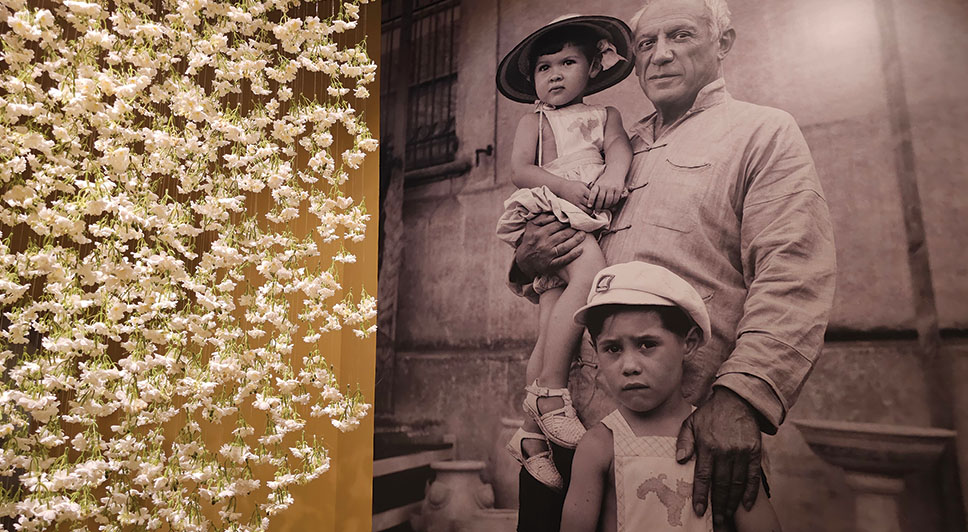
Picasso with his children Paloma and Claude
In that swift exchange, we glimpse the two recurring metaphors – peace and spectacle – that define Picasso: the Spanish man, and Picasso: the Spanish artist.
Related Spanish artist Cristobal Gabarron hypnotic action painting
Picasso’s creative choices were never arbitrary but deeply rooted in Spanish culture and personal experience.
Pivotal relationships with Women
The atmosphere shifts as we enter the gallery titled Women. The walls curve, painted a warm rose hue, setting a stage for works that chronicle Picasso’s most influential relationships.
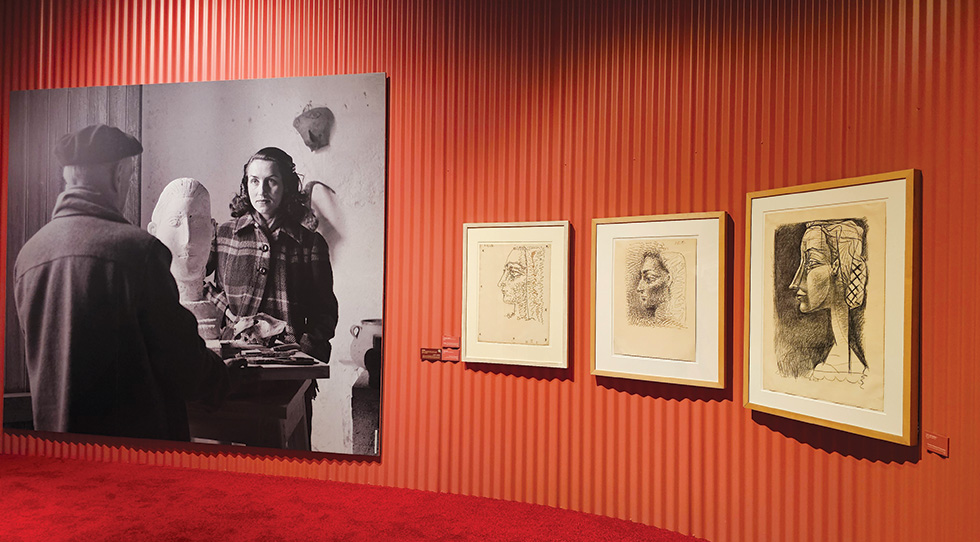
Gallery titled Women, the walls curve, painted a warm rose hue, setting a stage for art that chronicle Picasso’s relationships with women
Alma begins by introducing Françoise Gilot and Dora Maar.
Related Women and Femininity in Ancient China revealing way of life
“Notice how Françoise confronts you directly,” she says, pointing to a 1945 wash drawing titled Two Nude Women (Françoise Gilot and Dora Maar).
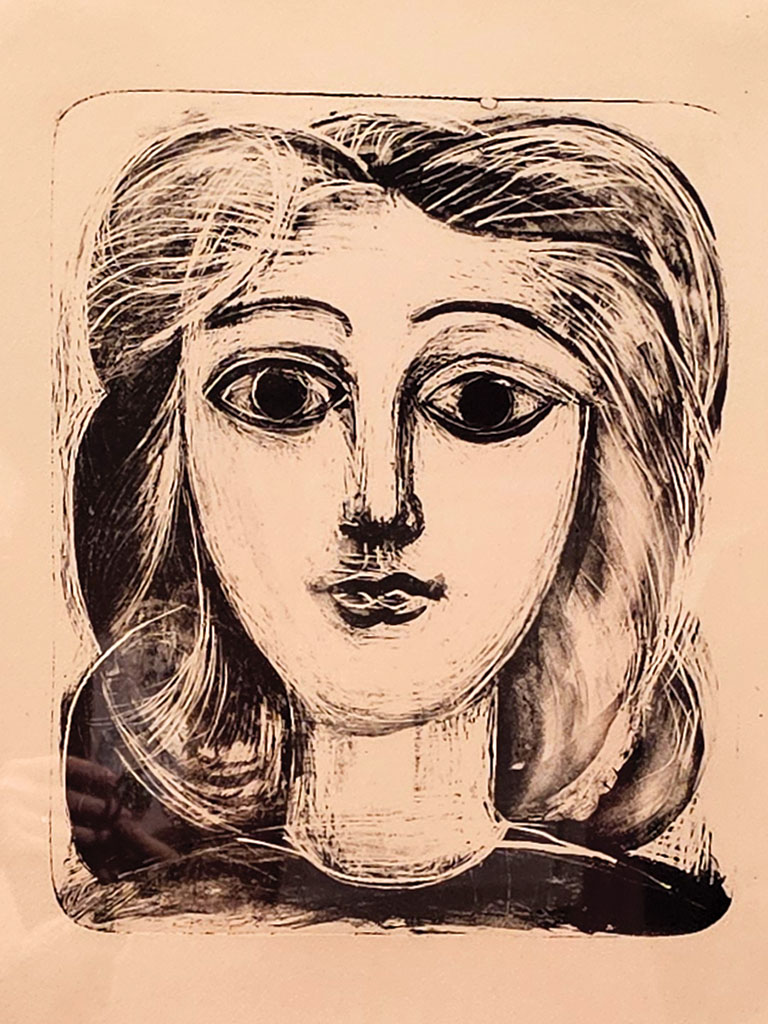
Head of a Young Girl (Francoise), Picasso, Scraper, angle bracket and wash drawing on stone (2nd state), 1945
“Her gaze is bold. She is central, active, and confident.” She motions to Dora’s profile.
“By contrast, Dora appears reserved, enigmatic.” The tension between the two figures tells us about Picasso’s creative dialogue with each woman.
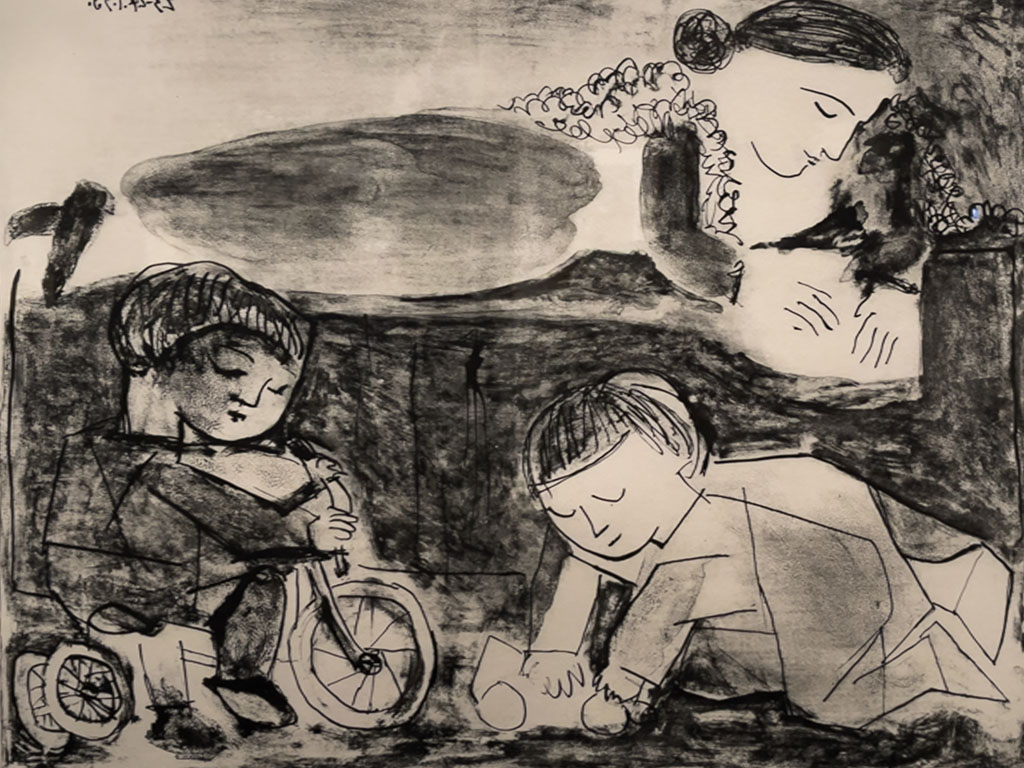
Games and Reading, Picasso, Wash drawing, wax crayon and pen on zinc, 1953
Alma and Karen stress that these depictions are not passive musings, as each woman shaped Picasso’s art as much as the paint shaped the canvas.
Picasso ceramics
A surprising discovery awaits in the Ceramics section. Karen shares an interesting fact: Picasso dreamed of every household owning a plate he decorated.
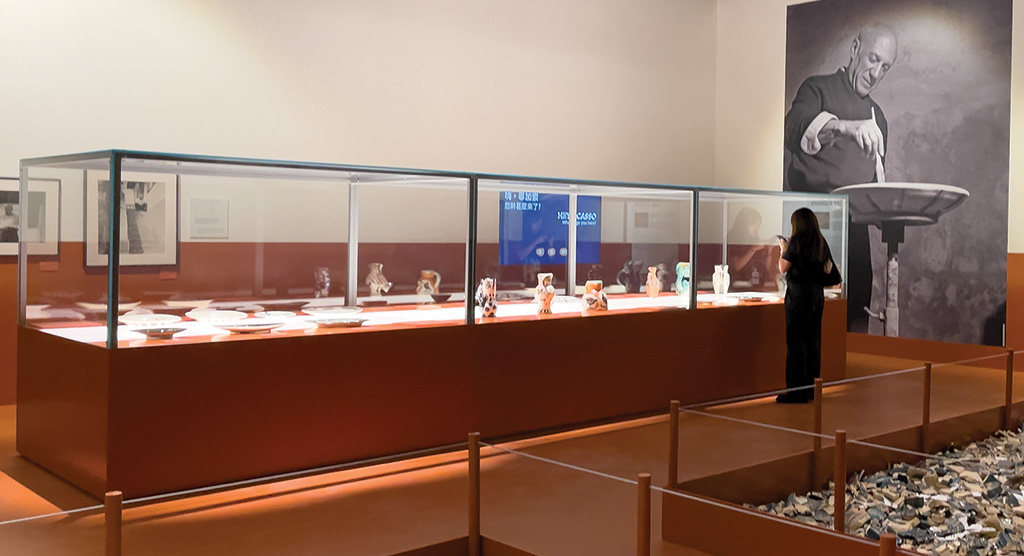
Here, plates and jugs glisten under spotlights, transformed by Picasso’s sketches of faces, bulls and mythic creatures.
Related Mythical Sanxingdui creatures discovered in Sichuan
Alma explains how, in partnership with the Madoura Workshop, Picasso extended his artistry onto clay.
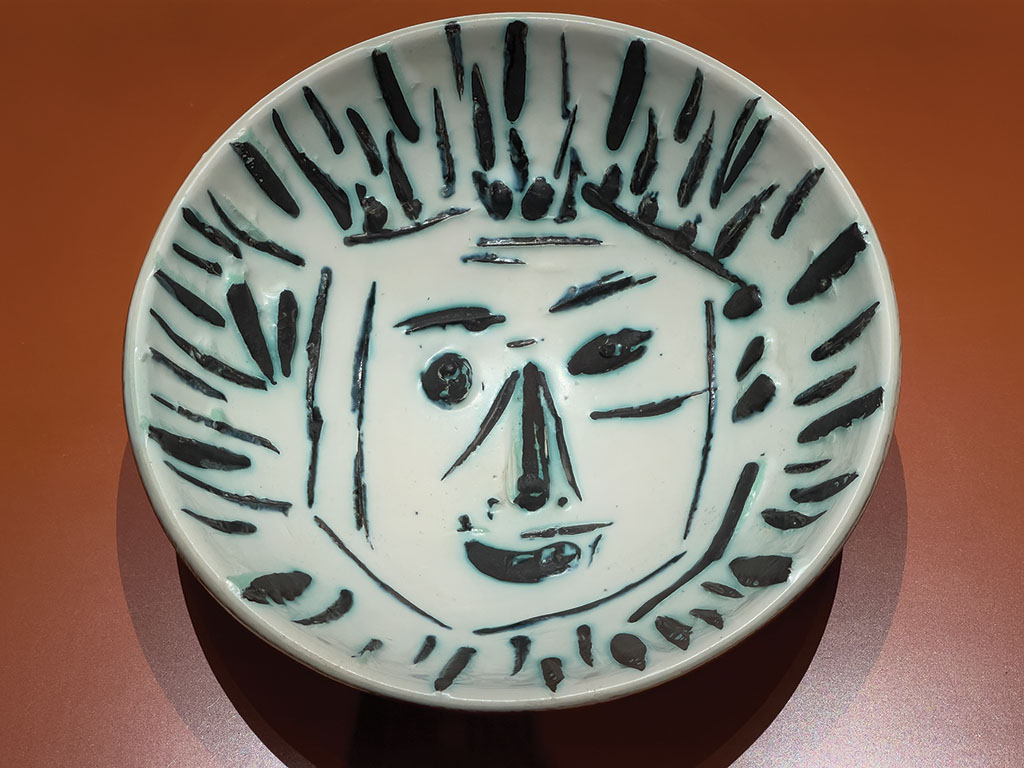
Full-Face Face, Picasso, Ceramic, White earthenware clay, 21/100, Atelier Madoura, 1960
He wanted art to be woven into daily life and imagined people eating dinner off his creations, using art as a form of nourishment.
Related Sensational Picasso paintings sculpted in glass: Gemmail
Today, these ceramics are rare collector’s items, yet they began as democratising gestures, art for ordinary hands.
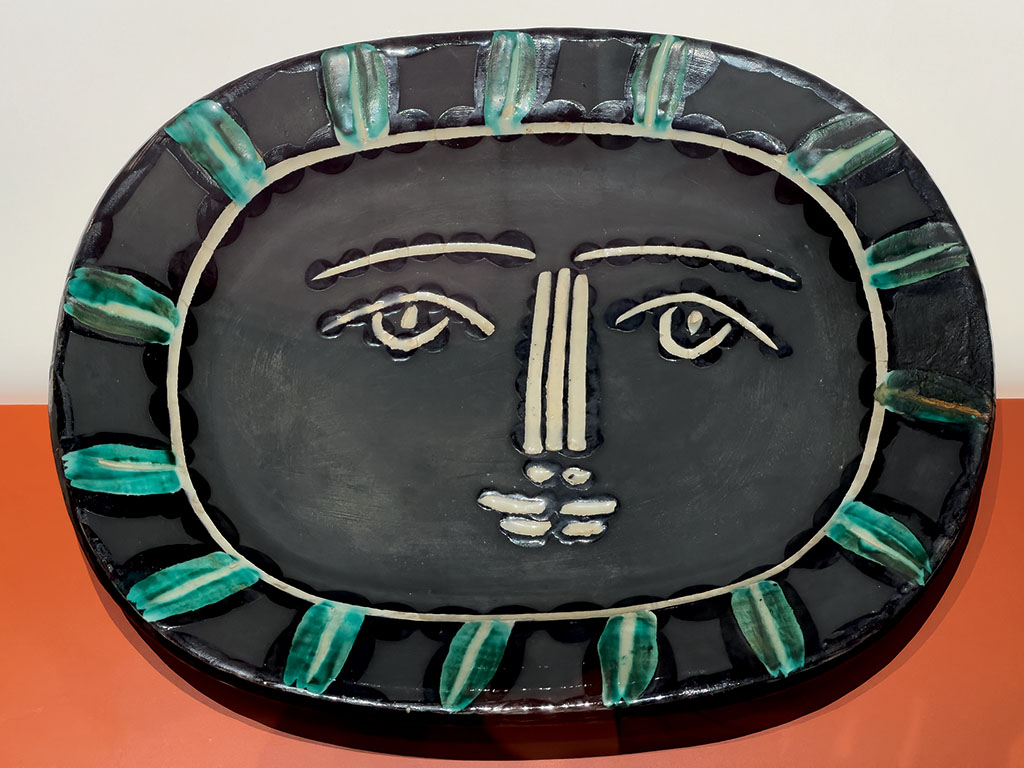
Grey Face, Picasso, Ceramic, White earthenware clay, Edition 500, Atelier Madoura, 1953
The section title Beauty presents Picasso’s most radical innovations. Faces fracture into Cubist planes.
Related Icons of Modern Art: Picasso and El Greco
Bodies twist into angular forms. Karen’s voice guides visitors through this challenging terrain: “Picasso once said, ‘Art is the most beautiful of all lies.’ These works ask us to question what we mean by beauty. Are these distortions grotesque, or do they reveal a deeper truth?”
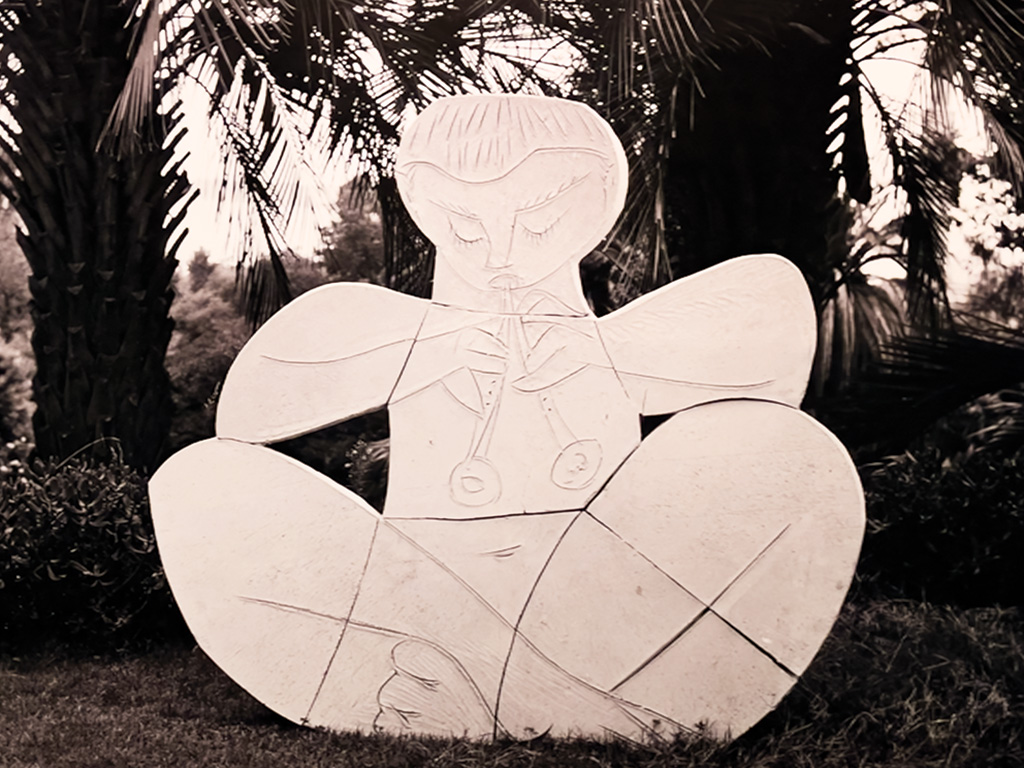
Alma adds, “Notice how fragments of Andalusian colour – burnt sienna, deep blues, ochre – persist even in his most abstract pieces.”
Related Chinese-Cuban Wifredo Lam, a friend of Picasso, found his voice through art
Together, the docents help me navigate the abstraction, revealing how Picasso’s experiments were rooted in the visual language of his youth.
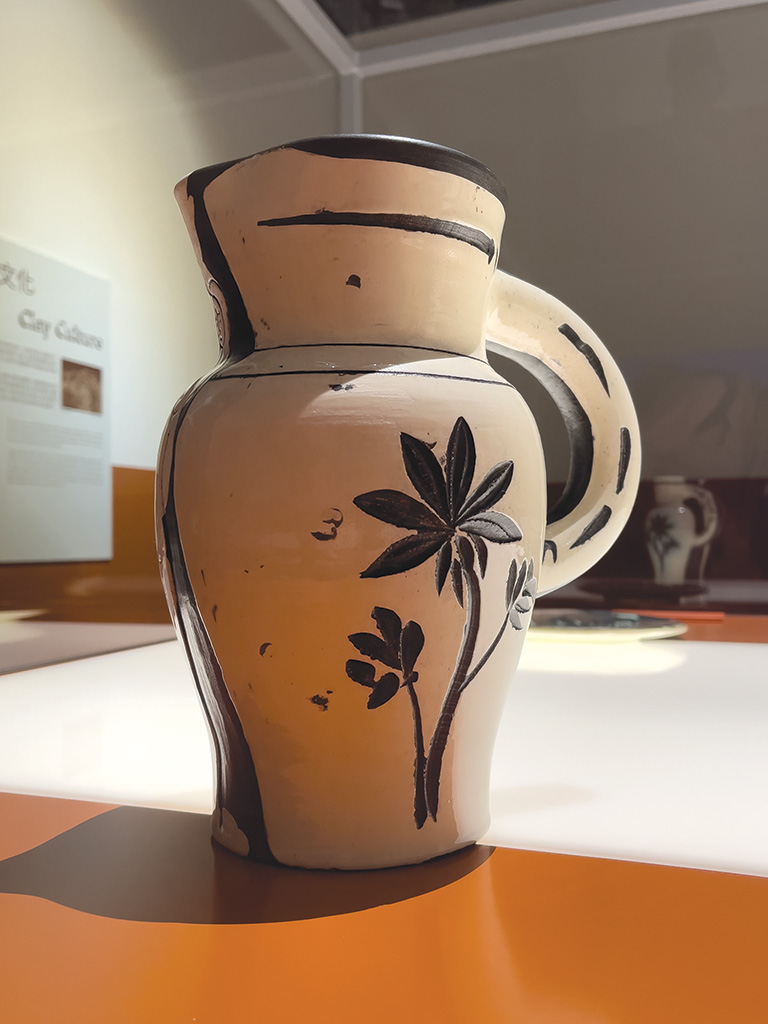
The Fountain, Picasso, Ceramic, Turned pitcher, White clay decorated with engobes and sculpted on partially glazed surface, Edition Picasso, Atelier Madoura, 1954
A secluded alcove addresses family legacy. Pictures of his children Paulo, Maya, Claude, and Paloma hang alongside a drawing of Raymonde, the child Picasso and his partner, Fernande Olivier, nearly adopted.
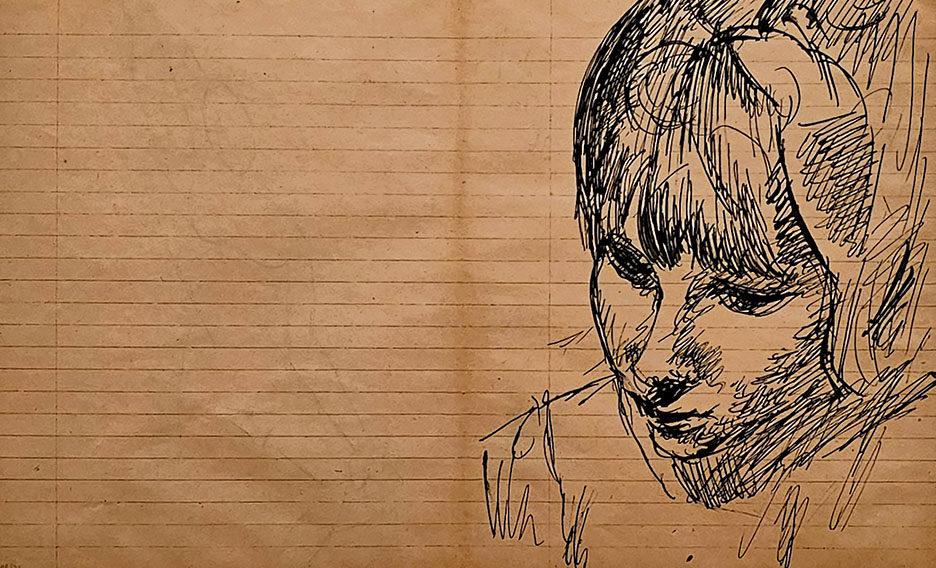
Portrait of Raymonde, Picasso, Pen and Indian ink on paper 1907
Alma recounts the delicate story: “Ferdinande was keen to have a child with Picasso. She said, ‘I want to have a child with you.’ And Picasso replied, ‘It’s too complicated. Let us just adopt instead.’”
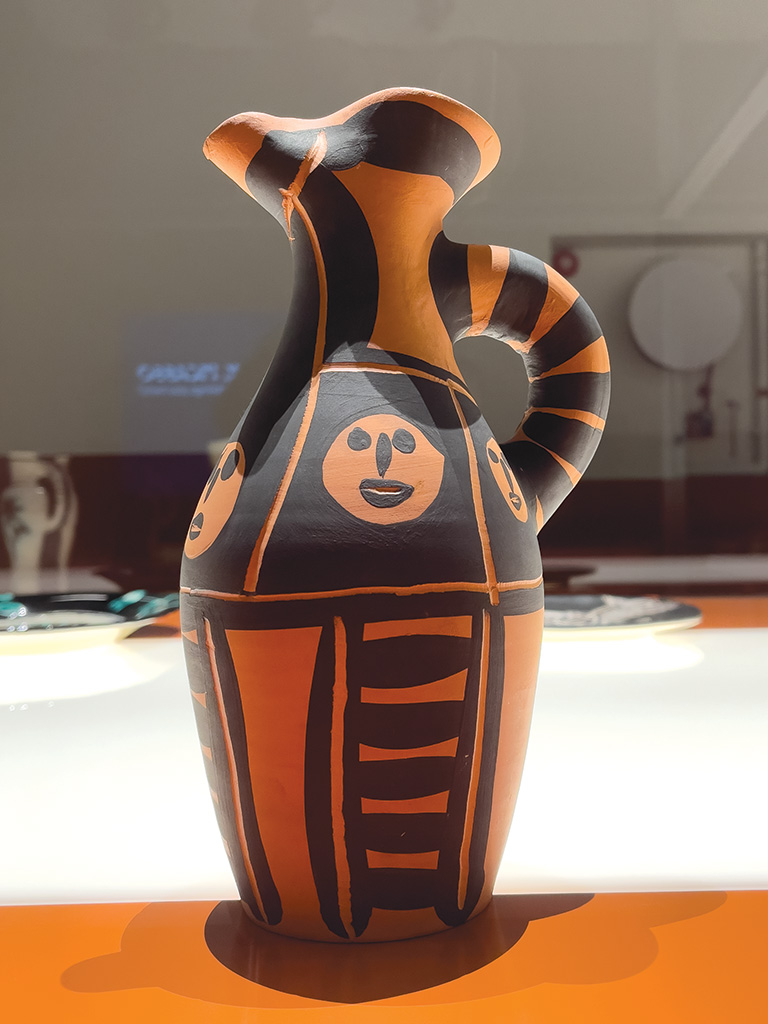
Yan Black Headband, Picasso, Ceramic, Turned pitcher, Red earthenware clay, 1/300, Atelier Madoura, 1963
Karen allows a moment of silence before continuing. A reminder of how personal choices, even questionable ones, influence creative lives. Family was Picasso’s anchor, even amid his restless spirit.
Related Van Gogh fabulous Roulin family portraits
Throughout the tour, a Mario Montañez’s metaphor enriches the experience: “Appreciating Picasso’s art is just like hearing a symphony with attention. You observe the art pieces, follow the line of thought, then ask, ‘What would I do if I were Picasso?’”
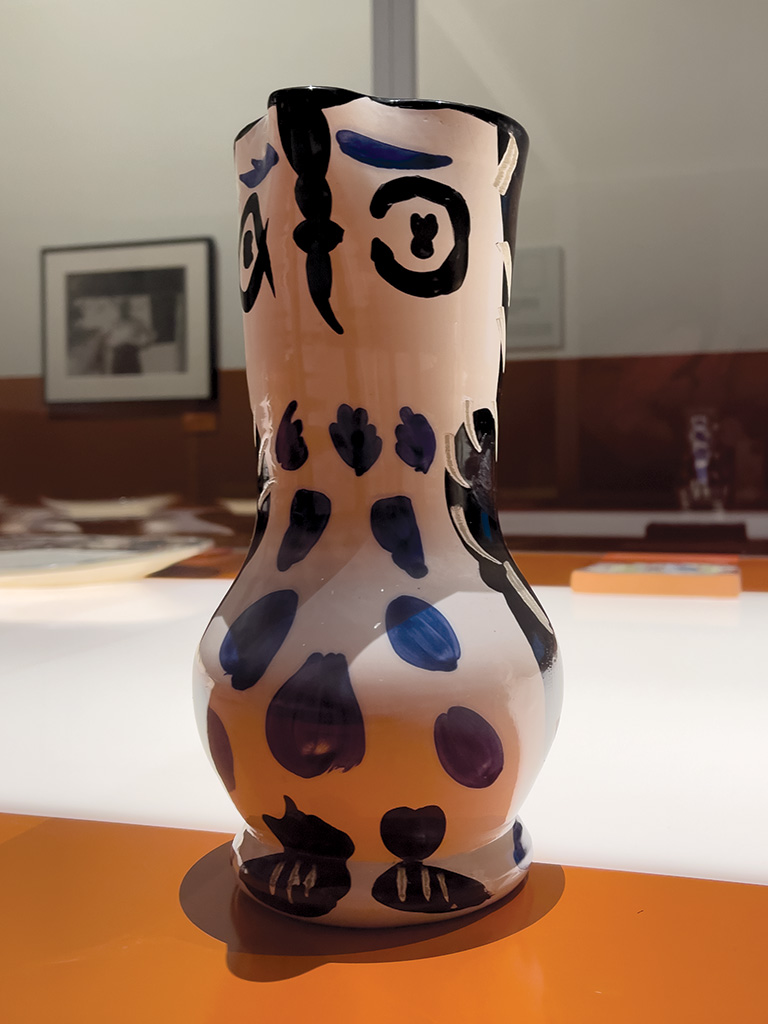
Wood-Owl, Ceramic, Picasso, Turned base, White earthenware clay, decoration in engobes engraved by boring-rod under partial brushed glaze, grey patina, 210/250, Atelier Madoura, 1969
The docents echo this advice, encouraging me not only to look but also to imagine myself within Picasso’s creative process.
Artist’s creative process
In the final gallery, tables are set with paper and pencils, inviting participation. “We’re not saying draw like Picasso,” says Karen, “but let us see how you respond after following his lines and ideas.”
Related Pop Art pioneer Andy Warhol
By weaving together biographical details, technical explanations, and emotional anecdotes, Alma and Karen create an immersive narrative.
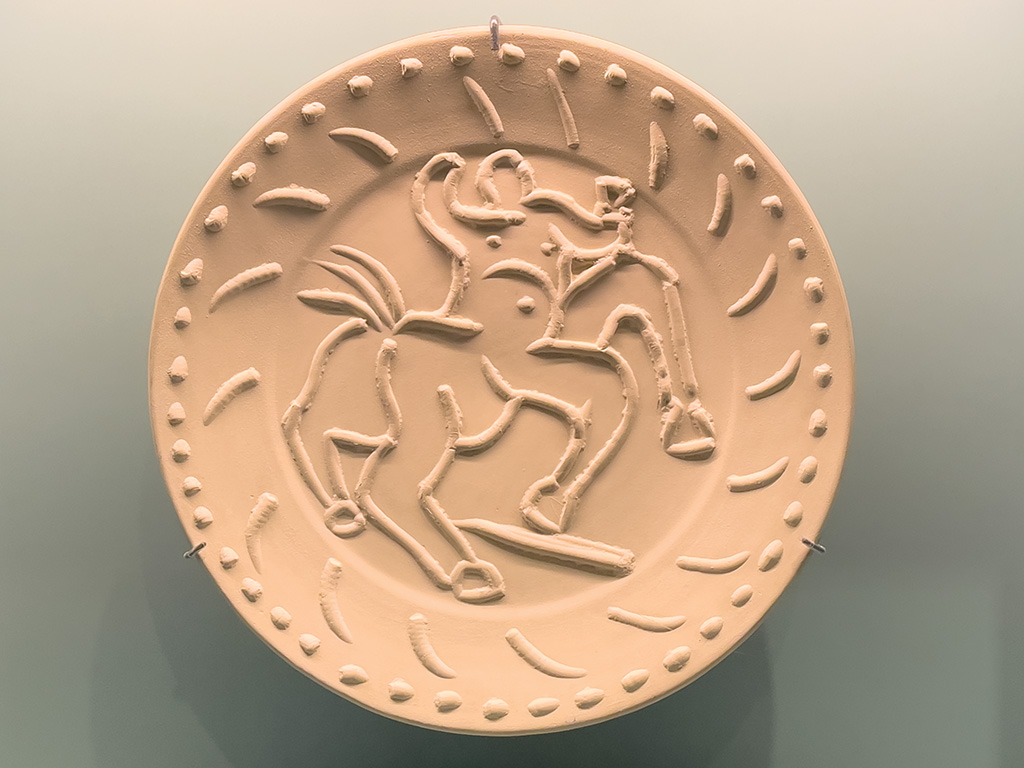
Centaur, Ceramic, Picasso, White clay with embossed decoration depicting a centaur, Land of Fayence white earthenware without glazing, 28/100, Atelier Madoura, 1956
They transform static objects into nodes of story, emotion and culture.
Related Gold glitters in luxurious hand made ceramics linked by Jingdezhen
From the raw energy of bullfight scenes to intimate family sketches, from ceramic experiments that democratise art to Cubist reinventions that challenge perception – each gallery becomes a movement in Picasso’s life symphony.
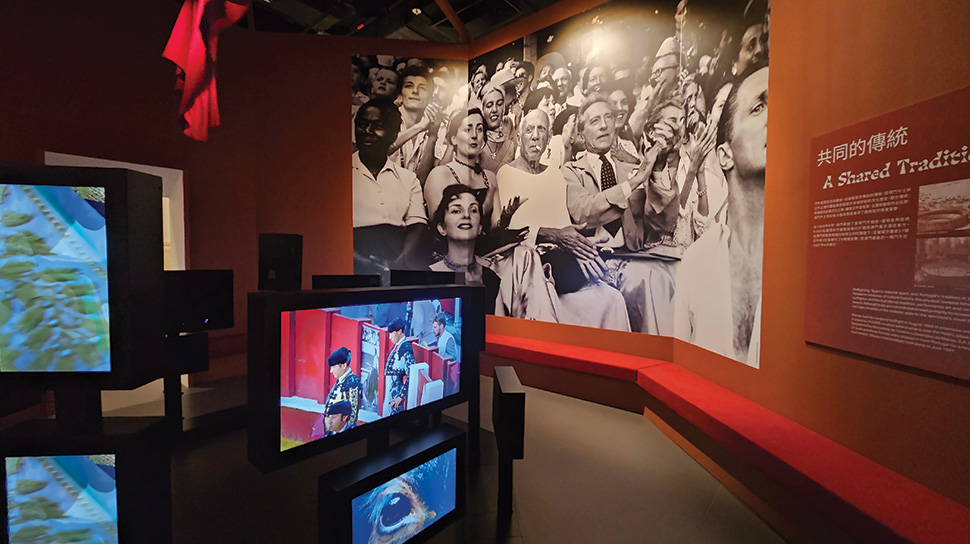
Picasso only lived in Spain for twenty-three years (1881-1904) and the remaining sixty-nine years in France.
Related French jewellery design from 1770 to 1970
Puzzled by the outside influence of Málaga, I asked curator Mario Montañez to explain why his patriotism did not align with his actions.
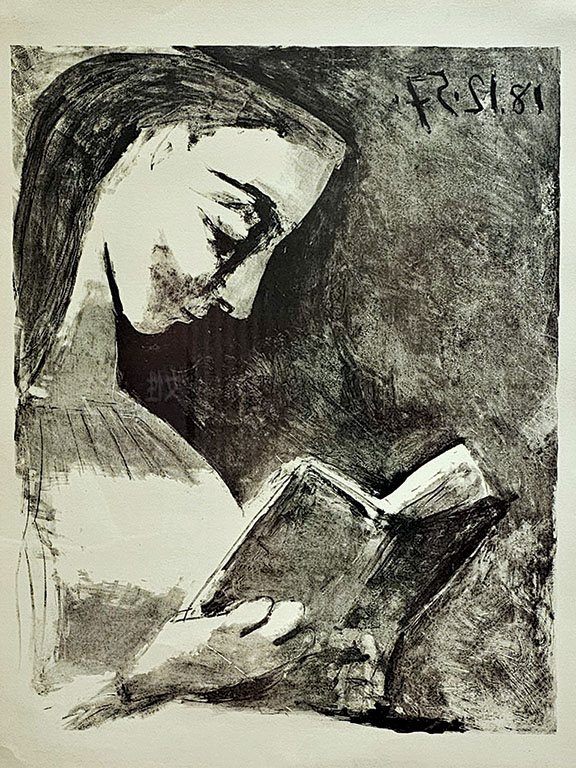
Jacqueline Reading, Picasso, Wash drawing and crayon on zinc (1st state), 1957
He said, “Picasso was born in Málaga, and all his life, he considered himself a Málaga citizen and a Spaniard.
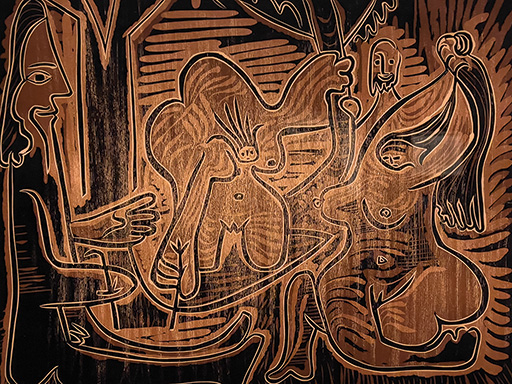
Luncheon on the Grass (after Manet) II, Picasso, Coloured Linocut, 1962
France offered Picasso French citizenship, but Picasso rejected it, saying, ‘I was born Spanish, and I will be a Spaniard, and I will die as a Spaniard.’ This is the national identity that has Picasso.”
Related Masters of printmaking Dürer, Edvard Munch & Miró
He then relayed this anecdote: “When Picasso had a special guest at home, he went to the kitchen and he prepared a dish from Málaga, ajo blanco, white garlic. And Picasso said, ‘this is a dish from my hometown, Málaga, please taste this.’ He was not a good cook, but he was a really good Málaga person.”

Figure with Striped Bodice, Picasso, Six colour on stone, according to Mourlot (yellow, red, green, brown, violet and black), wash drawing on lithographic paper transferred to zinc, 1949
Difficult to understand why Picasso, who by all appearances was extremely loyal to Spain, did not move back to Málaga, Mario explained, “In the 1970s, Picasso told his daughter he would go back once dictator Francisco Franco died.
Related Foundation collection of works by avant-garde Spanish artist Joan Miró
But he feared he would die first. He said, ‘If Franco should die tomorrow, in two days I’ll go back. But I know I am going to die first, and for that reason I am afraid I will never come back to my city.’”
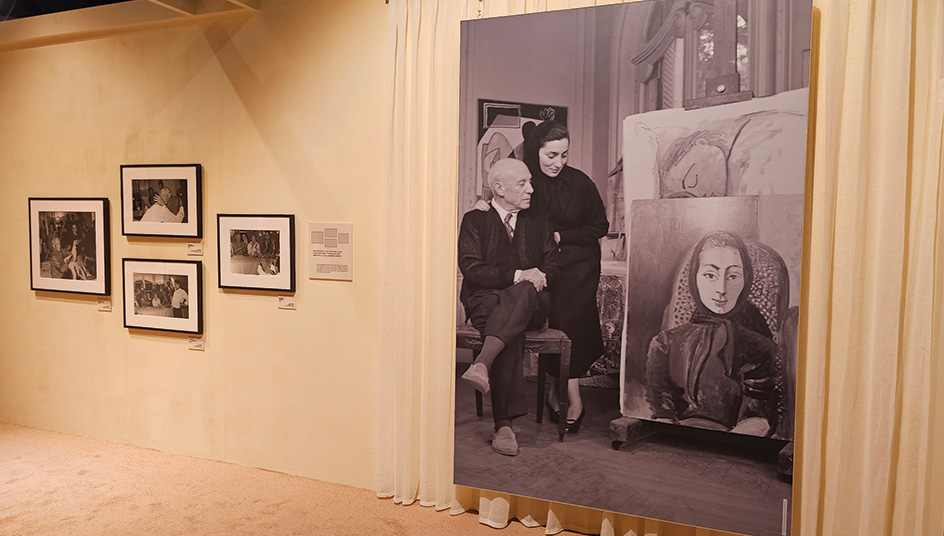
The memory hangs in the air, a testament to the cost of political exile and the enduring pull of home.
Related Surrealism beyond Mythologies
At the end of the tour and interview, I departed not merely informed but inspired.
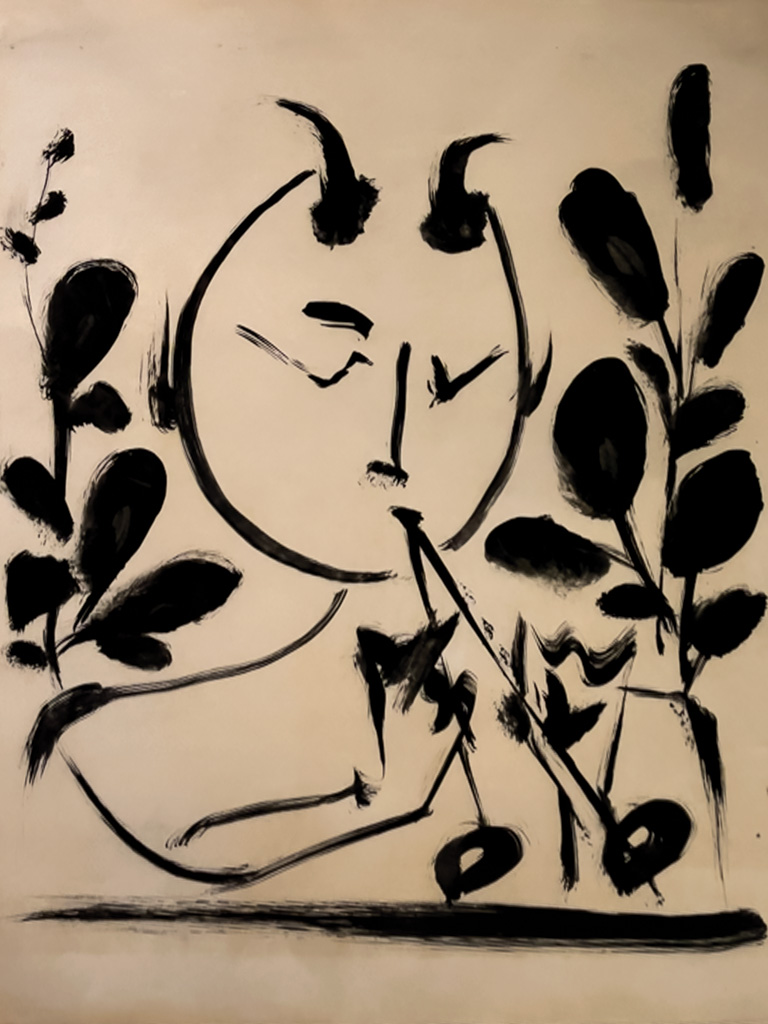
Musician Faun, Picasso, Lithograph, Wash drawing on zinc, 1948
The docents’ storytelling reveals how Picasso’s Spanish roots never faded, even as he embraced global influences and radical reinvention.
Related British Museum History of the World in 100 Objects
His lifelong allegiance to Málaga, his refusal of French nationality, his ajo blanco hospitality – each detail underscores the artist’s deep bond with his homeland.
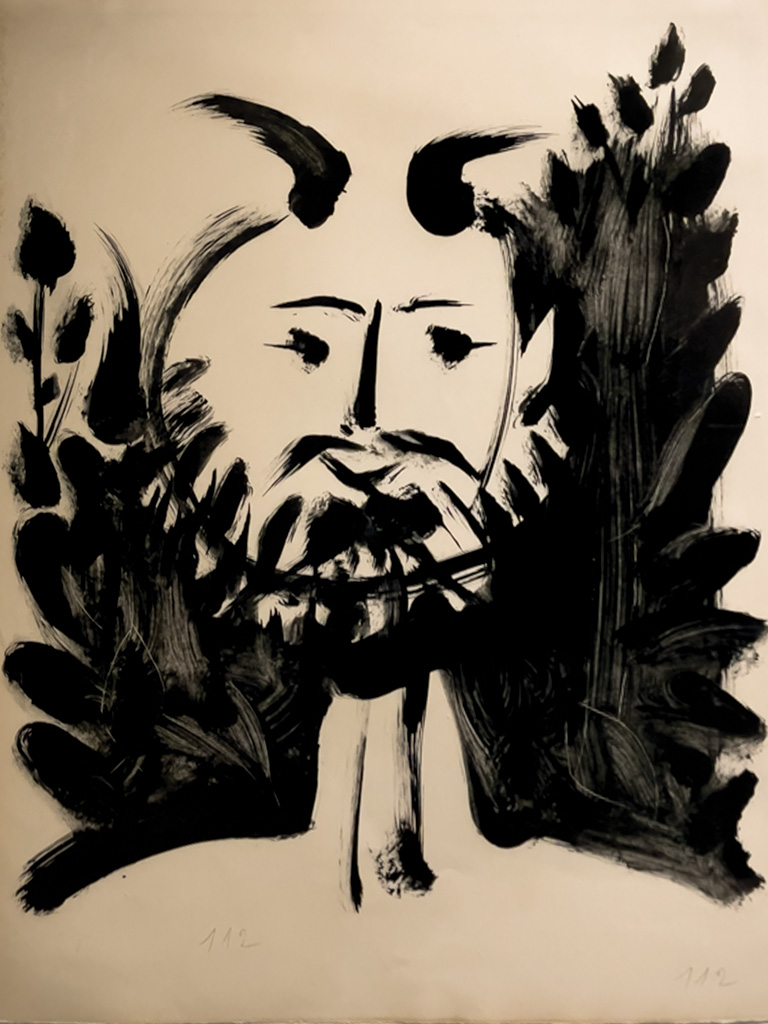
Smiling Faun, Picasso Lithograph, Wash drawing and scraper on zinc, 1948
At the same time, his ceramics and Cubist experiments demonstrate how creativity flourishes through cultural exchange.
Outside the soft light of the gallery’s corridors, the curators’ and docents’ voices linger.
Related Chateau de Versailles: Legacy of the Sun King
Their expert narratives guide me to see Picasso’s art not as isolated masterpieces but as chapters in an ongoing conversation between tradition and innovation, personal memory and universal expression.
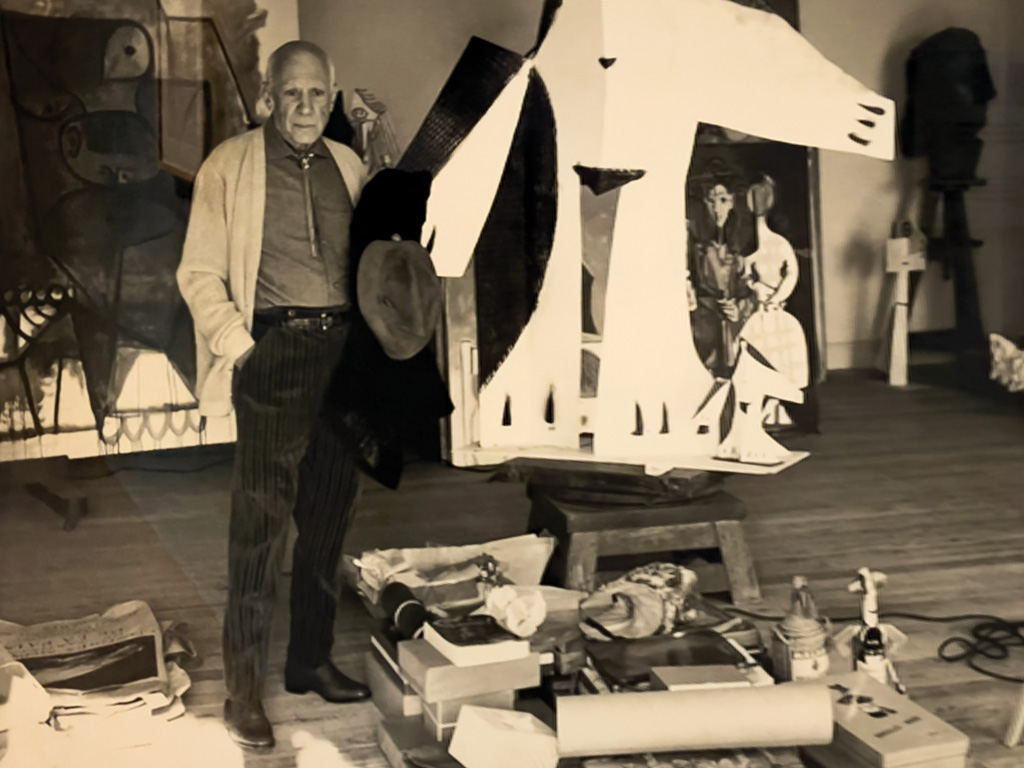
Through Alma and Karen’s words – and Mario Montañez’s vivid insights – I discovered that experience of art becomes richer when I listened to the stories behind the strokes, taste the flavours of his home, and imagined myself asking: what would I create if we were Picasso?
Text Martin Wray and photos Cammy Yiu


