
Revealing the Forbidden City and dynastic exchanges with the world

The iconic Forbidden City was the centre for interactions between China and the wider world
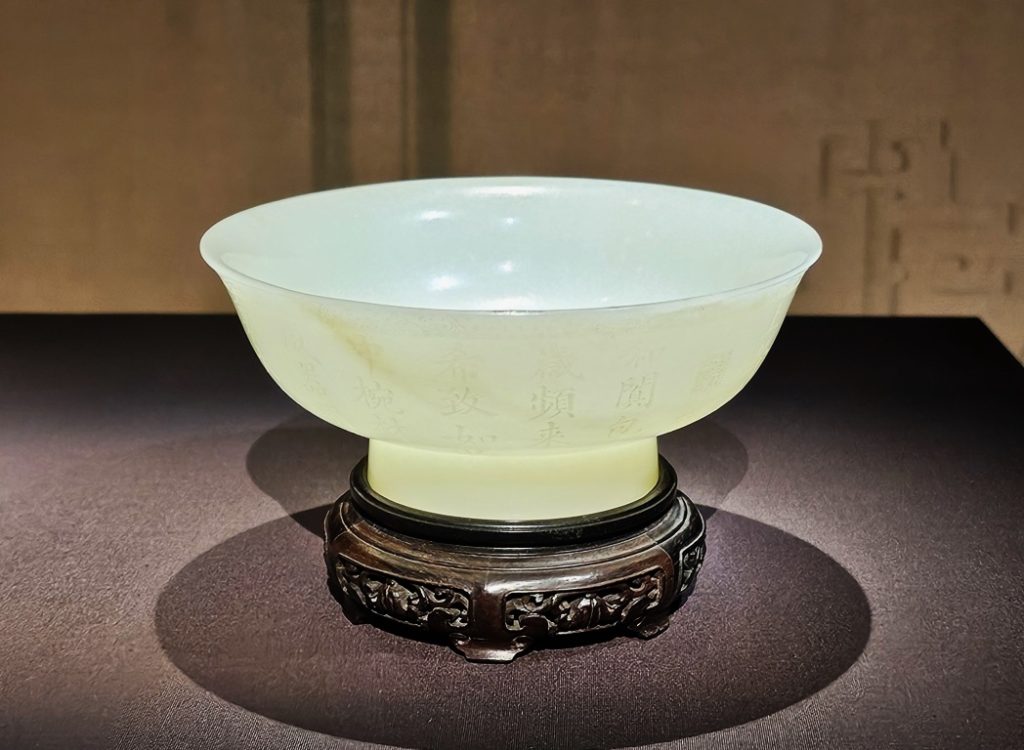
Bowl with an imperial poem, Central Asia, 18th century, Jade (nephrite), The Palace Museum
The Forbidden City and the World: Cultural Encounters
The exhibition The Forbidden City and the World: Cultural Encounters at the Palace Museum presents the iconic imperial palace of the Ming and Qing dynasties as both the centre of political power and the staging point for interactions between China and the wider world.
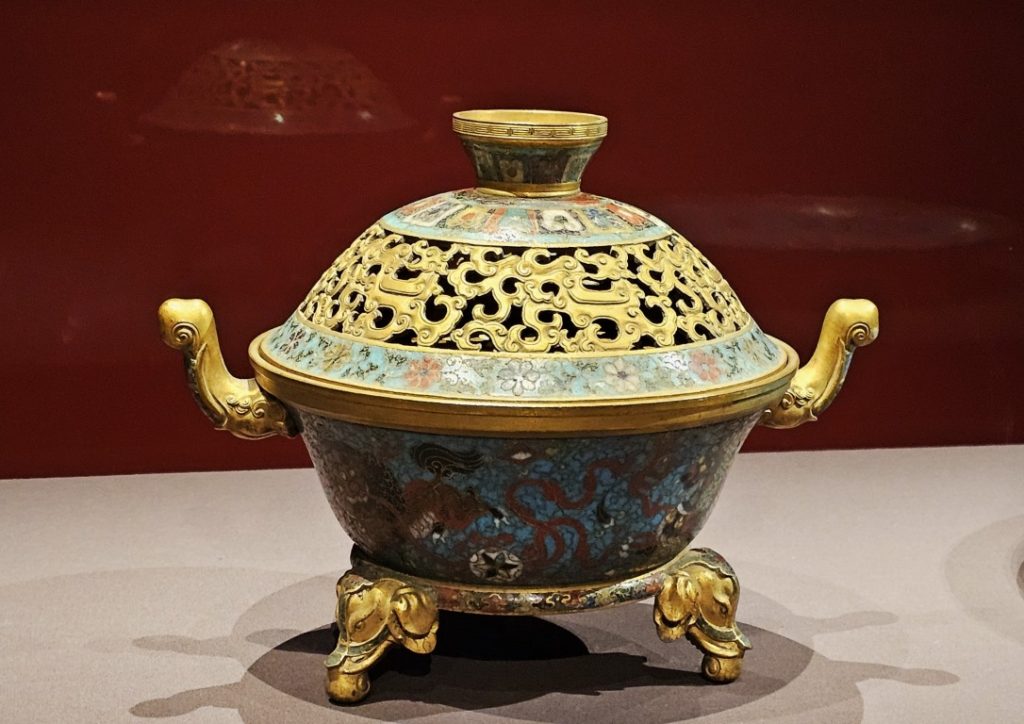
Incense burner with lions playing with a ball and a lingtai mark, Ming dynasty (1368-1644) Cloisonné
The narrative and artefacts on display span 600 years. Arranged chronologically, the stories the artefacts tell begin with the first foreign-led Yuan dynasty (1271- 1368), established by Kublai Khan. It then flows into the Han-Chinese-led Ming dynasty (1368-1644) and concludes with the Manchu-led Qing dynasty (1644-1911).
Related Majestic Han dynasty China’s first Golden Age
The presentation of life in the Forbidden City and its historical role as China’s political and cultural hub are the core of the thematic design and curatorial selections.
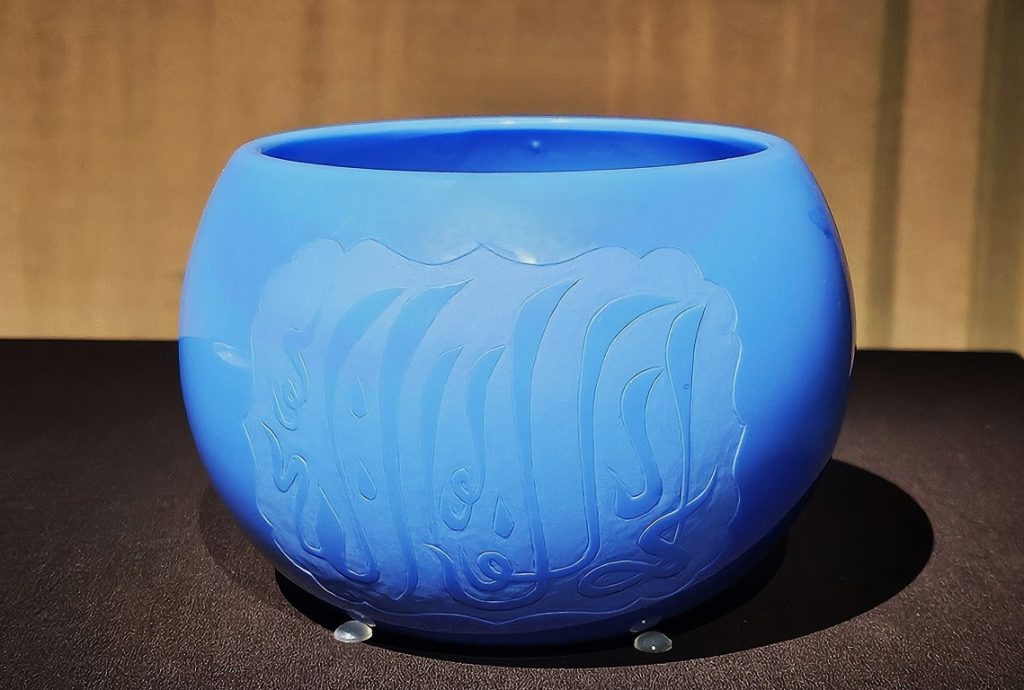
Bowl with Arabic Inscriptions, Imperial Workshops, Qing dynasty, Qianlong mark and period (1736-1795), Glass, Museum of Islamic Art, Doha
The Forbidden City embodied the heart and soul of China. It was commissioned in 1406, built on the ruins of the grand capital of the Yuan dynasty. During the Ming and Qing dynasties, it was home to emperors and empresses, concubines and eunuchs. It housed not only people but also countless treasures and tribute gifts given by foreign dignitaries and envoys.
Related Treasures of the Mughal Court presents 100 examples from the golden age
This former imperial city, with its extensive collection of artworks and artefacts, is now a UNESCO World Heritage Site and a cultural draw in the centre of Beijing. The Beijing Palace Museum administers it, and it opened to the public in 1925 after China’s last emperor was deposed. The museum provided this exhibition with precious artefacts, including 18 grade-one national treasures, to bring to life China’s rich cultural legacy embodied by the Forbidden City.
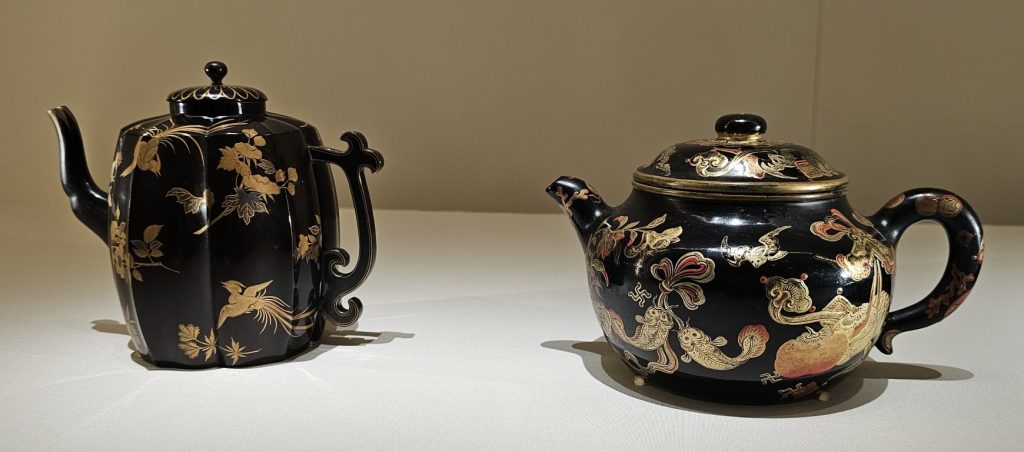
Left: Lobed pot with flowers and birds, Japan, Edo period (1603-1868), Black lacquer and gold; Right: Ewer with auspicious symbols, Qing dynasty, Qianlong period (1736-1795), Purple clay with black lacquer and gilding
The exhibited artefacts weave together the story of the Forbidden City, which served as the centre of political power and interactions between China and the wider world. Its architecture, artefacts, and stories bear the imprint of history, attesting to more than five centuries of cross-cultural encounters involving goods, technologies, arts, ideas, and cultures.
Related Treasures from the Forbidden City and Palace of Versailles
International trade was forged during the Tang dynasty, facilitated by the Silk Road. Trade volume via these overland and maritime routes reached unprecedented heights during the Yuan and Ming dynasties.
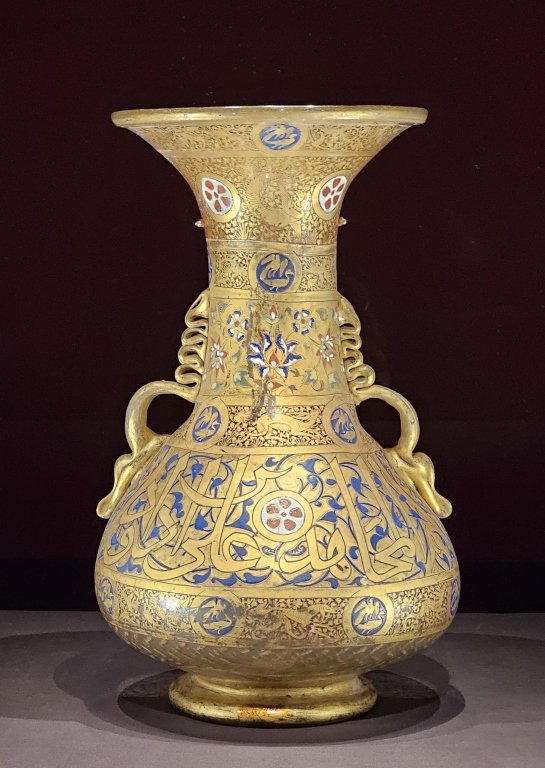
Mosque lamp with a verse from the Qur’an, Egyptian Mamluk dynasty (1250-1517), Glass with polychrome enamels and gilding
During the Yuan dynasty, overland routes to foreign regions were readily accessible, enabling the Venetian merchant Marco Polo (about 1254-1324) to travel across Eurasia along the Silk Routes to China, where he wrote about the flourishing city of Dadu (modern-day Beijing) in his travel account.
Related Silk Roads: The greatest link of civilisations in the world
The oldest artefact in the exhibition is a Mosque lamp with a verse from the Qur’an (1250-1517). The lamp is translucent because it is made of glass. The origin of glassmaking can be traced to West Asia and North Africa, with evidence of West Asian glassware in China dating back to 221 BCE.
Marco Polo travelled across Eurasia along the Silk Routes to China
This oil lamp was made in the Mamluk Sultanate (in the area around modern-day Egypt and Saudi Arabia) and was used to light the interiors of mosques or public buildings. It is meant to be hung from the ceiling, with chains to the ears on the sides.
Related Bold colours and magical, magnificent Rajasthan
On the belly of the lamp, there is a Qur’an inscription. Within the blue circles throughout the lamp, there are motifs of two birds: an eagle at the top and a waterfowl at the bottom. This is quintessential 14th-century Islamic decoration. At the neck, a lotus scroll appears, a subject commonly seen in blue-and-white ceramics of the Yuan and Ming dynasties.
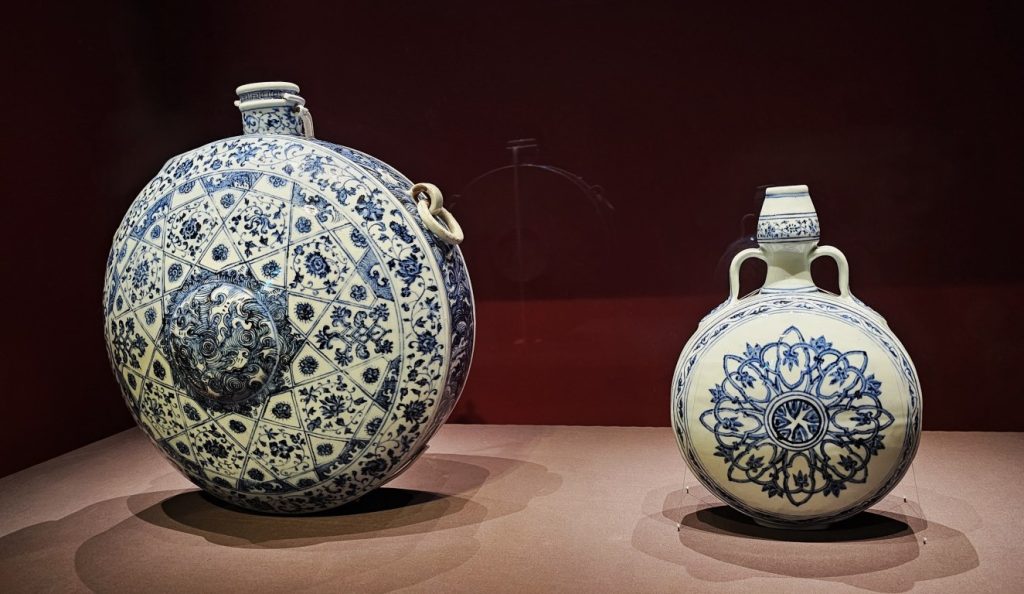
Left: Canteen with floral scroll, Jingdezhen kilns, Ming dynasty, Yongle period (1403-1424), Porcelain with underglaze cobalt blue; Right: Flask with medallion, Jingdezhen kilns, Ming dynasty, Xuande period (1426-1435), Porcelain with underglaze cobalt blue
The rich history of trade is reflected in the shapes and fusion of decoration in two blue-and-white porcelain ceramic artefacts from this era. A Canteen with a floral scroll was modelled on metal canteens produced in West Asia. The form for the Flask with medallion originated in the Mediterranean region. Both ceramics feature the lotus scroll motif, as well as geometric patterns influenced by Islamic art and classic Chinese wave patterns.
Related Yuan Blue and White porcelain from Jingdezhen
These mimicked brassware. The canteen was meant to be hung, as was the flask. Also known as a pilgrim flask, it was designed to hold wine, olive oil, or water and was sold as a souvenir to Christians on pilgrimage. Made of ceramic, they were too heavy for practical use. After they were introduced to China, they lost their original functions and were made only for display. They do vividly reflect the dynamic exchanges between China and foreign lands.
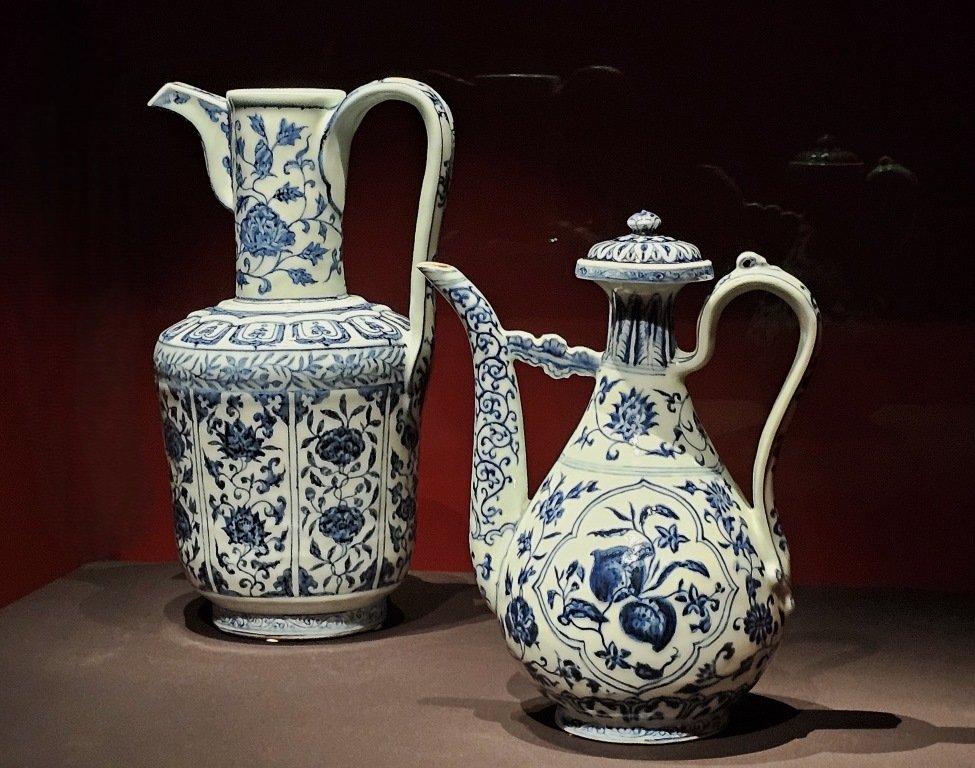
Left: Ewer with floral scrolls, Jingdezhen kilns, Ming dynasty, Yongle period (1403-1424), Porcelain with underglaze cobalt blue, Right: Ewer with fruit sprays, Jingdezhen kilns, Ming dynasty, Xuande period (1426-1435), Porcelain with underglaze cobalt blue
China exchanged frequently with Central and West Asia via the Silk Routes as early as the Han dynasty, and even more so from the Tang dynasty onward. The maritime routes navigated by the Ming diplomatic envoy Zheng He advanced China’s international outreach to an unprecedented degree during the Ming and Qing dynasties.
Related Tang dynasty golden age artistic highlights
Zheng He began his first of seven major maritime expeditions in 1405, visiting over thirty countries and regions across Southeast Asia, South Asia, and Africa. The silk and other gifts that his fleet carried were highly revered in foreign lands and during his travels. Novel items, such as Ewers with handles and spouts, were introduced to China from Central and West Asia. In China, people traditionally scooped wine from a large container with a ladle. The introduction of ewers changed the way drinks were served in China, from ladling to pouring.
Zheng He and his maritime expeditions carried silk to foreign lands
The cloisonné technique came from West Asia during the Yuan dynasty. Admired for its technique and colourful designs, the Ming court highly praised it and established a specialised workshop to produce it. Chinese cloisonné was elevated to high art, with fabulous pieces decorated with bold patterns and majestic subjects.
Related Chinese Blue and White porcelain from Yuan and Ming dynasties
A Plate with lions playing with a ball and Floral scrolls presents an example of a decoration featuring an animal not native to China. The lion motif came on diplomatic gifts as far back as the Han dynasty. During the Ming dynasty, they were presented to the court from places such as Herat (modern-day Afghanistan) and Samarkand (modern-day Uzbekistan).
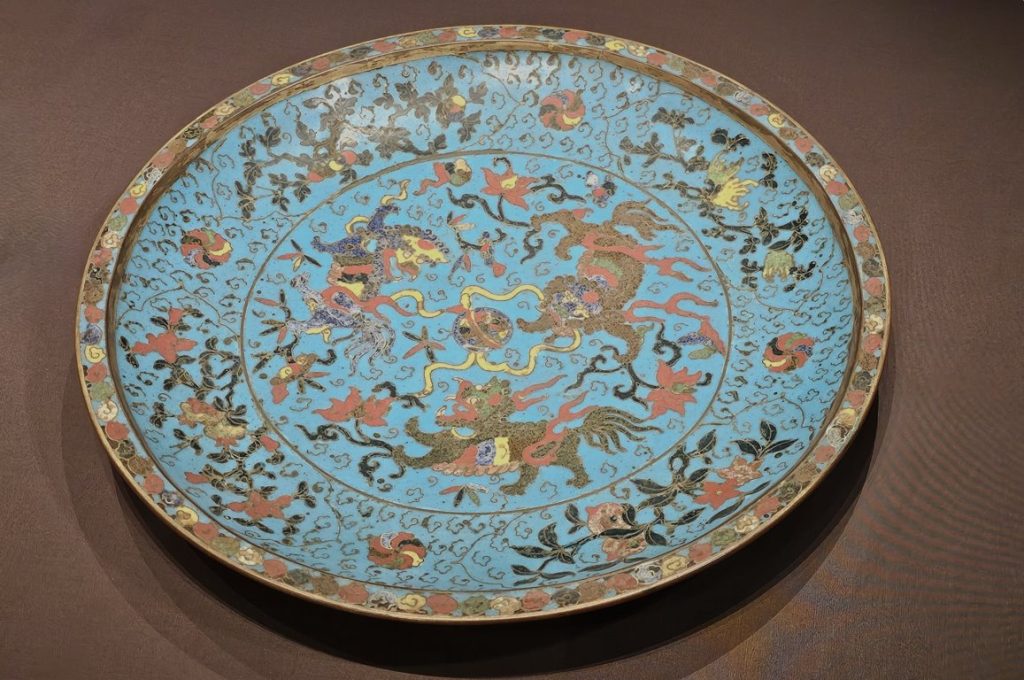
Plate with lions playing with a ball and Floral scrolls
Porcelain in traditional Chinese vessel forms was decorated with Islamic doctrines or mottos written in Arabic and Persian, and was made for imperial use at the Ming court. Classic blue-and-white porcelain in traditional shapes was decorated with flowing script alongside Chinese motifs.
Related Ceramic treasures from the Tang dynasty
A Candlestick with Arabic and Persian inscriptions and a Zun vessel with flanges and Arabic inscriptions are two examples of porcelain produced for Ming Emperor Zhengde, who showed a strong interest in Islam.
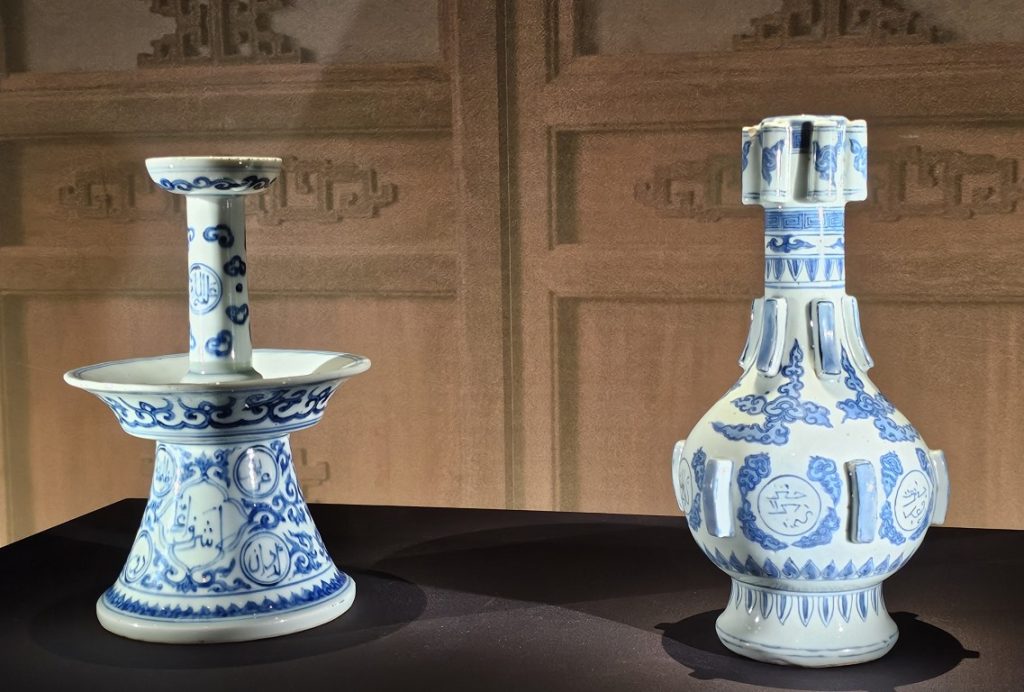
Left: Candlestick with Arabic and Persian inscriptions; Right: Zun vessel with flanges and Arabic inscriptions
In the late 14th century, the Ming government began restricting private trade with foreign regions. Then, during the Longqing period (1567-1572), the government officially approved the legalisation of foreign trade in Yuegang, a seaport in Zhangzhou, Fujian province.
Related Qing dynasty garden paradise Yuan Ming Yuan jewel of Chinese history
This led to a steady influx of rare materials from South and Southeast Asia, enriching China’s arts and material culture from the late 16th to the mid-17th century. Kingfisher feathers were coveted for their exquisite iridescent properties. The feathers’ unique structure causes light to refract, and their bluish-green colour shifts with changes in light while remaining vibrant and fade-resistant. Kingfisher feathers were used in imperial decorative arts, such as a Hanging screen with landscape.
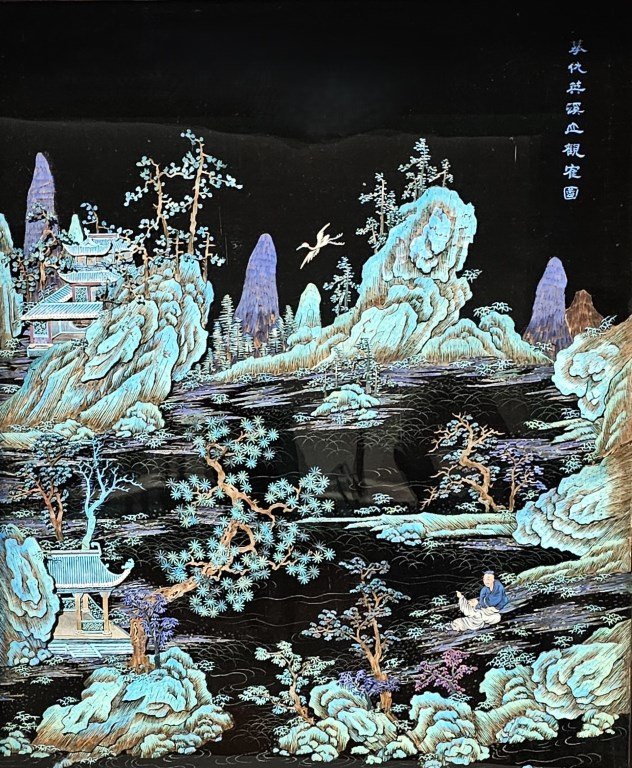
Hanging screen with landscape, Qing dynasty (1644-1911), Zitan wood and kingfisher feathers
Other types of feathers used in decorative arts during the Qing court primarily came from green peacocks (Pavo muticus) found in Yunnan, Burma (modern-day Myanmar), and Java, which differ from the Indian blue peacock (Pavo cristatus).
Related History of China in Silk and The Chris Hall Collection
An embroidered textile made with silk thread and peacock feathers shows colour tones that change with the viewing angle, and yet it never fades. The Imperial Household Department transported the peacock-feather thread, made in workshops in Nanjing, Suzhou, and elsewhere, to the Forbidden City to create garments for the emperor, empress, and nobility.
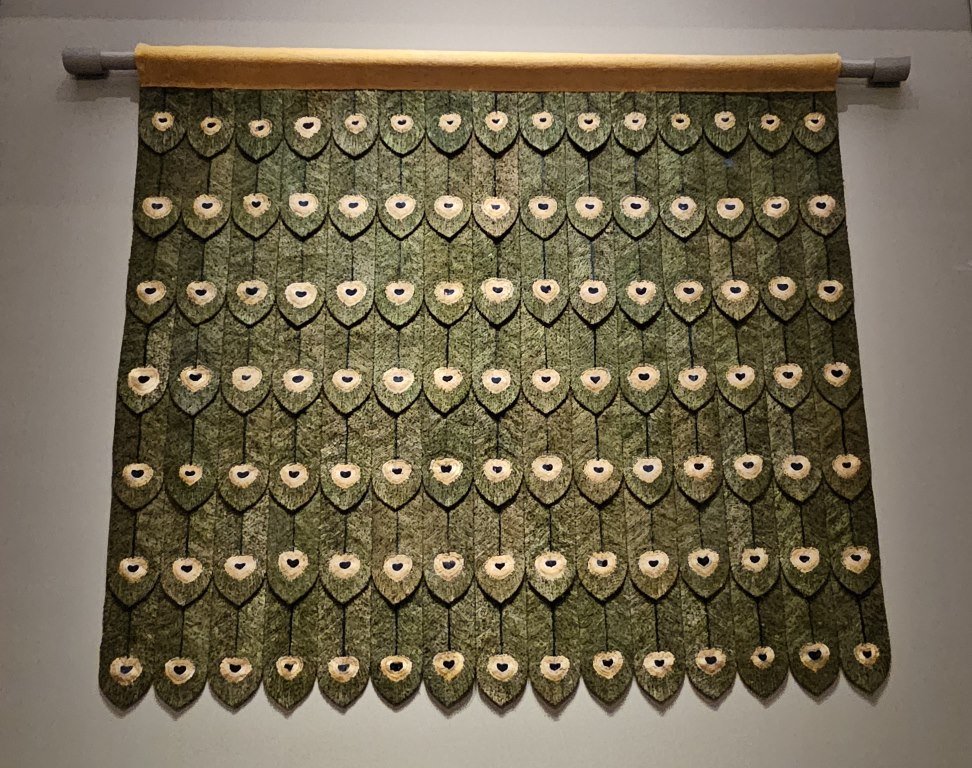
Peacock feather embroidered textile, 19th century, Peacock feather and silk thread, The Chris Hall Collection
Jadeite from modern-day Myanmar emerged as a highly desirable material for imperial ornaments and luxury objects. The fabulous Ruyi sceptre, shaped like a lingzhi fungus, is a rare artefact carved from a single block of Burmese jadeite.
Related Inkstones: History, artistry, and passion of Chinese culture
Ruyi sceptres were common auspicious ornaments in the Qing court. This grade-one national treasure is exceptional also for its size. Jade objects served as tribute from provincial officials and court gifts to local officials and foreign envoys.
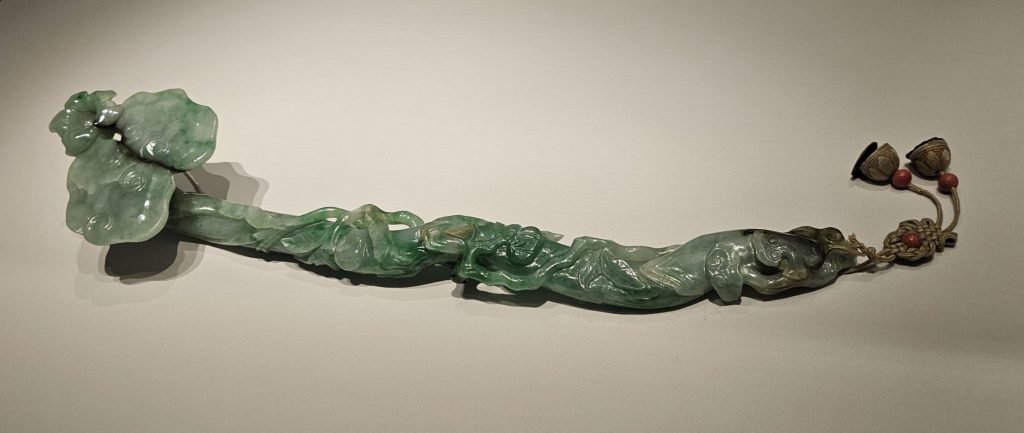
Ruyi sceptre in the form of lingzhi fungus, Qing dynasty (1644-1911), Jade (jadeite)
As the court opened up in 1567, overseas commerce prospered. Large quantities of tropical timber were imported, providing the material foundation for the increased production of hardwood furniture. This gradually shifted societal preference from softwood to hardwood furniture.
Related Tiger Mansion, 1930s Chinese eclectic architecture built by a legendary family
Furniture made from imported tropical hardwood, first crafted in the Jiangnan region, entered imperial palaces and later became standard at the early Qing court. Hardwoods such as Huanghuali were used in both private households and the imperial court after the late 16th century.
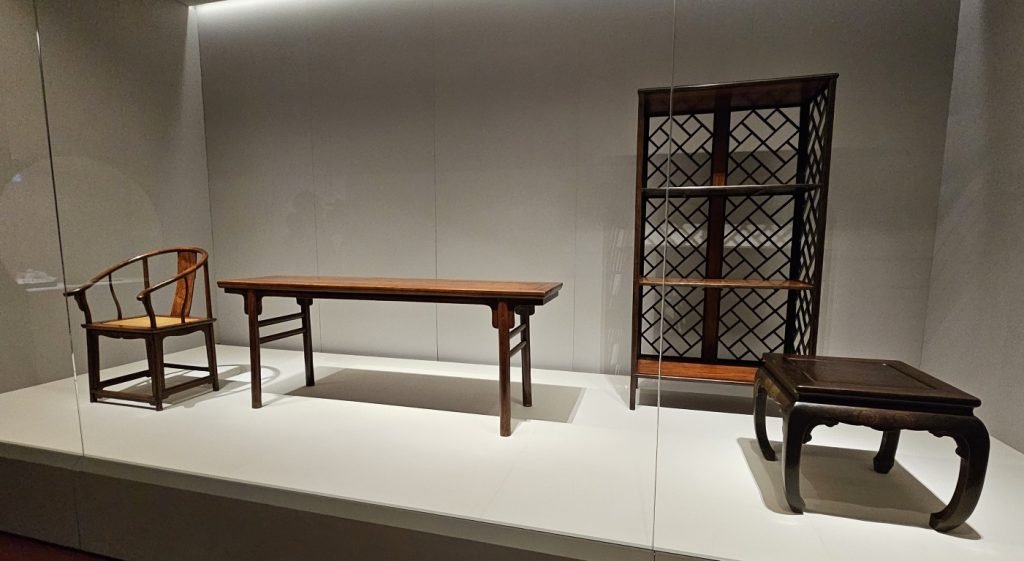
Left: Horseshoe armchair and Pingtouan table, Late Ming dynasty, late 16th century to mid-17th century, Huanghuali wood; Right: Lattice-backed shelf, Ming dynasty (1368-1644), Zitan wood; Far Right: Stool, Late Ming to early Qing dynasty, 17th century, Zitan wood
Hardwood was denser and more resistant to decay, but it took longer to grow. Zitan wood was especially precious. By the Qing dynasty, Zitan furniture became the standard for imperial court furnishings. In contrast, Ming court furniture had been primarily made of lacquer on softwoods, such as Chinese fir and Phoebe wood, before the late 16th century.
Related Way of the Sword: Warrior Traditions in China and Italy
In 1601, the Jesuit Matteo Ricci (1552-1610) brought a world map into the Forbidden City and used it to introduce the imperial court to world geography and natural history. Later Qing-palace compendia, such as the Album of Birds and the Album of Beasts, documented exotic species with unprecedented precision.
Jesuit missionaries introduced Western art and technical expertise to China
A copy of Jiang Tingxi’s Album of Birds on display shows a xianluo cui (Siam kingfisher), now known as the white-breasted kingfisher. Kingfishers were gifts to the Qing court from Siam (modern-day Thailand) and Champa (modern-day Central Vietnam).
Related Legends and History of Hoan Kiem Lake, Vietnam
Qianlong Emperor commissioned this Album of Birds in 1750. It referenced an earlier album painted by Jiang Tingxi (1669-1732) and took eleven years to complete; the compilers finished it in 1761. The album features illustrations of birds on the right-hand pages, while the left-hand pages describe the birds’ habits in both Chinese and Manchu scripts.
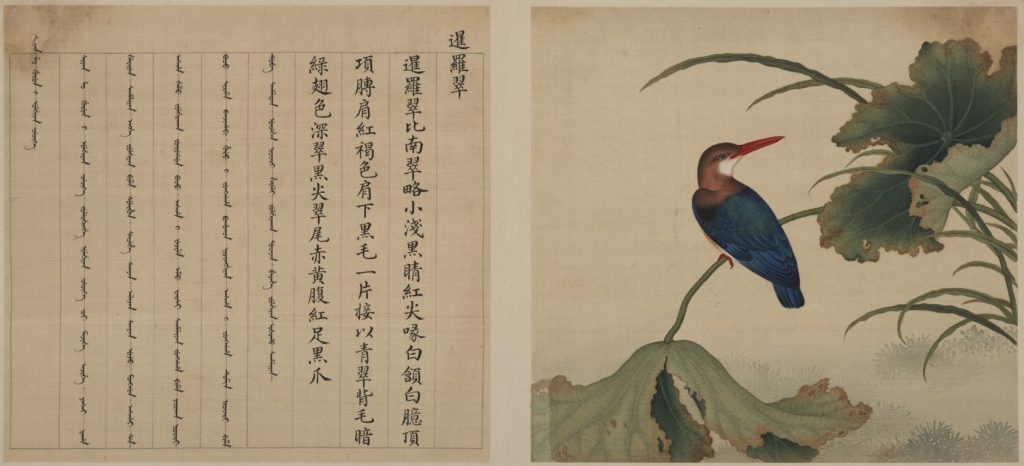
Copy of Jiang Tingxi’s Album of Birds, Qing dynasty (1644-1911), Album leaves, ink and colour on paper
Giuseppe Castiglione (1688-1766) was another Jesuit who arrived in China to preach in 1715. He was soon called to serve as a painter in the imperial Qing court. He painted in a style that fused European and Chinese traditions. This earned him the favour and respect of the Kangxi (r.1662-1722), Yongzheng (r.1723-1735) and Qianlong (r.1736-1795) Emperors.
Related Chinese Silk from the Qing dynasty: Stunning embroidery
An album leaf from Castiglione’s Flowers and Birds depicts a traditional flower-and-bird composition. Subtle variations of light and shadow make numerous details clearly visible. The artist frequently uses white paint to highlight bright areas and enhance the three-dimensionality of objects throughout the work.
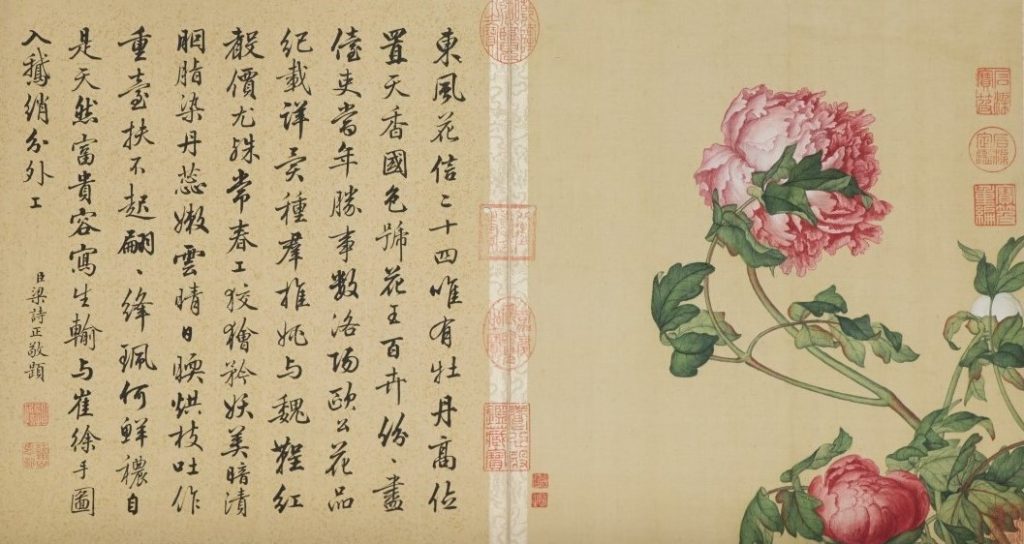
Flowers and birds, Giuseppe Castiglione, Qing dynasty (1644-1911), Album leaf, ink and colour on silk
Castiglione’s artwork exemplifies the integration of European chiaroscuro techniques into traditional Chinese painting, blending Eastern and Western artistic practices within the context of Qing court painting.
Related 8 Qing dynasty art pieces featured with 8 modern artworks
During the Qing dynasty, European missionaries such as Castiglione and Matteo Ricci introduced new knowledge, including mathematics, astronomy, and geography, to the imperial court. They fostered innovations in painting, as well as the creation of painted enamels, glassmaking and other arts and crafts.
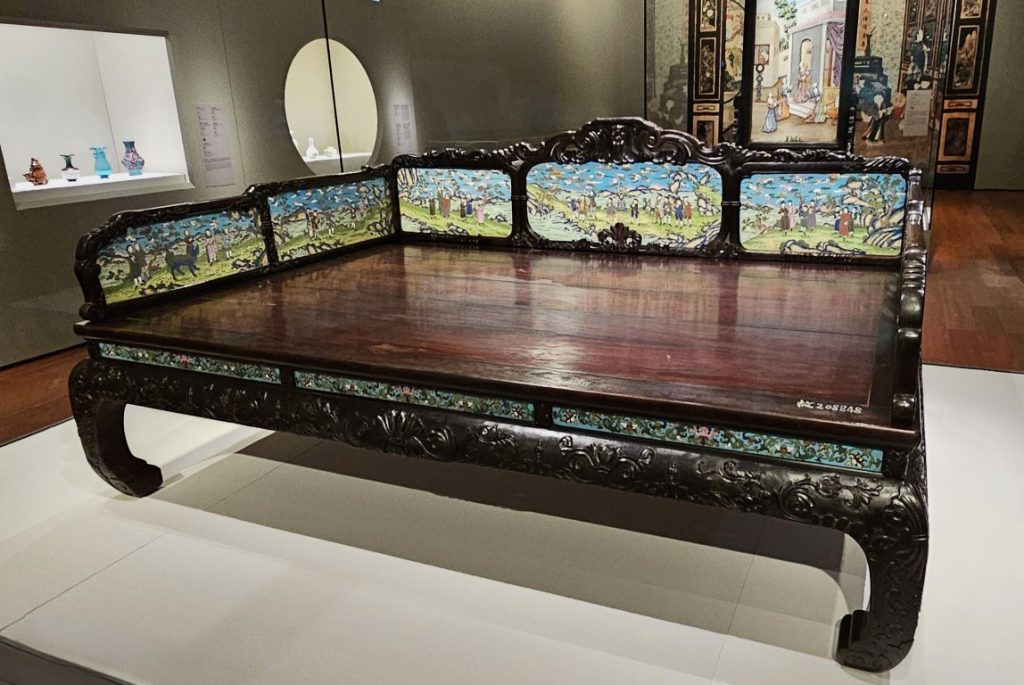
Luohan bed with figures, Qing dynasty (1644-1911), Zitan wood and Cloisonné
A Luohan bed made of Zitan wood and decorated with Cloisonné panels show figures of merchants and envoys carrying clocks and other treasures, illustrating how foreigners were visualised in Qing dynasty China.
Related Grit and fortune of the Qing dynasty military
When Matteo Ricci arrived in Beijing in the early 17th century, he presented gifts of mechanical clocks and a European-style world map to the Wanli Emperor (r.1572-1620).
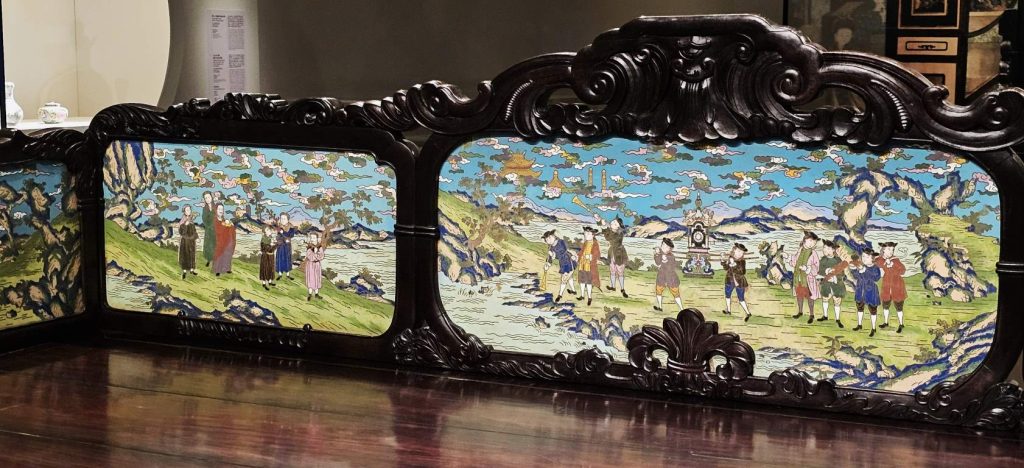
Luohan bed with figures (detail), Qing dynasty (1644-1911), Zitan wood and Cloisonné
The Kangxi Emperor (1662-1722) displayed a keen interest in European science. He actively supported the development of glassmaking and enamelling techniques, aiming to match European standards.
Related Chinese art from the collectors of Min Chiu Society
During the period when European missionaries served as technical advisors, glass production in China became refined and sophisticated. In 1696, the Glass Factory of the Imperial Workshops of the Qing court was established next to the French Catholic Church in Beijing. A Chinese-made vase with a flared neck illustrates the advanced glassmaking techniques achieved.
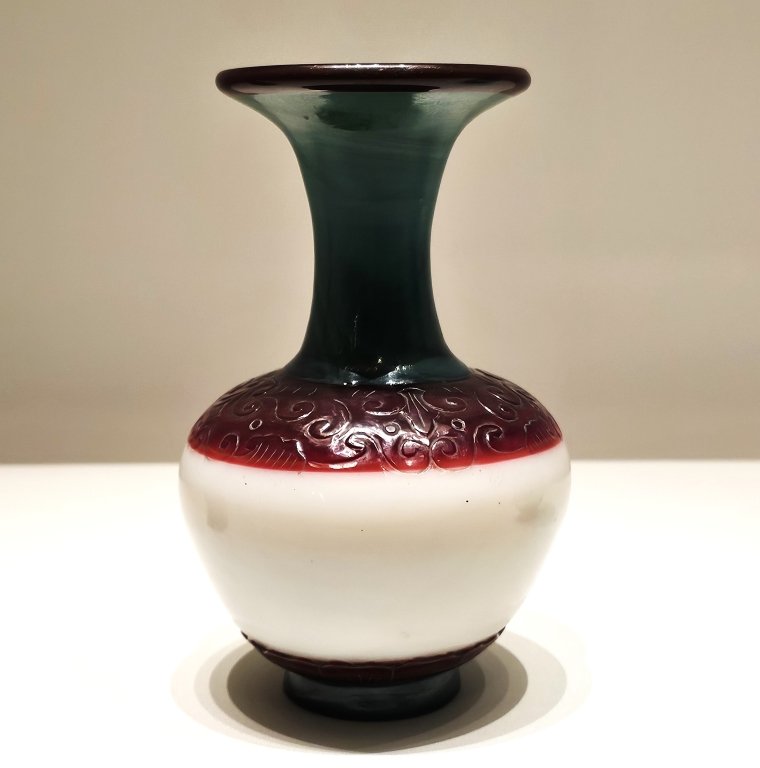
Vase with flared neck, Qing dynasty, Qianlong mark and period (1736-1795), Overlaid glass
Since the mid-16th century, large quantities of Chinese export porcelain entered Europe. It was expensive and highly favoured by the upper classes. Influenced by this trend, European ceramic workshops were established to imitate Chinese export wares. An 18th-century porcelain vase from Great Britain in the Palace Museum collection shows one such beautifully decorated piece with overglaze polychrome enamels and gilding.
Related Women and Femininity in Ancient China: Revealing the Way of Life
The Ewer-shaped vase with European figures exemplifies the standards of the highly coveted enamelling techniques produced in Europe. This vase’s form derives from ancient Greek examples. Vases of this sort were commonly displayed on mantelpieces in 18th-century European and American interiors.
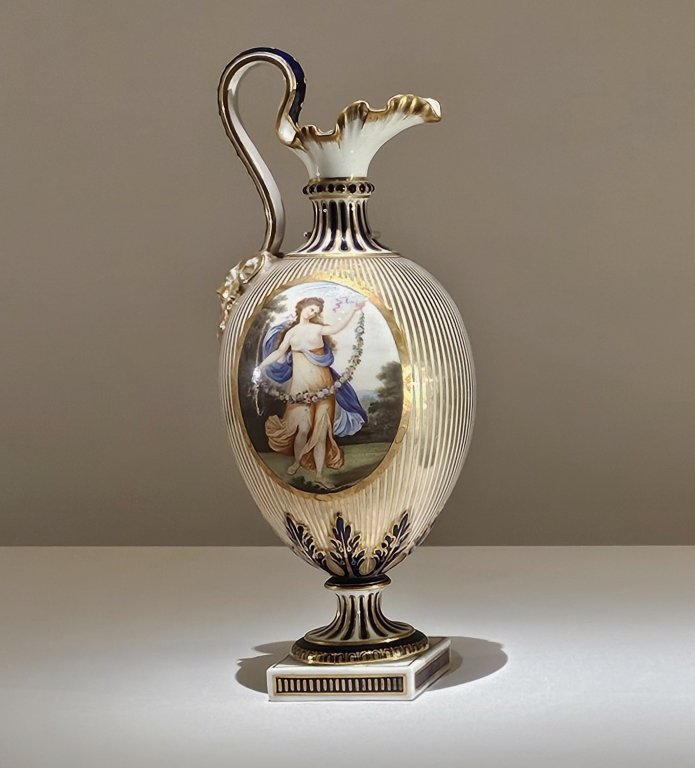
Ewer-shaped vase with European figures, Great Britain, 18th century. Porcelain with overglaze polychrome enamels and gilding
The Qing dynasty saw sustained exchange with the wider world, alongside advances in craftsmanship and the blending of Eastern and Western practices.
Related Odysseys of Art Masterpieces private Liechtenstein Princely art collection
Building on this exchange with the wider world, the Kangxi Emperor had a deep passion for studying geometry and mathematics. Within a few months, he mastered Euclidean geometry and commissioned Jesuits at court, including Jean-François Gerbillon (1654-1707), Joachim Bouvet (1656-1730), and Antoine Thomas (1644-1709), to teach him geometric principles and the use of scientific instruments.
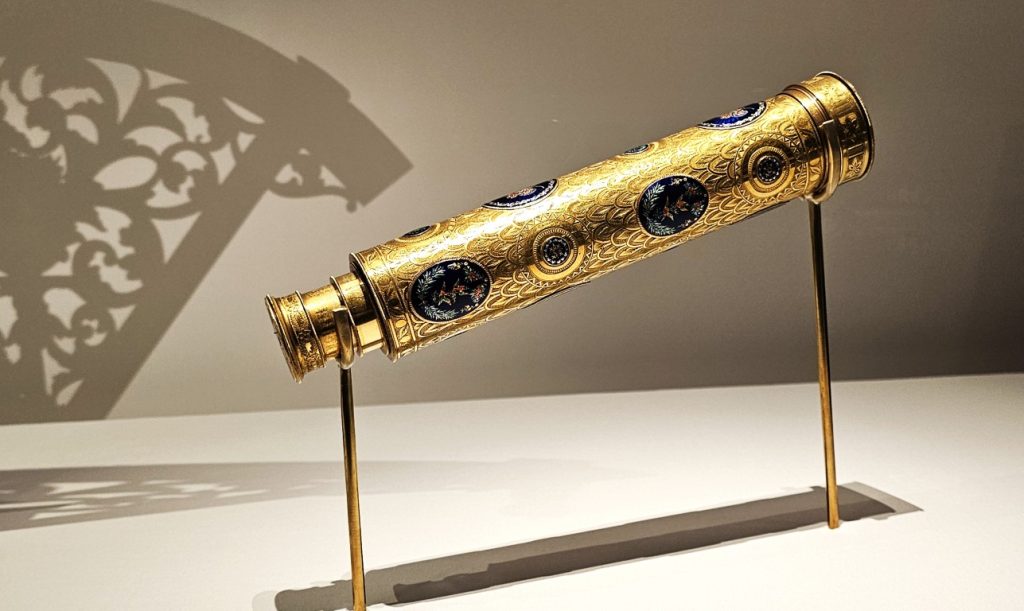
Telescope, Europe, 18th century, Gilt bronze and enamel
A beautifully crafted refracting telescope featuring a four-stage draw tube and decorated gilt bronze and enamel shows the kind of Western scientific tools that fascinated the Emperor. Jesuits introduced telescopes to China in the late 16th century. Recognised for their use in astronomical observation, terrestrial surveying, and military purposes, telescopes were highly valued.
Related Chateau de Versailles: Legacy of the Sun King
The fascination with technically sophisticated instruments led to the introduction of mechanical toys, watches, and clocks to the Chinese court. European clockmakers created mechanical toys known as singing birdcage automaton to cater to the Qing fashion for birdkeeping toys.
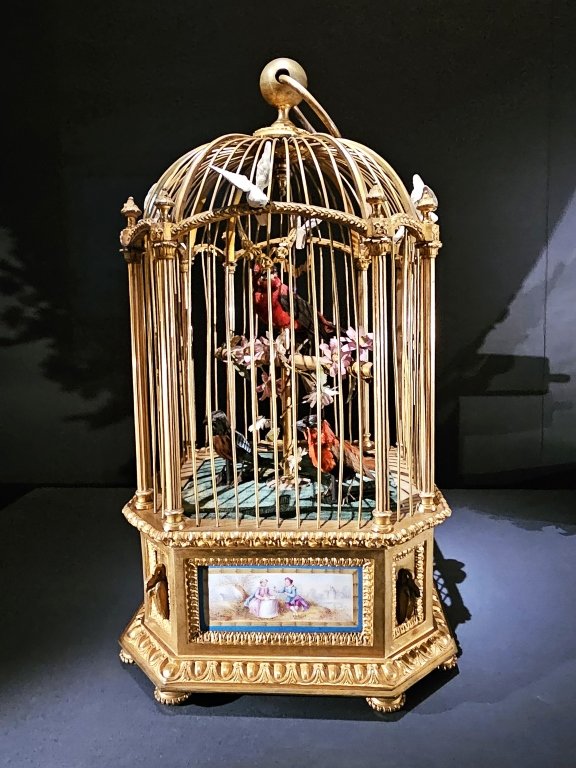
Singing bird cage automaton, France, 19th century. Gilt bronze and porcelain
Emperors Guangxu (r.1875-1908) and Xuantong (r.1909-1911) favoured mechanical novelties. In 1772, the Canton Customs included a singing bird cage among the birthday tributes presented to the Qianlong Emperor (r.1736-1795).
Related Maritime Silk Road Zodiac Heads from Old Summer Palace fountain clock
A singing birdcage automaton, made of gilt-bronze and porcelain, on display in the exhibition, is one of these curiosities. Driven by a spring mechanism and gearwork, the small bird flutters and sings within the cage.
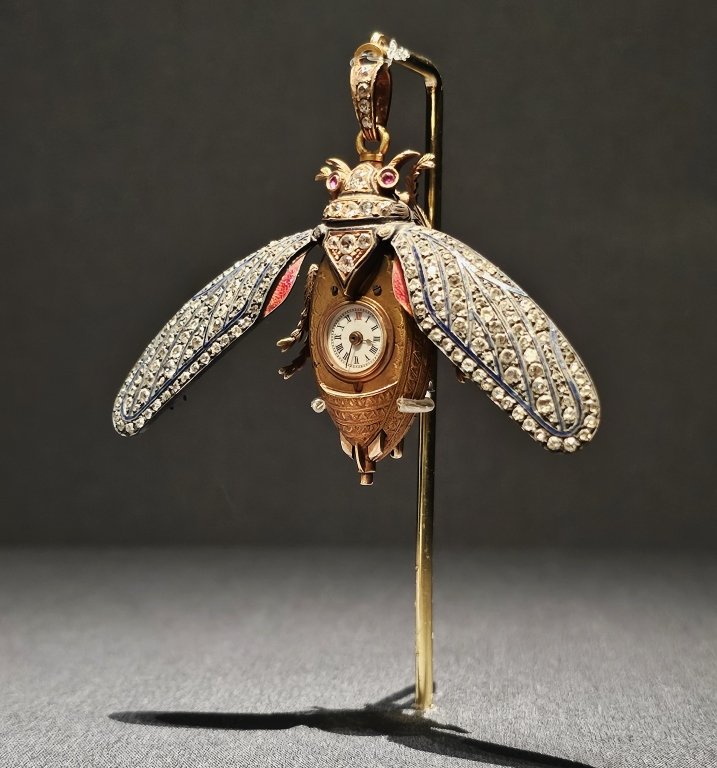
Cicada-shaped brooch watch, Switzerland, 19th century, Gold and diamonds
A gold-and-diamond Cicada-shaped brooch watch is an example of the remarkable timepieces in the Palace Museum collection. Delicately crafted and intricately inlaid with gemstones, the Cicada-shaped brooch watch is a wonderful illustration of Swiss engineering and design.
Related Ancient Chinese Gold symbol of power and wealth
The Qing court amassed an extraordinary number of timepieces produced in Europe, as well as models produced in Guangzhou and the Imperial Workshops in the Forbidden City. A Musical table clock crafted by James Cox, a renowned English clockmaker of the 18th century, is one of these.
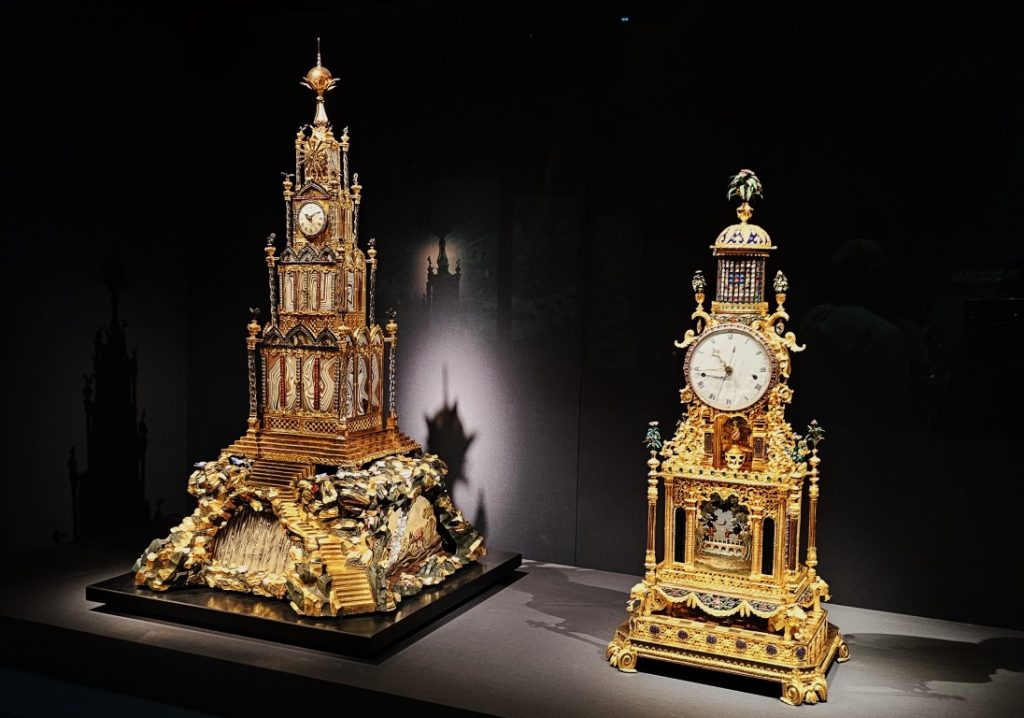
Left: Musical table clock, James Cox (active in 1749-1791), Great Britain, 18th century, Gilded and patinated bronze, agate, glass, and textile; Right: Musical clock, Qing dynasty (1644-1911), Gilt bronze, enamel, and glass
The clock is richly adorned with gilded and patinated bronze, agate, glass, and textile, and can play twelve tunes. Cox’s timepieces were imported for the Qing imperial court. His descendants established clockmaking workshops in Guangzhou, a centre for foreign trade and a key channel through which European clocks entered the imperial court.
Related Tale of 3 cities: Maritime Silk Trade in Guangdong – Hong Kong – Macau
Guangzhou became a major centre of clockmaking in China. Guangzhou-made timepieces, such as a Musical clock made of gilded bronze, enamel, and glass, became popular commodities because they were priced far lower than European-made clocks.
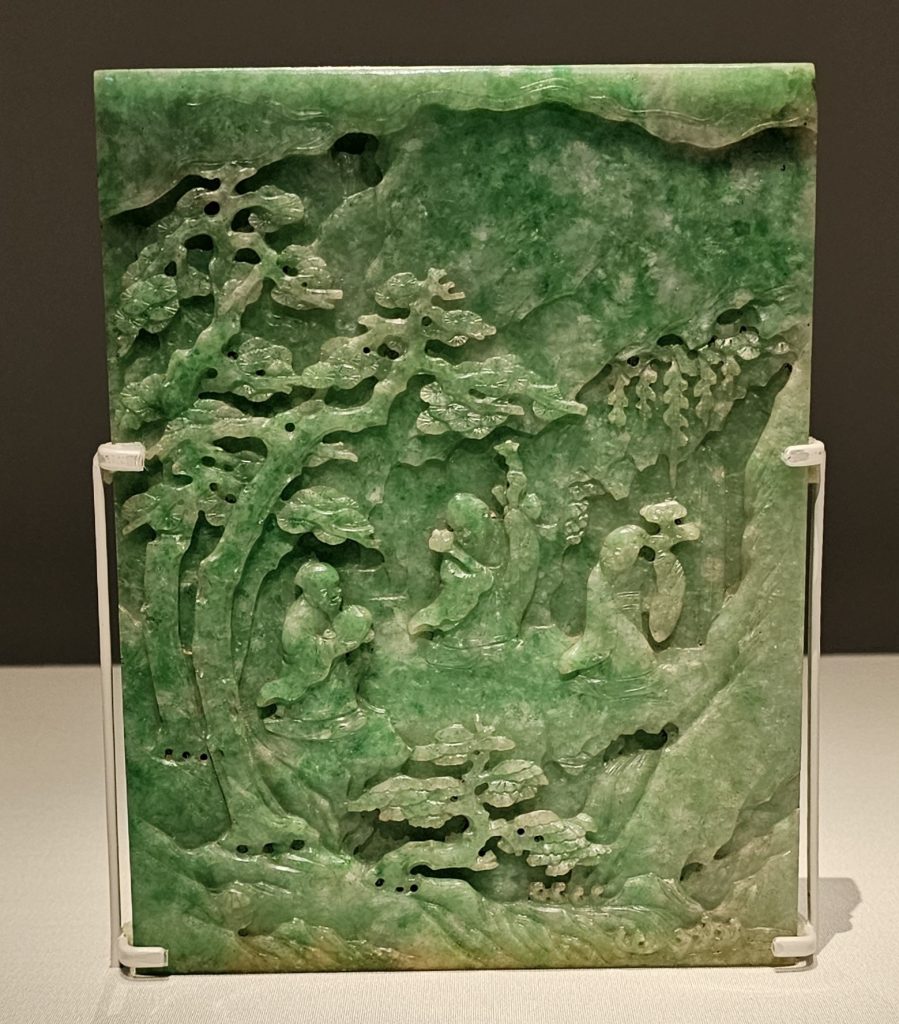
Table screen with gods of fortune, happiness, and longevity, Qing dynasty (1644-1911), Jade (jadeite)
Chinese civilisation has developed continuously for over five millennia. The Forbidden City and the World: Cultural Encounters exhibition highlights a relatively brief yet pivotal period of progress.
Related Mythical Sanxingdui creatures discovered in Sichuan
As the centre of the Ming and Qing dynasties, the Forbidden City served as the base of political power and the epicentre for China’s engagement with the rest of the world. The story and history of the Forbidden City during this defining era are told through the narratives provided by the artefacts now on view at the Hong Kong Palace Museum.
Text & Photos Cammy Yiu


